Increlex?

I think he was meaning long term HRT using 192aa GH or what the authors of that study call met-rhGH.

But in that study they did a 2 year window and seem to have encountered no discernible difference in side effects between rhGH (191aa) and met-rhGH (192aa) despite the presence of antibodies in the met-rhGH group. Interesting study. Seems to indicate 192aa is just as effective as 191aa which begs the question, if they are both equal in benefit, then shouldnt we just be using cheaper 192aa GH? Why pay more for something that is no more effective?

I had always heard the 192aa will cause antibodies (which sounds nefarious), but this is the first time ive seen a study about it and the study seems to suggest 192aa is perfectly ok to use...
The study did show more antibodies but concluded that the antibodies did not effect the children's growth - just trying to make it clear what they found.

So there are more antibodies being produced. This means the body views the 192aa as some sort of threat. That was my point. Inflammation of any sort is usually bad long term <---- no 192aa study about that. The last part is just my mind jumping to the next conclusion. Something is happening.
 
Was it 80 mcg/kg?
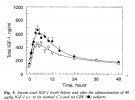
Yes. It is right on the first page of the paper linked. "All subjects were given 80ug/kg recombinant human IGF-1 s.c. and blood was sampled over 48 hours."

That is one injection, subcutaneous. Healthy subjects had a mean of 530.

This was with NO growth hormone, just IGF-1 injection.
 

Attachments

  • F42D0487-10CB-42CF-8C64-5FE94B8C4087.jpeg
    F42D0487-10CB-42CF-8C64-5FE94B8C4087.jpeg
    60.4 KB · Views: 13
As for it being expensive, well, nobody ever claimed real increlex was cheap . . . and that is basically what you are claiming for your product called insubolic, that it is the same thing?
 
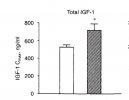
An easier to read graph. Healthy subjects on the left. Renal failure subjects on the right with the dark line.

This was the peak level after one subcutaneous injection of 80ug/kg.

Baseline IGF-1 was a mean of 130.
 

Attachments

  • 983AB975-5305-4B1B-A60B-F8F564D4CAF7.jpeg
    983AB975-5305-4B1B-A60B-F8F564D4CAF7.jpeg
    32.7 KB · Views: 13
The dose of Increlex is individualized by the doctor for each child. If a dose is well-tolerated for at least one week, then the doctor may choose to increase the dose by 0.04 mg/kg per dose, to the maximum dose of 0.12 mg/kg given twice daily.*

Children show better growth results when their Increlex dose is appropriately increased over the course of treatment. Regular weight monitoring is critical for proper unit dosing.

It is important that your child be weighed and measured regularly, so their dose can be adjusted as appropriate. You can keep your own records of your child's growth, but it's best to check in with the doctor's office so you get the most accurate measurements.

https://www.increlex.com/igf-1-dosage

.04 to .12 is the same as 40 to 120 ug/kg, and notice it is given TWICE DAILY, so up to 240 ug/kg (over that they are concerned with hyperglycemic effects, according to the footnote).

So 80 ug/kg is on the very low end of therapeutic dosing.
 
  • The dosage of INCRELEX should be individualized for each patient. The recommended starting dose of INCRELEX is 0.04 to 0.08 mg/kg (40 to 80 micrograms/kg) twice daily by subcutaneous injection. If well-tolerated for at least one week, the dose may be increased by 0.04 mg/kg per dose, to the maximum dose of 0.12 mg/kg given twice daily [see Warnings and Precautions (5.1 and 5.7)].
 
Do you know why they dont? Cause now im curious to know why.
It actually seems super weird that all the UG labs are only making HGH and then these weird lr3 and des analogues. Considering that the BB market is hugely intrested in REAL IGF 1 (increlex etc), and many sees it like the holy grail, it baffles me that all these labs didn't already make and sell real IGF 1 many many years ago

Is it because it's crazy hard and expensive to make? Or are we missing something here?
I'll make a post to address both questions later.
 
As for it being expensive, well, nobody ever claimed real increlex was cheap . . . and that is basically what you are claiming for your product called insubolic, that it is the same thing?
This is how I see it. If we use it as PED to improve athletic performance, then the effective dosages start at 200 mcg/day (just a few mcg per 1 kg). As with the most PEDs : higher the dosages = more pronounced effects. But 200 mcg of Recombinant Human IGF-1 should be enough for the most of us to see the effects. The dosages you are referring you are way higher, as you can see they start at 6 mcg/kg and injected twice a days, basically a few mg's a day. The dosages stimulate bone growth in kids.
As for the blood serum tests. I made sure there's no misunderstanding and we are aware that IGF-1 80 mcg/kg was injected, not just 80 mcg total. If someone is looking to do bloodwork he should be following the same protocol and inject 12-80 mcg per kg. If someone is looking to test IGF-1 itself, a few drops of IGF-1 can be added into the testing tube with blood and tested for total IGF-1 levels.
Why we may not see a huge increase in IGF-1 levels on the bloodwork, while we see it's working? One of the opinions :
"The IGF-1 is mostly free with true rIGF-1 and will be more diverse in effect by probably around 4:1 versus the matrix-bound hGH or rhGH mediated elevation of endogenous IGF-1 levels released by the liver and at paracrine sites during normal conditions."

The bodybuilding community is yet to find out what to expect from the RH-IGF-1, the best protocol to follow, etc. But the results we see are very promising.
 
It actually seems super weird that all the UG labs are only making HGH and then these weird lr3 and des analogues. Considering that the BB market is hugely intrested in REAL IGF 1 (increlex etc), and many sees it like the holy grail, it baffles me that all these labs didn't already make and sell real IGF 1 many many years ago

Is it because it's crazy hard and expensive to make? Or are we missing something here?
Back in the early 2000s alot of the research chem websites used to offer rhIGF-1, but it never sold well compared to other offerings and nowadays you just dont see it offered as much but its very easy to find manufacturers that will sell you it just use chemicalregister.com to search.

The general concensus over the years was that rhIGF-1 injected would mostly exert its effects at the site of administration, therefore broscientists believed its main use would be for localized growth of specific muscle groups. Bros believed that any economically feasible amount to use would be fully taken up by receptors at the site of administration before it could circulate systematically. This consensus may be partly to blame with its lack of popularity. Some bros ev3n began trying a protocol for localized muscle growth using rhIGF-1 and PGF2a which is a prostaglandin that supposedly can mimic the effect of working the muscle out. I never heard any rave reviews about the protocol.

In contrast to that broscientist belief about rhigf-1 however are studies showing its systematic administration (subcutaneous) to promote endochondral ossification in the long bones of children. IF systematic administration would not work then one would expect it to have no effect on long bone growth as they are most certainly not injecting it directly into the epiphyseal growth plates of these kids. So this flies in the face of broscientists beliefs from times past.

Now lets muddy the waters more. there was and may still be a product out there called Iplex. Now Iplex is a combo product of rhIGF-1 and IGFBP3. Basically they pre-bound the igf-1 to its most abundant natively endogenous binding protein igfbp3. The claim was this made it far more effective than regular rhIGF-1. Some years back i searched and tried very hard to get my hands on some Iplex but was never able to, its very rare and exotic pharma product and may not even be on the market anymore im not sure as ive fallen out of the researching loop.

Malf if you got time to kill you should dredge up some studies that cross compare iplex (igf-1/igfbp3 complex) verse increlex (igf-1)and post them here.

A bit of logic as well: if rhIGF-1 is so effective in and of itself wh3n administered from an exogenous source, why did Insmed make Iplex (igf1/igfbp3) and why did GroPep make Long R3? Solely to have something they can patent?? Or because they could make igf-1 more effective and overcome a perceivable obstacle to its clinical utilization: short half-life?
 
Back in the early 2000s alot of the research chem websites used to offer rhIGF-1, but it never sold well compared to other offerings and nowadays you just dont see it offered as much but its very easy to find manufacturers that will sell you it just use chemicalregister.com to search.

The general concensus over the years was that rhIGF-1 injected would mostly exert its effects at the site of administration, therefore broscientists believed its main use would be for localized growth of specific muscle groups. Bros believed that any economically feasible amount to use would be fully taken up by receptors at the site of administration before it could circulate systematically. This consensus may be partly to blame with its lack of popularity. Some bros ev3n began trying a protocol for localized muscle growth using rhIGF-1 and PGF2a which is a prostaglandin that supposedly can mimic the effect of working the muscle out. I never heard any rave reviews about the protocol.

In contrast to that broscientist belief about rhigf-1 however are studies showing its systematic administration (subcutaneous) to promote endochondral ossification in the long bones of children. IF systematic administration would not work then one would expect it to have no effect on long bone growth as they are most certainly not injecting it directly into the epiphyseal growth plates of these kids. So this flies in the face of broscientists beliefs from times past.

Now lets muddy the waters more. there was and may still be a product out there called Iplex. Now Iplex is a combo product of rhIGF-1 and IGFBP3. Basically they pre-bound the igf-1 to its most abundant natively endogenous binding protein igfbp3. The claim was this made it far more effective than regular rhIGF-1. Some years back i searched and tried very hard to get my hands on some Iplex but was never able to, its very rare and exotic pharma product and may not even be on the market anymore im not sure as ive fallen out of the researching loop.

Malf if you got time to kill you should dredge up some studies that cross compare iplex (igf-1/igfbp3 complex) verse increlex (igf-1)and post them here.

A bit of logic as well: if rhIGF-1 is so effective in and of itself wh3n administered from an exogenous source, why did Insmed make Iplex (igf1/igfbp3) and why did GroPep make Long R3? Solely to have something they can patent?? Or because they could make igf-1 more effective and overcome a perceivable obstacle to its clinical utilization: short half-life?
In order to draw a conclusion on why the RH-IGF-1 wasn't that successful in the early 2000s vs other chems, it'd be great to find out if it was the RH IGF-1 to begin with and besides it's authenticity there's quality and price factors.

Bodybuilding is based on broscience. =) There's no clinical data telling us how to stack Tren and Test, or use HGH at dosages needed to stimulate muscle growth in healthy individuals. So athletes experiment and see if it is worth taking and spend $ on.

"RH IGF-1 has a short half-life"
Terminal half-life averages 5.8 hours in children with severe primary IGFD1 11 16 25 and 19.2 hours in healthy individuals (from drugs dot com on Increlex)
From what I read, if your kid was prescribed RH IGF-1 and you can afford or insurance covers Iplex, then go with Iplex, as it only needs to be injected once daily vs Increlex x 2 times/day. I don't think that injecting something twice a day was ever a problem among bodybuilders.

Iplex can also be beneficial to :
"In addition, the serum half-life of unbound rhIGF-I is shorter when administered to patients with GHIS, who have low serum concentrations of its binding proteins IGFBP-3 and acid-labile subunit (ALS), than when administered to normal volunteers or to the patient with an IGF-I gene deletion (who had normal levels of IGFBP-3). "

I can see the logic behind adding IGFBP-3 to IGF-1 (see above). I can't say the same about IGF-1 LR3, I doubt they were not aware that it's not gonna be bioidentical to any endogenous hormone, antibodies and immunogenicity.
The market was guaranteed to Iplex : all the active components are bioidentical, insurance will cover the costs of the therapy (not many could afford it otherwise), prolly faster approval from FDA. what about IGF-1 LR3? I can assume they were not planning on putting their product in pharmacies.

RS

 
Last edited:
RS correct me if im wrong but my understanding was systematic circulation of IGF-1 is generally bound to IGFBPs particularly igfbp3, however autocrine/paracrine origin from intracrine signalling cascades would likely not involve igfbps.

As if the body uses the binding proteins as a way to deliver the igf-1 to needed target sites in a system wide distribution dynamic. In absence of the binding protein complexation the systematic igf-1 is more likely to bind to whatever available igf-1 receptor it comes across.

I assume at sites where its particularly needed the tissue produces some sort of protease that cleaves the igf-1 from the IGFBP thereby freeing it to occupy the receptor at the target tissue that needs it from an endocrine donation as opposed to an intracrine localized system. But from my understanding most IGF is occuring in an intracrine system meaning being produced by the cell in need or by an adjacent neighboring cell and never sees systematic circulation.

But my understanding could be hazy. Back in the early 2000s bros figured you could never inject enough rhIGF-1 to overwhelm the igf-1 receptors at the site of injection to facilitate systematic distribution, or that to do so would require prohibitively expensive dosages. The usual going rate if i recall correctly was similar to the price per mg of long R3, so bros were opting to use long R3 as you coukd supposedly use way way less. Because of this very few guys were playing with rhIGF-1 and over the years research chem sites stopped offering it as other items were much more popular.

Now maybe since those days the price of rhIGF-1 has come down a lot. But back then it was only slightly cheaper than long R3 per mg yet broscientists were speculating youd need to inject multi-mg quantities to oversaturate igf-1 receptors at site of admin to achieve systematic distribution. This was not a feasible choice for most bros so most bros never bothered with rhIGF-1.

When i say back in the day i am referring to when GroPep initially introduced and offeredlong R3 IGF-1. Back then bros were buying long R3 directly from GroPep, who was offering two grades: media grade and receptor grade. This lasted about a year until GroPep realized that the majority of ppl buying their receotor grade long R3 IGF-1 were not research scientists but rather broscientists injecting tye shit into themselves. Lol it still makes me chuckle to think about. After gropep pulled the plug on letting just anybody order it off their website long R3 disappeared from the bbing market for a bit then cameback with the help of the chinese as both generic raw API but also the more prettied up GenSci Igtropin kits. Those Igtropin kits really legitimized the long R3 as being something bros should consider using, as prior to that it was a much more experimental “maybe this will help” mindset regarding long R3.
 
I was listening to All Business Bodybuilding podcast, from back in February 2020, Justin Compton, Dominic Cardone, and Joe Binley, and they were talking about increlex dosages, and were discussing 1-1.5 mg daily (much lower than the children study and children therapeutic doses listed above) and expressed surprise that Dallas McCarver was taking more than 1.5 mg.
 
I was listening to All Business Bodybuilding podcast, from back in February 2020, Justin Compton, Dominic Cardone, and Joe Binley, and they were talking about increlex dosages, and were discussing 1-1.5 mg daily (much lower than the children study and children therapeutic doses listed above) and expressed surprise that Dallas McCarver was taking more than 1.5 mg.
I scrolled to the part where they start talking about manufacturing of IGF-1 etc.
One of the speakers says it's as easy to produce RH IGF-1 as LR3/Des or HGH and the reason why the labs don't produce RH IGF-1 is the product won't be cost efficient compared to Lr3 and Des.

First of all if it's that easy to make the IGF-1 then why they don't produce it? Many labs could simply have 1 extra product on the site which can be marketed as a cheaper alternative to Increlex? May be it's not that easy?

Another statement : Increlex (IGF-1) is inferior per mg to Lr3/Des. Comparing Lr3/Des and IGF-1 dosages as the effectiveness/safety etc of Lr3/Des is a known fact is wrong. There's NO CLINICAL DATA on Lr3/Des available.
Basically, it's like comparing a mythical animal unicorn to horses.

Dosages. Doses used in pediatric clinical practice and bodybuilding are different. Google "hgh doses for kids" "In pubertal patients, a weekly dosage of up to 0.7 mg/kg" Based on that data, a 220 lb athlete needs almost 200 IU's/week. It's 30 IU's/day. How many of us ran 30 IU/day?

Just my thoughts.

RS
 
For what it is worth, I posted the pediatric study not to show that bodybuilders should take the children's dose, but to show the dose relationship to IGF-1 on blood tests.

It was the only information I could find on what one might expect in terms of IGF-1 level to show up on a blood test after injecting increlex, so I shared it. Then I shared the other posts to show that those doses were indeed what the manufacturers say to give to kids (indeed, that was the lower end).

I was not suggesting any dose for a bodybuilder, and I have no experience with increlex or dosing for anybody.
 
For what it is worth, I posted the pediatric study not to show that bodybuilders should take the children's dose, but to show the dose relationship to IGF-1 on blood tests.

It was the only information I could find on what one might expect in terms of IGF-1 level to show up on a blood test after injecting increlex, so I shared it. Then I shared the other posts to show that those doses were indeed what the manufacturers say to give to kids (indeed, that was the lower end).

I was not suggesting any dose for a bodybuilder, and I have no experience with increlex or dosing for anybody.
I was just sharing my thoughts on the info I heard from that podcast.
 
There is some good information here, as I have very limited knowledge of but in depth experience with IGF-1 Lr3 specifically. I began using it on a whim after procuring enough to experiment with a few years ago - I researched what I could find at the time and just went for it - keep in mind that is was after taking a very long break from any gear use of any kind aside from protein and standard vitamins. I have always weight trained depending on the degree my unfortunate health issues were at any given time.

Long story not so short for those interested - I ended up there after health issues caught up with me & I had to literally fight to survive. Once back on my feet & training for several months I started on Test E at 125mg/wk for 8 weeks. All going great.

I introduced IGF-1 Lr3 at 50mcg into the muscles I was training that day. So 50 each in bi's day 1, 50 in tri's day 2 and so on.

I did this for 6 weeks as I upped my Test to a modest 250 during this time.

For me, there was no denying the hard pumps into the sight injected muscle groups - the next day I could still feel it in delta as I moved to quads for the current day. I loved it & my output in the gym was very positive & fulfilling. Almost as good as my 25 year old angst filled self with unlimited life ambitions. My vascularity was out of this world. I don't spend a ton of time in the mirror but I was enchanted by the places veins were showing up on my body.

However by week 5 I began to have discomfort, like my spleen was rupturing (it happened before, same feeling). I went down to 30mcg per sight with no change. At the end of week 6 I stopped completely (just the IGF).

Without having time to see if the pain & discomfort would subside, I ended up in the ER two days after stopping with a perforated ulcer. It was a nightmare, blood from every single orifice. Major surgeries, in a coma, developed chronic foot-drop from my right knee down, blood clot, 2 blood transfusions & 52 days in the hospital.

I also came out forever a diabetic as it seemed my pancreas issues didn't appreciate that experience either. So ended up with a mass on my pancreas & intestines. Fairly recently that was removed along with part of those organs.

After all that blabbing my point is just to share my feelings on it. I'll never dabble in it again personally. From having to take insulin daily for the rest of my life (which I have to mention stays perfectly in range with my Lantus dose - for those who may see the sweet food I post at times in Nutrition), to having that mass form, it just appears that with the bit of research I've done that a fella in my position is just asking for more trouble here.

I've spoken to many who compete that utilize IGF, GH on top of who knows what else but of course their genetics, personal health along with the concrete commitment they execute perpetually is a whole level from what my humble goals have always been.

Regardless I'm loving learning more about it and everything else for that matter.
 
Back
Top