I'm talking about controlling what is in our power to control, and looking at the balance of probabilities. And yes, I give far more weight to high-power clinical studies than a handful of anecdotes.
VS
Proudly boasting that "I don't filter and everything's fine." (not you Sampei)
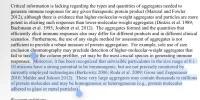
My idea of harm reduction is lessening of known risks, even if they can't be specifically measured. That's the same approach taken by professionals, who to this day, haven't established the precise mechanisms of immunogenicity, but they know enough that aggregates are closely linked that tremendous effort and expense is invested by pharma and regulators, and ZERO effort by UGL.
I don't care what strangers do, or if they hurt themselves. This is an intellectual exercise for me, and I put the information out there for those receptive to it and decide they'd prefer to reduce potential harms.
One side defines harm reduction as saving the expense of 50¢ worth of filters and 2 minutes of time, and I define it as taking the precaution of removing particulates that are certainly damaging health, and aggregates and that may or may not be.
Filtering at the individual level, even of carefully produced pharma peptide and not our UGL garbage, is recognized as reducing the risk of negative effects, "dramatically". not my words, but by the world's leading scientists who specialize in this field.
View attachment 317608
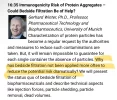
Here the are just 3 months ago covering this topic at a high level conference on protein drugs:
Cambridge Healthtech Institute’s 3rd Annual Protein Aggregates & Particles Understanding Aggregation Kinetics to Effect Control and Minimise Immunogenicity Risks 3 - 4 November 2016 | EPIC SANA Lisboa Hotel | Lisboa PORTUGAL Aggregation impacts biopharmaceutical development at every stage from...
www.pegsummiteurope.com