HGH cruise dose

The way risk is measured is by IGF-1 level for your age, not the dose of rHGH.

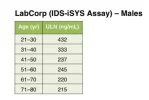
Find your ULN (upper limit of normal) IGF based on assay type(ie lab that performed the test):

View attachment 345268

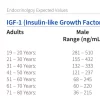
Your risk of developing signs of acromegaly depends on how much higher than the ULN you are:

View attachment 345269

At 1.3x ULN acromegaly features could begin to develop at between 2-5 years if you sustain IGF this high.

At 1.5x initial features can develop at 2 years.

2x starting at 1 year.

Above 2x acromegaly can begin to develop in less than a year,

First is soft and connective tissue, lips, nose, ears, organs, fully (lips) or partially (cartilage) reversible if you stop in time.

Then bone changes slowly over time, forehead, chin, teeth begin to misalign, irreversible.

It happens so slowly even family members often miss it for 5+ years.

@Ghoul - Just noticed the ULN for LabCorp Males age 51-60 is higher than 41-50. Do you know if that’s a typo?
 

Attachments

  • 1757046565848.webp
    1757046565848.webp
    16 KB · Views: 30
In the morning, before the day's dose.

At least 2 weeks after starting or changing dose, but 4 is better,

(For a baseline measurement when not using rHGH, any time is fine. Blood levels reflect the average of the last 24-36 hours and are stable. There's a brief spike shortly after injection that gives a deceptively high IGF.).
I was not aware of this brief spike. My low IGF-1 numbers have always been in the morning after my usual dose.

:confused:
 
I was not aware of this brief spike. My low IGF-1 numbers have always been in the morning after my usual dose.

:confused:

There's a *potential* brief spike. "Before" daily dose is straight out of endocrinology guidelines, but your low numbers may not be a spike, so don't lose hope.

On the other hand, if your numbers are really bad, you may actually qualify for legit adult growth hormone replacement therapy covered by insurance.
 
you have it mixed up , i thought that if you did the serum test , you find out "if" your hgh is potent by the test result, if its lower than say 30 ish ng/ml, then not as good as say 50 ish ng/ml . to many things dictate igf1 readings(which are somewhat meaningless) . idk so many myths surrounding hgh and potency. And then theres that "dimer" fella always fn things up.

That's what i know too. 10 IU intramuscular 2,5 - 3 hours before serum GH. This test as far as how good and potent is the GH is superior to IGF 1 test because in that one genetic response, basal IGF, estradiol, calories, overall liver health etc have a big impact on the outcome.
 
On the other hand, if your numbers are really bad, you may actually qualify for legit adult growth hormone replacement therapy covered by insurance.
As shared in this thread:

the range goes down to 50.

Mine was 83.
 
Insulin probably plays a role (use a glp with hgh if you can). monitor glucose, no need to repeat the mistakes of the past you can see living examples of.

Also though, intestines grow fast with rHGH, first thickening, then lengthening.

These can both be positive. Thickening enhances the barrier that prevents endotoxin from leaking from intestines into your bloodstream, reducing systemic inflammation. Lengthening enhances nutrient absorption. Too much intestine overgrowth (they won't ever stop growing with IGF too high above ULN) and you get Palumboism.

Just remember. if it does happen, pink bikini shorts can pull the look together so no one will notice.

View attachment 345272
Would intestinal growth follow the same timeframe as soft tissue (like lips/ears) or more like bone growth?
 
As shared in this thread:

the range goes down to 50.

Mine was 83.

It's "low-normal". While by itself it's not low enough to clearly indicate GH replacement is needed, it's also not disqualifying. If you also had low quality of life symptoms associated with GH deficiency, ie low energy, fat gain, muscle loss, brain fog, a good endocrinologist would perform confirmation testing, first checking issues that cause poor GH to IGF conversion like liver function and nutrient deficiencies, and if that was ok, the "gold standard" of a GH stimulation test would be next. That would be the last piece to decide if replacement is needed or not.

I don't know if you have the type of insurance that allows a self referral to an endocrinologist, or already have one, but what I'd do is find a "GH friendly" endo in your area, and one way or another get an appointment with him.

If you need a referral, I'd just tell my doc "I've been interested in closely monitoring my health so I got a package of blood tests done, and IGF-1 was one. I'm at the low end of normal and the symptoms of low GH have been creeping up on me for years. Could you give me an endocrinologist referral so I can discuss this with them and confirm or eliminate this as a potential issue, for my peace of mind."
 
Would intestinal growth follow the same timeframe as soft tissue (like lips/ears) or more like bone growth?

Intestines are one of the highest turnover tissues in the body so they respond to high IGF faster than almost anything else, They literally start to exhibit increased function from thickening within days after high dose rHGH. First thickening, then lengthening (after several months).

But they also reverse growth quickly after IGF goes back to normal.

The catch is that even though the intestines revert to normal size, other tissues in the abdominal wall that get stretched and pushed forward from intestinal enlargement and other visceral growth, like the muscle wall and abdominal connective tissue, also grow in response to IGF and DON'T shrink back to their original size after a certain amount of time leaving a permanent palumbo gut. How long? Who knows. But to be on the safe side, I would consider stopping if I had supraphysiologic IGF and noticed gut protrusion that wasn't going away in a day,

A tape measure and keeping notes would be sensible.

*insulin resistance will also contribute to a "stuffed gut" by packing on visceral fat. So keeping that in check while on GH would help slow this process down too
 
Intestines are one of the highest turnover tissues in the body so they respond to high IGF faster than almost anything else, They literally start to exhibit increased function from thickening within days after high dose rHGH. First thickening, then lengthening (after several months).

But they also reverse growth quickly after IGF goes back to normal.

The catch is that even though the intestines revert to normal size, other tissues in the abdominal wall that get stretched and pushed forward from intestinal enlargement and other visceral growth, like the muscle wall and abdominal connective tissue, also grow in response to IGF and DON'T shrink back to their original size after a certain amount of time leaving a permanent palumbo gut. How long? Who knows. But to be on the safe side, I would consider stopping if I had supraphysiologic IGF and noticed gut protrusion that wasn't going away in a day,

A tape measure and keeping notes would be sensible.

*insulin resistance will also contribute to a "stuffed gut" by packing on visceral fat. So keeping that in check while on GH would help slow this process down too
Great work as always, thanks Ghoul
 
It's "low-normal". While by itself it's not low enough to clearly indicate GH replacement is needed, it's also not disqualifying. If you also had low quality of life symptoms associated with GH deficiency, ie low energy, fat gain, muscle loss, brain fog, a good endocrinologist would perform confirmation testing, first checking issues that cause poor GH to IGF conversion like liver function and nutrient deficiencies, and if that was ok, the "gold standard" of a GH stimulation test would be next. That would be the last piece to decide if replacement is needed or not.

I don't know if you have the type of insurance that allows a self referral to an endocrinologist, or already have one, but what I'd do is find a "GH friendly" endo in your area, and one way or another get an appointment with him.

If you need a referral, I'd just tell my doc "I've been interested in closely monitoring my health so I got a package of blood tests done, and IGF-1 was one. I'm at the low end of normal and the symptoms of low GH have been creeping up on me for years. Could you give me an endocrinologist referral so I can discuss this with them and confirm or eliminate this as a potential issue, for my peace of mind."
its all how you word it with these dr's/insurance companies for referrals etc, and the fact that they actually give two shits about you,
 
Great work as always, thanks Ghoul
It would be a pleasure to meet you in the new members area, after reading the forum rules and etiquette.

 
I’m referring specifically to the LabCorp table.

41-50: 237
51-60: 245
61-70: 220

See how 51-60 actually is higher than 41-50? I assume it’s a typo.
I wonder if that upward trend correlates with the time in life when most peoples doctors tell them its important to get more active- so we see a little health boost in that demographic
 
Back
Top