Affordable Care Act (ACA) - Obamacare

Re: The Constitutionality of the Individual Mandate for Health Insurance

It's going down for two reasons:

1. The idiot Obama publicly chastised the SCOTUS during his SOTU address. Dumb, dumb, dumb. This prompted Kennedy to state he was not leaving until Obama was out of office.

2. Kagan already told him what the vote was. Whey else did he go off yet again on the SCOTUS when it would buy him nothing to alienate them unless he was preparing a campaign style angle.

3. The statement "can you create commerce in order to regulate it" caught many conservative legal analysts off guard (all lawyers are pretty dumb when it comes down to it) who thought the bill was a shoe in and they suddenly noted this argument killed it. If Congress can do that, then when conservatives are in power, they can regulate however the hell they want and tell you what to do and if you don't like it - suck it - they will have the power.

It's a goner. Pretend all you want - it's outta here. Plus there are ways within the law itself that allows states to opt out. Guess it would have paid to read the law after all, eh Pelosi?
 
Re: The Constitutionality of the Individual Mandate for Health Insurance

This is a VERY good day for the USA! But, there is so much more to do.
http://www.supremecourt.gov/opinions/11pdf/11-393c3a2.pdf

10192
 

Attachments

  • fuck yeah.jpg
    fuck yeah.jpg
    39.8 KB · Views: 28
Last edited:
Re: The Constitutionality of the Individual Mandate for Health Insurance

Supreme Court Upholds Affordable Care Act In Its Entirety

The most anticipated Supreme Court decision in years ended coming down in a manner that very few people expected. After two years of everyone focusing on the question of whether or not the Commerce Clause gave Congress the authority to force people to buy health insurance, the Supreme Court ended up upholding the law on completely different grounds via a very unlikely majority:
 
Re: The Constitutionality of the Individual Mandate for Health Insurance

Medicaid holding may have broad implications
http://www.scotusblog.com/2012/06/medicare-holding-may-have-broad-implications/

While the Court’s upholding the mandate is deservedly taking front stage in the media coverage, the Court’s decision to strike down a part of the Medicaid expansion may ultimately have broader jurisdprudential consequence. That, at least, will be a subject of debate among lawyers and academics in the days and weeks to come. This is the first time (as far as I know) that the Court has actually found a Spending Clause condition unconstitutionally coercive. Whether it establishes principles that make many other programs vulnerable is a question that will require further analysis and debate. Lyle Dennisten will start that analysis in an post later today or tomorrow morning.
 
Re: The Constitutionality of the Individual Mandate for Health Insurance

Look Who Opposes Obamacare, by Fat Margins
Look Who Opposes Obamacare, by Fat Margins | Jeff Frankels Weblog | Views on the Economy and the World

So ideology is much less important than party affiliation. This is the same result when one looks at which states receive more federal subsidies: despite all the rhetoric about “getting the government off our backs,” it is the red states, i.e., those where people vote Republican, that receive the most transfers from Washington. Alaska, Mississippi, Louisiana, West Virginia, and the Dakotas top the list. The Democratic-leaning states are the ones paying into the federal government and subsidizing everyone else: New England, New York, New Jersey, California. Those who are fiscally conservative in name are the ones who in fact tend to feed voraciously at the public trough.
 
Re: The Constitutionality of the Individual Mandate for Health Insurance

What really scares the shit out of the crazies is that they well understand that this a very important first step toward weakening their influence on the masses.
Anyone like to discuss that idea, need clarification ? Or just plain dont give a flying fuck?
:)
 
Re: The Constitutionality of the Individual Mandate for Health Insurance

Sommers BD, Baicker K, Epstein AM. Mortality and Access to Care among Adults after State Medicaid Expansions. New England Journal of Medicine. MMS: Error

BACKGROUND - Several states have expanded Medicaid eligibility for adults in the past decade, and the Affordable Care Act allows states to expand Medicaid dramatically in 2014. Yet the effect of such changes on adults' health remains unclear. We examined whether Medicaid expansions were associated with changes in mortality and other health-related measures.

METHODS - We compared three states that substantially expanded adult Medicaid eligibility since 2000 (New York, Maine, and Arizona) with neighboring states without expansions. The sample consisted of adults between the ages of 20 and 64 years who were observed 5 years before and after the expansions, from 1997 through 2007. The primary outcome was all-cause county-level mortality among 68,012 year- and county-specific observations in the Compressed Mortality File of the Centers for Disease Control and Prevention. Secondary outcomes were rates of insurance coverage, delayed care because of costs, and self-reported health among 169,124 persons in the Current Population Survey and 192,148 persons in the Behavioral Risk Factor Surveillance System.

RESULTS - Medicaid expansions were associated with a significant reduction in adjusted all-cause mortality (by 19.6 deaths per 100,000 adults, for a relative reduction of 6.1%; P=0.001). Mortality reductions were greatest among older adults, nonwhites, and residents of poorer counties. Expansions increased Medicaid coverage (by 2.2 percentage points, for a relative increase of 24.7%; P=0.01), decreased rates of uninsurance (by 3.2 percentage points, for a relative reduction of 14.7%; P<0.001), decreased rates of delayed care because of costs (by 2.9 percentage points, for a relative reduction of 21.3%; P=0.002), and increased rates of self-reported health status of “excellent” or “very good” (by 2.2 percentage points, for a relative increase of 3.4%; P=0.04).

CONCLUSIONS - State Medicaid expansions to cover low-income adults were significantly associated with reduced mortality as well as improved coverage, access to care, and self-reported health.
 
Re: The Constitutionality of the Individual Mandate for Health Insurance

you have to love the way the GREAT Dr.Scally uses his uncanny skills in selective reporting to show data that skews toward the left...

I wonder dr ... did they do any of these surveys along racial lines?

NOOOOOOO... I am sure the indigent fat asses that need gubment help are only white CHRISTIAN Republicans...

Nice try skippy... but Obamacare is the next step in socialism for this country.. skew it how you want to... but in the end it will go right back into your ass... being a dr, I am not sure how this makes you smile... you think the POTUS needs to set your salary?

you think the government should set the value on a life? should those of us that have good insurance now have to be taxed so those who dont WANT to work can have it free???
 
Re: The Constitutionality of the Individual Mandate for Health Insurance

Tax Credits In Federally Facilitated Exchanges Are Consistent With The Affordable Care Act’s Language And History
Tax Credits In Federally Facilitated Exchanges Are Consistent With The Affordable Care Act’s Language And History – Health Affairs Blog

Those who oppose making affordable health insurance available to lower- and middle-income Americans are not giving up easily. Having lost their two-year long battle to have the Affordable Care Act nullified in its entirety by the federal courts, opponents have come up with a new theory that they believe will at least deprive millions of middle-income Americans of the tax credits that Congress has offered through the ACA to help make health insurance affordable.
 
Re: The Constitutionality of the Individual Mandate for Health Insurance

Koppelman, Andrew M., 'Necessary,' 'Proper,' and Health Care Reform (November 16, 2012). Nathaniel Persily, Gillian Metzger, and Trevor Morrison, eds., The Health Care Case: The Supreme Court's Decision and Its Implications, Oxford University Press, 2013 (Forthcoming); Northwestern Public Law Research Paper No. 10-29. Available at SSRN: 'Necessary,' 'Proper,' and Health Care Reform by Andrew Koppelman :: SSRN

Chief Justice John Roberts argued, in NFIB v. Sebelius, that the Affordable Care Act exceeded Congress’s commerce power. The individual mandate to purchase insurance was not authorized by the Necessary and Proper Clause, he reasoned, because it involved a “great substantive and independent power.” He did not explain how one could tell what constituted such a power. This limitation was worked out in more detail by amici, and Roberts may have been gesturing toward their argument. This essay will look to the antecedents of Roberts’s argument to try to make better sense of what he said. This strategy will fail. There is no way to make this argument look good. It is a placeholder for a raw intuition that the law’s trivial burden on individuals was intolerable, an outrageous invasion of liberty, even when the alternative was a regime in which millions were needlessly denied decent medical care.
 
"Affordable" hmm, next to nothing our government enacts, administers and thereafter manages is affordable, IME, lol!
 
"Affordable" hmm, next to nothing our government enacts, administers and thereafter manages is affordable, IME, lol!

This one point should be enough for anybody with a brain. History already says its a fkup, disaster is in the bag. Why on earth can so many supposedly smart people not see the obvious. This time it is going to work? Come on. Sad.
 
U.S., business appeal on birth-control mandate
U.S., business appeal on birth-control mandate (UPDATED) : SCOTUSblog

UPDATE 4:28 p.m. The Obama administration has taken its own case to the Supreme Court on the birth-control mandate in the new federal health care law. The petition and appendix, a large file, are here; they were filed Thursday afternoon. The government petition raises only an issue under the Religious Freedom Restoration Act, not under the First Amendment. The Tenth Circuit Court had struck down the mandate as applied to the arts-and-crafts chain Hobby Lobby, based on RFRA and not on the Constitution. The government petition is docketed as No. 13-354. No number has been assigned yet to the petition described in the post below.
 
Re: Premiums

http://finance.yahoo.com/news/prices-set-health-care-exchanges-040600393.html

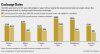
Across the country, the average premium for a 27-year-old nonsmoker, regardless of gender, will start at $163 a month for the lowest-cost "bronze" plan; $203 for the "silver" plan, which provides more benefits than bronze; and $240 for the more-comprehensive "gold" plan.

But for some buyers, prices will rise from today's less-comprehensive policies. In Nashville, Tenn., a 27-year-old male nonsmoker could pay as little as $41 a month now for a bare-bones policy, but would pay $114 a month for the lowest-cost bronze option in the new federal health exchanges.

Likewise, the least-expensive bronze policy would rise to $195 a month in Philadelphia for that same 27-year-old, from $73 today. In Cheyenne, Wyo., the lowest-cost option would be $271 a month, up from $82 today.

The Affordable Care Act marks a fundamental shift in the way insurers price their products. Carriers won't be allowed to charge higher premiums for consumers who have medical histories suggesting they might be more expensive to cover because they need more care. They will have to treat customers equally, with limited variation in premiums based on buyers' ages or whether they smoke.

Insurers also will have to offer a more generous benefits package that includes hospital care, preventive services, prescription drugs and maternity coverage.

For consumers used to skimpier plans—or young, healthy people who previously enjoyed attractive rates—that could mean significantly higher premiums.

The benefits are greater for people who previously were rejected for coverage because they were ill, or who were charged higher premiums. They are expected to find better coverage through the exchanges for the first time.
 

Attachments

  • 7e7a2d95-385c-4897-b8cf-dc9bce1745b5_NA-BY195A_HLTHR_G_20130924213605.jpg
    7e7a2d95-385c-4897-b8cf-dc9bce1745b5_NA-BY195A_HLTHR_G_20130924213605.jpg
    34.8 KB · Views: 8
Back
Top