Affordable Care Act (ACA) - Obamacare

Re: The Constitutionality of the Individual Mandate for Health Insurance

CBO’s Preliminary Analysis of H.R. 2, the Repealing the Job-Killing Health Care Law Act
Director's Blog Blog Archive CBO’s Preliminary Analysis of H.R. 2, the Repealing the Job-Killing Health Care Law Act
http://www.cbo.gov/ftpdocs/120xx/doc12040/01-06-PPACA_Repeal.pdf


As a result of changes in direct spending and revenues, CBO expects that enacting H.R. 2 would probably increase federal budget deficits over the 2012–2019 period by a total of roughly $145 billion (on the basis of the original estimate), plus or minus the effects of technical and economic changes that CBO and JCT will include in the forthcoming estimate. Adding two more years (through 2021) brings the projected increase in deficits to something in the vicinity of $230 billion, plus or minus the effects of technical and economic changes.
 
Re: The Constitutionality of the Individual Mandate for Health Insurance

Dissent on Commerce power
Dissent on Commerce power (UPDATED to 1:20 p.m.) : SCOTUSblog

Two Justices of the Supreme Court, in a dissent that may reveal a new division in the Court over Congress’s power to pass legislation under the Commerce Clause, on Monday accused the Court majority of silently accepting “the nullification” of the Court’s recent rulings on that power — especially, the decision in 1995 in Lopez v. U.S. The Lopez precedent has been playing a major role in the spreading national constitutional debate over President Obama’s health care reform plan. The dissent came as the Court refused to hear a Commerce Clause challenge to a federal law that made it a crime for a convicted felon to possess a bulletproof vest or other body armor that had traveled across state lines.

Continue at link above . . .


Supreme Court declines to rein in Congress' regulatory powers
The justices reject a constitutional challenge to a law that makes it a federal crime for a felon to have body armor or a bulletproof vest. The case involves the same point of law that is at the heart of pending legal battles over the healthcare law.
http://www.latimes.com/news/nationworld/world/sc-dc-0111-court-commerce-web-20110110,0,4582768.story

By David G. Savage, Washington Bureau
January 10, 2011, 9:19 a.m.

WASHINGTON — The Supreme Court gave a strong hint Monday that the justices are not anxious to rein in Congress' broad power to pass regulatory laws under the Constitution's commerce clause, the key point of dispute in the pending court battles over President Obama's health insurance law.

By a 7-2 vote, the justices turned down a constitutional challenge to a 2002 law that makes it a federal crime for a felon to have body armor or a bulletproof vest. The law came in response to several shootouts involving police, including a bank robbery in North Hollywood where the robbers came equipped in body armor.

But the dispute in the Supreme Court concerned only whether Congress had the power to enact a law regulating the possession of a product — in this instance, body armor. An appeal filed on behalf of Cedrick Alderman, a Seattle man, argued that the possession of a bulletproof vest had nothing to do with interstate commerce and, therefore, was beyond Congress' power.

"The federal power claimed is the authority to regulate anything — from the possession of French fries to the local theft of a Hershey's Kiss," Alderman's lawyers argued.

The lower courts had upheld the law. The Supreme Court considered the appeal over several months, but rejected it Monday in Alderman vs. United States.

The denial was met by a sharp dissent from Justices Clarence Thomas and Antonin Scalia, the court's two foremost proponents of limiting Congress's regulatory power.

"Today, the court tacitly accepts the nullification of our recent Commerce Clause jurisprudence," wrote Thomas in a seven-page dissent. The court's failure to act "threatens the proper limits on Congress' commerce power and may allow Congress to exercise police powers that our Constitution reserves to the states," he said.

Last year, the court reached a similar result in a case testing whether the federal government had the power to hold sex criminals in federal prisons after they had served their terms. A lower court said this law exceeded Congress' power, but the justices upheld it in a 7-2 decision in United States vs. Comstock, with dissents by Thomas and Scalia.

The disputes came just as many conservatives and "tea party" activists were demanding more limits on the power of the federal government.

State attorneys for more than 20 states have joined lawsuits arguing that the healthcare law goes beyond Congress' power because it requires Americans by 2014 to have some health insurance or pay a tax penalty.

Two district judges have rejected such challenges, and one in Virginia has ruled the law unconstitutional. The issue is likely to reach the Supreme Court in a year or two.
 
Last edited:
Re: The Constitutionality of the Individual Mandate for Health Insurance

Health care case advances in court
Health care case advances in court : SCOTUSblog

Both sides in the Virginia case testing the constitutionality of the new federal health care law formally declare they are appealing a federal judge’s December ruling striking down the insurance-purchase mandate in the law.

The Obama Administration and the state of Virginia have moved ahead with a major constitutional case in lower courts on the new federal health care law, filing formal notices that they will appeal to the Fourth Circuit Court in Richmond, Va., a federal judge’s decision — the first to strike down the new law’s requirement that nearly everybody must have health insurance by 2014. It is unclear whether Virginia will now seek to bypass the Fourth Circuit, and attempt to take the case on to the Supreme Court. That option is said to be still under consideration.

The government’s notice of appeal is here; Virginia’s is here. Such filings signal the issues that will be challenged on appeal. The government will contest District Judge Henry E. Hudson’s ruling in December that Congress had no authority to mandate the private purchase of a health policy. Virginia will contest Hudson’s refusal to strike down the entire new law and his refusal to issue an order barring the government from enforcing the purchase requirement. (The appeal notices were filed inCommonwealth of Virginia v. Sebelius, et al., District Court docket 10-188, in the Eastern District of Virginia.)

Another federal judge’s ruling, upholding the health insurance mandate, is already moving forward in the Fourth Circuit. That case is Liberty University v. Geithner, Circuit Court docket 10-2347. Briefing began this week in that case.

A federal judge in Florida is considering a challenge not only to the insurance mandate, but to other parts of the broad new law. and has been expected to rule early in the new year. District Judge Roger Vinson of Pensacola held a hearing on the case on December 16; in that hearing and in an earlier preliminary ruling, he expressed skepticism about the validity of the mandate. A total of 28 states have now joined in the challenge in that case (Florida v. Department of Health and Human Services, District Court docket 10-91 in the Northern District of Florida.)

Meanwhile, in a predictable sign that the fight outside the courts over health care will also continue, especially in Congress, the House of Representatives voted shortly after 6 p.m. Wednesday to repeal the entire new law. The size of the majority in favor of repeal was uncertain at 6 p.m. as voting was continuing, but the outcome was already settled. (UPDATE 6:26 p.m. The final vote to repeal was 245 to 189. A New York Times story on the vote is here.) That measure is not expected to pass in the Senate, and may not even be considered there.
 
Re: The Constitutionality of the Individual Mandate for Health Insurance

Fla. judge strikes down health overhaul
http://news.yahoo.com/s/ap/20110131/ap_on_bi_ge/us_health_overhaul_1


Florida Judge Voids Entire Health Care Law
Florida Judge Voids Entire Health Care Law | TPMDC

The money quote from the judge (http://www.slate.com/blogs/blogs/weigel/archive/2011/01/31/florida-district-court-rules-against-health-care-reform.aspx):

It is difficult to imagine that a nation which began, at least in part, as the result of opposition to a British mandate giving the East India Company a monopoly and imposing a nominal tax on all tea sold in America would have set out to create a government with the power to force people to buy tea in the first place.
 
Re: The Constitutionality of the Individual Mandate for Health Insurance

The money quote from the judge (http://www.slate.com/blogs/blogs/weigel/archive/2011/01/31/florida-district-court-rules-against-health-care-reform.aspx):

It is difficult to imagine that a nation which began, at least in part, as the result of opposition to a British mandate giving the East India Company a monopoly and imposing a nominal tax on all tea sold in America would have set out to create a government with the power to force people to buy tea in the first place.


Tea Party Shadows Health Care Ruling
http://www.nytimes.com/2011/02/02/health/policy/02notebook.html

February 1, 2011
By KEVIN SACK

Among the legal commentariat, which blogs its instant analysis after each turn in the health care litigation, one assertion in Monday’s ruling against the law by Judge Roger Vinson is receiving particular attention.

“It is difficult to imagine,” Judge Vinson, of Federal District Court in Pensacola, Fla., wrote in a central passage of his 78-page opinion, “that a nation which began, at least in part, as the result of opposition to a British mandate giving the East India Company a monopoly and imposing a nominal tax on all tea sold in America would have set out to create a government with the power to force people to buy tea in the first place.”

Supporters of the health care act — which Judge Vinson invalidated after ruling it was unconstitutional to require citizens to buy health insurance — saw in the language a deliberate nod to the Tea Party movement.

Whether that was the judge’s intent cannot be known. But legal scholars who disagreed with the ruling seized on it as evidence that Judge Vinson, who was appointed by President Ronald Reagan, a Republican, had infused his ruling with political bias.

“On first read, the most striking aspect of Judge Vinson’s ruling today is not its remedy — striking the Affordable Care Act in its entirety — but the impression one gets that the opinion was written in part as a Tea Party manifesto,” wrote Mark Hall, a law professor at Wake Forest University, on the blog Health Reform Watch.

Igor Volsky, a health policy analyst who writes on the blog ThinkProgress, also noted the judge’s reference. “It’s the kind of overreach that will do more to harm the Republican crusade against the law than help it,” he offered.

Not surprisingly, those who write from the right found Judge Vinson’s wording worthy of applause. Ilya Shapiro, a constitutional scholar at the Cato Institute, cited the tea passage in his reviewof Judge Vinson’s opinion, which he called “magisterial” and “breathtaking.”

“The 78-page ruling,” Mr. Shapiro wrote, “is well theorized and engaging (Vinson’s opus is a joy to read compared to most stuff I have to wade through to understand what the courts are doing).”

Vegetables Cited, Again

Given the role that green vegetables have played in the health care litigation, it would have been disappointing had Judge Vinson not given broccoli its due.

Throughout the health care proceedings in both Florida and Virginia, lawyers for the plaintiffs have argued that if Congress could force Americans to buy health insurance, it could require them to do most anything. And in each case, they have raised the specter of what this might mean — a government that can force you to buy a General Motors car, join a gym or even eat your vegetables.

Judge Vinson seized on the analogy in a hearing in December and did so again in his ruling on Monday, while batting away the Obama administration’s contention that health care is a unique market because people cannot opt out of it.

“There are lots of markets — especially if defined broadly enough — that people cannot ‘opt out’ of,” the Judge wrote in opening a discussion of the market for food. “Congress could require that people buy and consume broccoli at regular intervals, not only because the required purchases will positively impact interstate commerce, but also because people who eat healthier tend to be healthier, and are thus more productive and put less of a strain on the health care system.”

For Judge Henry E. Hudson of Federal District Court in Richmond, Va., the first judge to invalidate a portion of the health law, it was not broccoli but asparagus that he feared.

“What this really distills down to,” Judge Hudson said during a hearing in October, “is whether or not you can compel someone to make a decision when they’re not inclined to do so otherwise. And that could apply to one’s decision to buy an automobile, to join a gym, to eat asparagus.”

In California, which produces more broccoli and asparagus than any state, growers might chafe at the notion that anyone would have to be forced to consume either vegetable. But Dave Kranz, a spokesman for the California Farm Bureau Federation, declared that when it comes to green vegetables. there is no such thing as bad publicity.

“Here in California, we produce a lot of different vegetables and if somebody doesn’t like broccoli and asparagus, we’ve got Brussels sprouts and cauliflower,” Mr. Kranz said. “We’re happy to have people talking about vegetables. You’ll remember that the first President Bush was not a broccoli fan. The broccoli people weathered that, and they’ll weather this, too.”
 
Re: The Constitutionality of the Individual Mandate for Health Insurance

Hall, Mark A., Commerce Clause Challenges to Health Care Reform (January 24, 2011). University of Pennsylvania Law Review, Vol. 159, June 2011. Available at SSRN: SSRN-Commerce Clause Challenges to Health Care Reform by Mark Hall

This article reviews and pinpoints the strongest arguments for and against federal power under the Commerce Clause to mandate the purchase of health insurance. Among the key points in defense of this federal law are:

1. The "commerce" in question is simply health insurance, and not the non-purchase of insurance as challengers have framed it. Because "regulate" clearly allows both prohibitions and mandates of behavior, mandating purchase is lexically just as valid an application of the clause as is prohibiting purchase or mandating the sale of insurance.

2. Although existing precedent might allow a line to be drawn between economic activity and inactivity, there is no reason in principle or theory why such a line should be drawn in order to preserve state sovereignty. Purchase mandates, after all, are as rare under state law as under federal law.

3. Challengers do not seriously dispute the constitutional validity of the ACA’s regulation of insurers or the economic necessity of the mandate in order for that regulation to be effective. In fact, they essentially concede the mandate’s necessity by asking to strike the entire law if it is declared invalid. Accordingly, the mandate would pass the tests for constitutional necessity articulated by at least seven of the Justices in the Comstock opinion last year, and might even pass the necessity test embraced by Justices Thomas and Scalia.

4. An important challenge, not yet clearly discussed by court opinions to date, is that the mandate does not, strictly speaking, simply “carry into execution” Congress’ other regulatory powers, but is the exercise of a distinct power. However, both modern and historical precedents under the Necessary and Proper Clause are not limited narrowly to merely implementation measures. Both Comstock and a series of decisions under the Postal Power are good examples to the contrary since they authorize independent federal powers that expand the range of purposes and measures permitted by express Congressional powers.

5. There is no coherent basis for declaring a purchase mandate to be constitutionally "improper," and a categorical ban on regulating inactivity would contradict the implicit reasoning underlying several other established precedents -- such as those upholding the draft and the Congressional subpoena power. Also, federal eminent domain allows compelled transactions justified in part by the Necessary and Proper clause’s expansion of the commerce power, when applied, for instance, to citizen’s refusal to sell land for use in constructing highways, bridges, and canals.

6. Using the 10th Amendment to justify a categorical prohibition of purchase mandates (as Randy Barnett has argued) would be no more convincing than using the 9th or 5th Amendments (substantive due process). Instead, such a move would, for the first time and contrary to precedent, make the 10th a protector of individual liberties rather than just federalism concerns, and would radically enforce an absolute right to economic liberty, regardless of level of legislative justification or judicial scrutiny (see point 9).

7. Slippery slope concerns are no greater here than for any other of a range of expansive federal powers. Instead, the novelty of the mandate subjects it to greater political constraint, and so "parade of horribles" concerns may be even more unrealistic than similar settings where the Court has rejected them.

8. Grounding the mandate in the Necessary and Proper clause helps to confine its precedential effect by emphasizing it’s necessary role in the ACA’s particular regulatory scheme that, in other respects, clearly resides within the core of the conventional commerce power. This essential supportive and interconnected role is not shared by free-standing mandates to purchase American cars or broccoli, for instance.

9. Counteracting imaginary slippery slope concerns about absurd hypothetical laws are the legitimate concerns about insurmountable barriers that a prohibition of purchase mandates would erect. Forbidding Congress from any purchase mandate could cripple necessary efforts, for instance, to require preventive measures in the face of a massive pandemic that threatened tens of millions of lives.
 

Attachments

Re: The Constitutionality of the Individual Mandate for Health Insurance

Jensen, Erik M., The Individual Mandate and the Taxing Power (October 28, 2010). Northern Kentucky Law Review, Forthcoming; Case Legal Studies Research Paper No. 2010-33. Available at SSRN: SSRN-The Individual Mandate and the Taxing Power by Erik Jensen

This article, prepared for a symposium at the Salmon P. Chase College of Law, Northern Kentucky University, considers whether the Taxing Clause provides an alternative constitutional basis, as some have recently argued, for the individual mandate in the Patient Protection and Affordable Care Act of 2010 - the requirement, going into effect in 2014, that most individuals acquire satisfactory health insurance or pay a penalty. The article concludes that the Taxing Clause arguments are misguided. At best, the Clause can provide authority for the penalty, not for the mandate as a whole. Furthermore, the article questions whether the penalty will be a tax at all - if not, the Taxing Clause is obviously irrelevant - or, if it will be a tax, whether constitutional limitations on the taxing power will be satisfied. In particular, the article takes seriously whether the penalty might be a capitation tax, a form of direct tax that would have to meet an onerous apportionment rule to be valid. And the article argues that the penalty will not be a “tax on incomes” exempted from apportionment by the Sixteenth Amendment. The bottom line is this: relying on the Taxing Clause makes the analysis of the individual mandate more complicated than it needs to be, and the focus of constitutional analysis should return to where it has always belonged: the Commerce Clause.
 

Attachments

Re: The Constitutionality of the Individual Mandate for Health Insurance

On Health Care, Justice Will Prevail
http://www.nytimes.com/2011/02/08/opinion/08tribe.html

By LAURENCE H. TRIBE
Published: February 7, 2011

THE lawsuits challenging the individual mandate in the health care law, including one in which a federal district judge last week called the law unconstitutional, will ultimately be resolved by the Supreme Court, and pundits are already making bets on how the justices will vote.

But the predictions of a partisan 5-4 split rest on a misunderstanding of the court and the Constitution. The constitutionality of the health care law is not one of those novel, one-off issues, like the outcome of the 2000 presidential election, that have at times created the impression of Supreme Court justices as political actors rather than legal analysts.

Since the New Deal, the court has consistently held that Congress has broad constitutional power to regulate interstate commerce. This includes authority over not just goods moving across state lines, but also the economic choices of individuals within states that have significant effects on interstate markets. By that standard, this law’s constitutionality is open and shut. Does anyone doubt that the multitrillion-dollar health insurance industry is an interstate market that Congress has the power to regulate?

Many new provisions in the law, like the ban on discrimination based on pre-existing conditions, are also undeniably permissible. But they would be undermined if healthy or risk-prone individuals could opt out of insurance, which could lead to unacceptably high premiums for those remaining in the pool. For the system to work, all individuals — healthy and sick, risk-prone and risk-averse — must participate to the extent of their economic ability.

In this regard, the health care law is little different from Social Security. The court unanimously recognized in 1982 that it would be “difficult, if not impossible” to maintain the financial soundness of a Social Security system from which people could opt out. The same analysis holds here: by restricting certain economic choices of individuals, we ensure the vitality of a regulatory regime clearly within Congress’s power to establish.

The justices aren’t likely to be misled by the reasoning that prompted two of the four federal courts that have ruled on this legislation to invalidate it on the theory that Congress is entitled to regulate only economic “activity,” not “inactivity,” like the decision not to purchase insurance. This distinction is illusory. Individuals who don’t purchase insurance they can afford have made a choice to take a free ride on the health care system. They know that if they need emergency-room care that they can’t pay for, the public will pick up the tab. This conscious choice carries serious economic consequences for the national health care market, which makes it a proper subject for federal regulation.

Even if the interstate commerce clause did not suffice to uphold mandatory insurance, the even broader power of Congress to impose taxes would surely do so. After all, the individual mandate is enforced through taxation, even if supporters have been reluctant to point that out.

Given the clear case for the law’s constitutionality, it’s distressing that many assume its fate will be decided by a partisan, closely divided Supreme Court. Justice Antonin Scalia, whom some count as a certain vote against the law, upheld in 2005 Congress’s power to punish those growing marijuana for their own medical use; a ban on homegrown marijuana, he reasoned, might be deemed “necessary and proper” to effectively enforce broader federal regulation of nationwide drug markets. To imagine Justice Scalia would abandon that fundamental understanding of the Constitution’s necessary and proper clause because he was appointed by a Republican president is to insult both his intellect and his integrity.

Justice Anthony Kennedy, whom many unfairly caricature as the “swing vote,” deserves better as well. Yes, his opinion in the 5-4 decision invalidating the federal ban on possession of guns near schools is frequently cited by opponents of the health care law. But that decision in 1995 drew a bright line between commercial choices, all of which Congress has presumptive power to regulate, and conduct like gun possession that is not in itself “commercial” or “economic,” however likely it might be to set off a cascade of economic effects. The decision about how to pay for health care is a quintessentially commercial choice in itself, not merely a decision that might have economic consequences.

Only a crude prediction that justices will vote based on politics rather than principle would lead anybody to imagine that Chief Justice John Roberts or Justice Samuel Alito would agree with the judges in Florida and Virginia who have ruled against the health care law. Those judges made the confused assertion that what is at stake here is a matter of personal liberty — the right not to purchase what one wishes not to purchase — rather than the reach of national legislative power in a world where no man is an island.

It would be asking a lot to expect conservative jurists to smuggle into the commerce clause an unenumerated federal “right” to opt out of the social contract. If Justice Clarence Thomas can be counted a nearly sure vote against the health care law, the only reason is that he alone has publicly and repeatedly stressed his principled disagreement with the whole line of post-1937 cases that interpret Congress’s commerce power broadly.

There is every reason to believe that a strong, nonpartisan majority of justices will do their constitutional duty, set aside how they might have voted had they been members of Congress and treat this constitutional challenge for what it is — a political objection in legal garb.

Laurence H. Tribe, a professor at Harvard Law School, is the author of “The Invisible Constitution.”
 
Re: The Constitutionality of the Individual Mandate for Health Insurance

Analyzing Judge Vinson’s Opinion Invalidating The ACA
Analyzing Judge Vinson’s Opinion Invalidating The ACA – Health Affairs Blog

February 1st, 2011
By Timothy Jost

Federal District Court Judge Roger Vinson’s 78-page opinion in State of Florida v. United States Department of Health and Human Services is a remarkable piece of work. This decision, concluding a case brought by twenty-six state governors or attorneys general (in addition to two private parties and a business association, the National Federation of Independent Businesses), strikes down in its entirety the Patient Protection and Affordable Care Act as unconstitutional.

Judge Vinson bases this action on the conclusion that the Affordable Care Act’s minimum coverage requirement or “individual mandate” exceeds the authority vested in Congress by the Constitution. The mandate requires individuals who are not otherwise insured, have sufficient income to file taxes, can afford health insurance, and have no religious objection to being insured to purchase a basic, high cost-sharing, insurance policy.

Judge Vinson believes that this requirement cannot be squared with either the power the Constitution delegates to Congress to regulate interstate commerce, or the power the Constitution gives Congress to enact laws that are “necessary and proper” to execute its enumerated powers. For Judge Vinson the question of the constitutionality of the minimum coverage requirement, and ultimately therefore of the entire statue, boils down to one thing: Congress can only regulate “activity,” and cannot regulate “inactivity.” If Congress can make you buy health insurance, it can make you eat broccoli.

The Minimum Coverage Requirement

The idea of a minimum coverage requirement, as has often been pointed out, has solid Republican roots. The idea was reportedly considered by Presidents Nixon and George H.W. Bush and featured in Republican alternatives to the Clinton plan. It was supported by the Heritage Foundation and, of course, by former governor Mitt Romney of Massachusetts. This should not be surprising. Reaching universal health insurance coverage through public insurance is both practically and legally quite possible (although seemingly politically impossible). Reaching universal coverage through a private insurance system is much more difficult; indeed it may be impossible without a legal requirement that healthy as well as unhealthy individuals participate in the market. Supporters of a private health care financing system, therefore, have naturally gravitated to a mandate.

But well before the Affordable Care Act was adopted into law, opponents identified the minimum coverage requirement as the legislation’s Achilles heel. Congress had never before, they argued, required the purchase of a product in the private market. Moreover, they said, such a requirement is an unacceptable affront to individual liberty. Several states, including Virginia, adopted laws purporting to nullify the minimum coverage requirement even before the Affordable Care Act was signed into law. On the day President Obama signed the legislation, sixteen states (eventually joined by ten more) led by Florida filed a lawsuit claiming that the minimum coverage requirement was unconstitutional.

Most mainstream and progressive legal scholars, and even some conservative legal scholars, viewed these challenges as long shots. Indeed, over 100 legal scholars recently signed a letter arguing that the provision is within the constitutional authority of Congress. Other conservative legal scholars, however, greeted the litigation enthusiastically, seeing it as a path to reining in the unbridled power of the federal government and returning to the founders’ original vision of federalism.

Judge Vinson’s October Decision and Other Court Decisions

The case as filed by the states contained six separate challenges to Affordable Care Act. On October 14 of 2010, Judge Vinson dismissed four of these challenges: claims that the minimum coverage requirement violated the substantive due process rights of individuals; coerced and commandeered the states into operating the exchanges; interfered with the state’s sovereignty by requiring them to insure their employees; and imposed an unconstitutional “unapportioned capitation or direct tax.” He also held that the court had jurisdiction to hear the case on behalf of the individual plaintiffs and NFIB, and that the minimum coverage requirement could not be justified as a tax. He left for later consideration the claim that the Act’s Medicaid expansions unconstitutionally coerced the states and that the minimum coverage requirement exceeded the authority of Congress. Those were the issues decided in the January 31 decision.

Judge Vinson is not the first federal judge to consider the constitutionality of the law, of course. Two other federal district courts (in Michigan and Virginia) have already upheld the constitutionality of the law, while in another Virginia court Judge Henry Hudson found it unconstitutional. Because Judge Vinson’s case involved over half of the states as plaintiffs, however, it is very important.

Judge Vinson’s Opinion

Judge Vinson begins his opinion by stating:

This case is not about whether the Act is wise or unwise legislation, or whether it will solve or exacerbate the myriad problems in our health care system. In fact, it is not really about our health care system at all. It is principally about our federalist system, and it raises very important issues regarding the Constitutional role of the federal government.

It is clear that Judge Vinson does see the case as primarily involving the Constitutional authority of the federal government in relation to the states. (It is also painfully clear that he sees the Affordable Care Act to be “unwise” legislation.) What he does not seem to see is the implications of his decision for an equally important constitutional principle: separation of powers. Whereas Supreme Court jurisprudence in recent decades has largely deferred to rational judgments on the part of Congress in economic matters, broadly reading the commerce and necessary and proper clauses, Judge Vinson sees his task as establishing clear boundaries to cabin the unbridled grasp of Congress, incidentally reinforcing thereby the power of the judiciary in economic concerns.

The Medicaid Expansions and Jurisdiction

Judge Vinson considers first the state’s challenge to the Medicaid expansions imposed by the Affordable Care Act. The states had objected that the statute’s Medicaid requirements exceeded the power of Congress under the spending clause. They latched onto dicta (language not necessary to the holding of a case) in a leading Supreme Court decision stating that spending conditions may not be “coercive.” While acknowledging that he believes that modern spending-clause jurisprudence has strayed far from the intentions of the founders, and suggesting that the Supreme Court should revisit its spending-clause jurisprudence, he accepts that there is no basis under controlling precedent for striking down the Medicaid expansions, particularly as the states retain the right to withdraw from Medicaid if they do not like the terms on which federal funding is offered. (Of course, Judge Vinson later in the opinion does in fact strike down the Medicaid expansions by invalidating the entire statute).

He next proceeds to the minimum coverage requirement, the topic of most of the rest of the opinion. He begins by revisiting the question of standing. The federal courts are not empowered to decide abstract questions, but may only decide “cases and controversies,” that is disputes involving actual injury. Judge Vinson restates his earlier decision that the individual plaintiffs in the case are presently injured by their need to plan for their future obligation to purchase insurance. He also addresses the standing of the states to challenge the coverage requirement, noting that at least Idaho and Utah could do so, since they had adopted laws invalidating the Affordable Care Act before it went into effect. The Supreme Court has long held that states cannot challenge the constitutionality of federal law in the abstract, but Judge Hudson in the Virginia case had allowed Virginia to claim standing to challenge the Affordable Care Act to defend its own nullification law, thus bootstrapping itself into a “case or controversy.” Judge Vinson accepts this argument without even describing it. He does not find that the other states have standing to challenge the law, but lets them tag along.

What Would the Founding Fathers (and the Supreme Court) Think?

Judge Vinson moves next to a lengthy discussion of the intentions of the founding fathers in drafting the commerce clause. Indeed, the whole opinion has a heavy “originalist” flavor. While Judge Vinson accepts the fact that he cannot rewrite two centuries of constitutional jurisprudence, it is clear that he would like to. He opines that the commerce clause was adopted to allow Congress to eliminate trade restrictions and barriers imposed by the states to permit unimpeded trade in commodities. He notes that the federal government was long prohibited from regulating insurance because insurance is not a commodity shipped in commerce. He reverentially cites conservative legal scholars who would limit the power of Congress to regulating interstate trade in commodities.

Judge Vinson acknowledges, however, that the commerce power has expanded over time. Indeed, as early as 1824 in the first Supreme Court decision involving the clause, Justice Marshall read it very broadly, recognizing that the power of Congress was limited only by the power of the electorate to vote out of office Congresses that abused their commerce power. In the late 19th and early 20th century, on the other hand, the authority of Congress was limited significantly by the courts, as the courts struck down one federal law after another as interfering unduly with economic rights. But in the 1930s and 1940s, the Court turned a corner, as epitomized by Wickard v. Filburn in 1942, in which the Court upheld a law sanctioning a farmer for growing wheat for alleged personal use.

In two cases in 1995 and 2000 the Supreme Court drew back from the unfettered deference to Congress signaled by its earlier cases. These decisions, one involving a federal law criminalizing the possession of a gun in a school zone and the other a federal law regulating violence against women, held that Congress had gone too far in these statutes, exceeding its authority under the commerce clause. Both of these cases were 5 to 4 decisions, with the majority opinion written by Chief Justice Rehnquist, who long ago left the Court, yet Judge Vinson sees them as normative precedent and returns to them repeatedly throughout the opinion. He acknowledges that in its most recent opinion involving the commerce clause, Gonzales v. Raich (in which Rehnquist joined the dissent) the Court returned to its earlier broad interpretation of the commerce clause and deference to Congress, but Vinson does not see Gonzales as quite legitimate.

Congress Can’t Make you Eat Broccoli

Having set up the precedential framework for evaluating the minimum coverage requirement, Judge Vinson proceeds to take the provision down. He begins by noting that the minimum coverage requirement is “novel” and “unprecedented.” Here he quotes from reports of the Congressional Research Service and Congressional Budget Office, which he characterizes oddly as “Congress’s attorneys.” Neither of the reports Vinson cites, however, concluded that the law was unconstitutional. Indeed the CRS report presents arguments for and against constitutionality. He acknowledges that legislation is not necessarily unconstitutional just because it is unprecedented, but argues that the presumption of constitutionality that the courts usually afford congressional enactments should be weaker when a law takes a novel approach to a problem. He acknowledges briefly in passing that Congress has imposed mandates requiring inactive persons to take specific actions before — requiring jury service, participation in the census, or the purchase of firearms by able-bodied males (a law adopted by the first Congress) — but claims these are all obviously distinguishable.

Vinson then moves to his central argument, indeed the central argument that has been pressed all along by opponents of the legislation: The Commerce clause only permits regulation of activity, it does not permit the regulation of “inactivity.” Vinson finds the proposition that Congress could require individuals to purchase a product as a dangerous overreaching. In what Professor Mark Hall calls Judge Vinson’s “tea party manifesto,” the Judge states:

It is difficult to imagine that a nation which began, at least in part, as the result of opposition to a British mandate giving the East India Company a monopoly and imposing a nominal tax on all tea sold in America would have set out to create a government with the power to force people to buy tea in the first place.

Vinson proceeds to quote numerous Supreme Court cases that use the term “economic activity,” finding that regulation of “activity” is necessary to a valid exercise of the commerce clause. In none of those opinions did anything turn on the word “activity,” yet the fact that they used the term is enough for Judge Vinson.

The judge then turns to the question of whether the minimum coverage requirement actually regulates activity. Here he engages, ridicules, and rejects the federal government’s arguments as to why the market for health insurance is unique and why the decision not to purchase insurance is unique. The government, supported by an amicus brief signed by 35 leading economists (including 3 Nobel prize winners), argued that a decision not to purchase health insurance is an economic decision to impose the costs of one’s care on others because 1) everyone uses health care sooner or later; 2) if an uninsured person uses health care and cannot afford it, hospitals must provide it anyway; and 3) $43 billion a year in uncompensated care costs are shifted from the uninsured to taxpayers and to insured persons.

Judge Vinson notes that health care is not the only product everyone uses (could Congress require individuals to buy food, specifically broccoli?) or the only market where risks are shifted (could Congress require everyone to purchase burial insurance?). Vinson returns repeatedly to the Rehnquist decisions limiting the Commerce clause, contending that there must be a limiting principle that cabins the power of Congress. Every market problem, the Judge notes, is at some level unique and uniqueness is not a limiting principle. Here the Judge reaches the astonishing conclusion that “the mere status of being without health insurance, in and of itself, has absolutely no impact whatsoever on interstate commerce” (not “slight,” “trivial” or “indirect” but “no impact whatsoever”). He admits that Congress’s conclusion that people who choose to remain uninsured end up imposing costs on others is not “illogical or unreasonable,” but somehow concludes that Congress is not constitutionally permitted to make such “inferential leaps,” relying again on the Rehnquist cases.

Judge Vinson also rejects as “Orwellian” the argument, accepted by two other district courts that Congress can regulate “economic decisions.” The Michigan and Virginia courts which upheld the ACA concluded that the decision not to purchase health insurance was essentially a decision to risk imposing health care costs on others rather than to provide for those costs through insurance, and thus affected commerce. Judge Vinson sees the attempt by Congress to regulate a decision “to not purchase a product or service in anticipation of future consumption as a ‘bridge too far.’” (This is an ironic conclusion, given the fact that he had found standing for the plaintiffs precisely because the minimum coverage requirement affected their present actions in response to future consumption decisions).

Is the Law Necessary and Proper?

Judge Vinson then turns to the “necessary and proper” clause. Many of the powers exercised by Congress are not explicitly authorized by the enumerated powers. With a few exceptions, such as punishment of treason, the Constitution does not recognize authority in Congress to define or punish crimes. Yet we have an extensive federal criminal law because Congress has found establishing criminal law “necessary and proper” to carry out its enumerated powers. From the earliest times, the Supreme Court has held that the clause permits Congress to adopt laws that are “convenient or useful” or “conducive” to an authority’s “beneficial exercise.”

The Supreme Court’s most recent necessary and proper clause decision, decided last term, upheld a federal civil commitment authority, nowhere mentioned in the Constitution, as “rationally related” to Congress’ commerce power. Judge Vinson, however, quoting Hamilton and Jefferson as supporting a very restrictive interpretation of the necessary and proper clause, reads that clause as adding nothing to the powers otherwise delegated by the Constitution. It is completely redundant.

The federal government argued that the minimum coverage requirement was necessary to prevent the collapse of insurance markets once the law eliminated health status underwriting, a valid exercise of the commerce power. Judge Vinson stated in his October decision that Congress had “concluded that the individual mandate was ‘essential’ to the insurance market reforms contained in the statute,” and the judge himself concluded that “this is a ‘rational basis’ justifying the individual mandate.” Here, however, he concludes that, since Congress does not have independent authority under the commerce clause for the minimum coverage requirement, it has no additional authority under the necessary and proper clause.

The Entire Law is Unconstitutional

Having decided that the minimum coverage requirement is unconstitutional, Judge Vinson reaches the most controversial part of his opinion. Even though he had earlier rejected five separate constitutional challenges to various provisions of the Affordable Care Act, he now concludes that the entire Act is unconstitutional. In reaching this conclusion he relies heavily on a brief filed by the Family Research Council, which he credits in a footnote.

The Act does not contain a severability clause. Thus, a court must determine how much of the law to excise once it finds a provision unconstitutional. In a decision last term, the Supreme Court emphasized that courts should take a restrained approach to severability, limiting the solution to the problem, severing any “problematic portions while leaving the remainder intact.” Judge Hudson in the Virginia case heeded this caution, excising only the minimum coverage requirement and leaving the rest of the statute intact. Indeed, Judge Vinson notes that many of the provisions of the statute have little to do with the minimum coverage requirement, indeed little to do with insurance reform. He further notes, however, that the government had argued that the requirement was central to the operation of the Act, and Judge Vinson takes the government at its word. He does not try to rewrite the statute, which he characterizes as a “finely crafted watch.”

Judge Vinson concludes by declining to enter an injunction blocking the implementation of the law, but opining that he presumed that the federal government would follow his decision and cease implementing the law, a presumptuous presumption as two coordinate district courts have held the statute constitutional and a third has held only the minimum coverage requirement to be unconstitutional, leaving the rest of the law intact.

This is a radical decision. Judge Vinson has a clear vision of the limited federal government the founders intended that is very much in line with that espoused by the Tea Party Movement. He mourns the fact that the Supreme Court has allowed Congress to assume control over much of the American economy, and grasps any toehold he can find in precedent to push back against that authority. Despite repeated cautions in governing precedent that the courts should defer to congressional judgments in economic matters where rational, Judge Vinson is confident in the wisdom of his own judgments and readily substitutes them for those of Congress. He has thrown down the gauntlet.

But the ramifications of this case go far beyond the minimum coverage requirement. We will see what the courts of appeal and ultimately the Supreme Court do with this opinion. If it is upheld, it will mean a dramatic contraction of the authority of Congress and realignment of the power of Congress and of the courts. We are far, however, from hearing the last word on this subject.

 
Re: The Constitutionality of the Individual Mandate for Health Insurance

U.S. seeks health care clarity
U.S. seeks health care clarity : SCOTUSblog

The Justice Department asks a federal judge in Florida to narrow the scope of his sweeping ruling striking down all of the new health care law. It seeks to keep many parts of the law in effect while it appeals.

The Obama Administration, saying it fears “substantial disruption and hardship” if a federal judge does not narrow the impact of his sweeping ruling against all of the new health care law, formally asked on Thursday for clarification on what is to happen while the government appeals his ruling. First, it asked that the judge pare down the practical impact of the ruling. But, if that option is rejected, it asked the judge to say specifically just what he intended to happen while the government appeal proceeds. The motion and a legal memorandum supporting it are here- http://sblog.s3.amazonaws.com/wp-content/uploads/2011/02/DOJ-motion-on-Vinson-ruling-2-17-11.pdf

In effect, the Administration was asking Senior U.S. District Judge Roger Vinson of Pensacola, Fla., to embrace the government’s own view of his ruling. That is, it said, governent officials “do not interpret the Court’s order as requiring them to immediately cease operating programs, implementing Medicare reforms, collecting taxes, extending grants, providing tax credits, and enforcing duties created” by the law for the 26 states that sued, and others who joined in the lawsuit in Judge Vinson’s court. Federal officials, it said, “are proceeding on that basis,” so they are essentially seeking permission to continue to do so.

The approach the new motion took was different from asking the judge to put his entire ruling on hold while a government appeal proceeds. Had the government’s lawyers asked for a stay, that could have been interpreted as a concession that they were bound not to try to enforce any part of the new law unless the judge’s decision were formally blocked. The filing made it clear that officials, as of now, at least, do not feel so bound.

When Judge Vinson struck down the new law’s mandate that virtually every American obtain health insurance by 2014, a mandate that he said exceeded Congress’s powers, the judge concluded that every part of the law had to fall with that mandate. His order thus concluded flatly that the entire 2,700-page law was invalid.

Still, the judge refused a request by the challengers to order government officials not to continue enforcing it. He said he would depend on the Executive Branch to abide by his ruling, which was technically a formal declaration that the law as a whole was invalid — in other words, “a declaratory judgment.”

In its new filing, the Administration said Judge Vinson’s ruling was unique, adding that the government was “not aware of any past examples of a court relying on a general presumption that the government would adhere to the legal rulings in a declaratory judgment to conclude that the government would immediately halt implementation of so many statuory provisions with respect to so many plaintiffs, and indirectly affecting so many people, while appellate review is pending.”

The judge’s ruling, as officials are interpreting it, does not “relieve the parties to this case of any obligations or deny them any rights under the Act while appellate review is pending.” If officials are wrong about that, it added, “all parties must know that in determining specifically how to proceed while appellate review is pending.”

If the judge had issued an order commanding obedience now to his ruling striking down all parts of the law, instead of a mere declaration of invalidity, the judge would have had to make such an order quite specific in what was required to obey such an order, the motion argued.

If the judge clarifies that he did not intend his declaration to be the functional equivalent of an injunction against all parts of the law, the Administration filing said, that would also help shape how the case now proceeds on appeal. That appeared to be a strong hint that, if the judge does not take some step now to limit the real-world impact of his ruling, the government would have to ask for some other formal kind of relief as the appeal unfolds.

The bulk of the 15-page memorandum was devoted to a detailed discussion of the parts of the law that have already taken effect, and the implementation steps that are already being taken under many parts of the new law.

But, in closing, the Administration suggested an alternative to its plea for the judge to embrace the officials’ reading of what he meant.

This is how the alternative reads: “If the Court disagrees with [government officials'] understanding and instead issues an order stating that it did, in fact, anticipate its judgment to have immediate injunction-like effect, [officials] will consider how to respond pending appellate review, including whether to seek a stay pending appeal. Otherwise, [officials] will proceed based on their understanding of the judgment as reflected above.”

The filing said that Justice Department lawyers had consulted with lawyers for the law’s challengers in Judge Vinson’s court, and noted that they will oppose the motion.

In releasing the government’s motion Thursday evening, Justice Department spokeswoman Tracy Schmaler issued the following statement: “The district court took the extraordinary step of declaring the entire Affordable Care Act invalid in its ruling. The Department of Justice today filed a clarification to confirm that the court did not intend to disrupt the many programs currently in effect, including small business tax credits, the millions of dollars in federal grants awarded to states to help with health care costs, and other ongoing consumer protections while this case is on appeal.

“We believe it is important to put to rest any doubts about the ability of states and other parties to continue to implement these critical programs and consumer protections provided under this statute.

“As we have said, we strongly disagree with the court’s ruling and continue to believe — as other federal courts have found — that this law is constitutional, and we intend to file an appeal in the Eleventh Circuit. There is clear and well-established legal precedent that Congress acted within its constitutional authority in passing the Affordable Care Act and we are confident that we will ultimately prevail on appeal.”
 
Re: The Constitutionality of the Individual Mandate for Health Insurance

Federal Judge In D.C. Upholds Health Care Reform, Says Some Arguments 'Ignore Reality'
Federal Judge In D.C. Upholds Health Care Reform, Says Some Arguments 'Ignore Reality' | TPMDC

"It is pure semantics to argue that an individual who makes a choice to forgo health insurance is not 'acting,' especially given the serious economic and health-related consequences to every individual of that choice," Kessler writes. "Making a choice is an affirmative action, whether one decides to do something or not do something. They are two sides of the same coin. To pretend otherwise is to ignore reality."
 

Attachments

Re: The Constitutionality of the Individual Mandate for Health Insurance

Health care challengers hold fast
Health care challengers hold fast : SCOTUSblog

Challengers to the new federal health care law urged a federal judge in Florida to compel the government either to comply immediately with the judge’s ruling striking down all of the law, or else try to get the decision put on hold during an appeal.

A group of states and other challengers to the new health care law have urged a federal judge to act promptly to force the government to obey that judge’s decision declaring that no part of the law can be enforced. If the government is not prepared to obey the law, the challengers contended, it should try to get the ruling put on hold — although they argued that the government cannot justify any delay of the decision. This was the challengers’ response, filed Wednesday night, to the Obama Administration’s plea last week to U.S. District Judge Roger Vinson of Pensacola, Fla., to “clarify” his ruling and spell out what parts of the law — if any — would remain in effect during the government’s planned appeal.

In his sweeping decision on Jan. 31, Judge Vinson struck down the new law’s mandate that virtually all Americans obtain health insurance by 2014 or pay a penalty, and then ruled that the remainder of the 2,700-page law cannot function without the mandate, so the entire law was declared unconstitutional. The Administration did not ask the judge to stay that ruling while it appeals to the Eleventh Circuit Court, but rather said the judge should make clear just what he intended about the practical effect of his ruling.

Denouncing that maneuver as “untimely,” “unorthodox,” and “a transparent attempt” to get a stay without asking for one, the challengers urged Vinson to deny it, and to go further and refuse even to consider a stay request, should the government later make one. “If the Government does not intend to comply with this court’s order, it should seek a stay from the Eleventh Circuit without further delay or further unexcused noncompliance.” But, if Vinson opts to issue a stay pending appeal, the response added, that should be for only five days to give Justice Department officials a chance to ask the Eleventh Circuit to delay the Vinson ruling.

The challengers’ brief noted that Vinson had turned down their request to issue a formal order to the government not to enforce any part of the law, because he was relying on the government’s good faith to abide by his ruling that the entire law is invalid. The government, the brief said, now is seeking to continue enforcing at least some parts of the law, and is asking Vinson to state in a clarifying order that officials may do so. The challengers said that, if Justice Department officials, in any further filing on the “clarification” issue, indicate they will not obey the Vinson ruling, the judge should issue a binding order requiring them to comply.

It is merely “wishful thinking” on the part of government officials, the challengers argued, that Judge Vinson’s order should not be read as if it would not allow the health care law to continue in force, at least for those parts of it that have already gone into effect. The Vinson ruling, a declaratory judgment that the entire law is invalid, “is final and binding,” the brief asserted, and is fully operative against all parts of the law. The gove4rnment’s “contention that the court needs to clarify this basic legal principle throws sand in the court’s eyes…after the court sought to accord respect to a coordinate branch by assuming injunctive relief was unnecessary.”

Quoting the Seventh Circuit Court, the challengers said that “a declaratory judgment is a real judgment, not just a bit of friendly advice.”

The challengers said the Justice Department clarification request was riddled with legal errors, and suggested that that reflected “the government’s desperation to avoid the consequences of the court’s decision.” The government, it added, appears “to be seeking two bites at the stay apple, by their delayed clarification motion and a separate stay motion to follow….The entire stay issue should be resolved her and now, because time if of the essence in this matter, and because it is obvious that [government officials] cannot meet their heavy burden to justify such extraordinary relief….[The government has] failed to satisfy any of the pertinent factors for a stay.”

As Judge Vinson had done in his initial reaction to the clarification plea, the challengers chastised the Justice Department for waiting two and a half weeks before responding in any way to the Vinson decision. The fact that the government did not file an immediate appeal or seek a stay, the challengers said, undermines any argument that officials might now try to make that government interests will be seriously harmed if the Vinson ruling takes full effect.
 
Re: The Constitutionality of the Individual Mandate for Health Insurance

Kaiser Health Tracking Poll -- February 2011
Kaiser Health Tracking Poll -- February 2011 - Kaiser Family Foundation

In the wake of the health reform repeal vote in the U.S. House and the ongoing legal challenges over the individual mandate, nearly half the country either believes that the Patient Protection and Affordable Care Act (ACA) has been repealed and is no longer law (22 percent) or doesn’t know enough to say whether it is still law (26 percent). Roughly half of Americans (52 percent) accurately report that the ACA is still the law of the land.

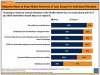
Meanwhile, views on repeal continue to be very mixed: with four in ten backing repeal (but half of those hoping the law will be replaced with a Republican alternative), three in ten backing an expansion of the law, and two in ten hoping to see it implemented as is. And most Americans continue to report they want to keep many of the key provisions of the law. There is more agreement when it comes to the strategy of using the legislative budgeting process to stop implementation of the law: six in ten continue to oppose the idea.

Overall opinion on the law is largely unchanged from January, with the public roughly divided and partisans on opposite sides of the issue, though negative views having risen among senior citizens in recent months. Finally, the survey finds little evidence that the public is suffering from issue fatigue when it comes to health reform.

The February poll is the latest in a series designed and analyzed by the Foundation’s public opinion research team.

Findings: http://www.kff.org/kaiserpolls/upload/8156-F.pdf

Chartpack: http://www.kff.org/kaiserpolls/upload/8156-C.pdf

Toplines: http://www.kff.org/kaiserpolls/upload/8156-T.pdf

8968
 

Attachments

  • 20110302_dw_03_02_2011.jpg
    20110302_dw_03_02_2011.jpg
    81.2 KB · Views: 10
Re: The Constitutionality of the Individual Mandate for Health Insurance

Florida judge refuses to halt new healthcare law
Florida judge refuses to halt new healthcare law | Reuters

(Reuters) - A federal judge in Florida on Thursday refused to order the Obama administration to stop implementing its far-reaching healthcare law, a small victory for President Barack Obama in his high-stakes effort to overhaul the U.S. healthcare system.

But U.S. District Judge Roger Vinson ordered the administration to seek an expedited appellate review within the next week of his January 31 ruling that favored arguments by 26 states that the law's requirement that Americans buy health insurance starting in 2014 or pay a penalty was unconstitutional.

The Obama administration has said previously it would appeal the ruling and continue implementing the law, which includes provisions allowing young adults to remain on their parents' healthcare insurance and prevents insurers from denying coverage for pre-existing medical conditions.

While Vinson and a federal judge in Virginia have ruled against the law, a cornerstone of Obama's domestic agenda, judges in several other states have dismissed challenges. The case is expected to eventually reach the U.S. Supreme Court.


Judge Gives Health-Care Overhaul a Reprieve
http://online.wsj.com/article/SB10001424052748703300904576178601234496560.html

A Florida federal judge on Thursday stayed his January ruling that declared the new health-care law unconstitutional, allowing the Obama administration to keep implementing the law while it appeals the decision.

U.S. District Court Judge Roger Vinson's order came in response to a motion the Justice Department filed that asked the judge to clarify his ruling.

Judge Vinson, considering a challenge to the health-care overhaul by a group of 26 states, ruled on Jan. 31 that the law must be declared void. He ruled the law's requirement that individuals carry health coverage or pay a penalty is unconstitutional.

The Obama administration and some states disagreed about whether Judge Vinson's decision meant that implementation of the law must stop while the case continues.

Judge Vinson, in a 20-page ruling Thursday that was critical of the government's legal tactics, said he did indeed intend for his earlier ruling to bar the Obama administration from moving forward with the law, at least with respect to the parties in the case.

The judge, blasting the government defendants, said he didn't expect they "would effectively ignore the order and declaratory judgment for two and one-half weeks, continue to implement the act, and only then file a belated motion to 'clarify.' "

But despite the criticism, Judge Vinson said he would postpone the effect of the original ruling while the government appealed. However, he said the Obama administration must file its appeal within seven days and seek expedited review at the 11th U.S. Circuit Court of Appeals in Atlanta.
 
Last edited:
Re: The Constitutionality of the Individual Mandate for Health Insurance

Judge Roger Vinson issues stay of own ruling
Judge Roger Vinson issues stay of own ruling - Jennifer Haberkorn - POLITICO.com

U.S. District Judge Roger Vinson ruled Thursday that implementation of the health law can proceed — but he gave the Obama administration just seven days to file an appeal.

Vinson issued a stay of his own Jan. 31 ruling that declared the entire health care reform law unconstitutional. He chastised the government for not interpreting that ruling as an immediate injunction to stop implementing the new law. http://www.politico.com/pdf/PPM187_vinson.pdf

But in a twist, he said he interpreted the Justice Department’s request for clarity as a motion to stay, which he granted.

“Because the defendants have stated that they intend to file a subsequent motion to stay if I were to ‘clarify’ that I had intended my declaratory judgment to have immediate injunction-like effect (which I just did), I will save time in this time-is-of-the-essence case by treating the motion to clarify as one requesting a stay as well,” Vinson said.

The Justice Department said it plans to file an expedited appeal request to the 11th Circuit.

“We appreciate the court's recognition of the enormous disruption that would have resulted if implementation of the Affordable Care Act was abruptly halted,” DOJ spokeswoman Tracy Schmaler said in a statement. “We strongly disagree with the district court’s underlying ruling in this case and continue to believe – as three federal courts have found – that this law is constitutional.”

In his order, Vinson criticized the Justice Department for not following normal procedure and requesting a stay.

“It was not expected that they would effectively ignore the order and declaratory judgment for two and one-half weeks, continue to implement the Act, and only then file a belated motion to 'clarify,'” Vinson wrote.

Vinson is trying to push the government into quickly resolving the case, requiring them to file an expedited appeal to the 11th Circuit or Supreme Court. In his ruling, Vinson repeated what he has said previously — that “the citizens of this country have an interest in having this case resolved as soon as practically possible.”

“That was nearly eleven months ago,” he wrote. “In the time since, the battle lines have been drawn, the relevant case law marshaled, and the legal arguments refined. Almost everyone agrees that the constitutionality of the Act is an issue that will ultimately have to be decided by the Supreme Court of the United States. It is very important to everyone in this country that this case move forward.”

Vinson’s actions mean the legal cloud over nationwide efforts to implement the law’s varied and complex requirements — from the establishment of state health exchanges to plans for Medicaid expansion and a new wave of consumer protections in the insurance market — is likely to remain for a while.

The administration has said it would press on with implementation, but two states — Florida and Alaska — have halted plans to do so, citing Vinson’s ruling. Others have moved ahead more cautiously or expressed concerns about the legal uncertainty.

Vinson walked a tightrope in his January ruling between not issuing an injunction — which has a very high legal bar, particularly for it to apply to the entire law — and achieving the results of an injunction. It’s rare for a district court judge to bar enforcement of a federal law.

The case before Vinson has the highest profile of several lawsuits against the health care overhaul. The suit was brought by 26 states and the National Federation of Independent Business, and Vinson is the only judge to throw out the entire law.

A federal judge in Virginia ruled the law’s requirement that individuals buy health insurance unconstitutional, but upheld the rest. Three other judges have upheld the entire law.

Several other challenges have been thrown out on procedural grounds.

The rulings have taken on a partisan tone: The two district court judges who ruled against the law are Republican nominees and the three who have ruled in its favor are Democratic ones.
 

Attachments

Re: The Constitutionality of the Individual Mandate for Health Insurance

Judge hardens health ruling, then delays it
Judge hardens health ruling, then delays it : SCOTUSblog

A Florida federal judge orders the Obama Administration to stop enforcing any part of the new health care law, but then puts that order on hold on condition that the Administration pursue a quick appeal.

A Florida federal judge who struck down all of the new federal health care law ordered the Obama Administration on Thursday to stop enforcing any part of the 2,700-page statute — but then immediately put his ruling on hold on condition that the Administration move quickly to appeal to a higher court — a federal appeals court or the Supreme Court. The Administration, however, has already indicated that it prefers to have all of the cases on the new law’s constitutionality proceed first through appeals courts, before going on to the Supreme Court. Senior U.S. District Judge Roger Vinson of Pensacola issued his new 20-page ruling in response to a Justice Department plea that he clarify his earlier decision.

Although saying that he thought his decision on Jan. 31 nullifying the law was clear enough, the judge did acknowledge that some confusion has arisen around the country about whether he intended to block all parts of the law — including provisions already in effect. He thus summarized what he had ruled earlier, then declared — as he had not done before — that his decision was the binding equivalent of an order totally blocking enforcement.

And then, even though the Administration has not yet sought a formal postponement of his decision, Vinson interpreted the motion to clarify his decision as a motion for a stay. He then examined the usual factors for and against a stay order, and concluded that, on the whole, one was justified. But he issued the stay on the specific condition that the Administration file its “anticipated appeal within seven calendar days of this order” and seek “an expedited appellate review, either in the Court of Appeals [for the Eleventh Circuit] or with the Supreme Court under Rule 11 of that Court.” Thus, enforcement of the law can continue in the meantime.

Noting that he had said early in the Florida lawsuit, nearly 11 months ago, that the people of the nation had an interest in having the constitutionality of the law decided “as soon as practically possible,” he commented that “almost everyone agrees” that that issue will not be finally resolved until the Supreme Court rules on it. “It is very important to everyone in this country that this case move forward as soon as practically possible,” he repeated.

Even though the Vinson decision against the law came down more than a month ago, the Administration still has not formally filed in court a notice that it would appeal, although Justice Department officials have said they would appeal to the Eleventh Circuit. Presumably, in response to Vinson’s new order, the government will start that process of appealing within the next week — or else face the prospect that the judge’s stay order would expire, and enforcement of any part of the huge new law would have to cease at the end of that week’s time. (UPDATE: Shortly after the judge issued the new order, Justice Department spokesperson Tracy Schmaler announced that the Department will promptly file an appeal with the Eleventh Circuit, and will seek to have the appeal put on a fast track. Other health care appeals are proceeding on an expedited basis in the Fourth and Sixth Circuits.)

Ordinarily, when the government is involved in a federal court case, it has 60 days after the decision comes down to file a formal notice of appeal in the trial court. After that, an appeal proceeds on a schedule set by the particular federal appeals court for the part of the country where the case was decided — in this case, the Eleventh Circuit based in Atlanta.

The Florida case has taken some strange turns since the judge issued his sweeping ruling against the law five weeks ago. Among the 26 states who sued in the case, along with a small business companies’ trade group and two individuals, many have continued to apply for and receive federal funds under the new law even after they had persuaded Judge Vinson to nullify it entirely. And, within a number of those states, disagreements have broken out on whether the Vinson ruling was binding, or not, against all parts of the law.

The judge had struck down, as beyond Congress’s powers, the provision in the law that would require virtually every American to have health insurance by the year 2014. That is the only part of the law that he explicitly found invalid. But then he concluded that no part of the law could function without the insurance-purchase mandate, so he issued what is called a “declaratory judgment” that the entire law was unconstitutional. However, he refused the challengers’ plea that he issue a binding injunction against enforcing it, saying he would rely on the usual assumption that government officials — when told what the law is — would obey it.

Some Administration officials, however, declared afterward that they were moving ahead with the law, especially those provisions that already have taken effect, including some popular clauses that expand access to health care and to health insurance coverage. And then the Justice Department, telling Judge Vinson that it did not read his opinion as forbidding enforcement of the law, asked the judge to confirm that that was his intention. Thursday’s ruling, sometimes critical of government maneuverings in the case, was the judge’s response. He suggested that some of the Department’s argument in favor of its plea for clarification “borders on misrepresentation” by using only selective quotations from court precedents.

While these post-decision developments were playing out, the Administration had done nothing to appeal the ruling formally, and did not seek to have it put on hold while the Department pursued an appeal. The judge was mildly critical of government lawyers for having waited to make a move, more than two weeks after he had ruled.

Among the reasons leading the judge to concede that some confusion had developed over what he had expected to happen in response to his decision, he cited the situation in the state of Michigan, which is covered by his ruling, but it is also a state in which a different federal judge has upheld the new law and its insurance-purchase mandate. In addition, Vinson cited a disagreement within Washington State between its governor and its attorney general, with the governor saying she wanted the implementation of the law to go forward and the attorney general saying the judge had blocked its enforcement.

In analyzing the factors controlling whether he should now issue a stay of his decision, Vinson said that the individual insurance-purchase mandate has raised some novel issues, and reasonable people including judges could disagree about its validity, and he suggested that there might also develop a disagreement among the federal appeals courts, and perhaps among the nine Justices of the Supreme Court. Thus, he conceded, though reluctantly, that the Administration did have some chance of winning its case on appeal.

He also said that there was a balance between harm that would befall those who had challenged the law and the government as it sought to carry out the law that Congress had approved, but he wound up concluding that the balance fell slightly in favor of the government — especially in view of confusion within and among some states.

On the factor of where “the public interest” lies on the question of postponing his rule, Vinson said that almost every argument the Justice Department lawyers had made on the need for clarification actually counted more with him as arguments for an appeal “in the most expeditious and accelerated manner.”

The judge said that “it should not be at all difficult or challenging to ‘fast-track’ this case.” He said that, in fact, the two sides have already done a great deal of legal writing as the case unfolded, and so they now could go forward in the appeals court simply by changing the caption of the case, “add colored covers, and be done with their briefing.”
 
Re: The Constitutionality of the Individual Mandate for Health Insurance

Obama administration appeals healthcare ruling
http://www.reuters.com/article/2011/03/09/us-usa-healthcare-appeal-idUSTRE7276V820110309
 
Re: The Constitutionality of the Individual Mandate for Health Insurance

UPDATE: U.S. seeks fast appeal on health care
UPDATE: U.S. seeks fast appeal on health care : SCOTUSblog

UPDATE Wednesday a.m. The Obama Administration asks the Eleventh Circuit Court to expedite review of the constitutionality of the new federal health care law, with briefing to be completed in June. Enforcement of the law will continue in the meantime.

UPDATE Wednesday 10:50 a.m.

The Obama Administration late Tuesday asked the Eleventh Circuit Court to put on a fast track the government’s appeal of the most sweeping ruling yet on the new health care law — a Florida federal judge’s decision striking down all parts of the law. In a motion for expedition (found here), the government suggested a schedule for briefing to be completed in June, with oral argument to follow quickly. (Further update: The docket number of the case is 11-11021.)

The Justice Department motion noted that two other federal appeals courts are considering constitutional questions about the new law on an expedited basis — the Fourth and Sixth Circuits. And it said that it had recently agreed to a fast-track appeal in another case, in the D.C. Circuit.

With the filing of the expedition motion, the Justice Department fulfilled the last of the requirements that Senior U.S. District Judge Roger Vinson had imposed as conditions for putting on hold his decision nullifying the entire 2,700-page law. Thus, while the Eleventh Circuit case proceeds, the government can coninued to enforce the law.

The briefing schedule suggested that the government’s opening brief be due April 18, with the challengers’ response due May 18. The government sought a reply brief date of June 1, unless the challengers raise issues in their response about the parts of their challenge that Judge Vinson had rejected. Justice Department lawyers may need more time to reply if the case is expanded that way, the motion said.

NOTE TO READERS: The following post appeared here Tuesday night:

The Obama Administration on Tuesday formally began an appeal, to the Eleventh Circuit Court, of a Florida federal judge’s ruling striking down all of the new health care law. The filing of a notice of appeal in U.S. District Court in Pensacola will allow the government to continue enforcing the new law while that appeal goes forward.

Last week, Senior District Judge Roger Vinson gave the government seven days to file such a notice, indicating that, if it did not, he would put into effect an order blocking enforcement of any part of the 2,700-page measure, which includes some 450 separate provisions. Tuesday’s filing beat that deadline by two days.

The Administration is also required, under the judge’s stay order, to seek expedited treatment of the case in the Eleventh Circuit. Two other appeals on the constitutionality of the new law, or key provisions of it, are moving on fast-track schedules in the Fourth Circuit, based in Richmond, VA, and in the Sixth Circuit, based in Cincinnati.

It is up to the Eleventh Circuit, based in Atlanta, to grant or deny expedition of the new government appeal there. Such a request will be filed in that court, and that filing is expected tomorrow, according to Tracy Schmaler, Justice Department spokesperson.

In its notice of appeal, the government said it would contest before the appeals court Judge Vinson’s ruling declaring the entire law unconstitutional, incliuding his clarifying opinion on March 3 that demanded that an appeal be started in return for a temporary stay of the decision. It also said it would challenge the judge’s refusal in October to dismiss the case as the government had requested.

Judge Vinson gave the government the option of seeking expedited review of his decision either in the Eleventh Circuit or directly in the Supreme Court. The government has made clear repeatedly that it believes the constitutional issues should be aired first in the appeals courts, rather than in a rush to get a Supreme Court decision.

The state of Virginia, however, has pending at the Supreme Court a plea for the Justices to hear that state’s case before the Fourth Circuit rules on the appeal pending there. That case is Virginia v. Sebelius (HHS Secretary), docket 10-1014. The Justice Department is due to file a reply by next Monday, if it does not seek and receive an extension. The Department is expected to oppose Supreme Court review at this stage.
 
Back
Top