Alzheimer’s

In Conversations About Potential To Treat Alzheimer's, Don't Miss Baxter's Gammagard
In Conversations About Potential To Treat Alzheimer's, Don't Miss Baxter's Gammagard - Forbes

Though not known for blockbuster prescriptions or an enviable drug research pipeline, Baxter International (BAX) has an immune system boosting drug Gammagard that is gaining notice as a potential Alzheimer’s treatment.

Gammagard, a biologic derived from plasma also known as intravenous immuno globulin (IVIG), raised some eyebrows at last week’s Alzheimer’s Association International Conference in Vancouver.

In what the association called “the first report of long-term stabilization of Alzheimer’s disease,” four patients who received Gammagard had no decline over three years in several key measures of cognition and daily function. The “small trial” caught the attention of the Alzheimer’s community and grabbed a headline in the New York Times about “hints (the) drug can slow Alzheimer’s.”
 
Irwig MS. Depressive Symptoms and Suicidal Thoughts Among Former Users of Finasteride With Persistent Sexual Side Effects. Journal of Clinical Psychiatry, 2012. http://article.psychiatrist.com/dao_1-login.asp?ID=10007988&RSID=31923221437757

Objective: Finasteride, a commonly prescribed medication for male pattern hair loss, has recently been associated with persistent sexual side effects. In addition, depression has recently been added to the product labeling of Propecia (finasteride 1 mg). Finasteride reduces the levels of several neuroactive steroids linked to sexual function and depression. This study assesses depressive symptoms and suicidal thoughts in former users of finasteride who developed persistent sexual side effects despite the discontinuation of finasteride.

Method: In 2010–2011, former users of finasteride (n = 61) with persistent sexual side effects for ? 3 months were administered standardized interviews that gathered demographic information, medical and psychiatric histories, and information on medication use, sexual function, and alcohol consumption. All former users were otherwise healthy men with no baseline sexual dysfunction, chronic medical conditions, current or past psychiatric conditions, or use of oral prescription medications before or during finasteride use. A control group of men (n = 29), recruited from the community, had male pattern hair loss but had never used finasteride and denied any history of psychiatric conditions or use of psychiatric medications. The primary outcomes were the prevalence of depressive symptoms and the prevalence of suicidal thoughts as determined by the Beck Depression Inventory II (BDI-II); all subjects self-administered this questionnaire at the time of the interview or up to 10 months later.

Results: Rates of depressive symptoms (BDI-II score ? 14) were significantly higher in the former finasteride users (75%; 46/61) as compared to the controls (10%; 3/29) (P < .0001). Moderate or severe depressive symptoms (BDI-II score ? 20) were present in 64% (39/61) of the finasteride group and 0% of the controls. Suicidal thoughts were present in 44% (27/61) of the former finasteride users and in 3% (1/29) of the controls (P < .0001).

Conclusions: Clinicians and potential users of finasteride should be aware of the potential risk of depressive symptoms and suicidal thoughts. The preliminary findings of this study warrant further research with controlled studies.
 
LaFerla FM. Preclinical Success against Alzheimer's Disease with an Old Drug. New England Journal of Medicine 2012;367(6):570-2. MMS: Error

10269


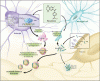
A Molecular Model of Beta-Amyloid Clearance and Cognition. Neurons are thought to be the main cellular source that releases the aggregation-prone Beta -amyloid (A Beta) peptide, which can then form neuritic plaques, a hallmark pathologic feature of Alzheimer's disease. Apolipoprotein E (APOE) is released mainly from astrocytes and microglia, although a small amount may also come from neurons. APOE associates with lipoproteins to form APOE-associated lipoprotein particles, which can bind to soluble A Beta, promoting its clearance from the brain. Researchers have recently reported that bexarotene, a nuclear receptor agonist, increases APOE expression, which stimulates the clearance of A Beta and improves the cognitive deficits in a murine model of Alzheimer's disease. PPAR-g denotes peroxisome-proliferator–activated receptor g, and RXR retinoid X receptor.
 

Attachments

  • A-Molecular-Model-of-Beta-A.gif
    A-Molecular-Model-of-Beta-A.gif
    173 KB · Views: 27
Lowenthal J, Hull SC, Pearson SD. The Ethics of Early Evidence - Preparing for a Possible Breakthrough in Alzheimer's Disease. New England Journal of Medicine 20123;367(6):488-90. MMS: Error
 
Scientists pinpoint how vitamin D may help clear amyloid plaques found in Alzheimer's

A team of academic researchers has identified the intracellular mechanisms regulated by vitamin D3 that may help the body clear the brain of amyloid beta, the main component of plaques associated with Alzheimer's disease.

Published in the March 6 issue of the Journal of Alzheimer's Disease, the early findings show that vitamin D3 may activate key genes and cellular signaling networks to help stimulate the immune system to clear the amyloid-beta protein.

Previous laboratory work by the team demonstrated that specific types of immune cells in Alzheimer's patients may respond to therapy with vitamin D3 and curcumin, a chemical found in turmeric spice, by stimulating the innate immune system to clear amyloid beta. But the researchers didn't know how it worked.

"This new study helped clarify the key mechanisms involved, which will help us better understand the usefulness of vitamin D3 and curcumin as possible therapies for Alzheimer's disease," said study author Dr. Milan Fiala, a researcher at the David Geffen School of Medicine at UCLA and the Veterans Affairs Greater Los Angeles Healthcare System.

Optimal Health Resource: Vitamin D and Curcumin Synergistically Clear Brain Tangles to Prevent Alzheimer’s Dementia

To test their hypothesis, scientists took blood samples from a group of currently diagnosed Alzheimer’s disease patients and a control group of healthy volunteers. They then isolated the immune-stimulating component of the white blood cells called macrophages. These special cells are known to target and eliminate amyloid fibrils and other waste products that accumulate in the brain before they manifest into detectable disease conditions.

Researchers then incubated some of the extracted immune cells for a 24 hour period in a solution containing the active form of vitamin D3 (1a, 25-dihydroxyvitamin D3). Other cells were exposed to a standardized curcumin extract. Past studies have shown that there are two types of macrophages, Type I and Type II that independently perform different functions, yet must work together to effectively remove amyloid protein in the brain.

The scientists found that Type I macrophage activity is greatly enhanced with optimal saturation of vitamin D3, and Type II immune cells are supported by the presence of curcumin. Researchers found that the action of both Type I and II macrophages are greatly enhanced by the synergistic application of vitamin D3 and curcumin together. Dr. Fiala concluded “Our findings demonstrate that active forms of vitamin D3 (and curcumin) may be an important regulator of immune activities of macrophages in helping to clear amyloid plaques.”

Proof positive now exists to support maintaining optimal blood saturation levels (50 to 70 ng/mL) of vitamin D as measured using the simple and inexpensive 25(OH)D test. Most people will need to supplement with 5,000 to 7,000 IU of vitamin D3 per day or rely on sun exposure to obtain ideal levels. Adding curcumin to your regular diet using natural curry-enriched foods or supplementing (300 to 500 mg per day standardized to 95% total curcuminoids) will provide a synergistic effect shown to help clear brain tangles and prevent Alzheimer’s dementia.

UCLA scientists pinpoint how vitamin D may help clear amyloid plaques found in Alzheimer's
 
Last edited:
Tau drug heads into phase 3 trials in frontotemporal dementia, Alzheimer's

The TauRx molecule has roused researchers' curiosity on a number of fronts. It is believed to be the only drug in clinical testing that breaks up aggregates of tau, the protein that forms neurofibrillary tangles in Alzheimer's and other neurodegenerative diseases. Even more unusual, it has reached Phase 3 with hardly any published preclinical data. Aside from several talks and posters presented at the International Conferences on Alzheimer's Disease in Chicago and Vienna, which Alzforum reported in 2008 and 2009, very little data on Rember or LMTX is in the public domain. Moreover, scientists had concerns about the design and analysis of the company's earlier Phase 2 trial in AD, some of which are addressed in the upcoming Phase 3 studies. A recent Alzforum story and Q&A with TauRx CEO Claude Wischik describe these developments.


FOR IMMEDIATE RELEASE
10 September 2012

Phase 3 clinical trial begins in early form of dementia

Investigational drug study follows earlier study with promising results in mild to moderate Alzheimer’s patients

Manchester, UK – TauRx Therapeutics today announced the initiation of a global Phase 3 clinical trial in a type of Frontotemporal Dementia (FTD) also known as Pick’s Disease. The announcement, which immediately follows The 8th International Conference on Frontotemporal Dementias, held 5-7 September in Manchester, England, underscores the need for new treatments for this form of dementia that is similar to Alzheimer’s Disease, except that it tends to damage different areas of the brain and affects people as early as 40 years old.

The study focuses on a type of FTD known as behavioural-variant, or bvFTD, which can cause early changes in personality and loss of empathy. A large percentage of these patients have a specific pathology that involves abnormal collections of tau protein in the brain.

The study drug, LMTX™, targets a process in the brain whereby a normal form of tau protein begins to self-aggregate due to binding neuronal waste-products. Once the process has started, the aggregates are able to propagate themselves indefinitely, using up normal tau protein and converting it into the toxic aggregates. After destroying the nerve cells where they are initially formed, the aggregates go on to infect nearby healthy neurons, progressively spreading and accelerating the destruction throughout the brain. LMTX™ stops this aggregation process in its tracks and releases the trapped tau protein in a form which can be easily cleared by nerve cells.

In a pilot series of cases, LMTX™ was found to arrest the progression of the disease. LMTX™ has been found to act in a similar way on the aggregation of TDP-43 protein. Tau or TDP-43 aggregates each account for about 50% of patients with this early form of dementia.

REVISED 22 SEPT 2012
Speaking to patients and caregivers at the FTD conference in Manchester, Professor Bradley Boeve of the Mayo Clinic in the U.S., one of the investigators of the study, said: “Clinicians devoted to FTD clinical trial development have been refining the measures to use in an experimental trial in FTD spectrum disorders for years, and frankly have been waiting for a promising agent. The basic science data for this agent, particularly in the tauopathies, looks sound and the excitement among investigators and among families is high.”

The Phase 3 double-blind placebo-controlled study is designed to evaluate the safety and efficacy of LMTX™, the second-generation Tau Aggregation Inhibitor (TAI) developed by TauRx. The study aims to confirm the results first seen in the pilot cases in a larger controlled clinical trial in bvFTD patients over a 52-week timeframe. Participating study sites are located in Canada, U.S., U.K., Germany, The Netherlands, Australia and Singapore. Because the condition is relatively rare, TauRx was granted Orphan Designation for LMTX™ in 2010, which provides a basis for more rapid approval for marketing if the trial is successful.
“This is an important step forward in our quest to find an effective treatment, with a goal to actually arrest the progression of the disease,” said Professor Claude Wischik, founder and CEO of TauRx Therapeutics and Professor of Old Age Psychiatry at the University of Aberdeen. “We are building on over thirty years of research, and the encouraging results from our previous Phase 2 clinical trial in Alzheimer’s Disease, which is also correlated with abnormal tau aggregates in the brain.”

 
Verdile G, Laws SM, Henley D, et al. Associations between gonadotropins, testosterone and beta amyloid in men at risk of Alzheimer's disease. Mol Psychiatry. Molecular Psychiatry - Abstract of article: Associations between gonadotropins, testosterone and [beta] amyloid in men at risk of Alzheimer/'s disease

Testosterone and gonadotropins have been associated with cognitive decline in men and the modulation of beta amyloid (Abeta) metabolism. The relatively few studies that have investigated whether changes in one or a combination of these hormones influence Abeta levels have focused primarily on plasma Abeta(1-40) and not on the more pathogenic Abeta(1-42). Currently, no study has investigated whether these hormones are associated with an increase in brain amyloid deposition, ante mortem.

Through the highly characterised Australian imaging, biomarkers and lifestyle study, we have determined the impact of these hormones on plasma Abeta levels and brain amyloid burden (Pittsburgh compound B (PiB) retention). Spearman's rank correlation and linear regression analysis was carried out across the cohort and within subclassifications.

Luteinizing hormone (LH) was the only variable shown, in the total cohort, to have a significant impact on plasma Abeta(1-40) and Abeta(1-42) levels (beta=0.163, P<0.001; beta=0.446, P<0.001). This held in subjective memory complainers (SMC) (Abeta(1-40); beta=0.208, P=0.017; Abeta(1-42); beta=0.215, P=0.017) but was absent in mild cognitive impairment (MCI) and Alzheimer's disease (AD) groups. In SMC, increased frequency of the APOE-varepsilon4 allele (beta=0.536, P<0.001) and increasing serum LH levels (beta=0.421, P=0.004) had a significant impact on PiB retention. Whereas in MCI, PiB retention was associated with increased APOE-varepsilon4 allele copy number (beta=0.674, P<0.001) and decreasing calculated free testosterone (beta=-0.303, P=0.043).

These findings suggest a potential progressive involvement of LH and testosterone in the early preclinical stages of AD. Furthermore, these hormones should be considered while attempting to predict AD at these earliest stages of the disease.
 
Holtzman DM, Mandelkow E, Selkoe DJ. Alzheimer Disease in 2020. Cold Spring Harbor Perspectives in Medicine 2012;2(11). Alzheimer Disease in 2020

Remarkable advances in unraveling the biological underpinnings of Alzheimer disease (AD) have occurred during the last 25 years. Despite this, we have made only the smallest of dents in the development of truly disease-modifying treatments. What will change over the next 10 years? While the answer is not clear, we make several predictions on the state of the field in 2020, based on the rich knowledge described in the other contributions in this collection. As such, our predictions represent some of the principal unresolved questions that we believe deserve special investigative attention in the coming decade.
 
O'Dwyer L, Lamberton F, Matura S, et al. Reduced Hippocampal Volume in Healthy Young ApoE4 Carriers: An MRI Study. PLoS One 2012;7(11):e48895. PLOS ONE: Reduced Hippocampal Volume in Healthy Young ApoE4 Carriers: An MRI Study

The E4 allele of the ApoE gene has consistently been shown to be related to an increased risk of Alzheimer's disease (AD). The E4 allele is also associated with functional and structural grey matter (GM) changes in healthy young, middle-aged and older subjects. Here, we assess volumes of deep grey matter structures of 22 healthy younger ApoE4 carriers and 22 non-carriers (20-38 years). Volumes of the nucleus accumbens, amygdala, caudate nucleus, hippocampus, pallidum, putamen, thalamus and brain stem were calculated by FMRIB's Integrated Registration and Segmentation Tool (FIRST) algorithm.

A significant drop in volume was found in the right hippocampus of ApoE4 carriers (ApoE4+) relative to non-carriers (ApoE4-), while there was a borderline significant decrease in the volume of the left hippocampus of ApoE4 carriers. The volumes of no other structures were found to be significantly affected by genotype. Atrophy has been found to be a sensitive marker of neurodegenerative changes, and our results show that within a healthy young population, the presence of the ApoE4+ carrier gene leads to volume reduction in a structure that is vitally important for memory formation.

Our results suggest that the hippocampus may be particularly vulnerable to further degeneration in ApoE4 carriers as they enter middle and old age. Although volume reductions were noted bilaterally in the hippocampus, atrophy was more pronounced in the right hippocampus. This finding relates to previous work which has noted a compensatory increase in right hemisphere activity in ApoE4 carriers in response to preclinical declines in memory function. Possession of the ApoE4 allele may lead to greater predilection for right hemisphere atrophy even in healthy young subjects in their twenties.
 
A Novel Inhibitor of Amyloid Beta (ABeta) Peptide Aggregation

Capsule

Background: Inhibitors of amyloid ? (A?) peptide aggregation may lead to improved therapeutics for Alzheimer disease (AD).

Results: Compound D737, discovered in our high throughput screen (HTS), was effective in protecting against toxicity in vitro and in aDrosophila model of AD.

Conclusion: An inexpensive HTS was used to isolate novel inhibitors of A? aggregation.

Significance: This could lead to better molecular scaffolds for disease therapy.


McKoy AF, Chen J, Schupbach T, Hecht MH. A Novel Inhibitor of Amyloid Beta (ABeta) Peptide Aggregation: FROM HIGH THROUGHPUT SCREENING TO EFFICACY IN AN ANIMAL MODEL OF ALZHEIMER DISEASE. Journal of Biological Chemistry 2012;287(46):38992-9000. A Novel Inhibitor of Amyloid ? (A?) Peptide Aggregation

Compelling evidence indicates that aggregation of the amyloid Beta (ABeta) peptide is a major underlying molecular culprit in Alzheimer disease. Specifically, soluble oligomers of the 42-residue peptide (ABeta42) lead to a series of events that cause cellular dysfunction and neuronal death. Therefore, inhibiting ABeta42 aggregation may be an effective strategy for the prevention and/or treatment of disease. We describe the implementation of a high throughput screen for inhibitors of ABeta42 aggregation on a collection of 65,000 small molecules. Among several novel inhibitors isolated by the screen, compound D737 was most effective in inhibiting ABeta42 aggregation and reducing ABeta42-induced toxicity in cell culture. The protective activity of D737 was most significant in reducing the toxicity of high molecular weight oligomers of ABeta42. The ability of D737 to prevent ABeta42 aggregation protects against cellular dysfunction and reduces the production/accumulation of reactive oxygen species. Most importantly, treatment with D737 increases the life span and locomotive ability of flies in a Drosophila melanogaster model of Alzheimer disease.
 
ApoE Is an Ideal Target for Halting Progression of Alzheimer's Disease
ApoE is an ideal target for halting progression of Alzheimer's disease, scientists say


Mahley Robert W, Huang Y. Apolipoprotein E Sets the Stage: Response to Injury Triggers Neuropathology. Neuron 2012;76(5):871-85. Neuron - Apolipoprotein E Sets the Stage: Response to Injury Triggers Neuropathology

Apolipoprotein (apo) E4 is the major genetic risk factor for Alzheimer s disease and is associated with poor clinical outcome following traumatic brain injury and other neuropathological disorders. Protein instability and an isoform-specific apoE property called domain interaction are responsible for these neuropathological effects. ApoE4 is the most neurotoxic isoform and can induce neuropathology through various cellular pathways. Neuronal damage or stress induces apoE synthesis as part of the repair response; however, when apoE4 is expressed in neurons, its unique conformation makes it susceptible to proteolysis, resulting in the generation of neurotoxic fragments. These fragments cause pathological mitochondrial dysfunction and cytoskeletal alterations. Here, we review data supporting the hypothesis that apoE4 (> apoE3 > apoE2) has direct neurotoxic effects and highlight studies showing that blocking domain interaction reverses these detrimental effects. ApoE4, the major genetic risk factor for Alzheimer s disease and neurodegeneration, assumes a neuropathologic conformation that directly causes neuronal toxicity. In this review, Mahley and Huang discuss the underlying cellular mechanisms and how small-molecule structure correctors mitigate apoE4 neuropathology.
 
Shukla V, Zheng Y-L, Mishra SK, et al. A truncated peptide from p35, a Cdk5 activator, prevents Alzheimer's disease phenotypes in model mice. The FASEB Journal 2013;27(1):174-86. A truncated peptide from p35, a Cdk5 activator, prevents Alzheimer's disease phenotypes in model mice

Alzheimer's disease (AD), one of the leading neurodegenerative disorders of older adults, which causes major socioeconomic burdens globally, lacks effective therapeutics without significant side effects. Besides the hallmark pathology of amyloid plaques and neurofibrillary tangles (NFTs), it has been reported that cyclin-dependent kinase 5 (Cdk5), a critical neuronal kinase, is hyperactivated in AD brains and is, in part, responsible for the above pathology. Here we show that a modified truncated 24-aa peptide (TFP5), derived from the Cdk5 activator p35, penetrates the blood-brain barrier after intraperitoneal injections, inhibits abnormal Cdk5 hyperactivity, and significantly rescues AD pathology (up to 70–80%) in 5XFAD AD model mice. The mutant mice, injected with TFP5 exhibit behavioral rescue, whereas no rescue was observed in mutant mice injected with either saline or scrambled peptide. However, TFP5 does not inhibit cell cycle Cdks or normal Cdk5/p35 activity, and thereby has no toxic side effects (even at 200 mg/kg), a common problem in most current therapeutics for AD. In addition, treated mice displayed decreased inflammation, amyloid plaques, NFTs, cell death, and an extended life by 2 mo. These results suggest TFP5 as a potential therapeutic, toxicity-free candidate for AD.
 
Hebert LE, Weuve J, Scherr PA, Evans DA. Alzheimer disease in the United States (2010-2050) estimated using the 2010 census. Neurology. Alzheimer disease in the United States (2010–2050) estimated using the 2010 census

Objectives: To provide updated estimates of Alzheimer disease (AD) dementia prevalence in the United States from 2010 through 2050.

Methods: Probabilities of AD dementia incidence were calculated from a longitudinal, population-based study including substantial numbers of both black and white participants. Incidence probabilities for single year of age, race, and level of education were calculated using weighted logistic regression and AD dementia diagnosis from 2,577 detailed clinical evaluations of 1,913 people obtained from stratified random samples of previously disease-free individuals in a population of 10,800. These were combined with US mortality, education, and new US Census Bureau estimates of current and future population to estimate current and future numbers of people with AD dementia in the United States.

Results: We estimated that in 2010, there were 4.7 million individuals aged 65 years or older with AD dementia (95% confidence interval [CI] = 4.0–5.5). Of these, 0.7 million (95% CI = 0.4–0.9) were between 65 and 74 years, 2.3 million were between 75 and 84 years (95% CI = 1.7–2.9), and 1.8 million were 85 years or older (95% CI = 1.4–2.2). The total number of people with AD dementia in 2050 is projected to be 13.8 million, with 7.0 million aged 85 years or older.

Conclusion: The number of people in the United States with AD dementia will increase dramatically in the next 40 years unless preventive measures are developed.
 
Brandt J, Sullivan C, Burrell LE, 2nd, Rogerson M, Anderson A. Internet-based screening for dementia risk. PLoS One 2013;8(2):e57476. PLOS ONE: Internet-Based Screening for Dementia Risk

The Dementia Risk Assessment (DRA) is an online tool consisting of questions about known risk factors for dementia, a novel verbal memory test, and an informant report of cognitive decline. Its primary goal is to educate the public about dementia risk factors and encourage clinical evaluation where appropriate.

In Study 1, more than 3,000 anonymous persons over age 50 completed the DRA about themselves; 1,000 people also completed proxy reports about another person. Advanced age, lower education, male sex, complaints of severe memory impairment, and histories of cerebrovascular disease, Parkinson's disease, and brain tumor all contributed significantly to poor memory performance. A high correlation was obtained between proxy-reported decline and actual memory test performance.

In Study 2, 52 persons seeking first-time evaluation at dementia clinics completed the DRA prior to their visits. Their responses (and those of their proxy informants) were compared to the results of independent evaluation by geriatric neuropsychiatrists. The 30 patients found to meet criteria for probable Alzheimer's disease, vascular dementia, or frontotemporal dementia differed on the DRA from the 22 patients without dementia (most other neuropsychiatric conditions).

Scoring below criterion on the DRA's memory test had moderately high predictive validity for clinically diagnosed dementia. Although additional studies of larger clinical samples are needed, the DRA holds promise for wide-scale screening for dementia risk.
 
Optimal Health Resource: Omega-3 Fatty Acids from Dietary Sources Lower Risk of Developing Alzheimer’s Disease
Omega-3 fats from foods including fish, chicken, nuts and seeds are preferentially sequestered after consumption and used for critical functions to maintain optimal brain metabolism and function. These long-chain fats are used to form the highly permeable cell wall membrane of nerve cells, as electrical and chemical transmissions through this barrier are limited when sufficient omega-3 fats are unavailable from blood circulation.

Increased Omega-3 Fats from Diet Reduces Beta-Amyloid Levels in the Blood up to Thirty Percent
The lead study author, Dr. Nikolaos Scarmeas noted “While it's not easy to measure the level of beta-amyloid deposits in the brain in this type of study, it is relatively easy to measure the levels of beta-amyloid in the blood, which to a certain degree, relates to the level in the brain.” The brain normally generates amyloid proteins as a metabolic byproduct that are broken down and cleared in the youthful, healthy brain. The study suggests that Omega-3 fats from dietary sources can aid this process, though the scientists did not specifically note this conclusion.

Researchers looked at 1,219 people that were over the age of 65 and free of dementia. The participants provided information regarding their diet for an average of 1.2 years before their blood was tested for beta-amyloid. The scientists specifically monitored ten nutrients including saturated fatty acids, omega-3 and omega-6 polyunsaturated fatty acids, mono-unsaturated fatty acid, vitamin E, vitamin C, beta-carotene, vitamin B12, folate and vitamin D.

Nutrient intake and plasma ?-amyloid
 
Villemagne VL, Burnham S, Bourgeat P, et al. Amyloid ? deposition, neurodegeneration, and cognitive decline in sporadic Alzheimer's disease: a prospective cohort study. The Lancet Neurology. Amyloid ? deposition, neurodegeneration, and cognitive decline in sporadic Alzheimer's disease: a prospective cohort study : The Lancet Neurology

Background - Similar to most chronic diseases, Alzheimer's disease (AD) develops slowly from a preclinical phase into a fully expressed clinical syndrome. We aimed to use longitudinal data to calculate the rates of amyloid ? (A?) deposition, cerebral atrophy, and cognitive decline.

Methods - In this prospective cohort study, healthy controls, patients with mild cognitive impairment (MCI), and patients with AD were assessed at enrolment and every 18 months. At every visit, participants underwent neuropsychological examination, MRI, and a carbon-11-labelled Pittsburgh compound B (11C-PiB) PET scan. We included participants with three or more 11C-PiB PET follow-up assessments. A? burden was expressed as 11C-PiB standardised uptake value ratio (SUVR) with the cerebellar cortex as reference region. An SUVR of 1•5 was used to discriminate high from low A? burdens. The slope of the regression plots over 3—5 years was used to estimate rates of change for A? deposition, MRI volumetrics, and cognition. We included those participants with a positive rate of A? deposition to calculate the trajectory of each variable over time.

Findings - 200 participants (145 healthy controls, 36 participants with MCI, and 19 participants with AD) were assessed at enrolment and every 18 months for a mean follow-up of 3•8 (95% CI CI 3•6—3•9) years. At baseline, significantly higher A? burdens were noted in patients with AD (2•27, SD 0•43) and those with MCI (1•94, 0•64) than in healthy controls (1•38, 0•39). At follow-up, 163 (82%) of the 200 participants showed positive rates of A? accumulation. A? deposition was estimated to take 19•2 (95% CI 16•8—22•5) years in an almost linear fashion—with a mean increase of 0•043 (95% CI 0•037—0•049) SUVR per year—to go from the threshold of11C-PiB positivity (1•5 SUVR) to the levels observed in AD. It was estimated to take 12•0 (95% CI 10•1—14•9) years from the levels observed in healthy controls with low A? deposition (1•2 [SD 0•1] SUVR) to the threshold of 11C-PiB positivity. As AD progressed, the rate of A? deposition slowed towards a plateau. Our projections suggest a prolonged preclinical phase of AD in which A? deposition reaches our threshold of positivity at 17•0 (95% CI 14•9—19•9) years, hippocampal atrophy at 4•2 (3•6—5•1) years, and memory impairment at 3•3 (2•5—4•5) years before the onset of dementia (clinical dementia rating score 1).

Interpretation - A? deposition is slow and protracted, likely to extend for more than two decades. Such predictions of the rate of preclinical changes and the onset of the clinical phase of AD will facilitate the design and timing of therapeutic interventions aimed at modifying the course of this illness.
 
Back
Top