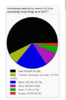
Angela Walch, an Associate Professor at St. Mary’s University School of Law whose research focuses on money and the law, blockchain technologies, governance of emerging technologies and financial stability, says Bitcoin shows all of the hallmarks of a speculative bubble:
Source: https://www.vice.com/en_us/article/d3xywq/buy-bitcoin-with-debt-insane
"Some of the hallmarks to me involve the FOMO idea—the fear of missing out and never being able to get in. People see other people making a lot of money and they just want in on it. The housing bubble is a good example of that. People thought another person would always want to buy their house from them at a higher price.
"The other thing that makes it look like a bubble to me is the way people are talking about it. If you watch any of the CNBC, Bloomberg type shows, people are just saying, "Wow, how high can it go!" The media just continues to talk it up, and the people that the media interview are, too. It's fascinating to me that we can continue to be seized by manias at any given time. And people keep saying, "This time is different. It's not a bubble."
I'm skeptical that it is different. Another feature of a bubble is the failure of people to understand what they're investing in at all. They forgo that. People are making money, so they just want to jump in. They don't know the history of Bitcoin. They don't understand the scalability issues. They don't understand the mining centralization issues. But they see other people doing it.
[...]
Yes, the dot com bubble I see as applicable because all you had to do was throw "dot com" on the end of a company name and have no business plan and no profits to get people to throw money at it. A lot of other cryptocurrencies are riding the coattails of Bitcoin, and people are rushing to those, too. As long as it's "crypto," you see hedge fund managers putting their money in. It's a trend.
It's similarly comparable to the housing bubble due to the failure of financial institutions to appreciate risk, as we've seen, with subprime mortgages being packaged up into mortgage-backed securities, so that everyone could have access to assets that were thought to only be able to increase in value. I'm worried that we're creating structures that mimic that, and that the futures we're creating, which will lead to [exchange-traded funds], which will come to rely on the one underlying asset of Bitcoin or other cryptocurrencies, which are moving targets and not an asset that can support that kind of structure built on top of them."
"The other thing that makes it look like a bubble to me is the way people are talking about it. If you watch any of the CNBC, Bloomberg type shows, people are just saying, "Wow, how high can it go!" The media just continues to talk it up, and the people that the media interview are, too. It's fascinating to me that we can continue to be seized by manias at any given time. And people keep saying, "This time is different. It's not a bubble."
I'm skeptical that it is different. Another feature of a bubble is the failure of people to understand what they're investing in at all. They forgo that. People are making money, so they just want to jump in. They don't know the history of Bitcoin. They don't understand the scalability issues. They don't understand the mining centralization issues. But they see other people doing it.
[...]
Yes, the dot com bubble I see as applicable because all you had to do was throw "dot com" on the end of a company name and have no business plan and no profits to get people to throw money at it. A lot of other cryptocurrencies are riding the coattails of Bitcoin, and people are rushing to those, too. As long as it's "crypto," you see hedge fund managers putting their money in. It's a trend.
It's similarly comparable to the housing bubble due to the failure of financial institutions to appreciate risk, as we've seen, with subprime mortgages being packaged up into mortgage-backed securities, so that everyone could have access to assets that were thought to only be able to increase in value. I'm worried that we're creating structures that mimic that, and that the futures we're creating, which will lead to [exchange-traded funds], which will come to rely on the one underlying asset of Bitcoin or other cryptocurrencies, which are moving targets and not an asset that can support that kind of structure built on top of them."
Source: https://www.vice.com/en_us/article/d3xywq/buy-bitcoin-with-debt-insane