

MESO-Rx
Anabolic Steroids

Navigation
Install the app
How to install the app on iOS
Follow along with the video below to see how to install our site as a web app on your home screen.
Note: This feature may not be available in some browsers.
More options
Style variation
Guest viewing limit reached
- You have reached the maximum number of guest views allowed
- Please register below to remove this limitation
- Already a member? Click here to login
You are using an out of date browser. It may not display this or other websites correctly.
You should upgrade or use an alternative browser.
You should upgrade or use an alternative browser.
Bitcoin Skeptics
- Thread starter Millard
- Start date
Russia’s top banker says potentially far-ranging new US sanctions would “make the Cold War look like child’s play” if implemented early next year.
Herman Gref, chief executive of Sberbank, told the FT in an interview that possible US sanctions against oligarchs and state-owned corporations would be “irrational” if they went as far as excluding state banks from the Swift payment system.
The idea has been repeatedly floated by Western politicians since the US and EU passed the first sanctions against Russia over the Ukraine crisis in 2014, but remained on the shelf as a “nuclear option”.
Worsening relations between the US and Russia has added to fears that exclusion from Swift may now be on the cards. A sweeping new law adopted by the US Congress makes it close to impossible for Donald Trump’s administration to lift existing sanctions against Russia and pushes it to broaden them.
The Treasury is due to deliver a report to Congress by early February on oligarchs and “parastatal entities” close to president Vladimir Putin that is likely to be used as a basis for further action. Under existing sanctions, Russian state banks cannot raise debt on Western markets with a maturity of more than 14 days. Bankers fear these sanctions could be further tightened.
An associate of Mr Putin’s since their days in the St Petersburg mayor’s office in the 1990s, Mr Gref, 53, has been one of the most outspoken liberal members of the Russian elite since he left government to head up Sberbank in 2007. Last year, he said Russia was doomed to be an economic “downshifter” due to its stagnant growth and over-reliance on oil and gas exports.
But during that same period, Sberbank has become a roaring success. The once-decrepit state structure has posted record profits for four of the last five quarters, plans to double dividend payouts by 2020, and now espouses Silicon Valley-style tech futurism.
Mr Gref — who ditched his suit for a Steve Jobs-style polo shirt and jeans to present the bank’s new strategy — said Sberbank could be twice as profitable if broader economic reforms were implemented. “If structural reforms happen and economic growth is higher, then we could achieve even more significant results,” he said. “Imagine if economic growth was 4 per cent instead of 2. Our retail would go up 22 per cent and our corporate bloc would grow 12-13 per cent. We’d be talking about different numbers.”
Mr Gref said he is now more hopeful that Mr Putin will implement a broader reform program after his expected re-election next spring. Mr Putin will consider plans, including proposals by former finance minister Alexei Kudrin to massively downsize the state’s role in the economy. Mr Kudrin’s plan is “the most qualified and the best developed,” Mr Gref said. “He’s done so much work and it’d be completely illogical not to use that document.”
But he said that Russia had already significantly caught up with its peers thanks to a new plan by Mr Putin to digitalise the economy. “If I used to think that we really seriously needed a shift like that and we had fallen by the wayside of the progress we were seeing, now a lot of Russian companies are beginning to move in that direction,” he said.
Mr Gref spoke out in favour of the oligarch Suleiman Kerimov, who is facing charges of tax evasion and money laundering in France. While he was one of several prominent Russians to write a letter to French president Emmanuel Macron on Mr Kerimov’s behalf, Mr Gref’s name stood out because he had stopped a scheme set up by Sberbank’s previous management whereby the oligarch was given billions of dollars in loans to buy Sberbank’s shares.
Though he said the scheme was “not right,” Mr Gref said Mr Kerimov remains one of Sberbank’s largest clients and deserved special treatment from French authorities due to his health problems and philanthropic work. “I have a lot of respect for him as a man who isn’t just a successful businessman, but spends a very large part of his fortune on various social charity projects,” he said.

Charlie Munger, the vice chairman of Warren Buffett's Berkshire Hathaway, says thinking about investing in cryptocurrencies is "perfectly asinine" and should be avoided "like the plague" especially bitcoin because it is "total insanity". (University of Michigan's Ross School of Business event, November 30, 2017)
"I think it is perfectly asinine to even pause to think about them," Munger said. "It's bad people, crazy bubble, bad idea, luring people into the concept of easy wealth without much insight or work. That's the last thing on Earth you should think about … There's just a whole lot of things that aren't going to work for you. Figure out what they are and avoid them like the plague. And one of them is bitcoin. … It is total insanity."
"You know it is one thing to think gold has some marvelous store of value because man has no way of inventing more gold or getting it very easily, so it has the advantage of rarity. Believe me, man is capable of somehow creating more bitcoin. … They tell you there are rules and they can't do it. Don't believe them. When there is enough incentive, bad things will happen."
Source: Buffett partner Charlie Munger says bitcoin is ‘total insanity,’ avoid it ‘like the plague’
"I think it is perfectly asinine to even pause to think about them," Munger said. "It's bad people, crazy bubble, bad idea, luring people into the concept of easy wealth without much insight or work. That's the last thing on Earth you should think about … There's just a whole lot of things that aren't going to work for you. Figure out what they are and avoid them like the plague. And one of them is bitcoin. … It is total insanity."
"You know it is one thing to think gold has some marvelous store of value because man has no way of inventing more gold or getting it very easily, so it has the advantage of rarity. Believe me, man is capable of somehow creating more bitcoin. … They tell you there are rules and they can't do it. Don't believe them. When there is enough incentive, bad things will happen."
Source: Buffett partner Charlie Munger says bitcoin is ‘total insanity,’ avoid it ‘like the plague’
Unforeseen Consequences and that 1929 Vibe
Unforeseen Consequences and that 1929 vibe - Charlie's Diary
So: me and bitcoin, you already knew I disliked it, right?
(Let's discriminate between Blockchain and Bitcoin for a moment. Blockchain: a cryptographically secured distributed database, useful for numerous purposes. Bitcoin: a particularly pernicious cryptocurrency implemented using blockchain.) What makes Bitcoin (hereafter BTC) pernicious in the first instance is the mining process, in combination with the hard upper limit on the number of BTC: it becomes increasingly computationally expensive over time. Per this article, Bitcoin mining is now consuming 30.23 TWh of electricity per year, or rather more electricity than Ireland; it's outrageously more energy-intensive than the Visa or Mastercard networks, all in the name of delivering a decentralized currency rather than one with individual choke-points. (Here's a semi-log plot of relative mining difficulty over time.) Credit card and banking settlement is vulnerable to government pressure, so it's no surprise that BTC is a libertarian shibboleth. (Per a demographic survey of BTC users compiled by a UCL researcher and no longer on the web, the typical BTC user in 2013 was a 32 year old male libertarian.)
Times change, and so, I think, do the people behind the ongoing BTC commodity bubble. (Which is still inflating because around 30% of BTC remain to be mined, so conditions of artificial scarcity and a commodity bubble coincide). Last night I tweeted an intemperate opinion—that's about all twitter is good for, plus the odd bon mot and cat jpeg—that we need to ban Bitcoin because it's fucking our carbon emissions. It's up to 0.12% of global energy consumption and rising rapidly: the implication is that it has the potential to outstrip more useful and productive computational uses of energy (like, oh, kitten jpegs) and to rival other major power-hogging industries without providing anything we actually need. And boy did I get some interesting random replies!
Unforeseen Consequences and that 1929 vibe - Charlie's Diary
So: me and bitcoin, you already knew I disliked it, right?
(Let's discriminate between Blockchain and Bitcoin for a moment. Blockchain: a cryptographically secured distributed database, useful for numerous purposes. Bitcoin: a particularly pernicious cryptocurrency implemented using blockchain.) What makes Bitcoin (hereafter BTC) pernicious in the first instance is the mining process, in combination with the hard upper limit on the number of BTC: it becomes increasingly computationally expensive over time. Per this article, Bitcoin mining is now consuming 30.23 TWh of electricity per year, or rather more electricity than Ireland; it's outrageously more energy-intensive than the Visa or Mastercard networks, all in the name of delivering a decentralized currency rather than one with individual choke-points. (Here's a semi-log plot of relative mining difficulty over time.) Credit card and banking settlement is vulnerable to government pressure, so it's no surprise that BTC is a libertarian shibboleth. (Per a demographic survey of BTC users compiled by a UCL researcher and no longer on the web, the typical BTC user in 2013 was a 32 year old male libertarian.)
Times change, and so, I think, do the people behind the ongoing BTC commodity bubble. (Which is still inflating because around 30% of BTC remain to be mined, so conditions of artificial scarcity and a commodity bubble coincide). Last night I tweeted an intemperate opinion—that's about all twitter is good for, plus the odd bon mot and cat jpeg—that we need to ban Bitcoin because it's fucking our carbon emissions. It's up to 0.12% of global energy consumption and rising rapidly: the implication is that it has the potential to outstrip more useful and productive computational uses of energy (like, oh, kitten jpegs) and to rival other major power-hogging industries without providing anything we actually need. And boy did I get some interesting random replies!
CBS Local — A top financial services firm is making the case that, despite soaring stock prices, the popular digital currency Bitcoin may actually be worth nothing at all.
Morgan Stanley executive director https://us.money2020.com/speakers/james-faucette has reportedly sent a memo to his group’s clients that suggested the true value of Bitcoin was $0.00. Faucette’s team of analysts argue that not only is Bitcoin hard to equate to real world money, fewer online retailers are accepting the cryptocurrency as payment.
In a release called “Bitcoin decrypted,” Morgan Stanley points out that it can not be valued like a currency because there is no interest rate associated with it. Faucette adds that unlike buying digital gold, Bitcoin has no intrinsic use like gold has in electronics and jewelry.
The analysts also listed the shrinking number of businesses that take the digital cash. According to the report, the number of Top 500 eCommerce merchants who accept Bitcoin has dropped from five in 2016 to three in 2017.
“If nobody accepts the technology for payment then the value would be 0,” Faucette said, via Business Insider.
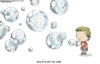


This old cunt doesn't understand the tech. He is a legend of an investor but he is behind the times.
For all the skeptics out there^^
There’s one incredible feature of cryptocurrencies that almost everyone seems to have missed, including Satoshi himself.
But it’s there, hidden away, steadily gathering power like a hurricane far out to sea that’s sweeping towards the shore.
It’s a stealth feature, one that hasn’t activated yet.
But when it does it will ripple across the entire world, remaking every aspect of society.
To understand why, you just have to understand a little about the history of money.

"You can’t value bitcoin because it’s not a value-producing asset...it's a real bubble in that sort of thing.”
Warren Buffet
And bc Cyber currency is confined to a relatively small group of "users" that bubble is likely upon us.
Bitconnect, the lending and exchange platform that was long suspected by many in the crypto community of being a Ponzi scheme, has announced it’s shutting down.
In a release on its website the platform said the shutdown is attributed to “continuous bad press” surrounding the platform, two cease and desist letters from both Texas and North Carolina’s securities boards, and continuous DDoS attacks on the platform.
While the platform says they’re refunding all outstanding loans at a rate of $363.62 USD (an average of the token’s price over the last 15 days), the Bitconnect token is currently trading down ~80% and worth less than $40, so while users may have been made whole on a BCC-equivlent, many are certainly suffering severe financial losses in terms of USD or Bitcoin (which is how they made their original investment).
Many in the cryptocurrency community have openly accused Bitconnnect of running a Ponzi scheme, including Ethereum founder Vitalik Buterin.
Similar threads


- Replies
- 9
- Views
- 543

- Replies
- 171
- Views
- 11K

- Replies
- 47
- Views
- 3K

- Replies
- 1
- Views
- 90

