June 2010 Update (The Endocrine Society): TRT

Michael Scally MD

Doctor of Medicine
10+ Year Member
Bhasin S, Cunningham GR, Hayes FJ, et al. Testosterone Therapy in Men with Androgen Deficiency Syndromes: An Endocrine Society Clinical Practice Guideline. J Clin Endocrinol Metab;95(6):2536-59.

Objective: Our objective was to update the guidelines for the evaluation and treatment of androgen deficiency syndromes in adult men published previously in 2006. Participants: The Task Force was composed of a chair, selected by the Clinical Guidelines Subcommittee of The Endocrine Society, five additional experts, a methodologist, and a medical writer. The Task Force received no corporate funding or remuneration.

Conclusions: We recommend making a diagnosis of androgen deficiency only in men with consistent symptoms and signs and unequivocally low serum testosterone levels. We suggest the measurement of morning total testosterone level by a reliable assay as the initial diagnostic test. We recommend confirmation of the diagnosis by repeating the measurement of morning total testosterone and, in some men in whom total testosterone is near the lower limit of normal or in whom SHBG abnormality is suspected by measurement of free or bioavailable testosterone level, using validated assays.

We recommend testosterone therapy for men with symptomatic androgen deficiency to induce and maintain secondary sex characteristics and to improve their sexual function, sense of well-being, muscle mass and strength, and bone mineral density.

We recommend against starting testosterone therapy in patients with breast or prostate cancer, a palpable prostate nodule or induration or prostate-specific antigen greater than 4 ng/ml or greater than 3 ng/ml in men at high risk for prostate cancer such as African-Americans or men with first-degree relatives with prostate cancer without further urological evaluation, hematocrit greater than 50%, untreated severe obstructive sleep apnea, severe lower urinary tract symptoms with International Prostate Symptom Score above 19, or uncontrolled or poorly controlled heart failure.

When testosterone therapy is instituted, we suggest aiming at achieving testosterone levels during treatment in the mid-normal range with any of the approved formulations, chosen on the basis of the patient's preference, consideration of pharmacokinetics, treatment burden, and cost. Men receiving testosterone therapy should be monitored using a standardized plan.

7855


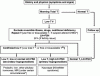
An approach for the diagnostic evaluation of adult men suspected of having androgen deficiency.

#, In some laboratories, the lower limit of the normal testosterone range in healthy young men is approximately 280–300 ng/dl (9.8–10.4 nmol/liter); however, this range may vary in different laboratories. Use the lower limit of the range established in your reference laboratory.

@, In some reference laboratories, the lower limit of the normal free testosterone range in healthy young men is approximately 5–9 ng/dl (0.17–0.31 nmol/liter) using equilibrium dialysis or calculated from total testosterone and SHBG; however, this range may vary in different laboratories, depending on the specific equilibrium dialysis or calculated from total testosterone and SHBG assays and the reference population used. Use the lower limit of the range established in your reference laboratory.

^, Conditions in which SHBG levels may be altered are listed in Table 2 .

*, Perform pituitary imaging (MRI) to exclude pituitary and/or hypothalamic tumor or infiltrative disease if severe secondary hypogonadism (serum T < 150 ng/dl), panhypopituitarism, persistent hyperprolactinemia, or symptoms or signs of tumor mass effect, such as headache, visual impairment, or visual field defect are present. SFA, Seminal fluid analysis; T, testosterone; MRI, magnetic resonance imaging.
 

Attachments

Last edited:
June 2010 Update: Fernandez-Balsells MM, Murad MH, Lane M, et al. Adverse Effects of Testosterone Therapy in Adult Men: A Systematic Review and Meta-Analysis. J Clin Endocrinol Metab;95(6):2560-75.

Context: The risks of testosterone therapy in men remain poorly understood.

Objective: The aim of this study was to conduct a systematic review and meta-analyses of testosterone trials to evaluate the adverse effects of testosterone treatment in men.

Data Sources: We searched MEDLINE, EMBASE, and Cochrane CENTRAL from 2003 through August 2008. Review of reference lists and contact with experts further identified candidate studies.

Study Selection: Eligible studies were comparative, randomized, and nonrandomized and reported the effects of testosterone on outcomes of interest (death, cardiovascular events and risk factors, prostate outcomes, and erythrocytosis). Reviewers, working independently and in duplicate, determined study eligibility. Data Extraction: Reviewers working independently and in duplicate determined the methodological quality of studies and collected descriptive, quality, and outcome data.

Data Synthesis: The methodological quality of the 51 included studies varied from low to medium, and follow-up duration ranged from 3 months to 3 yr. Testosterone treatment was associated with a significant increase in hemoglobin [weighted mean difference (WMD), 0.80 g/dl; 95% confidence interval (CI), 0.45 to 1.14] and hematocrit (WMD, 3.18%; 95% CI, 1.35 to 5.01), and a decrease in high-density lipoprotein cholesterol (WMD, -0.49 mg/dl; 95% CI, -0.85 to -0.13). There was no significant effect on mortality, prostate, or cardiovascular outcomes.

Conclusions: The adverse effects of testosterone therapy include an increase in hemoglobin and hematocrit and a small decrease in high-density lipoprotein cholesterol. These findings are of unknown clinical significance. Current evidence about the safety of testosterone treatment in men in terms of patient-important outcomes is of low quality and is hampered by the brief study follow-up.
 

Attachments

EDITORIAL

McLachlan RI. Certainly More Guidelines than Rules. J Clin Endocrinol Metab;95(6):2610-3.
JCEM -- Sign In Page

Prince Henry’s Institute of Medical Research, Monash University Department of Obstetrics and Gynaecology, and Andrology Australia, Monash Medical Centre, Clayton 3168, Australia

Address all correspondence and requests for reprints to: Robert I. McLachlan, Monash Medical Centre, Prince Henry’s Institute of Medical Research, P.O. Box 5152, Level 4, Block E, Clayton, Victoria 3168, Australia. E-mail: rob.mclachlan@princehenrys.org.


The updated clinical practice guidelines for testosterone (T) therapy in androgen deficiency (AD) have been crafted by a panel of internationally recognized leaders in clinical practice and translational research (1). They have synthesized the current evidence and made recommendations and suggestions that align broadly with recent international guidelines (2). The evidence basis for informing clinical practice has developed only marginally; among the 45 new references cited from 2006, there are seven small to moderate-sized randomized controlled trials and several controlled studies of T responses in young vs. older men; the remainder are commentaries, meta-analyses, or epidemiological studies. With their intimate understanding of the knowledge gaps, and as required for writing summary guidelines, the authors have "filled in the blanks" with considered commentary. But consequent upon the lack of definitive data, rather vague terms ("unequivocally low") and statements (measurement in "some" patients) necessarily appear that may obscure theoretical and pragmatic problems. These need to be recognized so that the reader is under no illusions about what is firm ground as opposed to potentially shifting sands.

AD is a "syndromic" diagnosis (3), a synthesis of clinical features and confirmatory low T levels. But how reliable is our evaluation of these two planks of diagnosis? More fundamentally, are we always thinking in terms of a classic hormonal deficiency state that demands replacement or in the many gray zones, with androgens as therapeutic agents to improve health outcomes in eugonadal men, and then seeking to retrofit the diagnostic criteria to legitimize such replacement therapy?

Clinical Evaluation

The guidelines outline the many causes of primary or secondary hypogonadism for which a pathological diagnosis is readily made and the tangible benefits provided by T treatment. The nonspecific nature of clinical features is evident; sexual dysfunction is among those rated "suggestive," yet we know most has a neurovascular or psychosexual basis, whereas the positive predictive value of others falls away steeply. The frequent challenge is the middle-aged or older man with nonspecific symptoms suggestive, but not diagnostic, of AD. The guidelines appropriately recommend against population screening and using symptom-screening tools, and point out the dangers of medicalizing the aging process. If recent data tell us anything, it is to confirm that serum T is a biomarker of good health; levels fall in association with many impacts (accumulating comorbidities and medication use, depression, bereavement, diabetes, obesity), and change over time and in response to changing health status (4, 5, 6). The data also tell us that a low serum T appears as a determinant of increased mortality rates (7, 8). When recruiting symptomatic aging men with low serum T for clinical trials, the exclusion of such comorbidities leaves few eligible candidates and/or results in the raising of the entry serum T threshold well into the normal age-related range (9, 10); "pure" age-related AD is very uncommon and cannot be gauged from descriptive studies using arbitrary T cutoffs (11).

A thorough holistic health evaluation is essential in ensuring that prevalent comorbidities that require address do not "pass under the radar." Although a diagnosis of AD might be sustainable based on the guidelines, this does not 1) mean that evidence exists that androgen treatment brings net health benefits and/or avoids harm; or 2) exclude that assiduous care of comorbidities will not bring greater benefit and secondarily raise serum T. In a 58-yr-old morbidly obese, poorly controlled diabetic subject with tiredness, depression, sexual difficulties and serum T of 2.1 ng/ml (7 nM), what, when, and how does one treat? One could propose T treatment to carry benefits over risk (physical, psychosexual, metabolic), but more clinical research is urgently needed. The summary recommendations don’t feature these considerations, yet in reference to certain conditions including type 2 diabetes, it is acknowledged that data supporting a role for T treatment are "limited or not available."

Endocrine Laboratory

The guidelines appropriately highlight total T as the best screening test using a reliable assay. But commercial platform-based immunoassays show bias from quantitative mass spectrometry methods and yield differing values and reference intervals (12); in 124 demonstrably healthy young men, eight such platforms provided lower reference intervals from 7.5 to 12.7 nmol (2.6–4.4 ng/ml) (13). And what populations are used to establish reference intervals? Reproductive problems are prevalent, and affected men should be identified by clinical examination and semen analysis and removed from control panels as one seeks to compare the patient’s reproductive status to that of reproductively healthy men. Unfortunately, most clinicians rely on commercial laboratories, emphasizing rapid turnaround times and cost reduction rather than accuracy and with little incentive for improvement. In reality, how can the clinician understand or modify the local service? Perhaps it is appropriate that these issues are not highlighted so as not to disturb a readership that is looking for clear advice on a seemingly simple endocrine evaluation; regrettably, real life is not that simple.

Free T evaluation in "some men" is recommended in settings where SHBG levels might be altered (e.g. age, insulin resistance, obesity) and theoretically impact T transport kinetics and tissue delivery, but its precise place in practice is not defined. The free T hypothesis holds that only the free fraction is bioavailable and correlates best with androgen action. But there are only limited clinical data supporting this contention, such as the cross-sectional study of elderly men showing the superior relationship between various free T estimates and bone density, muscle strength, and fat mass (14), but data are inconsistent (15, 16). Anecdotally, the finding of a near-normal free T in obese or diabetic men, with little evidence otherwise for AD, can seem reassuring—but is it?

Numerous theoretical and practical concerns surround free T measures. Intracellular T levels differ between tissues due to variations in microcirculatory delivery and metabolism. Other data support a direct SHBG action on target tissues through specific G protein-linked receptors, SHBG synthesis within tissues (e.g. prostate), and alternative pathways of T uptake (e.g. endocytosis of megalin-SHBG-bound T complexes). Putting theoretical concerns aside, an "accurate and reliable" free T assay is recommended, but in clinical practice does such a method exist? Some are impractical for wide application (the gold standard equilibrium dialysis, bioavailable T), whereas the widely recommended calculated free T methods have limitations. These equations rely on total T, SHBG, and albumin levels and assume invariant T-binding coefficients (17). Their outputs are critically dependent (80% variance) on total T assay but also on the binding equations used (14% variance), and all significantly overestimate levels obtained by ultracentrifugation (18) or equilibrium dialysis (19). Finally, there are no agreed calculated free T reference intervals. The use of mass spectrometry for total T will help, but reference intervals are needed (perhaps adjusted for age and adiposity); in the meantime, what is "low"?

Aging Men

The Committee’s difficulties in making a firm recommendation in the absence of definitive clinical evidence is very evident in regard to older men; disagreement arose over issuing a cutoff serum T value and the risk/benefit equation for intervention. What remains is a recommendation that the need for T therapy be on an "individualized basis in men with confirmed low [undefined, note that "unequivocally" no longer appears] T levels and clinically significant symptoms [recognizing the poor predictive value of symptoms in such men with frequent comorbidities] after explicit discussion of uncertainty about the risks and benefits." This pragmatic recommendation reflects the many knowledge gaps, while trying to provide guidance to clinicians hungry for such information and faced with increasing numbers of men presenting with the hope that T therapy will help them.

Modest benefits of T treatment on body composition or libido must be balanced by negative or inconsistent data for other parameters; the authors point to the deficiencies in study designs, and especially the absence of definitive clinical outcomes (cardiovascular or prostate cancer-related deaths, hip fracture). How can explicit discussions take place given the thin and short-term evidence base? Evaluating these recognized potential adverse outcomes requires the study of vastly greater numbers over much longer time frames. And what are the infamous "unknown-unknown" risks? Without large clinical trials, we will never know, nor are we able to systemically track the outcomes of the current widespread, essentially unregulated, and idiosyncratic use of androgens for this indication.

The diagnostic criteria in aging men will remain unreliable until clinical research better defines the phenotypic features of men shown to benefit from intervention. Studies are under way, including by the guidelines’ authors. A post hoc evaluation of placebo-controlled, randomized clinical trials will begin to identify characteristics (clinical, endocrine, possibly genetic) that predict tangible benefits (and at acceptable risk) from treatment, and that will inform future guidelines to help the clinician identify treatment candidates from among the large number of men presenting for evaluation. Until then, prevalence estimates and guidelines for evaluation or intervention will be open to criticism.

Will the reader of this recommendation place lower values on the unproven benefits of treatment and higher values on avoiding treatment burdens and unknown risks, as do the authors? Or alternatively, emboldened by its rather vague wording, will this be taken as a validation of their clinical practice? The critical patient discussion may be very different; one can foresee the more conservative (randomized controlled trial data-influenced) clinician defining a higher threshold to treat, concentrating on comorbidities while deferring T treatment and gravely discussing its uncertain risks. On the other hand, the "androgen enthusiast" will set a low threshold to treat and speak glowingly of the potential benefits while placing little or no emphasis on the absence of key efficacy and safety data.

Perhaps the real confounder to generating a single set of guidelines for androgen usage is that these hormones can be reasonably used for two related but distinct indications: first, as classic physiological replacement in hypogonadism, and second as a pharmacological therapeutic (drug) aimed at achieving a particular outcome (e.g. anabolism). The evaluation process, proof of efficacy, risks and benefits, and discussion with patients are quite different. Conflating these two uses into one set of guidelines does not serve the interests of either group. This concept extends to monitoring issues, and targeting of serum T values into the middle range of young men assumes that it provides the optimum benefit/risk across life—a reasonable starting point that requires proof. But in androgen replacement in older men, why aim higher than the median for age-matched fit, nonobese, sexually active, disease- and medication-free men? Conversely, if the key clinical issue is age-related sarcopenia, supraphysiological levels may maximize benefits, but the risk trade-off must be established by research (20, 21).

Improved laboratory methods and more clinical studies are needed to clarify the many uncertainties. Increasingly, the distinction between the use of androgens as hormonal replacement therapy and their role as therapeutic agents will become clearer, andseparate evidence-based guidelines will be needed. The development of selective androgen response modulators that target the desired effect while minimizing unwanted effects on other tissues holds great promise. These guidelines serve as a staging post alongthe way to our understanding of the many clinical settings in which androgen treatment may be beneficial. Ideally, the authors would have had the key evidence base needed to be more explicit and directive (a book of rules rather than guidelines). But currently, in the face of so many knowledge gaps, one suspects that, perhaps unfortunately, they will please just about everyone.

Footnotes

Disclosure Summary: The author has nothing to declare.
Abbreviations: AD, Androgen deficiency; T, testosterone.

Received April 12, 2010.
Accepted April 21, 2010.

References

1. Bhasin S, Cunningham GR, Hayes FJ, Matsumoto AM, Snyder PJ, Swerdloff RS, Montori VM 2010 Testosterone therapy in men with androgen deficiency syndromes: an endocrine society clinical practice guideline. J Clin Endocrinol Metab 95:2536–2559

2. Wang C, Nieschlag E, Swerdloff R, Behre HM, Hellstrom WJ, Gooren LJ, Kaufman JM, Legros JJ, Lunenfeld B, Morales A, Morley JE, Schulman C, Thompson IM, Weidner W, Wu FC 2009 Investigation, treatment and monitoring of late-onset hypogonadism in males. Int J Androl 32:1–10

3. Bhasin S, Zhang A, Coviello A, Jasuja R, Ulloor J, Singh R, Vesper H, Vasan RS 2008 The impact of assay quality and reference ranges on clinical decision making in the diagnosis of androgen disorders. Steroids 73:1311–1317

4. Travison TG, Araujo AB, Kupelian V, O'Donnell AB, McKinlay JB 2007 The relative contributions of aging, health, and lifestyle factors to serum testosterone decline in men. J Clin Endocrinol Metab 92:549–555

5. Yeap BB 2009 Testosterone and ill-health in aging men. Nat Clin Pract Endocrinol Metab 5:113–121

6. Wu FC, Tajar A, Pye SR, Silman AJ, Finn JD, O'Neill TW, Bartfai G, Casanueva F, Forti G, Giwercman A, Huhtaniemi IT, Kula K, Punab M, Boonen S, Vanderschueren D; European Male Aging Study Group 2008 Hypothalamic-pituitary-testicular axis disruptions in older men are differentially linked to age and modifiable risk factors: The European Male Aging Study. J Clin Endocrinol Metab 93:2737–2745

7. Shores MM, Matsumoto AM, Sloan KL, Kivlahan DR 2006 Low serum testosterone and mortality in male veterans. Arch Intern Med 166:1660–1665

8. Laughlin GA, Barrett-Connor E, Bergstrom J 2008 Low serum testosterone and mortality in older men. J Clin Endocrinol Metab 93:68–75

9. Allan CA, Strauss BJ, Burger HG, Forbes EA, McLachlan RI 2008 Testosterone therapy prevents gain in visceral adipose tissue and loss of skeletal muscle in nonobese aging men. J Clin Endocrinol Metab 93:139–146

10. Snyder PJ, Peachey H, Hannoush P, Berlin JA, Loh L, Holmes JH, Dlewati A, Staley J, Santanna J, Kapoor SC, Attie MF, Haddad Jr JG, Strom BL 1999 Effect of testosterone treatment on bone mineral density in men over 65 years of age. J Clin Endocrinol Metab 84:1966–1972

11. Araujo AB, O'Donnell AB, Brambilla DJ, Simpson WB, Longcope C, Matsumoto AM, McKinlay JB 2004 Prevalence and incidence of androgen deficiency in middle-aged and older men: estimates from the Massachusetts Male Aging Study. J Clin Endocrinol Metab 89:5920–5926

12. Wang C, Catlin DH, Demers LM, Starcevic B, Swerdloff RS 2004 Measurement of total serum testosterone in adult men: comparison of current laboratory methods versus liquid chromatography-tandem mass spectrometry. J Clin Endocrinol Metab 89:534–543

13. Sikaris K, McLachlan RI, Kazlauskas R, de Kretser D, Holden CA, Handelsman DJ 2005 Reproductive hormone reference intervals for healthy fertile young men: evaluation of automated platform assays. J Clin Endocrinol Metab 90:5928–5936

14. van den Beld AW, de Jong FH, Grobbee DE, Pols HA, Lamberts SW 2000 Measures of bioavailable serum testosterone and estradiol and their relationships with muscle strength, bone density, and body composition in elderly men. J Clin Endocrinol Metab 85:3276–3282

15. Tang YJ, Lee WJ, Chen YT, Liu PH, Lee MC, Sheu WH 2007 Serum testosterone level and related metabolic factors in men over 70 years old. J Endocrinol Invest 30:451–458

16. Rodriguez A, Muller DC, Metter EJ, Maggio M, Harman SM, Blackman MR, Andres R 2007 Aging, androgens, and the metabolic syndrome in a longitudinal study of aging. J Clin Endocrinol Metab 92:3568–3572

17. Rosner W, Auchus RJ, Azziz R, Sluss PM, Raff H 2007 Position statement: utility, limitations, and pitfalls in measuring testosterone: an Endocrine Society Position Statement. J Clin Endocrinol Metab 92:405–413

18. Sartorius G, Ly LP, Sikaris K, McLachlan R, Handelsman DJ 2009 Predictive accuracy and sources of variability in calculated free testosterone estimates. Ann Clin Biochem 46:137–143

19. Ly LP, Sartorius G, Hull L, Leung A, Swerdloff RS, Wang C, Handelsman DJ 13 March 2010 Accuracy of calculated free testosterone formulae in men. Clin Endocrinol (Oxf) doi: 10.1111/j.1365–2265.2010.03804

20. Bhasin S, Woodhouse L, Casaburi R, Singh AB, Mac RP, Lee M, Yarasheski KE, Sinha-Hikim I, Dzekov C, Dzekov J, Magliano L, Storer TW 2005 Older men are as responsive as young men to the anabolic effects of graded doses of testosterone on the skeletal muscle. J Clin Endocrinol Metab 90:678–688

21. LeBrasseur NK, Lajevardi N, Miciek R, Mazer N, Storer TW, Bhasin S 2009 Effects of testosterone therapy on muscle performance and physical function in older men with mobility limitations (The TOM Trial): design and methods. Contemp Clin Trials 30:133–140
 
EDITORIAL

Anawalt BD. Guidelines for Testosterone Therapy for Men: How to Avoid a Mad (T)ea Party by Getting Personal. J Clin Endocrinol Metab;95(6):2614-7.
JCEM -- Sign In Page

Department of Medicine, University of Washington, Seattle, Washington 98195-6420

Address all correspondence and requests for reprints to: Bradley D. Anawalt, 1959 NE Pacific Street, Box 356420, Seattle, Washington 98195-6420. E-mail: banawalt@medicine.washington.edu.


"Take some more tea," the March Hare said to Alice, very earnestly.

"I’ve had nothing yet," Alice replied in an offended tone, "so I can’t take more."

"You mean you can’t take less," said the Hatter. "It’s very easy to take more than nothing."

"Nobody asked your opinion," said Alice.

"Who’s making personal comments now?" the Hatter asked triumphantly.

—A Mad Tea-Party in Alice in Wonderland (1)


In this issue of JCEM, the original authors of The Endocrine Society’s inaugural guideline on "Testosterone Therapy in Men with Androgen Deficiency Syndromes," published in 2006 (2, 3), offer an update. What is the value of updating these guidelines just 4 yr later?

As the authors noted in the original 2006 guidelines, there were no randomized, placebo-controlled trials of the effects of testosterone therapy on clinically important outcomes such as mortality, quality of life, cardiovascular events, fragility fractures, or cognitive function in men. There was also a paucity of data about the effects of testosterone therapy in older men, men taking corticosteroids, and other clinical scenarios where men commonly have low serum testosterone levels and symptoms or signs that might be due to androgen deficiency. Unfortunately, there are still no published, long-term, large placebo-controlled trials examining clinically meaningful outcomes in hypogonadal men. As with the original 2006 guidelines, the evidence for the 2010 guidelines is weak. On a rating scale of very low, low, moderate, and high quality, all of the recommendations were based on evidence judged to be very low or low, and the majority of the recommendations were based on very low-quality evidence.

This deplorable state of affairs occurs nearly a decade after the publication of the Women’s Health Initiative, the landmark study of over 16,000 subjects that demonstrated the effects of conjugated estrogen plus a progestin on clinically important outcomes in postmenopausal women (4). The Women’s Health Initiative debunked a number of myths about the miraculous effects that postmenopausal hormone therapy might have and led to much more judicious use of hormone therapy in women. In this millennium, testosterone has become one of the panacea snake oils for men who are older, frail, or just want to look better. Testosterone and other androgens are in the class of drugs known as "performance-enhancing," a term that refers to athletic performance but resonates with the public mythology about the effects of testosterone in male performance in many aspects of life.

Despite the lessons learned about sex steroid hormone therapy in postmenopausal women from the Women’s Health Initiative, we are threatened with a reprise of promiscuous prescription of sex steroid hormone therapy in aging men, obese men, diabetic men, and other groups of men with a high prevalence of low serum androgen levels. We are threatened with a mad "T" party. We could scarcely know less about the long-term effects of testosterone therapy on clinically meaningful outcomes in men. Contrary toCarrollian logic, we have proven with the absence of large, publicly funded trials that it is not "very easy to know more" about the diagnosis and management of androgen deficiency in men.

Into this rabbit hole, the authors of the 2010 Endocrine Society Guidelines on Testosterone Therapy in Men have boldly plunged. Their updates include a comprehensive review of the published literature, the addition of more than 40 recent references, and significant revisions of their recommendations regarding detecting prostatic cancer before initiation of androgen therapy and during maintenance therapy. They have subtly, but significantly, revised their recommendations for older men with low serum testosterone levels. The authors also have emphasized that long-acting opiates that are commonly prescribed may cause profound, symptomatic hypogonadism, and they have added a brief commentary on the controversy surrounding testosterone therapy for hypogonadal men with a history of prostate cancer that has been treated and deemed cured. Finally, the authors have included two new testosterone formulations that recently have become available (injectable testosterone undecanoate that may be injected atintervals up to 12–14 wk and a testosterone matrix patch that lasts 2 d after application).

There are some key differences in the new guidelines regarding detecting prostate cancer screening during androgen replacement therapy. The authors have appropriately specified that men younger than 40 yr do not need pretreatment screening for prostate cancer or monitoring during maintenance therapy. For men at least 40 yr old, the authors are vague about pretreatment screening for prostate cancer: "We suggest that clinicians assess prostate cancer risk in men being considered for testosterone therapy."Although the authors do not explicitly recommend a pretreatment digital rectal exam plus measurement of serum prostate specific antigen (PSA), they imply that clinicians should use both to assess for baseline risk of prostate cancer. They recommend that clinicians estimate a patient’s risk of prostate cancer by using a recently developed risk calculator (5) that includes digital rectal exam findings and a serum PSA level as well as family history, race, and prostate biopsy history.

This recommendation will be controversial. First, the risk calculator is not widely accepted because it is not clear how well it will perform in men in the general population (6). In addition, this risk calculator can only be used for men over age 55 (5, 6).Secondly, screening for prostate cancer at any age is controversial and is particularly controversial for men ages 40 to 49. Although the American Urological Association recommends screening for prostate cancer starting at age 40, the American Cancer Society suggests that men at least 50 yr should be offered the opportunity for prostate cancer screening after careful discussion of the personal risks and benefits; men at higher risk of prostate cancer should begin this discussion at age 40 or 45 (7, 8). The U.S. Preventive Services Task Force recently has recommended against prostate cancer screening in men 75 or older and has concluded that for men 75 yr old or younger there is "inadequate evidence to determine whether treatment for prostate cancer detected by screening improves health outcomes compared with treatment after clinical detection" (9).

Screening for prostate cancer is controversial because the benefit appears to be modest and the cost is significant. The results of two recently published prostate cancer trials (with over 200,000 patients combined) indicate that screening for prostate cancer may prevent one death due to prostate cancer per 1410 men screened and 48 treated, but prostate cancer screening does not reduce overall mortality (10, 11). Screening for prostate cancer in hypogonadal men might be even less rewarding. Small studies suggest that exogenous testosterone therapy does not significantly increase prostate tissue testosterone levels or increase expression of genes associated with prostate cancer (12, 13).

Most clinicians will decide to screen for prostate cancer before and during testosterone therapy in men over age 50 because testosterone may promote the growth of established invasive or metastatic prostatic cancer (14) and because of fear of litigation when a prostate cancer is detected incidentally some time after the initiation of testosterone therapy. The authors of the 2010 guidelines have highlighted an important and not widely known fact: serum PSA levels rise after testosterone therapy by an average of less than 0.5 ng/ml. Their recommendation to assess for possible prostate cancer for any serum PSA increase of at least 1.5 ng/ml in a year is conservative and is based on the wide natural variation in serum PSA levels in patients with benign prostatic hyperplasia. Even when the serum PSA level remains less than the upper limit of age-matched men, urological evaluation should be considered in any man whose serum PSA rises by at least 1.5 ng/ml in 1 yr.

To monitor for the development of prostate cancer, the guidelines authors continue to recommend a digital rectal examination in addition to serum PSA. This recommendation is not trivial because a digital rectal examination requires an office visit, is uncomfortable or embarrassing to many patients (and clinicians!), and is inexpertly performed by most clinicians. The evidence from randomized trials does not support the use of the digital rectal examination as a screening test (8). During testosterone therapy, screening with a serum PSA suffices.

In this 2010 update of the guidelines, the authors have made a subtle but important change to their recommendation regarding testosterone therapy for older men with symptoms suggesting hypogonadism plus low serum testosterone levels. The authors admit that there was considerable internal disagreement about the threshold of serum total testosterone level that would justify testosterone therapy in older men. Some experts on the panel favored treating only symptomatic men with very low total testosterone levels (e.g. <200 ng/dl), whereas others on the panel favored treating symptomatic men and total testosterone levels below the lower limit of normal. This debate pivots on whether there is a threshold serum testosterone level where the benefit exceeds the risk of testosterone therapy for symptomatic older men.

This disagreement is irresolvable based on current data, but it is refreshing to read guidelines that divulge disagreement among the panelists. Although guidelines are intended to be advisory based on an expert panel’s collective assessment of the scientific literature, they are generally presented as monolithic consensus statements and often are perceived to define the standard of care. Guidelines seldom are as unanimous as they appear, and it is helpful for clinicians to read a candid disclosure about important disagreements. Knowledge about the controversy and the source of disagreement facilitates more informed and personalized care. For example, after reading these guidelines, a clinician who sees a 65-yr-old man with weakness, low libido, and a serum total testosterone of 280 ng/dl is more likely to acknowledge the uncertainty of benefit and risk; the clinician is more likely to engage the patient in a discussion that will inform the patient’s choice.

The panel experts chose not to comment on the benefits and risks of testosterone therapy on cardiovascular events in men. Many, but not all, epidemiological studies suggest that men with lower serum testosterone levels have higher rates of cardiovascularevents than men with higher serum testosterone levels (15, 16, 17, 18, 19), but there are no long-term large placebo-controlled studies of testosterone therapy that include cardiovascular outcomes. The authors cite a recent systematic review and a meta-analysis showing no differences in cardiovascular events and mortality in men (with baseline low serum testosterone levels) treated with testosterone vs. placebo, but these findings are based on short-term studies (20, 21). Because the data are so scanty, it is appropriate that the panelists avoided making conclusions regarding the effects of testosterone therapy on cardiovascular risk.

There will be other points to debate in the guidelines: e.g. the role of free vs. total testosterone levels in the diagnosis of male hypogonadism, the value of determining bone densitometry at baseline and during androgen therapy, the threshold hematocrit to use as an exclusion criterion for testosterone therapy, and the relative benefit and risk of testosterone therapy in men with low testosterone levels plus diabetes mellitus. It is essential that we now begin large, long-term randomized trials of testosterone therapy to answer these questions and to measure clinically significant outcomes such as quality of life, functional capacity, prostate cancer, and cardiovascular events. These trials should address the major areas of controversy including whether older men, obese men, and other men with conditions commonly associated with low serum testosterone derive more benefit than harm from androgen supplementation therapy to normalize serum testosterone levels. In the meantime, we should commend the panelists for a careful review of the scientific literature and making clear, reasonable recommendations that will help practicing clinicians. Most importantly, they framed each recommendation as a good-faith estimation of the benefits and risks for the individual patient. We asked for their opinions, and they made the recommendations appropriately personal—focused on the individual and not broad sweeping generalizations.

"At any rate I’ll never go there again!" said Alice as she picked her way through the wood. "It is the stupidest tea party I ever was at in all my life!" Once more she found herself in the long hall, close to the little glass table. "Now I’ll manage better this time."

With clear, well-reasoned guidelines such as these, we’ll manage better, too.

Acknowledgments

I thank Dr. Stephanie T. Page for her careful review.


Footnotes

This work was supported by National Institutes of Health–National Institute of Child Health and Human Development Grants U54 HD12629-27 and U54 HD042454.

Disclosure Summary: The author has nothing to disclose.


Abbreviation: PSA, Prostate specific antigen.

Received April 14, 2010.
Accepted April 23, 2010.

References

1. Carroll L 2005 Alice’s Adventures in Wonderland and Through the Looking Glass. New York: Barnes & Noble Classics

2. Bhasin S, Cunningham GR, Hayes FJ, Matsumoto AM, Snyder PJ, Swerdloff RS, Montori VM 2010 Testosterone therapy in adult men with androgen deficiency syndromes: an Endocrine Society Clinical Practice Guideline. J Clin Endocrinol Metab 95:2536–2559

3. Bhasin S, Cunningham GR, Hayes FJ, Matsumoto AM, Snyder PJ, Swerdloff RS, Montori VM 2006 Testosterone therapy in adult men with androgen deficiency syndromes: an Endocrine Society Clinical Practice Guideline. J Clin Endocrinol Metab 91:1995–2010

4. Rossouw JE, Anderson GL, Prentice RL, LaCroix AZ, Kooperberg C, Stefanick ML, Jackson RD, Beresford SA, Howard BV, Johnson KC, Kotchen JM, Ockene J; Writing Group for the Women’s Health Initiative Investigators 2002 Risks and benefits of estrogen plus progestin in health postmenopausal women. Principal results from the Women’s Health Initiative Randomized Controlled Trial. JAMA 288:321–333

5. Thompson IM, Ankerst DP, Chi C, Goodman PJ, Tangen CM, Lucia MS, Feng Z, Parnes HL, Coltman Jr CA 2006 Assessing prostate cancer risk: results from the Prostate Cancer Prevention Trial. J Natl Cancer Inst 98:529–534

6. Nguyen CT, Yu C, Moussa A, Kattan MW, Jones JS 2010 Performance of Prostate Cancer Prevention Trial risk calculator in a contemporary cohort screened for prostate cancer and diagnosed by extended prostate biopsy. J Urol 183:529–533

7. Greene KL, Albertsen PC, Babaian RJ, Carter HB, Gann PH, Han M, Kuban DA, Sartor AO, Stanford JL, Zietman A, Carroll P 2009 Prostate specific antigen best practice statement: 2009 update. J Urol 182:2232–2241

8. Wolf AM, Wender RC, Etzioni RB, Thompson IM, D'Amico AV, Volk RJ, Brooks DD, Dash C, Guessous I, Andrews K, DeSantis C, Smith RA for the American Cancer Society Prostate Cancer Advisory Committee 2010 American Cancer Society guideline for the early detection of prostate cancer: update 2010. CA Cancer J Clin 60:70–98

9. U.S. Preventive Services Task Force 2008 Screening for prostate cancer: U.S. Preventive Services Task Force recommendation statement. Ann Intern Med 149:185–191

10. Andriole GL, Crawford ED, Grubb 3rd RL, Buys SS, Chia D, Church TR, Fouad MN, Gelmann EP, Kvale PA, Reding DJ, Weissfeld JL, Yokochi LA, O'Brien B, Clapp JD, Rathmell JM, Riley TL, Hayes RB, Kramer BS, Izmirlian G, Miller AB, Pinsky PF, Prorok PC, Gohagan JK, Berg CD 2009 Mortality results from a randomized prostate-cancer screening trial. N Engl J Med 360:1310–1319

11. Schröder FH, Hugosson J, Roobol MJ, Tammela TL, Ciatto S, Nelen V, Kwiatkowski M, Lujan M, Lilja H, Zappa M, Denis LJ, Recker F, Berenguer A, Määttänen L, Bangma CH, Aus G, Villers A, Rebillard X, van der Kwast T, Blijenberg BG, Moss SM, de Koning HJ, Auvinen A 2009 Screening and prostate-cancer mortality in a randomized European study. N Engl J Med 360:1320–1328

12. Marks LS, Mazer NA, Mostaghel E, Hess DL, Dorey FJ, Epstein JI, Veltri RW, Makarov DV, Partin AW, Bostwick DG, Macairan ML, Nelson PS 2006 Effect of testosterone replacement therapy on prostate tissue in men with late-onset hypogonadism: a randomized controlled trial. JAMA 296:2351–2361

13. Page ST, Lin DW, Mostaghel EA, Hess DL, True LD, Amory JK, Nelson PS, Matsumoto AM, Bremner WJ 2006 Persistent intraprostatic androgen concentrations after medical castration in healthy men. J Clin Endocrinol Metab 91:3850–3856

14. Fowler Jr JE, Whitmore Jr WF 1981 The response of metastatic adenocarcinoma of the prostate to exogenous testosterone. J Urol 126:372–375

15. Khaw KT, Dowsett M, Folkerd E, Bingham S, Wareham N, Luben R, Welch A, Day N 2007 Endogenous testosterone and mortality due to all causes, cardiovascular disease, and cancer in men: European prospective investigation into cancer in Norfolk (EPIC-Norfolk) Prospective Population Study. Circulation 116:2694–2701

16. Laughlin GA, Barrett-Connor E, Bergstrom J 2008 Low serum testosterone and mortality in older men. J Clin Endocrinol Metab 93:68–75

17. Arnlöv J, Pencina MJ, Amin S, Nam BH, Benjamin EJ, Murabito JM, Wang TJ, Knapp PE, D'Agostino Sr RB, Bhasin S, Vasan RS 2006 Endogenous sex hormones and cardiovascular disease incidence in men. Ann Intern Med 145:176–184

18. Wu FC, von Eckardstein A 2003 Androgens and coronary artery disease. Endocr Rev 24:183–217[Abstract/Free Full Text]

19. Liu PY, Death AK, Handelsman DJ 2003 Androgens and cardiovascular disease. Endocr Rev 24:313–340

20. Fernández-Balsells HM, Murad MH, Melanie L, Lampropulos JF, Albuquerque F, Erwin PJ, Bhasin S, Montori VM 2009 Adverse effects of testosterone therapy in adult men: a systematic review and meta-analysis.

21. Calof OM, Singh AB, Lee ML, Kenny AM, Urban RJ, Tenover JL, Bhasin S 2005 Adverse events associated with testosterone supplementation of older men. J Gerontol A Biol Sci Med Sci 60:1451–1457

 
Thank you very much Mike!

All - if you are close with your doctor please e-mail him/her these guidelines, as most docs in practice don't have a hell of a lot of time to search for these documents themselves.
 
Thank you very much Mike!

All - if you are close with your doctor please e-mail him/her these guidelines, as most docs in practice don't have a hell of a lot of time to search for these documents themselves.


On that note, you must be a member of The Endocrine Society to even have access for the next six months.
 
I note that the infamous prostate cancer and its suggested cause - testosterone - still abounds like an urban legend.

There are so many variables in the human body and yet, only testosterone/dht, specifically it seems, is the implied cause, even though oestradiol production is reduced via the accepted route of serms or ai's in women with certain cancers as well as fibroids etc; not forgetting that men who wish to curtail the possibilities of gynecomastia, use the aforementioned methods. ie. oestradiol seems to be quite responsible for cell proliferation, a la hyperplasia.

To err on the side of safety is understandable, but, to rely on pathetic evidence from 60 years ago, which the European Journal of Urology has already dismissed due to it being a case study on one man, is ridiculous.

Well, that's only my opinion based on my non-professional understanding.
 
Last edited:
Endocrinologists are poorly trained save a few areas. The AMA should be ashamed how narrowly these MDs are trained. I have seen 3, I have no respects for this area of expertise!!! I should have sued one for fucken malpractice 3 years ago--I would have easily won (I know now in rerospect)!

I don't trust anyone in the medical community! I should mention I have a daughter who is a pathologist and a son who is a health care economist!!!
 
Endocrinologists are poorly trained save a few areas. The AMA should be ashamed how narrowly these MDs are trained. I have seen 3, I have no respects for this area of expertise!!! I should have sued one for fucken malpractice 3 years ago--I would have easily won (I know now in rerospect)!

I don't trust anyone in the medical community! I should mention I have a daughter who is a pathologist and a son who is a health care economist!!!

My doctor won't even send a patient to an endo anymore for hypogonadism. He told me that they would always report back that they can't do anything for them or that there is nothing wrong. It seems like the average internest is better trained than the average endo in this. I wonder if urologists are a better choice.
 
Back
Top