
Ghoul
Member
That’s more like -1, which is within “normal” “-2 to +2” range.
IGF is lower than 75-85% of peers.
IGF is lower than 75-85% of peers.

MESO-Rx
Anabolic Steroids

Follow along with the video below to see how to install our site as a web app on your home screen.
Note: This feature may not be available in some browsers.
Based on my z score, the plan is to slowly titrate up to 6 IU/d operating on the premise of 1 IU -> ~ 0.5 increase in z score. Will recheck IGF in about a month. Any advice on titration speed?That’s legit GH replacement therapy…
Zscore from quest was 2.3 for the 385 reading. Forgot to add that to my original post2.5 - 3

My 83 (see first post of thread) is a Z score of -1.0 . . . a negative 2 must be very low, indeed.That’s more like -1, which is within “normal” “-2 to +2” range.
IGF is lower than 75-85% of peers.
Borderline genius IGF-1 level!Zscore from quest was 2.3 for the 385 reading. Forgot to add that to my original post
It reminds of TRT “normal”.My 83 (see first post of thread) is a Z score of -1.0 . . . a negative 2 must be very low, indeed.
I always found two standard deviations on either side to be a very wide range to be considered "normal." If that were IQ, we would be looking at folks with a 70 IQ (2 SD below) and 130 IQ (2 SD above). Only a little over 2% of the population has above or below those levels of intelligence. Nobody would call either person with 70 or 130 IQ "normal" in intelligence. You probably would not want to hire a 70 IQ individual to do anything more than very simple tasks. If you take 100 persons at random, only 2 are likely to be at this IQ or below. If you went to a school with 1000 students, the poorest performing 20 or so, including special education, is who we are talking about at that level or below.
I am not sure I would ever want my IGF-1 to be at the special ed level.

So I have a -1 Z Score and all of the following symptoms you listed. Would it be worth trying GH to see if symptoms improve?It reminds of TRT “normal”.
“Yea you’re in the bottom 1%, but that’s in range no test for you”.
And just like TRT, a minority of specialists recognize even if not technically below the normal range, if there are symptoms it’s worth treating.
It’s called:
Adult Growth Hormone Insufficiency (AGHI) or
Functional / Relative Growth Hormone Deficiency
Diagnosed by a Z score below -0.5 and one or
more:
They will prescribe GH to treat this but insurance doesn’t recognize it. However, by going through speciality compounding pharmacies (instead of brand name rHGH) I’ve heard it’s less then $200 for a months supply.
- Fatigue, low energy
- Increased fat mass (especially visceral fat)
- Reduced muscle mass and strength
- Poor exercise recovery
- Low mood or cognitive “fog”
- Reduced bone density
- Low-normal IGF-1 for age
- “Normal” GH stimulation test but blunted response
If only that was natty. Unfortunately I had to use Tesa/IPA to achieve a borderline genius hahaBorderline genius IGF-1 level!
So I have a -1 Z Score and all of the following symptoms you listed. Would it be worth trying GH to see if symptoms improve?

I’m -0.1 zscore and going above 1 feels real good to me.So I have a -1 Z Score and all of the following symptoms you listed. Would it be worth trying GH to see if symptoms improve?
I had no clue about those other symptoms. I have high LDL and low HDL. Bone pain during certain lifts, activities, and almost all of the other symptoms. I’ll have to update the thread after a couple months of being on. Hopefully things are better for me by then.Personally I would.
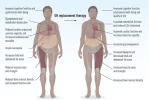
Are you more like the guy on the left or right?
View attachment 367435
As long as you understand the responsibility and risks that come along with it.
That said, like self administered TRT for those who used to be routinely denied (before the proliferation of enlightened clinics), the payoff in improved quality of life could change your world. That’s not an exaggeration based on clinical results for those diagnosed with adult GH deficiency. There’s every reason to believe that just like hypogonadism is strictly defined by testosterone numbers, there are those with a GH level that’s “too low for them”, and symptomatic, who benefit from hormone replacement (or “optimization”.
Just remember, because too many don’t seem to grasp this:
It’s not take a dose = everything suddenly gets better or it means it doesn’t work.
It takes time for the most profound improvements to develop. It’s an investment.
But for those who put in the time and effort, I get the impression most never want to go back.


I had no clue about those other symptoms. I have high LDL and low HDL. Bone pain during certain lifts, activities, and almost all of the other symptoms. I’ll have to update the thread after a couple months of being on. Hopefully things are better for me by then.


How are you feeling at that z-score? Any noticeable improvements? As it stands now, I'm planning to stabilize my z-score around 2.5Latest IGF-1: 276, zscore 1.6. Age 53. I've been on 4iu for a couple months now and think I'll cruise here.
It's hard to say what is from the GH, but at age 53 I'm doing many hours of hot yoga every week and running 5ks for the first time in my life.How are you feeling at that z-score? Any noticeable improvements? As it stands now, I'm planning to stabilize my z-score around 2.5
Latest IGF-1: 276, zscore 1.6. Age 53. I've been on 4iu for a couple months now and think I'll cruise here.


