semaglutide vs tirzepatide compared - for hunger & binging & junk food noise purely?

demal

New Member
Out of semaglutide and tirzepatide - which is the better for hunger & urge to binge eat on junk food, especially in deep caloric defecits?

I understand that the most important thing - is discipline & will power to stick to a diet. That is exactly what I am working on currently.
I thought 0.25-1mg Semaglutide or 5-10mg Tirzepatide a week could help. What do you guys think?
 
For appetite suppression, semaglutide is the most effective.
Tirzepatide also works very well and additionally increases insulin levels.
However, both can cause side effects that may be difficult to tolerate at the beginning of the treatment.
 
Sema is the more potent and brutal of the two. If you eat beyond your reduced appetite, it'll punish you shortly after (over)eating with brutal sides to drive the lesson that you need to obey appetite signals.

Eat only when physically hungry, slowly, in small portions, and stop when satiated, and you'll be spared from nausea and other gastric side effects.
 
For appetite suppression, semaglutide is the most effective.
Tirzepatide also works very well and additionally increases insulin levels.
However, both can cause side effects that may be difficult to tolerate at the beginning of the treatment.
I though they were supposed to help with insulin resistance/sensitivity?
 
I though they were supposed to help with insulin resistance/sensitivity?

How Tirzepatide Affects Insulin:

  • Increases insulin secretion when blood glucose is high (helps avoid hypoglycemia).
  • Improves beta-cell function in the pancreas (cells that make insulin).
  • Enhances insulin sensitivity, particularly via GIP action.
  • Reduces insulin resistance, which is especially helpful in people with type 2 diabetes or metabolic syndrome.
 
Out of semaglutide and tirzepatide - which is the better for hunger & urge to binge eat on junk food, especially in deep caloric defecits?

I understand that the most important thing - is discipline & will power to stick to a diet. That is exactly what I am working on currently.
I thought 0.25-1mg Semaglutide or 5-10mg Tirzepatide a week could help. What do you guys think?
Instead of picking a feel good number, start them with the proper protocol and build up. Sema if you want stomach issues and you like farting.
 

How Tirzepatide Affects Insulin:

  • Increases insulin secretion when blood glucose is high (helps avoid hypoglycemia).
  • Improves beta-cell function in the pancreas (cells that make insulin).
  • Enhances insulin sensitivity, particularly via GIP action.
  • Reduces insulin resistance, which is especially helpful in people with type 2 diabetes or metabolic syndrome.

This somewhat contradictory answer from AI could use some clarification.

Insulin sensitivity is improved because although GLPs increase the amount of insulin released in response to blood sugar rising (the opposite of what insulin sensitivity is supposed to do), this results in blood glucose being lowered FASTER, and insulin release stopping sooner,

Cells are exposed to larger amounts of insulin but for SHORTER periods of time, instead of a small amount of insulin over a longer period of time.

When insulin isn't present, insulin receptors slowly emerge from behind cell walls (where they hide to protect themselves from overexposure to insulin). sticking out further, making them more sensitive to insulin in the future, so less and less insulin is needed to get cells to respond going forward (ie increased insulin sensitivity), so insulin levels needed to control glucose slowly goes down, and your pancreas and beta cells get a break from constant insulin production, protecting them from burning out, the root cause of diabetes Type II.

It's the duration of time receptors are exposed to insulin that makes insulin receptors pull back into cells causing insulin resistance, not the amount of insulin.
 
When insulin isn't present, insulin receptors slowly emerge from behind cell walls (where they hide to protect themselves from overexposure to insulin). sticking out further, making them more sensitive to insulin in the future, so less and less insulin is needed to get cells to respond going forward (ie increased insulin sensitivity), so insulin levels needed to control glucose slowly goes down, and your pancreas and beta cells get a break from constant insulin production, protecting them from burning out, the root cause of diabetes Type II.

It's the duration of time receptors are exposed to insulin that makes insulin receptors pull back into cells causing insulin resistance, not the amount of insulin.
I’m not entirely sure that this is correct. I have fasting insulin levels typical of mild insulin resistance but my insulin sensitivity is very high. If simple exposure to insulin caused resistance, my sensitivity would not be this high.
 
I’m not entirely sure that this is correct. I have fasting insulin levels typical of mild insulin resistance but my insulin sensitivity is very high. If simple exposure to insulin caused resistance, my sensitivity would not be this high.

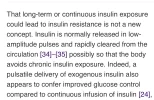
It's been pretty well established at this point that longer time of exposure to insulin, endogenous or exogenous, causes resistance to develop to a much greater degree than the same amount of insulin delivered over a shorter period via "pulses".

IMG_2553.webp


IMG_2550.webp

IMG_2551.webp


There are other causes of resistance as well, but GLPs reduce insulin resistance in large part, by increasing insulin secretin and "extinguishing the glucose fire" quickly, allowing cells the rest period they need for receptors to resensitize. .

This mechanism of shortening the time of insulin exposure is also the main way GLPs improve lipids. It's a long story, but essentially it's by reducing insulin resistance in the liver, which allows it to do a better job
of clearing cholesterol from blood.

There's a ton on this you can find by searching "Insulin resistance pulsatile". A couple of early papers questioned this concept, but I don't think that's happened in at least a last decade, with the overwhelming amount of research and evidence supporting it.

 
It's been pretty well established at this point that longer time of exposure to insulin, endogenous or exogenous, causes resistance to develop to a much greater degree than the same amount of insulin delivered over a shorter period via "pulses".

View attachment 347408


View attachment 347410

View attachment 347409


There are other causes of resistance as well, but GLPs reduce insulin resistance in large part, by increasing insulin secretin and "extinguishing the glucose fire" quickly, allowing cells the rest period they need for receptors to resensitize. .

This mechanism of shortening the time of insulin exposure is also the main way GLPs improve lipids. It's a long story, but essentially it's by reducing insulin resistance in the liver, which allows it to do a better job
of clearing cholesterol from blood.

There's a ton on this you can find by searching "Insulin resistance pulsatile". A couple of early papers questioned this concept, but I don't think that's happened in at least a last decade, with the overwhelming amount of research and evidence supporting it.

Ah, so you’re pointing the finger more at those big, extended postprandial AUCs. My pattern is the opposite. High-for-sensitivity basal values but the postprandial AUCs are squashed. I did a glucose tolerance test and the entire curve was upside down.
 
Ah, so you’re pointing the finger more at those big, extended postprandial AUCs. My pattern is the opposite. High-for-sensitivity basal values but the postprandial AUCs are squashed. I did a glucose tolerance test and the entire curve was upside down.

Another example would be consuming carbs through many small snacks vs the same amount of carbs taken in a few large meals. Despite the same number of carbs. spreading them out increases exposure
to insulin and increased resistance.
 
Another example would be consuming carbs through many small snacks vs the same amount of carbs taken in a few large meals. Despite the same number of carbs. spreading them out increases exposure
to insulin and increased resistance.
Anyhow, I ended up here in the first place because I was trying to find the answer to a question: how anti-catabolic actually is endogenous insulin? I’ve seen studies showing a substantial effect, for example about a 50% suppression of muscle protein breakdown at 15 uIU/ml in healthy, young adults.

Is that a real, leverable effect?
 
I actually think Tirzepatide is strictly better: it eliminates food noise WITHOUT the nausea of semaglutide. A lot of people confuse the nausea of semaglutide with better appetite suppression but it's just nausea.

Why risk the additional side effects when Tirz does the job?
 
I actually think Tirzepatide is strictly better: it eliminates food noise WITHOUT the nausea of semaglutide. A lot of people confuse the nausea of semaglutide with better appetite suppression but it's just nausea.

Why risk the additional side effects when Tirz does the job?
To be fair, Tirz isnt completely nausea free for many
 
Back
Top