Sex Hormone Binding Globulin [SHBG]

The last appointment I mentioned took the 'wait another 3 months and see' approach...

I'm now 7 months off treatment and feeling the same.... Have an appointment in two weeks, hopefully it wont be a repeat of the above... I am hoping for a gel trial or monotherapy with an AI (NHS)
 
Last edited:
The last appointment I mentioned took the 'wait another 3 months and see' approach...

I'm now 7 months off treatment and feeling the same.... Have an appointment in two weeks, hopefully it wont be a repeat of the above... I am hoping for a gel trial or monotherapy with an AI (NHS)

Do you know you can pretty reliably get an AI from a number of offshore pharmacies? If I were you, I wouldn't wait so long to let damage such as gynecomastia and the potential atrophy of genital tissues continue to accumulate.
 
A PATIENT WITH ELEVATED TESTOSTERONE AND GONADOTROPINS: IS IT SECONDARY HYPERGONADISM? [Abstract #1004] http://am.aace.com/sites/all/files/Abstract-Book.pdf

Case Presentation: A 64- year old man was referred to Endocrinology section for evaluation of very high testosterone levels. Gonadal profile measured as the patient was complaining of fatigue and erectile dysfunction. Other Medical problems include chronic smoker, type 2 diabetes treated with insulin, chronic liver disease secondary to hepatitis C virus and depression.

Physical exam showed normal testicular exam and no gynecomastia. Total testosterone level of more than 6000 ng/dl (241 - 827). Repeated blood work revealed a total testosterone of more than 1500 ng/dl free testosterone 16.65 ng/dl ( 5.0-21.0), beta-HCG <1 mIU/mL ( 0-3), alpha subunit 1.9 ng/mL ( < 0.6 ng/ml ), sex hormone binding globulin (SHBG) 158.3nm/l (19.3-76.4), LH 15.3 mIU/ml ( 1.2-10.8), FSH 9.5 mIU/ml ( 0.7-10.8), total estradiol 50.5 pg/ml (7.6- 42.6).

Other results include, TSH 0.70 uIU/ml (0.4 - 4.0), albumin 3.6, alkaline phosphatase 79, AST 77 units/L (12 - 34), ALT 110 units/L (10 - 55). MRI of pituitary was done without any evidence of pituitary adenoma. Other pituitary and target function tests were normal.

Repeat blood work up at 6 months revealed total testosterone 1045 ng/dl, free testosterone 10.5 ng/dl, SHBG 188.6 nm/l, LH 13 mIU/ml , FSH 9 mIU/ml , total estradiol 52.5 pg/ml, a free estradiol was came back 0.4 pg/ml ( 0.2-1.5 pg/ml).

Discussion: The interesting features are: elevated LH level with high total testosterone and estradiol with normal free testosterone and low free estradiol level.

This patient has elevated SHBG as a result of hepatitis C and chronic liver disease. SHBG bind both testosterone and estrogens. An elevated SHBG level explains the high total testosterone and high total estradiol. Gonadotropin levels are controlled via a negative feedback from free testosterone as well free estradiol. Estradiol exerts a strong negative feedback on the pituitary and decreases the release of gonadotropins. Therefore, in this patient, the elevated LH level can be attributed to either the low free estradiol level or to partial testosterone resistance.

In view of elevated LH and elevated testosterone levels, other possibilities include gonadotroph adenomas and HCG secreting tumors. HCG levels being low, rules out HCG as the culprit. MRI pituitary has no evidence of pituitary adenoma.

Conclusion: Patients with chronic liver disease may have elevated SHBG causing high total testosterone and estradiol. Free estradiol may become so low that it loses its ability to suppress gonadotropins. The resulting elevated gonadotropins and high total testosterone may mimic a picture of secondary hypergonadism. A partial testosterone resistance can’t be ruled out as well.
 
Dr. Scally,

This paper demonstrates secondary hypogonadism from low FE. Could the reverse situation also be possible? SHH from high FE?

Considering that free estrogen is the primary feedback mechanism for the amplitude of the LH pulse (one recent medical textbook suggests that the feedback strength is 50:1 to testosterone)...

Could it be true that excess FE (from insufficient SHBG) would thus cause LH suppression and therefore secondary hypogonadism?
 
Last edited:
A Multi-Step, Dynamic Allosteric Model of Testosterone's Binding to Sex Hormone Binding Globulin

Highlights
· Accurate estimation of free testosterone (fT) is central to diagnosis of hyogonadism.
· Limitations in measurements have led to development of models for calculation of fT.
· Current models of fT estimation show deviation from values measured by dialysis.
· The SHBG exhibits complex dynamics in associating with testosterone.
· fT values from new model incorporating allostery in SHBG:T match closely with dialysis.

Zakharov MN, Bhasin S, Travison TG, et al. A multi-step, dynamic allosteric model of testosterone's binding to sex hormone binding globulin. Mol Cell Endocrinol. https://www.sciencedirect.com/science/article/pii/S030372071400272X

PURPOSE: Circulating free testosterone (FT) levels have been used widely in the diagnosis and treatment of hypogonadism in men. Due to experimental complexities in FT measurements, the Endocrine Society has recommended the use of calculated FT (cFT) as an appropriate approach for estimating FT.

We show here that the prevailing model of testosterone's binding to SHBG, which assumes that each SHBG dimer binds two testosterone molecules and that the two binding sites on SHBG have similar binding affinity is erroneous and provides FT values that differ substantially from those obtained using equilibrium dialysis.

METHODS: We characterized testosterone's binding to SHBG using binding isotherms, ligand depletion curves, and isothermal titration calorimetry (ITC). We derived a new model of testosterone's binding to SHBG from these experimental data and used this model to determine FT concentrations and compare these values to those derived from equilibrium dialysis.

RESULTS: Experimental data on testosterone's association with SHBG generated using binding isotherms including equilibrium binding, ligand depletion experiments, and ITC provide evidence of a multi-step dynamic process, encompassing at least two inter-converting microstates in unliganded SHBG, readjustment of equilibria between unliganded states upon binding of the first ligand molecule, and allosteric interaction between two binding sites of SHBG dimer.

FT concentrations in men determined using the new multistep dynamic model with complex allostery did not differ from those measured using equilibrium dialysis. Systematic error in calculated FT vales in females using Vermeulen's model was also significantly reduced. In European Male Aging Study, the men deemed to have low FT (<2.5th percentile) by the new model were at increased risk of sexual symptoms and elevated LH.

CONCLUSION: Testosterone's binding to SHBG is a multi-step dynamic process that involves complex allostery within SHBG dimer. FT values obtained using the new model have close correspondence with those measured using equilibrium dialysis.
 
Simo R, Saez-Lopez C, Lecube A, Hernandez C, Fort JM, Selva DM. Adiponectin upregulates SHBG production: molecular mechanisms and potential implications. Endocrinology 2014;155(8):2820-30. http://press.endocrine.org/doi/abs/10.1210/en.2014-1072

Epidemiological studies have shown that plasma SHBG levels correlate with plasma adiponectin levels, both in men and women. There are no reports describing any molecular mechanism by which adiponectin regulates hepatic SHBG production.

The aim of the present study is to explore whether adiponectin regulates SHBG production by increasing HNF-4alpha levels through reducing hepatic lipid content. For this purpose, in vitro studies using human HepG2 cells, as well as human liver biopsies, were performed.

Our results show that adiponectin treatment increased SHBG production via AMPK activation in HepG2 cells. Adiponectin treatment decreased the mRNA and protein levels of enzymes related to hepatic lipogenesis (ACC) and increased those related to fatty acid oxidation (ACOX and CPTI).

These adiponectin-induced changes in hepatic enzymes resulted in a reduction of total TG and FFA and an increase of HNF-4alpha. When HNF-4alpha expression was silenced by using siRNA, adiponectin-induced SHBG overexpression was blocked. Furthermore, adiponectin-induced upregulation of SHBG production via HNF-4alpha overexpression was abrogated by the inhibition of fatty acid oxidation or by the induction of lipogenesis with a 30mM glucose treatment in HepG2 cells.

Finally, adiponectin levels correlated positively and significantly with both HNF-4alpha and SHBG mRNA levels in human liver biopsies. Our results suggest for the first time that adiponectin increases SHBG production by activating AMPK, which reduces hepatic lipid content and increases HNF-4alpha levels.
 
Hong H, Branham WS, Ng HW, et al. Human Sex Hormone Binding Globulin Binding Affinities of 125 Structurally Diverse Chemicals and Comparison with Their Binding to Androgen Receptor, Estrogen Receptor and alpha-Fetoprotein. Toxicol Sci. http://toxsci.oxfordjournals.org/content/early/2014/10/26/toxsci.kfu231.abstract

One endocrine disruption mechanism is through binding to nuclear receptors such as the androgen receptor (AR) and estrogen receptor (ER) in target cells. The concentration of a chemical in serum is important for its entry into the target cells to bind the receptors, which is regulated by the serum proteins.

Human sex hormone binding globulin (SHBG) is the major transport protein in serum that can bind androgens and estrogens and thus change a chemical's availability to enter the target cells. Sequestration of an androgen or estrogen in the serum can alter the chemical elicited AR- and ER-mediated responses.

To better understand chemical induced endocrine activity, we developed a competitive binding assay using human pregnancy plasma and measured the binding to the human SHBG for 125 structurally diverse chemicals, most of which were known to bind AR and ER.

Eighty seven chemicals were able to bind the human SHBG in the assay, while 38 chemicals were non-binders. Binding data for human SHBG are compared with that for rat alpha-fetoprotein, ER and AR. Knowing the binding profiles between serum and nuclear receptors will improve assessment of a chemical's potential for endocrine disruption.

The SHBG binding data reported here represent the largest data set of structurally diverse chemicals tested for human SHBG binding. Utilization of the SHBG binding data with AR and ER binding data could enable better evaluation of endocrine disrupting potential of chemicals through AR- and ER-mediated responses since sequestration in serum could be considered.
 
Zakharov MN, Bhasin S, Travison TG, et al. A multi-step, dynamic allosteric model of testosterone's binding to sex hormone binding globulin. Mol Cell Endocrinol. https://www.sciencedirect.com/science/article/pii/S030372071400272X

PURPOSE: Circulating free testosterone (FT) levels have been used widely in the diagnosis and treatment of hypogonadism in men. Due to experimental complexities in FT measurements, the Endocrine Society has recommended the use of calculated FT (cFT) as an appropriate approach for estimating FT.

We show here that the prevailing model of testosterone's binding to SHBG, which assumes that each SHBG dimer binds two testosterone molecules and that the two binding sites on SHBG have similar binding affinity is erroneous and provides FT values that differ substantially from those obtained using equilibrium dialysis.

METHODS: We characterized testosterone's binding to SHBG using binding isotherms, ligand depletion curves, and isothermal titration calorimetry (ITC). We derived a new model of testosterone's binding to SHBG from these experimental data and used this model to determine FT concentrations and compare these values to those derived from equilibrium dialysis.

RESULTS: Experimental data on testosterone's association with SHBG generated using binding isotherms including equilibrium binding, ligand depletion experiments, and ITC provide evidence of a multi-step dynamic process, encompassing at least two inter-converting microstates in unliganded SHBG, readjustment of equilibria between unliganded states upon binding of the first ligand molecule, and allosteric interaction between two binding sites of SHBG dimer.

FT concentrations in men determined using the new multistep dynamic model with complex allostery did not differ from those measured using equilibrium dialysis. Systematic error in calculated FT vales in females using Vermeulen's model was also significantly reduced. In European Male Aging Study, the men deemed to have low FT (<2.5th percentile) by the new model were at increased risk of sexual symptoms and elevated LH.

CONCLUSION: Testosterone's binding to SHBG is a multi-step dynamic process that involves complex allostery within SHBG dimer. FT values obtained using the new model have close correspondence with those measured using equilibrium dialysis.
 
A PATIENT WITH ELEVATED TESTOSTERONE AND GONADOTROPINS: IS IT SECONDARY HYPERGONADISM? [Abstract #1004] http://am.aace.com/sites/all/files/Abstract-Book.pdf
..
Conclusion: Patients with chronic liver disease may have elevated SHBG causing high total testosterone and estradiol. Free estradiol may become so low that it loses its ability to suppress gonadotropins. The resulting elevated gonadotropins and high total testosterone may mimic a picture of secondary hypergonadism. A partial testosterone resistance can’t be ruled out as well.

There was discussion earlier about binding affinity of testosterone and estradiol, and the conclusion was that testosterone prefers to bind to SHBG and estradiol prefers to bind to albumine. This answer was from Dr Jim (thread "Testosterone levels in a heathly young man", post #16). At least, that is how I understood it.

Above they talk about elevated SHBG causing high total estradial and very low free estradiol.. How does that work? Why SHBG? Why not albumine, if estradiol has higher binding affinity to albumine than SHBG?

Just trying to understand.. Thanks!
 
Highlights
· Hyperinsulinemia does not downregulate hepatic SHBG production in obesity.
· Proinflammatory cytokines and hepatic steatosis downregulate SHBG in obesity.
· Monosaccharides and palmitate downregulate and oleate upregulates hepatic SHBG.
· Plasma SHBG could be a biomarker of the degree of inflammation in metabolic disorders.

Simo R, Saez-Lopez C, Barbosa-Desongles A, Hernandez C, Selva DM. Novel insights in SHBG regulation and clinical implications. Trends Endocrinol Metab. https://www.sciencedirect.com/science/article/pii/S1043276015000831

Sex hormone-binding globulin (SHBG) is produced and secreted by the liver into the bloodstream where it binds sex steroids and regulates their bioavailability.

Traditionally, body mass index (BMI) was thought to be the major determinant of SHBG concentrations and hyperinsulinemia the main cause for low SHBG levels found in obesity.

However, no mechanisms have ever been described. Emerging evidence now shows that liver fat content rather than BMI is a strong determinant of circulating SHBG.

In this review we discuss evidence demonstrating that insulin might not regulate SHBG production, describe putative molecular mechanisms by which proinflammatory cytokines downregulate SHBG, and comment on recent findings suggesting dietary SHBG regulation. Finally, clinical implications of all of these findings and future perspectives are discussed.
 
Thats a good one and the REASON I say this is because it has to be the blindest shot of shit I have seen published by a study in a while. I am not sure the political insight and relation yet. I will read it.

I Know I have got on this soap box before. And WHY would sex hormones (in addition to the hormone "Insulin", "Vit D", "THYROID", ETC...) not regulate it FIRST.??!? STill when you consider all the things that come together at the cell to urn the furnace. FOR THAT MATTER, O2 and CO2 could very well be the MORE primary influencer...!! As this would def apply to obesity, VO2 max, etc...

My SHBG has been low since before TRT 10 years ago and when body fat was more like 18% and not 30%. I as drinking beer then but binge drinking light weight only once a week then. And pretty muscularly active. Currently, and in mid-forties, myy SHBG stays around 13-15 (same as back then), and I have no issues with diabetes, insulin or sugar plasma levels when tested... ever.

I would think Insulin may be a good INDICATION or SYMPTOM, at best, and just cyphering logically and anecdotally. Its definitely higher up the tree as things burned at the cell. Still ONLY a "Key of caloric preference/distinguishment" / or CATALYST as I think in my tiny mind. And because of the fact that IF YOU HAVE NO NEED TO BURN CALORIES, the need for insulin diminishes.... Or SHOULD...

I WONDER HOW INSULIN RELATES TO FAT STORAGE. Keep in mind NOT BEING FAT ALREADY. But the process of blowing up the genetically present adipose tissue, or even the possible notion of overeating so bad that you actually build NEW fat cells. Could that lethargy related to getting fat/being fat - POSSIBLY be associated with GH release to MAINTAIN fat / or BUILD new fat tissue?!?

HOW DOES SHBG BEHAVE IN A "FAT BUILDING SESSION". I have done them believe me my health profile is BIPOLAR to say the least. Year to year, or YEARS TO YEARS.. I would speculate that SHBG related to NORMAL BODY FAT MAINTENANCE SHOULD be only 1/3 the FLOW RATE which is required to work healthy muscle tissue...?!? Considering the DENSITY of the two types of body Masses...

Still we fall back to my mid-evil circle of HOW do you even QAUNTIFY a hormone or SHBG "Burn Rate". ??

Something I have never mentioned, I THINK A GOOD Potential CASE STUDY, - WOuld
be to measure a resting atheletes SHBG rate AT REST vs. UNDER LOAD vs. Post load (with food replenishment and without). You just might be able to capture momentary changes should you be drawing blood in 1 minute intervals.

STILL when you consider HORMONAL DERIVATIVES, the analysis would be massive and heavily detaild to see just what the SHBG was carrying, In or our, testosterone, androgens, estrogens. DOES FAT HOLD hormones better, or GENERATE HORMONES BETTER. I would think slower and holding them. So you toss a bunch of T and DHT derivative from a workout and DO YOU cause E2 to stay at receptor and convert the the DEVIL E3!!!!??? And if your SHbG production is not up to spec. Or even if it is should fat turn over hormones even FASTER THAN MUSCLE. When you consider how stubborn fat is, how hard it is to DEVELOP MUSCLE. It may turn out the fat actually metabolizes TESTORSTERONE TO ESTROGEN 3-10 times FASTER/ When being challenged to use under work load...!!!!!!!!!!!! And then only slower than muscle when sedentary..?!?!

I have often mentioned how do you put a meter on the testicles to actually measure testosterone PRODUCTION. Cause there can be no other true way as the hormone is so generally used. You could test LH, FSH, and brain produced hormones with draws from the neck vessels at INS and outs. That would be interesting.

WE MUST CONSIDER PULSE RATE... And this is because the blood is going to have a MAX CONCENTRATION of the components if carries when you add them all up. Also consider if you have poor cardio capability and poor Oxygen and CO2 availability and removal, then you have less functional red blood cells more likely. AND LESS OF THEM COMPONENT WISE... Hemocrit, stuff like that should be a measure that applies. But IF THERE ARE NOT ENOUGH OXYGEN MOLECULES to activate at fat or muscle tissue, THERE CAN BE NO FIRE AT THOSE RECEPTOR FURNACES. If the receptors can not process the many hormones, air, hormones, vitamins, minerals, one of two things will happen. The brain will downregulate what it orders to burn, OR it will think and KNOW if needs to burn but cant cause satellite systems like pancreas or testes might not be caught up or malfunctioning, OR WORST CASE the cells just cant handle it, but the brain if forcing it, and blood volume components OVERLOAD and things GET TRAPPED at tissue cells. Not good I speculate. Could that be a case for HIGH SHBG and poor metabolic performance and under any BMI conditions.

Finally, for some more brainstorm.
HOW DOES THE FUNCTION OF THE bRAIN WHEN IT COMES TO THINKING APPLY...! I am a sure everyone who has worked out seriously has noted before that a hard day in the office WILL KILL GYM STRENGTH...! So just what does having the "CYPHER with the brain", or just be under psychological stress which is isolated to brain only, AFFECT blOOD FACTORS, insulin, and MORE IMPORTANTLY - O2 and Co2...!! We know the brain is a place of glycogen use and storage, and without you brain fart. You know you cant think hard without eating well.. It takes insulin to deliver calories to the brain to think. Ever seen I diabetic with too much insulin. WHy does that problem turn them into drunks and shut their brains down??! Did they burn up all their calories too fast, or did the extra insulin HOG/Block the receptors in the brain. But that is a coma-bound moment without some sugar stat.. Does insulin WITHOUT CALORIES ATTACHED STILL INTERACT AND NOW DELIVER NOTHING!!! Essentially the equivalent to a plastic bag over the head..??

I shot askew for a moment but my point on HOW DOES BRAIN TRAINING PERTAIN TO MUSCLE TRAINING.?!? Could you quit training for a few months to go back to school and maintain a better metabolic profile than opposed to not thinking much in that time. Do nerds working their brains all the time have the potential to hit the track, excell faster than others equally inlclined, and then quickly run fast and long and simply due to brain metabolism...?

One thing is for sure. Sedentary life, muscle atrophy, low diet or poor diet will make you TIRED and RETARDED. How much capability does an athlete have to learn academically and endure psychological stress after years of training and if INTELLECTUALLY BIOLOGICAL INCLINED....!!! Did working out from years 18-26 make me smarteR???

LASTLY -
I speak of HOW to measure blood components and TRUE METABOLISM RATES vs. a poor application of a "Serum Count" which snap shots ONE MOMENT IN TIME. Helpful, but only in proper use and application. So how to know how much testosterone the nutz are making for the current "BURN RATE"?? How. How to know how much SHBG (difficult calculation as least just from a snap shot even)???

1. WE can SPECULATE that an ML of blood can only hold so much of all the components at one time. With a RANGE. But still AN ml...... is ..... an ML....!

2. WHat else can we deduct.? HEATRATE, PULSE, ACTIVITY RATE.. This one's important cause it will/should vary greatly in the body WHERE The BLOOD IS DRAWN if the heart is racing. This would be some interesting proof of some things.

3. But a guy out of shape completely overloading pulse rate on an exercise bike should have a great reduction of many blood components if he puts himself under a 165 pulse load and with no training in years. AS OPPOSED TO HIM SITTING AS REST... Under and after new workload, many factors should be a total LIE as composed to his normal life. does he go into glycemic type insulin OD more likely. Does his blood sugar spike cause his insulin cant produce enough for the unusual rate? O2 Being what I would call a "Master Set" of bilogical life would take up more space. Could it funtion properly. Could Co2 clear? no. Not untrained. buT HOW MUCH DOES "BRAIN WORK" Prepare for and Toll ON physcial activity..!

4. What does that say about an ANAEROBIC BODY BUILDER'S capacity for blood component potential? Do BB's that also work carbio possess greater blood component capacity. Is this why some have hemcrit too high. and some dont.? Why some are more vascular looking? What are the implications. How important is it to blend prolonged aerobic activity with Anaerobic for different types exercises. And running vs. lifting.?

Just some shots from the hip... I wont define "Hip".

:)


Highlights
· Hyperinsulinemia does not downregulate hepatic SHBG production in obesity.
· Proinflammatory cytokines and hepatic steatosis downregulate SHBG in obesity.
· Monosaccharides and palmitate downregulate and oleate upregulates hepatic SHBG.
· Plasma SHBG could be a biomarker of the degree of inflammation in metabolic disorders.
Simo R, Saez-Lopez C, Barbosa-Desongles A, Hernandez C, Selva DM. Novel insights in SHBG regulation and clinical implications. Trends Endocrinol Metab. https://www.sciencedirect.com/science/article/pii/S1043276015000831

Sex hormone-binding globulin (SHBG) is produced and secreted by the liver into the bloodstream where it binds sex steroids and regulates their bioavailability.

Traditionally, body mass index (BMI) was thought to be the major determinant of SHBG concentrations and hyperinsulinemia the main cause for low SHBG levels found in obesity.

However, no mechanisms have ever been described. Emerging evidence now shows that liver fat content rather than BMI is a strong determinant of circulating SHBG.

In this review we discuss evidence demonstrating that insulin might not regulate SHBG production, describe putative molecular mechanisms by which proinflammatory cytokines downregulate SHBG, and comment on recent findings suggesting dietary SHBG regulation. Finally, clinical implications of all of these findings and future perspectives are discussed.
 
Molecular Mechanisms Regulating Hepatic Sex Hormone-Binding Globulin (SHBG) Production
https://www.sciencedirect.com/science/article/pii/S1043276015000831

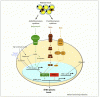
Cytokines such as tumor necrosis factor alpha (TNFa), interleukin 1 beta (IL1b), and adiponectin regulate SHBG expression by interacting with their receptors and activating various signal cascades resulting in alterations of hepatocyte nuclear factor 4 alpha (HNF-4a) protein levels that increase or decrease SHBG expression.

Dietary factors such as carbohydrates or olive oil are also able to regulate SHBG expression by affecting HNF-4a or peroxisome proliferator-activated receptor gamma (PPARg), respectively.

Thyroid hormone levels can also regulate SHBG production by affecting HNF-4a protein levels.

SHBG-regulation.gif
 
Wang Q, Kangas AJ, Soininen P, Tiainen M, Tynkkynen T, et al. Sex hormone-binding globulin associations with circulating lipids and metabolites and the risk for type 2 diabetes: observational and causal effect estimates. Int J Epidemiol. http://ije.oxfordjournals.org/content/early/2015/06/06/ije.dyv093.abstract

BACKGROUND: The causal role of circulating sex hormone-binding globulin (SHBG) for type 2 diabetes is controversial. Information on the relations between SHBG and new biomarkers of cardiometabolic risk is scarce.

METHODS: We applied quantitative nuclear magnetic resonance metabolomics in three Finnish population-based cohorts to comprehensively profile circulating lipids and metabolites and study their associations with SHBG. Mendelian randomization was used to examine potential causality of SHBG on the metabolic measures and insulin resistance. Prospective associations and causal effect estimates of SHBG on type 2 diabetes were assessed via meta-analysis including summary statistics from the DIAGRAM consortium.

RESULTS: In cross-sectional analysis in 6475 young adults (mean age 31, 57% men), higher SHBG was linked with a more favourable cardiometabolic risk profile, including associations with lipoprotein subclasses, fatty acid composition, amino acids, ketone bodies and inflammation-linked glycoproteins. Prospective analysis of 1377 young adults with 6-year follow-up indicated that SHBG is also associated with future insulin resistance. Mendelian randomization suggested only minor, if any, causal effects of SHBG on lipid and metabolite measures and insulin resistance(n = 10 895).Causal effect estimates on type 2 diabetes for 41 439 cases and 103 870 controls indicated a causative protective role of SHBG (OR = 0.83 per 1-SD, 95% CI: 0.76, 0.91); however, effects were considerably weaker than observed in meta-analysis of prospective studies [hazard ratio (HR) = 0.47 per 1-SD, 95% CI: 0.41, 0.53].

CONCLUSION: Circulating SHBG is strongly associated with systemic metabolism and predictive for insulin resistance and diabetes. The weaker causal estimates suggest that the observational associations are partly confounded rather than conferred directly via circulating SHBG.
 
Dietary SHBG regulation

During the past decade, several studies have shown that numerous dietary components are involved in the regulation of SHBG production in the liver, and some of the underlying molecular mechanisms have been identified.

SHBG Downregulation by Monosaccharides and Palmitate

Diets containing high amounts of carbohydrates – fructose in particular – induce de novo lipogenesis and intrahepatic lipid accumulation and inhibits mitochondrial b-oxidation of long-chain FAs, triglyceride formation, and steatosis.

In vitro studies using HepG2 cells have provided evidence that monosaccharides directly regulate SHBG gene expression in these cells by increasing de novo lipogenesis. Reduced SHBG production in response to supplementation of the medium with glucose or fructose was accompanied by reductions in SHBG promoter activity in HepG2 cells in a dose-dependent manner.

Under these conditions, HNF-4a expression was also reduced at the mRNA and protein levels in the cells; this is of importance since it has been shown in HepG2 cells and human liver biopsies that HNF-4a plays a key role in controlling human SHBG gene expression in the liver.

In addition, in vivo studies using hSHBG mice fed with high amounts of sucrose or glucose resulted in decreased human SHBG levels in the blood, which were further reduced when these mice were fed high concentrations of fructose rather than an equicaloric amount of glucose.

Fructose, unlike glucose, fails to stimulate insulin secretion by pancreatic b cells, which is in agreement with the concept that insulin does not play a significant role in reducing the hepatic production of SHBG. However, future prospective clinical studies are required to confirm these results.

Palmitic acid is the first FA produced during FA synthesis and the precursor of longer FAs. Palmitate treatment was also able to reduce SHBG production via a reduction in HNF-4a levels in HepG2 cells. Moreover, treatment with a FA synthase inhibitor (cerulenin) was able to inhibit the monosaccharide-induced reduction of SHBG production in these cells.

SHBG Upregulation by Oleate

A recent clinical study showed that olive oil consumption was associated with elevated SHBG serum levels. The plasma samples used in this study were from 315 men from the cohort of the Pizarra Study in which 1134 people (443 men and 691 women) selected randomly from the municipal census of Pizarra (a southern Spanish population) were included. After 6 years, 928 (341 men and 587 women) were evaluated again.

SHBG serum levels were significantly higher in subjects using olive oil for cooking compared with subjects using sunflower oil. SHBG levels correlated positively with monounsaturated FAs (MUFAs) and negatively with saturated FAs. In addition, multiple regression analysis showed that MUFAs were independently associated with SHBG levels.

This study was complemented by in vitro evidence indicating that oleate treatment increases SHBG production in HepG2 cells by downregulating peroxisome proliferatoractivated receptor gamma (PPARg). This is in agreement with an earlier report showing that PPARg represses hepatic SHBG production and in apparent contradiction to the fact that rosiglitazone increases SHBG plasma levels in hypogonadal men.

However, the effects of rosiglitazone in terms of improving whole-body insulin resistance, and in reducing low-grade inflammation and proinflammatory cytokines, could overcome the negative and direct effects that PPARg has on SHBG regulation.
 
Zheng X, Bi C, Brooks M, Hage DS. Analysis of Hormone-Protein Binding in Solution by Ultrafast Affinity Extraction: Interactions of Testosterone with Human Serum Albumin and Sex Hormone Binding Globulin. Anal Chem. http://pubs.acs.org/doi/abs/10.1021/acs.analchem.5b03007

Ultrafast affinity extraction was used to study hormone-protein interactions in solution, using testosterone and its transport proteins human serum albumin (HSA) and sex hormone binding globulin (SHBG) as models for this research.

Both single column and two-dimensional systems based on HSA microcolumns were utilized to measure the free fraction of testosterone in drug/protein mixtures at equilibrium or that were allowed to dissociate for various lengths of time.

These data were used to determine the association equilibrium constants (Ka) or global affinities (nKa') and dissociation rate constants (kd) for testosterone with soluble HSA and SHBG. This method was also used to simultaneously measure the free fraction of testosterone and its equilibrium constants with both these proteins in physiological mixtures of these agents.

The kd and Ka values obtained for HSA were 2.1-2.2 s^-1 and 3.2-3.5 x 10^4 M^-1 at pH 7.4 and 37 oC. The corresponding constants for SHBG were 0.053-0.058 s^-1 and 0.7-1.2 x 10^9 M^-1.

All of these results gave good agreement with literature values, indicating that this approach could provide information on a wide range of rate constants and binding strengths for hormone-protein interactions in solution and at clinically-relevant concentrations. The same method could be extended to alternative hormone-protein systems or other solutes and binding agents.
 
Functional Effects Of Sex Hormone-Binding Globulin Variants

A new study has found eight single nucleotide polymorphisms in sex hormone-binding globulin that functionally affect its affinity for androgens or estrogens and other biochemical properties. This finding adds to growing concern about the 'one size fits all' approach in formulas to calculate free or bioavailable concentrations of estradiol and testosterone.

Limitations of Calculating Free or Bioavailable Sex Steroid Concentrations

· Immunoassayed total concentrations might be inaccurate, especially for low concentrations of testosterone or estradiol, or possibly when single nucleotide polymorphisms affect sex hormone-binding globulin (SHBG) epitopes
· SHBG binding sites might be occupied by other ligands, making free testosterone calculation inaccurate in pregnancy, for example
· Many different formulas exist, some of which are poorly validated (particularly for estradiol)
· Polymorphisms might influence the affinity of SHBG for testosterone, estradiol or both
· To what extent the free, bioavailable and SHBG-bound fractions actually contribute to bioactivity is unclear
· SHBG might have biological functions beyond restricting the bioactivity of circulating sex steroids
· Other metabolites might contribute to, or be better biomarkers of, androgen status
· Plasma concentrations of sex steroids do not account for sex steroid metabolism within tissues (‘intracrinology’)

Laurent MR, Vanderschueren D. Reproductive endocrinology: Functional effects of sex hormone-binding globulin variants. Nat Rev Endocrinol. http://www.nature.com/nrendo/journal/vaop/ncurrent/full/nrendo.2014.120.html
 
Back
Top

