Sex Hormone Binding Globulin [SHBG]

drp90210

New Member
shbgMy most recent labs have low free and high bioavailable as follows:

Total T - 978 (range = 241 - 827 ng/dl)
Free T - 10.89 (range = 12.4 - 40.0 pg/ml)
Bioavailable T - 630.0 (range = 110.0 - 575.0 ng/dl)
SHBG = 26.5 (range 13 - 71 nmol/L)

Does anyone know why I have total and free levels above the reference ranges alongside free levels below reference range? My regimen is injecting 36 mg of testosterone cyp. twice a week and 200 units of HCG twice a week.
 
Last edited by a moderator:
Re: Labs say low free T but high Bioavailable T. Why?

The American Association of Clinical Endocrinologists (AACE) clinical practice guidelines for the evaluation and treatment of hypogonadism states, "Free testosterone assays are method dependent, and may be difficult to interpret. Because albumin binds testosterone weakly, the amount of free testosterone measured will vary with the technique.” [AACE Hypogonadism Task Force, American Association of Clinical Endocrinologists medical guidelines for clinical practice for the evaluation and treatment of hypogonadism in adult male patients, 8(6) Endocr Pract 439 (2002).]

“Measurement of free or bioavailable testosterone should be considered experimental until they are clearly shown to be a better marker of hypogonadism in the elderly than total testosterone levels. Therefore measurements of free or bioavailable testosterone is not currently justified.” [SR Plymate, Issues in testosterone replacement in older men, III. Which Testosterone Assay Should Be Used In Older Men? 83 J Clin Endocrinol Metab 3436 (1998).]

“In addition, one must be aware that assays that purport to measure free testosterone without using a dialysis method or without calculating free testosterone levels based on separate measurements of testosterone and SHBG can markedly underestimate by as much as 100 percent the true free hormone level. This sort of assay error can result in an incorrect overestimation of the degree or prevalence of androgen deficiency.” [SR Plymate, Issues in testosterone replacement in older men, III. Which Testosterone Assay Should Be Used In Older Men? 83 J Clin Endocrinol Metab 3436 (1998).]
 
Re: Labs say low free T but high Bioavailable T. Why?

My most recent labs have low free and high bioavailable as follows:

Total T - 978 (range = 241 - 827 ng/dl)
Free T - 10.89 (range = 12.4 - 40.0 pg/ml)
Bioavailable T - 630.0 (range = 110.0 - 575.0 ng/dl)
SHBG = 26.5 (range 13 - 71 nmol/L)

Does anyone know why I have total and free levels above the reference ranges alongside free levels below reference range? My regimen is injecting 36 mg of testosterone cyp. twice a week and 200 units of HCG twice a week.

The total T test appears to be the Quest total T test by Immunochemiluminometric assay (ICMA). I'm not sure this is the most accurate test for total T. I think that the Quest total T test by Liquid chromatography tandem mass spectrometry (LC/MS/MS) is the better test. The free T test seems to be by direct assay from the low normal range. As Dr. Scally quoted, a free T test by calculation or equilibrium dialysis is the preferred method. Either the Quest 36170X test (total and free T) or 14966X (calculated) would be a better choice.

There is controversy about the free T test by direct assay. I know that Dr. Scally thinks that it is essentially useless, bot some other respected doctors think it is useful as long as one recognizes that the range is lower by a factor of about 5 (5.3, I think). My doctor uses the Quest teat that analyzes free T by tracer equilibrium dialysis.

Question for Dr. Scally - Is tracer equilibrium dialysis the same as equilibrium dialysis?

I don't know if you should believe your free T results or not. I have read opinions both ways and have seen one study that says that it is acceptable, as it has a constant difference (5.3) between it and ED.
 
Re: Labs say low free T but high Bioavailable T. Why?

The total T test appears to be the Quest total T test by Immunochemiluminometric assay (ICMA). I'm not sure this is the most accurate test for total T. I think that the Quest total T test by Liquid chromatography tandem mass spectrometry (LC/MS/MS) is the better test. The free T test seems to be by direct assay from the low normal range. As Dr. Scally quoted, a free T test by calculation or equilibrium dialysis is the preferred method. Either the Quest 36170X test (total and free T) or 14966X (calculated) would be a better choice.

There is controversy about the free T test by direct assay. I know that Dr. Scally thinks that it is essentially useless, bot some other respected doctors think it is useful as long as one recognizes that the range is lower by a factor of about 5 (5.3, I think). My doctor uses the Quest teat that analyzes free T by tracer equilibrium dialysis.

Question for Dr. Scally - Is tracer equilibrium dialysis the same as equilibrium dialysis?

I don't know if you should believe your free T results or not. I have read opinions both ways and have seen one study that says that it is acceptable, as it has a constant difference (5.3) between it and ED.

Free T is just 1% of active test ..Please comment scally.
 
Re: Labs say low free T but high Bioavailable T. Why?

Recent findings reinforce the active role of SHBG-bound androgens in androgen action and question the validity of the free hormone hypothesis, which asserts that SHBG-bound T is a passive buffer for circulating free T. The sophisticated-sounding free hormone hypothesis, largely a product of outmoded 1970s pharmacological theory of drug interactions, has become a rarely challenged quasi-axiomatic belief in endocrinology.

The free hormone hypothesis assumes unbound hormone is more readily diffusible into tissues and thereby bioactive. This overlooks the equal likelihood that such freely diffusible hormone is also more likely to undergo inactivating metabolism so that the net balance between bioactivity and inactivation remain impossible to determine by theory. It makes many other assumptions (binding equilibria are completed during capillary transit, all capillaries operate similarly, T binding affinity for SHBG is invariant).

Empirically, the proliferation of calculational formulae for free or bioavailable T adds a further layer of inaccuracies adopting wrong stoichiometry, inaccurate SHBG binding affinity, and substitute an immunoassay for a SHBG binding assay, leading to limited validation and poor performance in large-scale usage. [Handelsman DJ. Update in Andrology. J Clin Endocrinol Metab 2007;92(12):4505-11.
Update in Andrology -- Handelsman 92 (12): 4505 -- Journal of Clinical Endocrinology & Metabolism ]


For some background, read the following. Lin BC, Scanlan TS. Few Things in Life are “Free”: Cellular Uptake of Steroid Hormones by an Active Transport Mechanism. Molecular Interventions 2005;5(6):338-40.

Conventional dogma holds that steroid hormones traverse cell membranes passively, owing to their lipophilic nature. The recently characterized protein megalin, however, functions as a transport protein on cell surfaces to carry steroids across the plasma membrane. Upon hydrolysis of steroid-associated binding globulins in lysosomes, free hormone is liberated and may exert its effects in the cell. Megalin-independent mechanisms of steroid uptake are likely important too, as the phenotypes of megalin-deficient mice do not completely mimic the phenotypes of androgen receptor– or estrogen receptor–null mice.

Steroid hormones participate in the regulation of normal vertebrate homeostasis, development, and reproduction. The best understood mechanism of steroid action is for these signaling molecules to enter target cells and bind to their cognate intracellular receptors that, subsequently, regulate the transcription of corresponding steroid responsive genes. Defects in these signaling pathways can lead to a variety of endocrine and neoplastic disorders.

Most circulating steroids are bound to carrier proteins that deliver these hormones to their target cells. Upon reaching their destination, steroids are released and, by virtue of their small size and lipophilic nature, are believed to traverse the plasma membrane by free diffusion to carry out their regulatory effects inside the cell. Thus, the free hormone hypothesis states that the biological activity of a particular hormone is only affected by its free (protein unbound) concentration, rather than its protein-bound concentration in plasma(1).

Recent findings refute the long-held notion that lipophilic hormones, such as androgens and estrogens, solely diffuse into cells by a free, non-specific mechanism. Megalin (2, 3), a member of the low density lipoprotein receptor superfamily of endocytic proteins, has been identified as an important facilitator of steroid entry into cells. Previous work by Nykjaer and colleagues (4) has demonstrated the existence of megalin-dependent endocytic pathways for tissue specific uptake of complexed vitamin D [i.e., 25-(OH) vitamin D3 bound to vitamin D binding protein (DBP)], suggesting that megalin may be important in maintaining steroid hormone balance in mammals. Specifically, they demonstrated that megalin knockout (KO) mice were unable to resorb the vitamin into the epithelial cells of the renal proximal tubules, where the receptor is normally expressed. As a result, these megalin-null animals developed bone calcification defects, likely owing to the inability of 25-(OH) vitamin D3 to be converted to the active vitamin D receptor ligand, 1,25-(OH)2 vitamin D3. Physiologically, this megalin-mediated pathway is very appealing, given that the overwhelming majority of plasma 25-(OH) vitamin D3 is found in complex with DBP, with only a very small percentage of the metabolite existing in the free form(5).

In addition to the renal proximal tubules, megalin is expressed in a variety of other tissues, including ones that are steroid responsive. Notably, this endocytic receptor has been found in both male and female reproductive organs (i.e., epididymis, prostate, ovaries, and uterus) (6). Given the tissue distribution of megalin and its proposed role in cellular uptake of vitamin D, Hammes et al. (7)hypothesized that this endocytic receptor may also be important for the cellular delivery of sex steroids. This group has recently presented convincing evidence that androgens and estrogens in complex with their carrier protein, the sex hormone binding globulin (SHBG), are endocytosed in cultured cells expressing megalin. The presence of accessible megalin appears to be necessary for optimal internalization of these steroid-SHBG complexes, as evidenced by the reduced levels of uptake observed when receptor-associated protein (RAP, an antagonist of ligand binding to megalin) or megalin-specific antiserum was added, or in cells that lack megalin expression. Furthermore, transcriptional activation (the hallmark of intracellular steroid action) of an androgen-sensitive reporter was observed when androgen-SHBG complexes were added to megalin-expressing cells in vitro; this activity was also inhibited by the addition of RAP. Finally, the most striking evidence supporting a role for megalin in proper sex steroid uptake and signaling came from in vivo studies of megalin KO mice. Males lacking megalin showed impaired descent of the testes whereas megalin-deficient females exhibited abnormalities in vaginal development––both defects being consistent with insensitivity to androgens and estrogens, respectively. Hence, as is the case for megalin involvement with vitamin D3, there seems to be significant physiological relevance for megalin in the cellular uptake of sex steroids. Depending on the steroid, the majority of metabolites of certain steroids can be found in complex with their corresponding binding proteins (8). Thus, free diffusion of these molecules may not play as important a role in delivery, especially in tissues that require large amounts of steroid hormones.

Despite the intriguing findings regarding the proposed role of megalin in the endocytosis of steroid hormones, it is certainly worth noting that megalin-null mice are not phenotypic replicas of mice that lack the androgen or estrogen receptor (9). These observations suggest that megalin-independent mechanisms must also exist for the sex steroids to carry out their effects. Thyroid hormone (another small, lipophilic molecule) was also traditionally believed to enter target cells by passive diffusion; however, thyroid hormone can be actively transported into target cells via the monocarboxylate transporter MCT8 (10). It is not unreasonable to think that a similar mode of transport may occur for the sex steroid hormones.

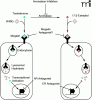
The identification of endocytic pathways for estrogens and androgens could have potentially important therapeutic implications, given the existence of breast and prostate tumors that are dependent on their respective sex steroids for growth and proliferation. If megalin is indeed the primary mediator for the uptake of these steroid hormones in pathological settings, drugs that target this endocytic receptor could help to block the supply of these molecules to cancer cells, and serve as an alternative or cooperative treatment to currently existing therapies (e.g., estrogen antagonists and biosynthesis inhibitors in the case of breast cancer) (Figure 1). There are many questions, however, that must first be addressed regarding the role of megalin in tumor biology. For example, do tumor cells that are androgen- or estrogen-dependent overexpress megalin at the plasma membrane, relative to their normal counterparts? What is the precise megalin binding site for the steroid-SHBG complex and is this site distinct for androgens versus estrogens? Given that megalin acts as a promiscuous receptor for a wide variety of ligands (e.g., vitamin and steroid–binding protein complexes, lipoproteins, enzymes, drugs, toxins, etc.), how is specificity of endocytosis achieved? More importantly, from a drug development standpoint, how might antagonism and target tissue specificity be achieved such that uptake of other endogenous megalin ligands (e.g. vitamin D3 in the kidneys) and normal physiological processes are minimally affected? Although megalin may be a promising new target for cancer therapy, much target validation work remains to be done.

In conclusion, the findings presented by Hammes et al. (7) demonstrate that megalin has a potentially significant role in sexual and reproductive development in mice. This active transport mechanism is particularly interesting, and perhaps important, regarding: 1) the proper function of tissues that require large amounts of steroids or, 2) the pathophysiological processes involved in steroid-dependent tumors. In these two examples, passive diffusion alone would be unlikely to deliver the necessary amounts of steroids to propagate their effects in target cells. Thus, the identification of megalin as an endocytic receptor for the cellular uptake of sex steroids represents a novel paradigm for a physiological role of these carrier bound molecules and should be factored into future steroid hormone biology research.


7657


Figure 1. Schematic representation of mechanisms blocking androgen and estrogen actions. Most of the current drugs used to treat steroid-dependent tumors either: 1) block the biosynthesis of steroid hormones (aromatase inhibitors) or 2) prevent transcriptional activation of steroid responsive genes by inhibiting the binding of endogenous steroids to their intracellular receptors (androgen receptor (AR) or estrogen receptor (ER) antagonists). Megalin has been identified as an endocytic receptor for the cellular uptake of steroid/sex hormone binding globulin (SHBG) complexes (7). Development of megalin antagonists, that block the entry of steroids into cells, may serve as an alternative or synergistic treatment to presently available therapeutics.


References

1. Mendel, C.M. The free hormone hypothesis: a physiologically based mathematical model. Endocr. Rev. 10, 232–274 (1989).

2. Christensen, E.I. and Birn, H. Megalin and cubulin: Multifunctional endocytic receptors. Nat. Rev. Mol. Cell Biol. 3, 258–268 (2002). This review provides a comprehensive overview of megalin biology.

3. Willnow, T.E., Nykjaer, A., and Herz, J. Lipoprotein receptors: New roles for ancient proteins. Nat. Cell Biol. 1, E157–E162 (1999).

4. Nykjaer, A., Dragun, D., Walther, D., Vorum, H., Jacobsen, C., Herz, J., Melsen, F., Christensen, E.I., and Willnow, T.E. An endocytic pathway essential for renal uptake and activation of the steroid 25-(OH) vitamin D3.Cell 96, 507–515 (1999). These findings provide the first suggestion that megalin is an endocytic receptor for steroid [i.e., 25-(OH) vitamin D3] delivery into cells.

5. Bikle, D.D., Gee, E., Halloran, B., Kowalski, M.A., Ryzen, E., and Haddad, J.G. Assessment of the free fraction of 25-hydroxyvitamin D in serum and its regulation by albumin and the vitamin D binding protein. J. Clin. Endocrinol. Metab. 63, 954–959 (1986).

6. Zheng, G., Bachinsky, D.R., Stamenkovic, I., Strickland, D.K., Brown, D., Andres, G., and McCluskey, R.T. Organ distribution in rats of two members of the low-density lipoprotein receptor gene family, gp330 and LRP/alpha-2MR, and the receptor-associated protein (RAP). J. Histochem. Cytochem.42, 531–542 (1994).

7. Hammes, A., Andreassen, T.K., Spoelgen, R. et al. Role of endocytosis in cellular uptake of sex steroids. Cell 122, 751–762 (2005). This paper describes the endocytic uptake of sex steroid/carrier protein complexes by megalin, as described in this Viewpoint.

8. Dunn, J.F., Nisula, B.C., and Rodbard, D. Transport of steroid hormones: Binding of 21 endogenous steroids to both testosterone-binding globulin and corticosteroid-binding globulin in human plasma. J. Clin. Endocrinol. Metab. 53, 58–68 (1981).

9. Couse, J.F. and Korach, K.S. Exploring the role of sex steroids through studies of receptor deficient mice. J. Mol. Med. 76, 497–511 (1998).

10. Friesema, E.C.H., Ganguly, S., Abdalla, A., Manning Fox, J.E., Halestrap, A.P., and Visser, T.J. Identification of monocarboxylate transporter 8 as a thyroid hormone transporter. J. Biol. Chem. 278, 40128–40135 (2003).

 

Attachments

Re: Labs say low free T but high Bioavailable T. Why?

Krasnoff JB, Basaria S, Pencina MJ, et al. Free Testosterone Levels Are Associated with Mobility Limitation and Physical Performance in Community-Dwelling Men: The Framingham Offspring Study. J Clin Endocrinol Metab:jc.2009-680.

Context: Mobility limitation is associated with increased morbidity and mortality. The relationship between circulating testosterone and mobility limitation and physical performance is incompletely understood.

Objective: Our objective was to examine cross-sectional and prospective relations between baseline sex hormones and mobility limitations and physical performance in community-dwelling older men.

Design, Setting, and Participants: We conducted cross-sectional and longitudinal analyses of 1445 men (mean age 61.0 {+/-} 9.5 yr) who attended Framingham Offspring Study examinations 7 and 8 (mean 6.6 yr apart). Total testosterone (TT) was measured by liquid chromatography tandem mass spectrometry at examination 7. Cross-sectional and longitudinal analyses of mobility limitation and physical performance were performed with continuous (per SD) and dichotomized [low TT and free testosterone (FT) and high SHBG vs. normal] hormone levels.

Main Outcome Measures: Self-reported mobility limitation, subjective health, usual walking speed, and grip strength were assessed at examinations 7 and 8. Short physical performance battery was performed at examination 7.Results: Higher continuous FT was positively associated with short physical performance battery score ({beta} = 0.13; P = 0.008), usual walking speed ({beta} = 0.02; P = 0.048), and lower risk of poor subjective health [odds ratio (OR) = 0.72; P = 0.01]. In prospective analysis, 1 SD increase in baseline FT was associated with lower risk of developing mobility limitation (OR = 0.78; 95% confidence interval = 0.62-0.97) and progression of mobility limitation (OR = 0.75; 95% confidence interval = 0.60-0.93). Men with low baseline FT had 57% higher odds of reporting incident mobility limitation (P = 0.03) and 68% higher odds of worsening of mobility limitation (P = 0.007).

Conclusions: Lower levels of baseline FT are associated with a greater risk of incident or worsening mobility limitation in community-dwelling older men. Whether this risk can be reduced with testosterone therapy needs to be determined by randomized trials.
 
Re: Labs say low free T but high Bioavailable T. Why?

Well instead of starting a new thread I am going to say hello on yours Members. Hi to you and all the members of this forum, just found it today and I will second on that this is a great site with allot of useful information.
 
Re: Labs say low free T but high Bioavailable T. Why?

Sex hormone-binding globulin (SHBG) is the high-affinity plasma transport protein for androgens and estrogens, and it modulates the amounts of free or nonprotein- bound sex steroids that can access their target tissues. The presence of human SHBG within cells raises the obvious question of whether it promotes the internalization and actions of sex steroids, or dampens their effects by restricting steroid access to their nuclear receptors. These questions were explored in a series of experiments that lead researchers to conclude that the presence of human SHBG within specific cell types, such as PCT epithelial cells, accentuates the uptake of androgens and serves as a reservoir for androgens that can be accessed by the AR, and that this may be especially important under conditions where the supply of androgens is limited.


Hong E-J, Sahu B, Janne OA, Hammond GL. Cytoplasmic Accumulation of Incompletely Glycosylated SHBG Enhances Androgen Action in Proximal Tubule Epithelial Cells. Mol Endocrinol:me.2010-0483. Cytoplasmic Accumulation of Incompletely Glycosylated SHBG Enhances Androgen Action in Proximal Tubule Epithelial Cells -- Hong et al., 10.1210/me.2010-0483 -- Molecular Endocrinology

Human sex hormone-binding globulin (SHBG) accumulates within the cytoplasm of epithelial cells lining the proximal convoluted tubules of mice expressing human SHBG transgenes. The main ligands of SHBG, testosterone and its metabolite, 5{alpha}-dihydrotestosterone (DHT), alter expression of androgen-responsive genes in the kidney. To determine how intracellular SHBG might influence androgen action, we used a mouse proximal convoluted tubule (PCT) cell line with characteristics of S1/S2 epithelial cells in which human SHBG accumulates. Western blotting revealed that SHBG extracted from PCT cells expressing a human SHBG cDNA (PCT-SHBG) is 5-8 kDa smaller than the SHBG secreted by these cells, due to incomplete N-glycosylation and absence of O-linked oligosaccharides. PCT-SHBG cells sequester [3H]DHT more effectively from culture medium than parental PCT cells, and the presence of SHBG accentuates androgen-dependent activation of a luciferase reporter gene, as well as the endogenous kidney androgen-regulated protein (Kap) gene. After androgen withdrawal, androgen-induced Kap mRNA levels in PCT-SHBG cells are maintained for more than 2 wk vs 2 d in parental PCT cells. Transcriptome profiling after testosterone or DHT pretreatments, followed by 3 d of steroid withdrawal, also demonstrated that intracellular SHBG enhances androgen-dependent stimulation (e.g. Adh7, Vcam1, Areg, Tnfaip2) or repression (e.g. Cldn2 and Osr2) of many other genes in PCT cells. In addition, nuclear localization of the androgen receptor is enhanced and retained longer after steroid withdrawal in PCT cells containing functional SHBG.

Thus, intracellular SHBG accentuates the uptake of androgens and sustains androgens access to the androgen receptor, especially under conditions of limited androgen supply.
 
Last edited:
SHBG accentuates androgen action

Cytoplasmic Accumulation of Incompletely Glycosylated SHBG Enhances Androgen Action in Proximal Tubule Epithelial Cells.

Mol Endocrinol. 2010 Dec 30;

Authors: Hong EJ, Sahu B, Jänne OA, Hammond GL

Human sex hormone-binding globulin (SHBG) accumulates within the cytoplasm of epithelial cells lining the proximal convoluted tubules of mice expressing human SHBG transgenes. The main ligands of SHBG, testosterone and its metabolite, 5?-dihydrotestosterone (DHT), alter expression of androgen-responsive genes in the kidney. To determine how intracellular SHBG might influence androgen action, we used a mouse proximal convoluted tubule (PCT) cell line with characteristics of S1/S2 epithelial cells in which human SHBG accumulates. Western blotting revealed that SHBG extracted from PCT cells expressing a human SHBG cDNA (PCT-SHBG) is 5-8 kDa smaller than the SHBG secreted by these cells, due to incomplete N-glycosylation and absence of O-linked oligosaccharides. PCT-SHBG cells sequester [(3)H]DHT more effectively from culture medium than parental PCT cells, and the presence of SHBG accentuates androgen-dependent activation of a luciferase reporter gene, as well as the endogenous kidney androgen-regulated protein (Kap) gene. After androgen withdrawal, androgen-induced Kap mRNA levels in PCT-SHBG cells are maintained for more than 2 wk vs 2 d in parental PCT cells. Transcriptome profiling after testosterone or DHT pretreatments, followed by 3 d of steroid withdrawal, also demonstrated that intracellular SHBG enhances androgen-dependent stimulation (e.g. Adh7, Vcam1, Areg, Tnfaip2) or repression (e.g. Cldn2 and Osr2) of many other genes in PCT cells. In addition, nuclear localization of the androgen receptor is enhanced and retained longer after steroid withdrawal in PCT cells containing functional SHBG. Thus, intracellular SHBG accentuates the uptake of androgens and sustains androgens access to the androgen receptor, especially under conditions of limited androgen supply.

PMID: 21193555 [PubMed - as supplied by publisher]
 
Sex Hormone Binding Globulin: Inhibitor or Facilitator (or Both) of Sex Steroid Actio

Saw this on ATM

Sex Hormone Binding Globulin: Inhibitor or Facilitator (or Both) of Sex Steroid Action?

A long-standing dogma in the field of sex steroid action has been the “free-hormone hypothesis,” which holds that it is the fraction of androgens and estrogens not bound to SHBG that is biologically active (1). The underlying premise of this hypothesis is that sex steroids bound to SHBG cannot access target tissues because testosterone and estradiol have relatively high binding affinities for SHBG (2), and the circulating, dimeric form of SHBG has a molecular mass of approximately 90 kDa (thus preventing it from traversing the capillary barrier). This has led to the development of various approaches to estimate non-SHBG-bound (“bioavailable”) sex steroids by the ammonium sulfate precipitation method (3) or by using mass action equations (4), or to estimate non-SHBG-, non-albumin-bound (“free”) sex steroids by the equilibrium dialysis method or by using mass action equations (4). Although each of these methods has advantages and limitations, the fundamental assumption remains that it is only the non-SHBG-bound steroids that are biologically relevant.

http://jcem.endojournals.org/content/91/12/5029.full
SHBG Gene Promoter Polymorphisms in Men Are Associated with Serum Sex Hormone-Binding Globulin, Androgen and Androgen Metabolite Levels, and Hip Bone Mineral Density
 
Re: Sex Hormone Binding Globulin: Inhibitor or Facilitator (or Both) of Sex Steroid A

It's nice to see that people are finally waking up.

SHBG is one of the most important values in your bloodwork. Morons like Dr. Shippen (and previously, Dr. Crisler) completely ignore it.
 
Re: SHBG - Free & Bioavailable Testosterone

Now we see the, hesitate to say complete, more detailed role of sex binding globulins
and another reason to leep your liver healthy by avoiding sugars and starches.
Would there tend to be an inverse relationship between average T levels and SHBG?
In other words would high T, by whatever means, guys have lower SHBG?
 
LEF's Take on Low SHBG

"SHBG: The Master Regulator for Testosterone and Estrogen

SHBG is a protein produced primarily in the liver, although the testes, uterus, brain, and placenta also synthesize it. It serves as a transport carrier, shuttling estrogen and testosterone to sex hormone receptors throughout your body.11,12 SHBG also safeguards these vital hormones from degrading too rapidly and prevents their clearance from the body.

It thus acts as the master regulator of your sex hormone levels, maintaining the delicate balance between estrogen and testosterone critical to overall health in aging humans.

New evidence further indicates that the SHBG molecule itself plays another key role in the body: conveying essential signals to the heart, the brain, and adipose (fat) tissue that ensure their optimal function.13 There’s even a special SHBG receptor molecule on cell surfaces that functions much like the ubiquitous vitamin D receptor protein, helping cells communicate with one another.14,15 In other words, SHBG itself functions much like a hormone.

Knowing your SHBG levels, along with testosterone and estrogen, thus gives you and your doctor a more precise picture of your overall health—and enables you to take preventive measures against life-threatening conditions for which you may be at greater risk."

The article goes on to describe how low SHBG can also cause both cardiovascular and insulin related problems.

Check it out here:

Do You Know Your Sex Hormone Status? – Life Extension

Amazing that so few doctors were aware of these facts. Low SHBG? That's fine! Low vtimain D? Also fine! They're both just hormones, after all, and who needs those?

[:o)]
.
 
Re: LEF's Take on Low SHBG

Keep in mind that these are all pretty recent medical developments .Medicine is a constantly changing field and doctors simply do not have the time to continue to learn like they probably should. Most docs are probably some of the busiest people in the world.

You know by now that with a few weeks and an internet connection you can learn more about a subject than most of the professionals in that field. How many people do you know in real life have a fucking clue about hormones? Why should they? There's are fine (probably) so why would they ever need to learn about them?

I'm not discounting your condition - I'm just reminding you that you are probably the most knowledgeable person about it, besides maybe a handful of doctors out there. You need to find those doctors and see if they can give you any worthwhile suggestions.
 
Re: LEF's Take on Low SHBG

I'm not discounting your condition - I'm just reminding you that you are probably the most knowledgeable person about it, besides maybe a handful of doctors out there. You need to find those doctors and see if they can give you any worthwhile suggestions.

What CubbieBlue said. My endo is a med school professor. He is far better informed than any endo I've ever worked with (I've had Addison's since the 1980s, so I've had a lot of experience with endos). And HE is aware that there's research he hasn't had time to digest, and that some of his patients will come in knowing things he hasn't heard about yet. He treats it as part of his learning process, and he has to, because some of these fields are moving really, really fast now.
 
Re: LEF's Take on Low SHBG

Looks like a crock of shit. And comming from me......:p

The article goes on to describe how low SHBG can also cause both cardiovascular and insulin related problems.

Check it out here:

Do You Know Your Sex Hormone Status? – Life Extension

Amazing that so few doctors were aware of these facts. Low SHBG? That's fine! Low vtimain D? Also fine! They're both just hormones, after all, and who needs those?

[:o)]
.
 
Re: LEF's Take on Low SHBG

The article goes on to describe how low SHBG can also cause both cardiovascular and insulin related problems.

Check it out here:

Do You Know Your Sex Hormone Status? – Life Extension

Amazing that so few doctors were aware of these facts. Low SHBG? That's fine! Low vtimain D? Also fine! They're both just hormones, after all, and who needs those?

[:o)]
.

These are not facts, but suppositions. The associations of SHBG with various conditions are widely known. There is no evidence at this time that manipulating SHBG levels will change certain disease outcomes. It is the proverbial chicken and egg (and more).

Also, from your LEF quote, there is a contradiction that goes unexplained. It is about the free hormone hypothesis. I have written about it at Meso.
 
Re: LEF's Take on Low SHBG

These are not facts, but suppositions. The associations of SHBG with various conditions are widely known. There is no evidence at this time that manipulating SHBG levels will change certain disease outcomes. It is the proverbial chicken and egg (and more).

Also, from your LEF quote, there is a contradiction that goes unexplained. It is about the free hormone hypothesis. I have written about it at Meso.

There is no evidence, yet, for heart disease. There is evidence, however, for insulin resistance.

SHBG has be causally linked to insulin resistance in at least one study. By directly raising SHBG in women with an SHBG deficiency, insulin resistance has been shown to reduce.

Regarding the first link, I understand that SHBG is not greatly affected by T unless T goes outside of the normal range.

However, as explained in your second link, genetics can affect SHBG levels by up to 60%, which in males like me, can create a pretty awful case of hypogonadism that cannot be completely cured by the direct replacement of testosterone alone.

The STUDIES (over 50) that are referenced by the LEF article point towards an explanation: that, quite like vitamin D, SHBG plays more of a role than most were aware: it affects androgen signaling beyond being just a transport protein; receptors exist for SHBG in the brain, etc.

We don't even have studies that show how testosterone affects sex drive or mood. We can't even prove that either of those are directly affected by testosterone. We have anecdotal reports. We have studies that show the reported benefits of replacement in males with otherwise healthy endocrine systems. It would stand to reason that the same effect would be seen if SHBG were the only offending value on a lab test, and one were able to elevate SHBG to normal levels.

The bottom line, as I see it, in the context of men on TRT:
SHBG, like anything else, is vital for proper hormone balance and proper hormone signaling. A deficit can persist certain hypogonadal symptoms despite circulating androgens. A defecit will make hormone balance extremely difficult, if not entirely impossible.

It is silly, to me, to attempt to argue that a deficiency of anything in the body could possibly be "OK" or "easily worked around" by increasing an unrelated hormone. SHBG is vital for testosterone transport and protection. That's no "theory."
 
Last edited:
Back
Top