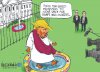
In almost half a decade of stunts, provocations and demagoguery, one moment may come to define President Trump’s authoritarian turn. On Monday evening, security forces fired rubber bullets, flash-bang shells and chemical irritants to disperse a group of peaceful protesters massed outside the White House. The path cleared, Trump strode to nearby St. John’s Episcopal Church flanked by his allies, including the country’s top military official, and waved a Bible before cameras in a telegraphed photo op. Back at the Rose Garden, he had vowed to unleash military force against demonstrators massing across the country’s cities.
The optics of the move were dramatic enough, but the message was all the more ominous. “Everything [Trump] has said and done is to inflame violence,” the Episcopal bishop of Washington later told my colleagues. “We need moral leadership, and he’s done everything to divide us.”
Critics warn of the country teetering into genuine crisis under his watch. “We long ago lost sight of normal, but this was a singularly immoral act,” said Brendan Buck, a longtime former Hill aide who is now a Republican operative,
to my colleagues. “The president used force against American citizens, not to protect property, but to soothe his own insecurities. We will all move on to the next outrage, but this was a true abuse of power and should not be forgotten.”
For the president, the tensions unleashed by the killing of George Floyd — an unarmed black man who was pinned at the neck by a Minneapolis police officer’s knee — are a political opportunity. Trump invoked scattered instances of looting to threaten armed retribution on an entire protest movement. He cast the continued unrest as evidence of the weakness of his Democratic opponents. And he proposed alarming emergency measures, including the criminalization of an inchoate, decentralized network of
anarchist and anti-fascist groups as “terrorists.”