Trump Timeline ... Trumpocalypse


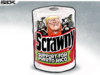
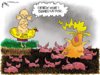
Fox News ran a story on Oct. 8 about a decorated Vietnam War Navy SEAL and glass artist who created an enormous presidential glass seal he hoped to give to President Trump. On Thursday, 11 days later, the network retracted the story after being told the Trump supporter never served in the SEALs or in Vietnam, much less earned commendations for his service.

In the segment, John Garafalo said he served in the Vietnam War with the U.S. Navy SEAL team. Fox News reported that he also received two Purple Hearts and about two dozen other medals for his service.

The man’s claimed record turned out to be a fabrication.


Over the last few days, concerns about some kind of a hidden alliance between Donald Trump and Vladimir Putin have exploded. There is the president-elect with his apparently fawning regard for the Russian leader. There are Trump’s top cabinet picks, with their unusual Russian ties: as national security advisor, Lt. General Mike Flynn, who has met Putin and done paid events for a Kremlin-sponsored TV station; and as secretary of state, ExxonMobil CEO Rex Tillerson, who has done billions of dollars of business in Russia and received an award from Putin. And then there is the revelation, from the CIA, that Russia may have actively interfered in the US election to get Trump elected.

Of course, Putin may well have reasons for wanting Trump to be president—not least Trump’s apparent skepticism toward NATO and his lack of opposition to Russia’s military interventions in Ukraine and Syria. But a more important connection between the two men may be their common approach to leadership, which will almost certainly outlast any friendship that may form between them. During his campaign, Donald Trump repeatedly expressed admiration for the way Putin governed. “The man has very strong control over his country,” Trump said at one point. “He’s been a leader far more than our president has been a leader.” That revealed a lot about Trump’s concept of the presidency—he seems to believe that effectiveness is measured by the extent to which the leader “controls” the country. But how might that play out in practice? To what extent can Putin provide insight into Trump’s understanding of power?

There is still much we don’t know about how Trump will rule. But in the month since his election, some characteristic patterns have emerged—and they bear some instructive similarities to the style Putin has practiced over many years. Here are a few of them:

Lying is the message. ...

The media is the mirror. ...

Taking charge of a boring world. ...

Interests rather than priorities. ...

A president behind enemy lines. ...

The chosen one. ...


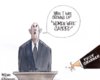
Consider this nightmare scenario: a military coup. You don’t have to strain your imagination—all you have to do is watch Thursday’s White House press briefing, in which the chief of staff, John Kelly, defended President Trump’s phone call to a military widow, Myeshia Johnson. The press briefing could serve as a preview of what a military coup in this country would look like, for it was in the logic of such a coup that Kelly advanced his four arguments.

1. Those who criticize the President don’t know what they’re talking about because they haven’t served in the military. ...

2. The President did the right thing because he did exactly what his general told him to do. ...

3. Communication between the President and a military widow is no one’s business but theirs. ...

4. Citizens are ranked based on their proximity to dying for their country. ...

Kelly’s last argument was his most striking. At the end of the briefing, he said that he would take questions only from those members of the press who had a personal connection to a fallen soldier, followed by those who knew a Gold Star family. Considering that, a few minutes earlier, Kelly had said most Americans didn’t even know anyone who knew anyone who belonged to the “one per cent,” he was now explicitly denying a majority of Americans—or the journalists representing them—the right to ask questions. This was a new twist on the Trump Administration’s technique of shunning and shaming unfriendly members of the news media, except this time, it was framed explicitly in terms of national loyalty. As if on cue, the first reporter allowed to speak inserted the phrase “Semper Fi”—a literal loyalty oath—into his question.

Before walking off the stage, Kelly told Americans who haven’t served in the military that he pities them. “We don’t look down upon those of you who haven’t served,” he said. “In fact, in a way we are a little bit sorry because you’ll have never have experienced the wonderful joy you get in your heart when you do the kinds of things our servicemen and women do—not for any other reason than that they love this country.”

When Kelly replaced the ineffectual Reince Priebus as the chief of staff, a sigh of relief emerged: at least the general would impose some discipline on the Administration. Now we have a sense of what military discipline in the White House sounds like.


It is a commonly accepted rule among those who are in the business of argument, especially online, that he or she who invokes Adolf Hitler, either in oratory or essays, automatically forfeits the argument.

The reference is deemed far too extreme, too explosive, too far beyond rational correlation. No matter how bad a present-day politician, not one of them has charted or is charting a course to exterminate millions of innocent people as an act of ethnic cleansing.

Hitler stands alone in this regard, without rival, a warning to the world about how evil and lethal human beings can be, a warning that what he did can never be allowed again.

That said, there are strategies that Hitler used to secure power and rise — things that allowed his murderous reign — that can teach us about political theory and practice. And very reasonable and sage comparisons can be drawn between Hitler’s strategies and those of others.

According to James Murphy’s translation of Hitler’s “Mein Kampf”:

“In the big lie there is always a certain force of credibility; because the broad masses of a nation are always more easily corrupted in the deeper strata of their emotional nature than consciously or voluntarily; and thus in the primitive simplicity of their minds they more readily fall victims to the big lie than the small lie, since they themselves often tell small lies in little matters but would be ashamed to resort to large-scale falsehoods.”

The text continues:

“It would never come into their heads to fabricate colossal untruths, and they would not believe that others could have the impudence to distort the truth so infamously. Even though the facts which prove this to be so may be brought clearly to their minds, they will still doubt and waver and will continue to think that there may be some other explanation. For the grossly impudent lie always leaves traces behind it, even after it has been nailed down, a fact which is known to all expert liars in this world and to all who conspire together in the art of lying.”

This demonstrates a precise understanding of human psychology, but also the dangerously manipulative nature that operates in the mind of a demon.

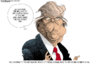
And yet, as many have noted, no person of sound reason or even cursory political awareness can read this and not be immediately struck by how similar this strategy of lying is to Donald Trump’s seeming strategy of lying: Tell a lie bigger than people think a lie can be, thereby forcing their brains to seek truth in it, or vest some faith in it, even after no proof can be found.

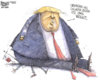
Trump is no Hitler, but the way he has manipulated the American people with outrageous lies, stacked one on top of the other, has an eerie historical resonance. Demagogy has a fixed design.

One of those lessons is about how purposeful lying can be effectively used as propaganda. The forthcoming comparison isn’t to Hitler the murderer, but to Hitler the liar.
 

Sponsors

Latest posts

Back
Top