[OA] Human Sperm Displays Rapid Responses to Diet
Sperm motility in healthy young men is highly sensitive to diet and is associated with changes in specific populations of tRNA fragments. In non-human animals, similar molecular changes correlate with metabolic effects in the offspring. These results not only show that human sperm may rapidly respond to diet, but that these changes may potentially ripple into the next generation.
The global rise in obesity and steady decline in sperm quality are two alarming trends that have emerged during recent decades. In parallel, evidence from model organisms shows that paternal diet can affect offspring metabolic health in a process involving sperm tRNA-derived small RNA (tsRNA).
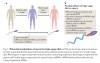
Here, we report that human sperm are acutely sensitive to nutrient flux, both in terms of sperm motility and changes in sperm tsRNA. Over the course of a 2-week diet intervention, in which we first introduced a healthy diet followed by a diet rich in sugar, sperm motility increased and stabilized at high levels.
Small RNA-seq on repeatedly sampled sperm from the same individuals revealed that tsRNAs were up-regulated by eating a high-sugar diet for just 1 week. Unsupervised clustering identified two independent pathways for the biogenesis of these tsRNAs: one involving a novel class of fragments with specific cleavage in the T-loop of mature nuclear tRNAs and the other exclusively involving mitochondrial tsRNAs.
Mitochondrial involvement was further supported by a similar up-regulation of mitochondrial rRNA-derived small RNA (rsRNA). Notably, the changes in sugar-sensitive tsRNA were positively associated with simultaneous changes in sperm motility and negatively associated with obesity in an independent clinical cohort.
This rapid response to a dietary intervention on tsRNA in human sperm is attuned with the paternal intergenerational metabolic responses found in model organisms. More importantly, our findings suggest shared diet-sensitive mechanisms between sperm motility and the biogenesis of tsRNA, which provide novel insights about the interplay between nutrition and male reproductive health.
Nätt D, Kugelberg U, Casas E, et al. Human sperm displays rapid responses to diet. PLOS Biology 2019;17:e3000559. Human sperm displays rapid responses to diet