Yes my comments assume both labs has access to same sample material (samples from same batch, split vial, etc).In fairness to the chemists involved, there is no guarantee that the same sample was tested at each lab.
Last edited:
Follow along with the video below to see how to install our site as a web app on your home screen.
Note: This feature may not be available in some browsers.
Yes my comments assume both labs has access to same sample material (samples from same batch, split vial, etc).In fairness to the chemists involved, there is no guarantee that the same sample was tested at each lab.
Thus is what I was trying to say haha..Without getting too in the weeds from stats standpoint, @janoshik quotes his HPLC method as 5% margin of error (one sided hence +/- 5?) .
Code:https://www.janoshik.com/details/
This is probably a 95% confidence interval? He can tell you whether is it +/- 5% or +/- 2.5%.
Let's say axle's test cyp is exactly 200 mg/ml. So we would expect 95% of the time the test would return a measurement between 190 and 210 mg/ml (skipping a bunch of details few want). In this case we don't know what's in the vial. The only way to know who was "righter" would be to send them both a reference standard where we know accurately what the concentration was.
Of course @Axle Labs can tell you what he calculated for his batch based on his measurements which are also subject to error.
TLDR: reassuring the two measurements are within 10%. The uncertainty here combines variability in the instrument (usually low, sample injection) and method prep (usually higher, human error of prepping sample). This is why you have both labs report the results of 10 replicates haha. Everyone would be very enlightened by the distribution.
Exciting.
Postscript: would be useful for both labs to share their method RSV (relative standard deviation) based on internal work. What is your "margin of error", COV, RSV for HPLC quantitative @Chromate ? Don't see it on your site? Example for certain compound is fine. Obviously you have access to reference standards now. No? Yes?

thinksteroids.com
When doing method precision work it is typical to do two different evaluations...Correct me if I'm misunderstanding.. towards the end your saying each lab would need to take say 20 tests of the same sample and then get the average or mean of that group for a answer? Or am I misunderstanding.
In fairness to the chemists involved, there is no guarantee that the same sample was tested at each lab.
Axles Test C 200 batch C48
@freedom69 did not ship the sample to janoshik, so he wouldn't know. And correct, the supplement industry lacks the strict regulations for batch and lot coding which are present in the pharmaceutical industry. New labels can be applied to old batches (to update expiry), or vice versa (to forego the need for new testing).@Chromate Expand on your thinking here. If you don't mind?
Perhaps two different batches both with the C48 label? @Axle Labs ?
Might as well get as much info as we can from the excellent effort put in by @freedom69
Ok I believe have a better understanding now.When doing method precision work it is typical to do two different evaluations...
1. Instrument precision: prep once and inject 10 times
2. Method precision: take sample to be analyzed and prep 10 separate times (prep replicates). Take each one of those analytical samples and inject.
together these will give you estimates for precision of the instrument and then precision of analyst + instrument.
If you want separate check on accuracy you can also calculate % recovery by spiking a known amount of material into sample and see how much you are able to measure.
I addressed questions above to the labs to help answer your larger question....confidence interval for the measurement from both labs.
Made up Example (Mean with 95 or 99 or whatever you want percentile confidence interval):
Jano: 197 +/- 2 mg/ml
Chromate: 215 +/- 2 mg/ml
In this example if both labs analyzed the same material then someone has an accuracy issue.
To the last part on your post. Does one calibrate their machine in a similar way to how one would calibrate a scale?
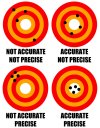
So far we can not. My comment above did not rule that out. Currently we are addressing question around precision, not explicit accuracy.Playing devils advocate .. who's to say both labs aren't wrong?

They don't have to deal with an organization like Weights and measures dept, using as an example, correct?
@freedom69 did not ship the sample to janoshik, so he wouldn't know. And correct, the supplement industry lacks the strict regulations for batch and lot coding which are present in the pharmaceutical industry. New labels can be applied to old batches (to update expiry), or vice versa (to forego the need for new testing).
We will supply the requested data shortly.
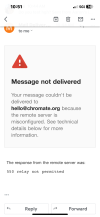
I see the problem and will try to solve it. It should work through Proton in the meantime.How do i get ahold of Chromates services I've tried two different emails and both return a funky error message?
It should go through now. But to answer your question: no, we do not yet test hGH. Working on it.What would be the full proton email?
Excellent extra credit work on the tyrosol. A+@readalot Apologies for the late submission.
Thank you.Bravo. Your instrument precision is very nice.
So sample prep is dilute and shoot for potential AAS adulterant in an supplement oil / synthol oil or AAS adulterant in capsule / tablet?Thank you.
Not sure how simply changing the compound has any great impact on the precision being demonstrated (except where sample preparation vastly differs, or for uniquely challenging compounds which behave erratically in the column). You should have at least a decent idea of operator error and instrument precision with the data provided.
Nine commercial supplements were purchased from Holland and Barrett. All the supplements were in tablet capsule or powder dosage form. Each single dosage form was weighed separately. Using mortar and pestle for tablets and capsule shell removing for capsules three tablets or capsules are mixed and homogenized. A portion of powder (50 mg) of from each supplement was dissolved in a solvent mixture of (50:50, v/v) of methanol and ultra-deionized water (50 mL). All samples were sonicated for 20 min at 40°C. An aliquot (10 mL) of each sample solution was filtered by membrane filters (0.22 μm). An aliquot (0.25 UL) of each filtered sample was transferred into 1 mL test tube containing solvent (50:50, v/v) of methanol and ultra-deionized water (0.25 μL). To this solution an internal standard (0.5 mL) of THS(120 μg/mL) was added.
Sample preparation
Oil-based samples were prepared by soni-
cating the appropriate amount (typically 20
μL) in 4 mL of methanol for 20 min and fil-
tering through 0.5-μm or 0.2-μm nylon fil-
ters. Tablets were prepared by sonicating an
appropriate amount (typically between 20
and 100 mg) in 4 mL of methanol and fil-
tering as mentioned above.