
MESO-Rx
Anabolic Steroids

Navigation
Install the app
How to install the app on iOS
Follow along with the video below to see how to install our site as a web app on your home screen.
Note: This feature may not be available in some browsers.
More options
Style variation
Guest viewing limit reached
- You have reached the maximum number of guest views allowed
- Please register below to remove this limitation
- Already a member? Click here to login
You are using an out of date browser. It may not display this or other websites correctly.
You should upgrade or use an alternative browser.
You should upgrade or use an alternative browser.
Giant Semaglutide Thread (and other GLP-1 / GIP agonists)
- Thread starter Doodle
- Start date

PTFE .22 syringe filterwhat type of filter? a plain syringe filter disk 22 um?

G.I Swoli
New Member
Jumped back on sema to easily win a weightloss challenge at work. Found a year old vial in my fridge that I'm going to use until my package come from qsc. Honestly don't remember if I reconstructed with 1ml or 2 ml so I took a jab of 0.05 ml to start. I felt absolutely nothing so I yolo'd a 0.1ml jab on day 5 and now the side effects are hitting me like a fucking truck. Hopefully my package arrives soon so I can properly dose with non degraded Sema.

PiscesMoon
Member
Would you guys reccoment 15 or 20mg vials for tirz? First time with GLPs so I'm gonna do the pharma protocol (2.5 for 4 weeks, then 5 for 4 weeks and so on).
The first vial would last me 5 or 6 weeks, is that too long? will it loose potency?
Hey @Luke391 15mg vials of Tirzepatide may be the better choice (vs 20mg vials) as you are starting out with the 2.5mg dose.
Keeping the reconstituted vial in refrigerated storage may help the most with preserving its potency. Along with using a quality brand of bacteriostatic water for reconstituting.

Super common side effect. TLDR - Smaller meals. Metamucil (basically mandatory) and/or Miralax with plenty of water.Does anyone else get nasty burps. I can deal with the burps. Helping out a friend of mine and she is going off about the burps LOL
There's some interesting physiology involved. Typically, when food is moving through the gut normally, dietary protein is partially broken down by stomach acid and enzymes, and these smaller peptides are quickly pulled out of the food bolus so the body can start using them. This means microbes in the gut don't have a chance to chow down on them.
When you slow gut transit rates, the gut biota has a chance to metabolize amino acids. In the case of sulfur burps, methionine and cysteine are being metabolized to H2S (rotten egg smell). Enough gas collects and it's gotta go somewhere.
In a healthy person, H2S is produced from those two amino acids anyway, but it's done in the liver and contained there. There's some relationship between hepatic H2S production and lipid droplet deposition, like in non-alcoholic fatty liver disease. When it happens in your gut, the reductive power of the molecule is wasted. Pretty neat.
Anyway, the intestines do two things: one sucks up water, the other sucks up nutrients. Drink plenty of water and add some bulk to the food bolus with fiber (Metamucil or whatever psyllium husk is in your country) to keep things moving as quickly as possible and help alter the gut biome distribution. If that's not enough, a product like Miralax can help. Don't over-do the fiber or you'll end up ripping your taint... once a day is enough, and for some very small people it may be more than enough.

TheBeast1
Member
I get my BAC water from this site Syringes and Needles | Same Day Shipping Available (till 2pm CST M-F)Could I reconstitute sema/tirz with BAC water from a ugl?
My country is the world's asshole (Italy) and apparently no pharmacu sells BAC water, only sterile water. I went to every pharmacy in my town and looked up dozens of online pharmacy. BAC just doesn't exist here seems like. Tons and tons of sterile water but BAC water is impossible to find.

Ghoul
Member
This is amazing information and a great example of knowledge 99% of doctors prescribing these meds don't have.When you slow gut transit rates, the gut biota has a chance to metabolize amino acids. In the case of sulfur burps, methionine and cysteine are being metabolized to H2S (rotten egg smell). Enough gas collects and it's gotta go somewhere.
In a healthy person, H2S is produced from those two amino acids anyway, but it's done in the liver and contained there. There's some relationship between hepatic H2S production and lipid droplet deposition, like in non-alcoholic fatty liver disease. When it happens in your gut, the reductive power of the molecule is wasted. Pretty neat.
It goes some way to explaining the liver defatting properties of GLP class pharmaceuticals.
Really brilliant and appreciate this contribution. I may have gone years without learning this otherwise, and I probably average 10+ scientific journal articles on the topic a week.

Here2Learn
Member
So there is definitely hormonal effected for women with GLP’s. I’ve not come across a specific scientific reason but do know lots of women are getting pregnant on GLP’s who had been struggling for years. Some women experience less of a period and some a lot more so I don’t think there is a better answer than it definitely could be the reason.So my question pertains to tirz vs sema…. And the periods….
. The lady is bleeding more lately… side affects of tirz…. Is what ive read..
Does sema cause the same issue?
As for Sema, I find each GLP affects each person differently so without her trying to see there really is no way of knowing.
Hardcoreboy
New Member
The European Medicines Agency (EMA) is starting to investigate the possible side effects of drugs used as diabetes and weight loss drugs.
The agency's drug safety evaluation committee PRAC has started a risk assessment of drugs containing Semaglutide. The evaluation is related to recent studies in which it has been found that the drug increases the risk of developing NAION eye disease.
NAION, or non-arteritic anterior ischemic optic neuropathy, is a disease of the optic nerve that can cause vision loss. The background is a local lack of oxygen due to a blood circulation disorder.
Semaglutide is an active ingredient in certain medications used to treat diabetes and obesity. These include Ozempic, Rybelsus and Wegovy.
The purpose is to assess whether patients treated with semaglutide have an increased risk of developing NAION.
Patients with type 2 diabetes may already have an inherently higher risk of developing NAION.
In the treatment of obesity, drugs can be used when the body mass index is over 30. If a person has co-morbidities, such as diabetes, drug treatment can be used when the body mass index is at least 27–28.
The authority intends to examine all available material on the connection between NAION and the medicinal substance.
The agency's drug safety evaluation committee PRAC has started a risk assessment of drugs containing Semaglutide. The evaluation is related to recent studies in which it has been found that the drug increases the risk of developing NAION eye disease.
NAION, or non-arteritic anterior ischemic optic neuropathy, is a disease of the optic nerve that can cause vision loss. The background is a local lack of oxygen due to a blood circulation disorder.
Semaglutide is an active ingredient in certain medications used to treat diabetes and obesity. These include Ozempic, Rybelsus and Wegovy.
The purpose is to assess whether patients treated with semaglutide have an increased risk of developing NAION.
Patients with type 2 diabetes may already have an inherently higher risk of developing NAION.
In the treatment of obesity, drugs can be used when the body mass index is over 30. If a person has co-morbidities, such as diabetes, drug treatment can be used when the body mass index is at least 27–28.
The authority intends to examine all available material on the connection between NAION and the medicinal substance.
Can the use of GLP-1 hinder absorptions of vitamins like iron? And protein? Decreasing level of albumin, same as if you were malnutritioned because you aren't absorbing and processing proteins properly?Super common side effect. TLDR - Smaller meals. Metamucil (basically mandatory) and/or Miralax with plenty of water.
There's some interesting physiology involved. Typically, when food is moving through the gut normally, dietary protein is partially broken down by stomach acid and enzymes, and these smaller peptides are quickly pulled out of the food bolus so the body can start using them. This means microbes in the gut don't have a chance to chow down on them.
When you slow gut transit rates, the gut biota has a chance to metabolize amino acids. In the case of sulfur burps, methionine and cysteine are being metabolized to H2S (rotten egg smell). Enough gas collects and it's gotta go somewhere.
In a healthy person, H2S is produced from those two amino acids anyway, but it's done in the liver and contained there. There's some relationship between hepatic H2S production and lipid droplet deposition, like in non-alcoholic fatty liver disease. When it happens in your gut, the reductive power of the molecule is wasted. Pretty neat.
Anyway, the intestines do two things: one sucks up water, the other sucks up nutrients. Drink plenty of water and add some bulk to the food bolus with fiber (Metamucil or whatever psyllium husk is in your country) to keep things moving as quickly as possible and help alter the gut biome distribution. If that's not enough, a product like Miralax can help. Don't over-do the fiber or you'll end up ripping your taint... once a day is enough, and for some very small people it may be more than enough.
Friend of mine is finding himself with low iron and low albumin level. Eating 300gr of proteine a day : /
Question.
My dad (60 year old, 170cm about 17kg overweight at 87kg, diabetic on daily insulin) currently is taking 4mg weekly of sema for both weight loss and insulinic sensitivity ( since starting sema he needs a lot less insulin). He started at the reccomended dosage and we went up when he got hunger back as he started losing the weight.
I'm thinking of switching him to tirze mostly because I can afford it and it might be better but also because he's getting really high up in dosage( I know there are trials up to 7.something that say it's safe but the public is only to 2.4 so far) .
What dosage should he start tirze at if ? I don't really want him going trough the start of the process again.
Putting him on reta is also an option but he really needs the appetite suppression which reta isn't that great at.
My dad (60 year old, 170cm about 17kg overweight at 87kg, diabetic on daily insulin) currently is taking 4mg weekly of sema for both weight loss and insulinic sensitivity ( since starting sema he needs a lot less insulin). He started at the reccomended dosage and we went up when he got hunger back as he started losing the weight.
I'm thinking of switching him to tirze mostly because I can afford it and it might be better but also because he's getting really high up in dosage( I know there are trials up to 7.something that say it's safe but the public is only to 2.4 so far) .
What dosage should he start tirze at if ? I don't really want him going trough the start of the process again.
Putting him on reta is also an option but he really needs the appetite suppression which reta isn't that great at.
Ghoul
Member
Question.
My dad (60 year old, 170cm about 17kg overweight at 87kg, diabetic on daily insulin) currently is taking 4mg weekly of sema for both weight loss and insulinic sensitivity ( since starting sema he needs a lot less insulin). He started at the reccomended dosage and we went up when he got hunger back as he started losing the weight.
I'm thinking of switching him to tirze mostly because I can afford it and it might be better but also because he's getting really high up in dosage( I know there are trials up to 7.something that say it's safe but the public is only to 2.4 so far) .
What dosage should he start tirze at if ? I don't really want him going trough the start of the process again.
Putting him on reta is also an option but he really needs the appetite suppression which reta isn't that great at.
Tirz is much weaker, generally, appetite suppression wise. I went from 2.4mg Sema to Tirz, and felt very little until I got to 10mg.
However, some react very strongly to one and not the other, so caution is warranted.
I would start on 7.5mg. After 2 days, if he's feeling hunger increasing go to 10mg the following week (but not sooner), then 12.5 after that if necessary. Keep titrating 2.5mg per week until he has sufficient appetite suppression. UGL Tirz is not as potent in my experience, with 20mg roughly equaling 15mg pharma. So in my opinion, as much as 25mg UGL Tirz is within an acceptable safety margin.
It's possible he has high preexisting Semaglutide neutralizing antibodies for some reason, and as those don't affect Tirz, it may be stronger than expected, which is why I suggest starting at a conservative 7.5mg, with a rapid titration if necessary.
Any thoughts on mixing? As in starting at 2.5mg of tirze and going up in tirze and going down on Sema at the same time. Mostly to see if he's gonna have side effects cause of tirze before going full hog. Or do you think that way lies messyness and I should just switch him?Tirz is much weaker, generally, appetite suppression wise. I went from 2.4mg Sema to Tirz, and felt very little until I got to 10mg.
However, some react very strongly to one and not the other, so caution is warranted.
I would start on 7.5mg. After 2 days, if he's feeling hunger increasing go to 10mg the following week (but not sooner), then 12.5 after that if necessary. Keep titrating 2.5mg per week until he has sufficient appetite suppression. UGL Tirz is not as potent in my experience, with 20mg roughly equaling 15mg pharma. So in my opinion, as much as 25mg UGL Tirz is within an acceptable safety margin.
It's possible he has high preexisting Semaglutide neutralizing antibodies for some reason, and as those don't affect Tirz, it may be stronger than expected, which is why I suggest starting at a conservative 7.5mg, with a rapid titration if necessary.
Ghoul
Member
Any thoughts on mixing? As in starting at 2.5mg of tirze and going up in tirze and going down on Sema at the same time. Mostly to see if he's gonna have side effects cause of tirze before going full hog. Or do you think that way lies messyness and I should just switch him?
Never mix peptides in the same container. Aggregate formation, essentially creating millions of random new protein molecules that at best are ineffective wasting compound, and at worst can set off a decades long chain reaction that induces neurodegenerative disease.
In a clinical setting users are switched from Sema to Tirz, with 2.4mg Sema starting at 5-7.5mg Tirz.
I would only consider adding a very small dose of Sema if 25mg Tirz is insufficient. to reach a healthy weight, which is highly unlikely. .25mg, using a separate syringe.
Mixing as in injecting one and then the other. Titrating one up and the other down over a couple weeks . But I guess it's not worth it. 7.5mg it isNever mix peptides in the same container. Aggregate formation, essentially creating millions of random new protein molecules that at best are ineffective wasting compound, and at worst can set off a decades long chain reaction that induces neurodegenerative disease.
In a clinical setting users are switched from Sema to Tirz, with 2.4mg Sema starting at 5-7.5mg Tirz.
I would only consider adding a very small dose of Sema if 25mg Tirz is insufficient. to reach a healthy weight, which is highly unlikely. .25mg, using a separate syringe.
Ghoul
Member
Mixing as in injecting one and then the other. Titrating one up and the other down over a couple weeks . But I guess it's not worth it. 7.5mg it is
No need to over complicate it. Just switch the way it's done by doctors on patients using pharma. The only difference being you have the flexibility to quickly titrate Tirz up if it's insufficient.
The bloodwork my group has shows some people becoming depleted in B12, iron, and calcium (and D as a consequence) in that order. Usually a multi-vitamin fixes it, but I imagine he has tried that. Protein absorption is harder to measure, but at 300g, it's not really conceivable to take in any more.Can the use of GLP-1 hinder absorptions of vitamins like iron? And protein? Decreasing level of albumin, same as if you were malnutritioned because you aren't absorbing and processing proteins properly?
Friend of mine is finding himself with low iron and low albumin level. Eating 300gr of proteine a day : /
The short version is that serum albumin is not a reliable indicator of protein intake. It is one strong influence, but it's not the only one, and those others are quite strong. Kidney function is one, and inflammation is another. For people who lift, we induce inflammation on purpose, so albumin is less reliable than it may be for other people. And depending on what drugs someone is taking, kidney health can change kinda fast -- even taking NSAIDs regularly will mess with your kidneys enough to throw off albumin.
The reliable measure of protein intake is going to be 24 urine capture with urea analysis. This is a pain in the ass and requires someone to stop physical activity for a while. The calculation requires equilibrium (anabolism = catabolism), so someone should be on an isocaloric diet and not exercising for a couple days beforehand. It's just a real mess.
It is highly unlikely for your friend to be lacking protein unless there's a secondary condition. If he came in and his urine showed negative nitrogen balance on that diet, I would immediately get him screened for cystic fibrosis, Chron's, and pancreatitis -- something actually obstructs or damages the small intestine. CF, at least in the US, is the most common reason for malabsorption and might be indicated by some really thick mucous coming out with his feces. But this is something an adult would almost certainly know beforehand because of the other complications of cystic fibrosis.
This is unfortunately someplace where going by feel and performance is what matters. Wish there was an easier answer.
Ghoul
Member
Wish there was an easier answer.
There's always GLP-2, which boosts protein absorption efficiency significantly, with minimal effect on fat absorption....
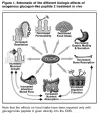
"lean body mass increased 2.9 ± 1.9 kg (P = 0.004), fat mass decreased 1.8 ± 1.3 kg (P = 0.007)"
Also reduces leakage of bacteria from the intestines into the bloodstream, reducing systemic inflammation.
Only about $60 for 60 days worth of the dose used in the study....for any peptide Magellans out there.
Last edited:
If his friend had an intestinal injury, that might be something a brave person would do. One of the outstanding questions for healthy people is whether decreasing the rate of apoptosis in the gut is beneficial. The process is so tightly controlled in healthy tissue that slowing it can lead to tumors.There's always GLP-2, which boosts protein absorption efficiency significantly, with minimal effect on fat absorption....
"lean body mass increased 2.9 ± 1.9 kg (P = 0.004), fat mass decreased 1.8 ± 1.3 kg (P = 0.007)"
Only about $60 for 60 days worth of the dose used in the study....for any peptide Magellans out there.
One very interesting and noteworthy piece is that a person can be carrying extra fat while simultaneously being malnourished. This is frighteningly common among long-term obese people who report strict dieting but can't lose weight. It's one of the things that GLP-1 RAs seem to fix, which is almost miraculous... whatever metabolic derangement that obesity followed by severe nutrient restriction causes seems to be undoable with these drugs.
Similar threads


- Replies
- 8
- Views
- 380

- Replies
- 10
- Views
- 97
- Question
- Replies
- 7
- Views
- 514

- Replies
- 7
- Views
- 603
A
Sponsors
Latest posts
-

-

-
 MESO-Rx Sponsor AASraw: GMP-Certified Steroid and Peptide API Manufacturer
- Latest: hcgfiend123456

