Low Estradiol? Here's How DHEA Can Fix Your "Crashed" E2

i wonder how significant if even significant a precursor is for our surpressed adrenal glands when we're rate limited by aromatase activity + testosterone substrate and not the lack of a precursor?


where does those estrogen elevations come from, bodybuilders on continuous blast + cruise, or women or natty men? it dosent look too promising from anecdotes on here
 
Didn’t actually worked to revive my tube steak from the burden of crashed e2.
But also didn’t feel like death while i was taking it that I would otherwise felt from crashed estro.
In my younger years I always had this idea that as long as I had the base weekly test injection I could throw anything else on top. LOL.

Avoiding the crashed E2 all together is the best play.
 
No. I didn’t see a rise in E2 nor prolactin, and progesterone increased from .2 to .5. I was taking 50mg DHEA SR and 50mg Pregnenolone SR from Nutrascriptives.

I am beginning to wonder whether this brand is any good.
The pregnenolone raised your progesterone. Not the DHEA. 0.5 is better than 0.2 FYI
 
I’m fascinated by DHEA, and the different outcomes you get between the sexes. Studies show that oral DHEA supplementation tends to cause a higher increase in testosterone levels in women than in men. Lots of ladies have had some nasty virilization side effects from lower doses of it.
 
I’m fascinated by DHEA, and the different outcomes you get between the sexes. Studies show that oral DHEA supplementation tends to cause a higher increase in testosterone levels in women than in men. Lots of ladies have had some nasty virilization side effects from lower doses of it.
weird huh.
 
weird huh.
For sure. I bought some before I started HRT but after doing more research I put that shit in a corner and probably won’t ever touch it. Seems like a roll of the dice in a game I don’t really wanna play. I have way more control over my hormones with my injections and I’m happy with that.


Read Now on typeiix.substack.com

Summary​

Estradiol (E2) serves essential physiological functions in men beyond its recognized role in female reproductive biology. When circulating E2 concentrations fall below normal ranges—often in the context of anabolic-androgenic steroid use—the resulting syndrome manifests primarily as joint pain (arthralgia), alongside metabolic, cognitive, and sexual dysfunction.
DHEA (dehydroepiandrosterone) functions as both a direct estrogen receptor ligand and a precursor to estradiol biosynthesis through peripheral conversion. At physiologic replacement doses (50 mg/day orally), DHEA reliably increases circulating estradiol in men while avoiding the adverse effects associated with exogenous estrogen administration.
The optimal implementation protocol includes:
  1. Assessment of symptoms using the flowchart of decision-making
  2. Initial dosing of 50 mg DHEA to achieve moderate E2 elevation (~25 pg/mL)
  3. Dose escalation to 200 mg for higher E2 requirements (~75 pg/mL)
  4. Systematic monitoring of subjective symptom resolution and objective biochemical markers
Unlike metandienone (Dianabol), which produces a synthetic estrogen not detected in standard bloodwork and carries significant hepatotoxicity concerns, DHEA offers a legal, accessible alternative with a superior safety profile and reliable dose-response relationship. This makes DHEA an invaluable tool for managing estrogen deficiency states in male physiology.

Not Medical Advice
This is not medical advice. The author is not a medical doctor. No part herein, no statement, act, nor omission made by this author or any agent or affiliate is to be construed to delay necessary medical attention. No patient-doctor relationship is formed.

Key Takeaways

  1. DHEA serves as a safe, legal alternative to metandienone (Dianabol) for increasing estradiol levels in men experiencing "crashed E2."
  2. The primary symptom of low estradiol is persistent joint pain (arthralgia), particularly in synovial joints like shoulders, elbows, hips, and knees.
  3. Estradiol plays essential roles in male physiology beyond what is commonly recognized, affecting joint health, bone metabolism, cognitive function, and sexual health.
  4. DHEA functions as an estrogen in men, with studies showing dose-dependent increases in estradiol levels - 50mg raises E2 to approximately 25 pg/mL while 200mg can raise it to approximately 75 pg/mL.
  5. Unlike exogenous estradiol, DHEA supplementation avoids negative side effects such as reproductive pathologies, decreased IGF-1 bioavailability, and dramatically increased SHBG.
  6. DHEA is available over-the-counter in most regions, making it an accessible option for addressing low estrogen symptoms when compared to controlled substances.

About the Author

Type-IIx is an expert on all methods used in enhanced bodybuilding and the author of Bolus: A Practical and Reference Guide for the Use of Human Growth Hormone and GH Secretagogues. His articles can be found on Meso-Rx and his https://ampouletude.com/articles (Team Ampouletude website) along with his other projects like the Gear, Growth, and Gains Podcast on the web [www] – [telegram] – [spotify] – and everywhere podcasts stream!

Serious articles about topics that range from training matters, to recovery modalities, to drugs, to nutritional and dietary supplements
Gear, Growth, and Gains podcast releases
Event
information, including symposiums (live presentation + Q&A workshop)
Exclusive content you won't find anywhere else
Click Subscribe to sign up


Read Now on typeiix.substack.com

can you talk about pregnenolone? I see a lot of people doing the dhea/pregnenolone combo. but not sure what's the real benefits
 
can you talk about pregnenolone? I see a lot of people doing the dhea/pregnenolone combo. but not sure what's the real benefits
You need to get your pregnenolone LC/MS and progesterone tested before thinking about adding pregnenolone. It’s not a hormone you just add for the sake of adding it. You add it if you need it.
 
can you talk about pregnenolone? I see a lot of people doing the dhea/pregnenolone combo. but not sure what's the real benefits
I discussed pregnenolone and allopregnanolone particularly with regard to how low levels can negatively impact male sexual function [and how synthetic AAS can reduce these but testosterone increases them typically] here:

 
I’m fascinated by DHEA, and the different outcomes you get between the sexes. Studies show that oral DHEA supplementation tends to cause a higher increase in testosterone levels in women than in men. Lots of ladies have had some nasty virilization side effects from lower doses of it.
This is also the basis for my having delved pretty deeply [and continuing to do so] with regard to DHEA: it is highly sexually dimorphic in its effects, meaning it behaves so differently in men versus women, and in different tissues.

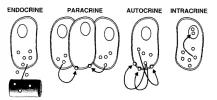
A lot of the reason that DHEA surprises people with how potently it reverses crashed E2 relates to intracrinology. DHEA acts, as an adrenal steroid, primarily in peripheral tissues. So its aromatization is rapid and in the local tissues rather than primarily in the blood.

You can read a bit more about the differences between intracrinology and endocrinology and how DHEA relates here:

From Labrie, Fernand. “Intracrinology.” Molecular and Cellular Endocrinology, vol. 78, no. 3, July 1991, pp. C113–18. DOI.org (Crossref), Redirecting.

Annotations​

“A large proportion of androgens in men (40%), and the majority of estrogens in women (75% before menopause and close to 100% after menopause), are synthesized in peripheral target tissues from precursor steroids of adrenal origin.” (Labrie, 1991, p. 13)

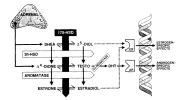
1758723279557.webp(Labrie, 1991, p. 14)

“Rule of adrenal precursor sex steroids @TS” (Labrie, 1991, p. 14)

“A”-dione. DHEA and DHEA-S should not be called adrenal” (Labrie, 1991, p. 14)

1758723279578.webp(Labrie, 1991, p. 14)

““androgens”, since these three steroids possess no intrinsic biological activity, and require transformation by steroidogenic enzymes in peripheral target tissues to become active androgens or estrogens (Fig. 2). We thus propose to call these three steroids precursor sex steroids (PSS), a term which more adequately describes their role and does not presume their final biological activity.” (Labrie, 1991, p. 15)

“Sources of androgens in men As a measure of the importance of adrenal precursor sex steroids in adult man, serum levels of the main metabolites of androgens - 5aandrostane-3a,l7P-diol (3a-dial), androsterone (ADT) and their glucuronidated derivatives, 3adiol-G and ADT-G - are reduced only by 5070% following surgical or medical castration (Moghissi et al., 19841, evidence that the conversion of adrenal precursor sex steroids accounts for 30-50% of total androgens in adult men.” (Labrie, 1991, p. 15)

“we have developed a combination therapy where the formation of androgens by the testes is blocked by the administration of an LHRH agonist or surgical castration while, at the same time, the action of androgens of adrenal origin is blocked in prostatic tissue by administration of the pure antiandrogen flutamide. Blockade of adrenal androgens with antiandrogen is the first treatment demonstrated in large scale studies to prolong life in prostate cancer (Labrie et al., 1985; B&land et al., 1987; Crawford et al., 1989). The combination therapy is now used worldwide and is being extended to early stages of the disease in order to facilitate radical prostatectomy and radiotherapy (Monfette et al., 1990).” (Labrie, 1991, p. 16)

“blockade of androgens to obtain compounds with higher potency at the level of the androgen receptor and to block androgen formation by 17P-HSD and Sa-reductase. Blockade of 17P-HSD and Scu-reductase activity should have no serious systemic side effects since glucocorticoid and mineralocorticoid pathways would remain intact. Such compounds present clear advantages over less specific inhibitors of steroidogenesis, such as aminoglutethimide and ketoconazole, which inhibit cortisol secretion; they would thus avoid the necessity of replacement therapy with glucocorticoids (and sometimes mineralocorticoids).” (Labrie, 1991, p. 16)

“Sources of estrogens in women In women, the role of the adrenal precursors DHEA-S, DHEA and A”-dione in the peripheral formation of estrogens is likely to be even more important than that described for the formation of androgens from the same precursors in men. The best estimate of the intracrine formation of estrogens in peripheral tissues in women is in the order of 75% before menopause, and close to 100% after menopause.” (Labrie, 1991, p. 16) Synthesis of sex steroids (!) estrogen (!) included is primarily from adrenal origin (75%+) in women!

And for a topical discussion relating to the pitfalls of relying on bloodwork levels to describe tissue-level estrogen regulation, refer to Primobolan / Equipoise Crashed my E2 – Help! and its section titled:

Limitations of Circulating Levels as an Index of Tissue-Specific Estrogen Regulation​

Limitations of Circulating Levels as an Index of Tissue-Specific Estrogen Regulation
[10]
AD: androstenedione

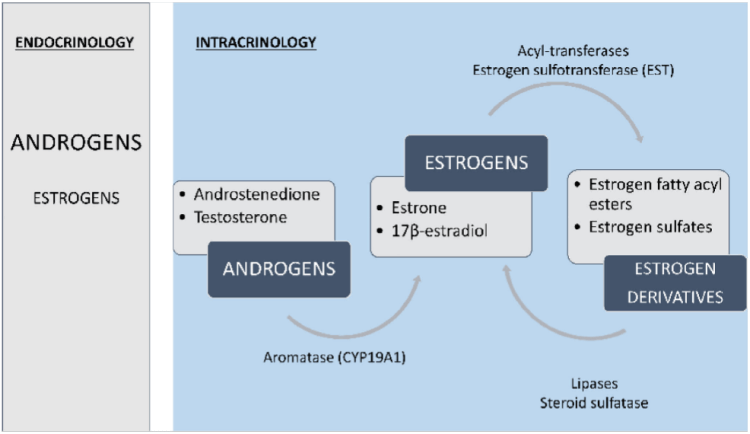
Regulation of estrogen production and metabolism within peripheral tissues is enabled by local expression of Aromatase (CYP19A1), which converts androgens to estrogens (T ⇒ E2 and AD ⇒ E1 [E2 is the most prevalent estrogen in men; which may explain the greater tolerability for EQ in women]). Estrogens further can be converted to estrogen sulfates and estrogen fatty acyl esters via Estrogen Sulfotransferase (EST) and Acyl-Transferases, respectively. Finally, these estrogen derivatives can be converted back to parent estrogens by Steroid Sulfatase (Sulfatase) and Lipase activity [10].

Adipose Tissue (AT) is particularly enriched in estrogen fatty acyl esters and consequently has an extensive buffering system that enables local regulation of estrogen production and metabolism… Notably, in a study of obese men, E2 fatty acyl ester concentrations did correlate in serum and fat (Wang, et al., 2013) [10], possibly indicating that serum estrogen levels influence stored estrogen content in AT, but conversion to bioactive forms is locally regulated [10].

Several clinical studies have demonstrated dissociations between circulating and intra-adipose estrogen levels, including in men (Blankenstein, et al., 1992; Belanger, et al., 2006; Deslypere, et al., 1985; Wang, et al., 2013) [10].

 
I discussed pregnenolone and allopregnanolone particularly with regard to how low levels can negatively impact male sexual function [and how synthetic AAS can reduce these but testosterone increases them typically] here:

I’m pretty confident my <10 pregnenolone levels were from steroid use (probably mostly tren). Progesterone was 0.1. I use 100mg micronized pregnenolone divided in two daily doses and it gets my progesterone up to 0.5 so that’s something I plan to continue forever

On the DHEA side, 50mg divided in two daily doses gets my DHEA-S to 409, which I think is a good place to be. I’ll play a little devil’s advocate though when I say low DHEA-S seems to be an association for all cause mortality but not a cause since there isn’t good evidence that DHEA supplements are that impactful.
 
I’m pretty confident my <10 pregnenolone levels were from steroid use (probably mostly tren). Progesterone was 0.1. I use 100mg micronized pregnenolone divided in two daily doses and it gets my progesterone up to 0.5 so that’s something I plan to continue forever

On the DHEA side, 50mg divided in two daily doses gets my DHEA-S to 409, which I think is a good place to be. I’ll play a little devil’s advocate though when I say low DHEA-S seems to be an association for all cause mortality but not a cause since there isn’t good evidence that DHEA supplements are that impactful.
Yup on that latter point, highlights the issue with epidemiology: taking a cross-section of population-wide associations (DHEA-S levels and all-cause morbidity) is a correlation. One that correlates with aging, generally, since DHEA-S begins to increase at adrenarche (7 years of age) peaking at 30 years, then declining about 2% per year afterward [and steeply dropping to practically zero after menopause in women].

So the association with DHEA-S and all-cause morbidity is the same correlation (not causation) seen with testosterone, GH, and… age in years… which do you think is the strongest causal factor among these? Er, age?
 
Yup on that latter point, highlights the issue with epidemiology: taking a cross-section of population-wide associations (DHEA-S levels and all-cause morbidity) is a correlation. One that correlates with aging, generally, since DHEA-S begins to increase at adrenarche (7 years of age) peaking at 30 years, then declining about 2% per year afterward [and steeply dropping to practically zero after menopause in women].

So the association with DHEA-S and all-cause morbidity is the same correlation (not causation) seen with testosterone, GH, and… age in years… which do you think is the strongest causal factor among these? Er, age?
Yes, it’s definitely aging. However, there is much more evidence in favor of clinical benefits of Testosterone and even GH if we are talking about HRT than there is for DHEA supplementation.
 
This is also the basis for my having delved pretty deeply [and continuing to do so] with regard to DHEA: it is highly sexually dimorphic in its effects, meaning it behaves so differently in men versus women, and in different tissues.

A lot of the reason that DHEA surprises people with how potently it reverses crashed E2 relates to intracrinology. DHEA acts, as an adrenal steroid, primarily in peripheral tissues. So its aromatization is rapid and in the local tissues rather than primarily in the blood.

You can read a bit more about the differences between intracrinology and endocrinology and how DHEA relates here:

From Labrie, Fernand. “Intracrinology.” Molecular and Cellular Endocrinology, vol. 78, no. 3, July 1991, pp. C113–18. DOI.org (Crossref), Redirecting.

Annotations​

“A large proportion of androgens in men (40%), and the majority of estrogens in women (75% before menopause and close to 100% after menopause), are synthesized in peripheral target tissues from precursor steroids of adrenal origin.” (Labrie, 1991, p. 13)

View attachment 350261(Labrie, 1991, p. 14)

“Rule of adrenal precursor sex steroids @TS” (Labrie, 1991, p. 14)

“A”-dione. DHEA and DHEA-S should not be called adrenal” (Labrie, 1991, p. 14)

View attachment 350262(Labrie, 1991, p. 14)

““androgens”, since these three steroids possess no intrinsic biological activity, and require transformation by steroidogenic enzymes in peripheral target tissues to become active androgens or estrogens (Fig. 2). We thus propose to call these three steroids precursor sex steroids (PSS), a term which more adequately describes their role and does not presume their final biological activity.” (Labrie, 1991, p. 15)

“Sources of androgens in men As a measure of the importance of adrenal precursor sex steroids in adult man, serum levels of the main metabolites of androgens - 5aandrostane-3a,l7P-diol (3a-dial), androsterone (ADT) and their glucuronidated derivatives, 3adiol-G and ADT-G - are reduced only by 5070% following surgical or medical castration (Moghissi et al., 19841, evidence that the conversion of adrenal precursor sex steroids accounts for 30-50% of total androgens in adult men.” (Labrie, 1991, p. 15)

“we have developed a combination therapy where the formation of androgens by the testes is blocked by the administration of an LHRH agonist or surgical castration while, at the same time, the action of androgens of adrenal origin is blocked in prostatic tissue by administration of the pure antiandrogen flutamide. Blockade of adrenal androgens with antiandrogen is the first treatment demonstrated in large scale studies to prolong life in prostate cancer (Labrie et al., 1985; B&land et al., 1987; Crawford et al., 1989). The combination therapy is now used worldwide and is being extended to early stages of the disease in order to facilitate radical prostatectomy and radiotherapy (Monfette et al., 1990).” (Labrie, 1991, p. 16)

“blockade of androgens to obtain compounds with higher potency at the level of the androgen receptor and to block androgen formation by 17P-HSD and Sa-reductase. Blockade of 17P-HSD and Scu-reductase activity should have no serious systemic side effects since glucocorticoid and mineralocorticoid pathways would remain intact. Such compounds present clear advantages over less specific inhibitors of steroidogenesis, such as aminoglutethimide and ketoconazole, which inhibit cortisol secretion; they would thus avoid the necessity of replacement therapy with glucocorticoids (and sometimes mineralocorticoids).” (Labrie, 1991, p. 16)

“Sources of estrogens in women In women, the role of the adrenal precursors DHEA-S, DHEA and A”-dione in the peripheral formation of estrogens is likely to be even more important than that described for the formation of androgens from the same precursors in men. The best estimate of the intracrine formation of estrogens in peripheral tissues in women is in the order of 75% before menopause, and close to 100% after menopause.” (Labrie, 1991, p. 16) Synthesis of sex steroids (!) estrogen (!) included is primarily from adrenal origin (75%+) in women!

And for a topical discussion relating to the pitfalls of relying on bloodwork levels to describe tissue-level estrogen regulation, refer to Primobolan / Equipoise Crashed my E2 – Help! and its section titled:

Limitations of Circulating Levels as an Index of Tissue-Specific Estrogen Regulation​

Limitations of Circulating Levels as an Index of Tissue-Specific Estrogen Regulation
[10]
AD: androstenedione

Regulation of estrogen production and metabolism within peripheral tissues is enabled by local expression of Aromatase (CYP19A1), which converts androgens to estrogens (T ⇒ E2 and AD ⇒ E1 [E2 is the most prevalent estrogen in men; which may explain the greater tolerability for EQ in women]). Estrogens further can be converted to estrogen sulfates and estrogen fatty acyl esters via Estrogen Sulfotransferase (EST) and Acyl-Transferases, respectively. Finally, these estrogen derivatives can be converted back to parent estrogens by Steroid Sulfatase (Sulfatase) and Lipase activity [10].

Adipose Tissue (AT) is particularly enriched in estrogen fatty acyl esters and consequently has an extensive buffering system that enables local regulation of estrogen production and metabolism… Notably, in a study of obese men, E2 fatty acyl ester concentrations did correlate in serum and fat (Wang, et al., 2013) [10], possibly indicating that serum estrogen levels influence stored estrogen content in AT, but conversion to bioactive forms is locally regulated [10].

Several clinical studies have demonstrated dissociations between circulating and intra-adipose estrogen levels, including in men (Blankenstein, et al., 1992; Belanger, et al., 2006; Deslypere, et al., 1985; Wang, et al., 2013) [10].

How quickly would 50mg DHEA taken daily bring estrogen up if you're low?
 
Used to take DHEA, my dhea-s levels tested 874ug/dl, no adrenal issues. Took a little over a year to come back down into the mid 400s.
 
"Serum E2 concentrations increased significantly 60 min after ingestion"
Not sure if you even read the thing you attached and are supposedly quoting.

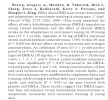
ingestion of 50 mg of DHEA increased serum androstenedione concentrations 150% within 60 min (P , 0.05) but did not affect serum testosterone and estrogen
concentrations.

...
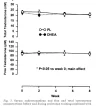
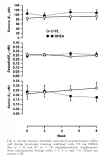
Serum concentrations of free and total testosterone, estrone, estradiol, estriol, lipids, and liver transaminases were unaffected by supplementation and
training, while strength and lean body mass increased significantly and similarly (P , 0.05) in the men treated with placebo and DHEA. These results suggest that DHEA ingestion does not enhance serum testosterone concentrations or
adaptations associated with resistance training in young men.

They then go on to show a big ole' fat nothing-burger in terms of hormone changes over an 8-week period @ 150mg DHEA

1759352568514.webp1759352607510.webp
 

Attachments

  • 1759352430454.webp
    1759352430454.webp
    97.9 KB · Views: 4
Not sure if you even read the thing you attached and are supposedly quoting.
yeah i did actually.. In it's entirety. If you only pull the parts you did it's quite contradictory.

He asked how quickly it would take effect. I didn't go into detail about how useless it is just provided a human study.
 
Last edited:

Sponsors

Latest posts

Back
Top