
MESO-Rx
Anabolic Steroids

Navigation
Install the app
How to install the app on iOS
Follow along with the video below to see how to install our site as a web app on your home screen.
Note: This feature may not be available in some browsers.
More options
Style variation
Guest viewing is limited
- You have a limited number of page views remaining
- 13 guest views remaining
- Register now to remove this limitation
- Already a member? Click here to login
You are using an out of date browser. It may not display this or other websites correctly.
You should upgrade or use an alternative browser.
You should upgrade or use an alternative browser.
Revolution
- Thread starter Michael Scally MD
- Start date
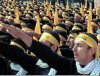

Shy U.S. Intellectual Created Playbook Used in a Revolution
http://www.nytimes.com/2011/02/17/world/middleeast/17sharp.html
By SHERYL GAY STOLBERG
Published: February 16, 2011
BOSTON — Halfway around the world from Tahrir Square in Cairo, an aging American intellectual shuffles about his cluttered brick row house in a working-class neighborhood here. His name is Gene Sharp. Stoop-shouldered and white-haired at 83, he grows orchids, has yet to master the Internet and hardly seems like a dangerous man.
But for the world’s despots, his ideas can be fatal.
Few Americans have heard of Mr. Sharp. But for decades, his practical writings on nonviolent revolution — most notably “From Dictatorship to Democracy,” a 93-page guide to toppling autocrats, available for download in 24 languages — have inspired dissidents around the world, including in Burma, Bosnia, Estonia and Zimbabwe, and now Tunisia and Egypt.
When Egypt’s April 6 Youth Movement was struggling to recover from a failed effort in 2005, its leaders tossed around “crazy ideas” about bringing down the government, said Ahmed Maher, a leading strategist. They stumbled on Mr. Sharp while examining the Serbian movement Otpor, which he had influenced.
When the nonpartisan International Center on Nonviolent Conflict, which trains democracy activists, slipped into Cairo several years ago to conduct a workshop, among the papers it distributed was Mr. Sharp’s “198 Methods of Nonviolent Action,” a list of tactics that range from hunger strikes to “protest disrobing” to “disclosing identities of secret agents.”
Dalia Ziada, an Egyptian blogger and activist who attended the workshop and later organized similar sessions on her own, said trainees were active in both the Tunisia and Egypt revolts. She said that some activists translated excerpts of Mr. Sharp’s work into Arabic, and that his message of “attacking weaknesses of dictators” stuck with them.
Peter Ackerman, a onetime student of Mr. Sharp who founded the nonviolence center and ran the Cairo workshop, cites his former mentor as proof that “ideas have power.”
Mr. Sharp, hard-nosed yet exceedingly shy, is careful not to take credit. He is more thinker than revolutionary, though as a young man he participated in lunch-counter sit-ins and spent nine months in a federal prison in Danbury, Conn., as a conscientious objector during the Korean War. He has had no contact with the Egyptian protesters, he said, although he recently learned that the Muslim Brotherhood had “From Dictatorship to Democracy” posted on its Web site.
While seeing the revolution that ousted Hosni Mubarak as a sign of “encouragement,” Mr. Sharp said, “The people of Egypt did that — not me.”
He has been watching events in Cairo unfold on CNN from his modest house in East Boston, which he bought in 1968 for $150 plus back taxes.
It doubles as the headquarters of the Albert Einstein Institution, an organization Mr. Sharp founded in 1983 while running seminars at Harvard and teaching political science at what is now theUniversity of Massachusetts at Dartmouth. It consists of him; his assistant, Jamila Raquib, whose family fled Soviet oppression in Afghanistan when she was 5; a part-time office manager and a Golden Retriever mix named Sally. Their office wall sports a bumper sticker that reads “Gotov Je!” — Serbian for “He is finished!”
In this era of Twitter revolutionaries, the Internet holds little allure for Mr. Sharp. He is not on Facebook and does not venture onto the Einstein Web site. (“I should,” he said apologetically.) If he must send e-mail, he consults a handwritten note Ms. Raquib has taped to the doorjamb near his state-of-the-art Macintosh computer in a study overflowing with books and papers. “To open a blank e-mail,” it reads, “click once on icon that says ‘new’ at top of window.”
Some people suspect Mr. Sharp of being a closet peacenik and a lefty — in the 1950s, he wrote for a publication called “Peace News” and he once worked as personal secretary to A. J. Muste, a noted labor union activist and pacifist — but he insists that he outgrew his own early pacifism and describes himself as “trans-partisan.”
Based on studies of revolutionaries like Gandhi, nonviolent uprisings, civil rights struggles, economic boycotts and the like, he has concluded that advancing freedom takes careful strategy and meticulous planning, advice that Ms. Ziada said resonated among youth leaders in Egypt. Peaceful protest is best, he says — not for any moral reason, but because violence provokes autocrats to crack down. “If you fight with violence,” Mr. Sharp said, “you are fighting with your enemy’s best weapon, and you may be a brave but dead hero.”
Autocrats abhor Mr. Sharp. In 2007, President Hugo Chávez of Venezuela denounced him, and officials in Myanmar, according to diplomatic cables obtained by the anti-secrecy group WikiLeaks, accused him of being part of a conspiracy to set off demonstrations intended “to bring down the government.” (A year earlier, a cable from the United States Embassy in Damascus noted that Syrian dissidents had trained in nonviolence by reading Mr. Sharp’s writings.)
In 2008, Iran featured Mr. Sharp, along with Senator John McCain of Arizona and the Democratic financier George Soros, in an animated propaganda video that accused Mr. Sharp of being the C.I.A. agent “in charge of America’s infiltration into other countries,” an assertion his fellow scholars find ludicrous.
“He is generally considered the father of the whole field of the study of strategic nonviolent action,” said Stephen Zunes, an expert in that field at the University of San Francisco. “Some of these exaggerated stories of him going around the world and starting revolutions and leading mobs, what a joke. He’s much more into doing the research and the theoretical work than he is in disseminating it.”
That is not to say Mr. Sharp has not seen any action. In 1989, he flew to China to witness the uprising in Tiananmen Square. In the early 1990s, he sneaked into a rebel camp in Myanmar at the invitation of Robert L. Helvey, a retired Army colonel who advised the opposition there. They met when Colonel Helvey was on a fellowship at Harvard; the military man thought the professor had ideas that could avoid war. “Here we were in this jungle, reading Gene Sharp’s work by candlelight,” Colonel Helvey recalled. “This guy has tremendous insight into society and the dynamics of social power.”
Not everyone is so impressed. As’ad AbuKhalil, a Lebanese political scientist and founder of the Angry Arab News Service blog, was outraged by a passing mention of Mr. Sharp in The New York Times on Monday. He complained that Western journalists were looking for a “Lawrence of Arabia” to explain Egyptians’ success, in a colonialist attempt to deny credit to Egyptians.
Still, just as Mr. Sharp’s profile seems to be expanding, his institute is contracting.
Mr. Ackerman, who became wealthy as an investment banker after studying under Mr. Sharp, contributed millions of dollars and kept it afloat for years. But about a decade ago, Mr. Ackerman wanted to disseminate Mr. Sharp’s ideas more aggressively, as well as his own. He put his money into his own center, which also produces movies and even a video game to train dissidents. An annuity he purchased still helps pay Mr. Sharp’s salary.
In the twilight of his career, Mr. Sharp, who never married, is slowing down. His voice trembles and his blue eyes grow watery when he is tired; he gave up driving after a recent accident. He does his own grocery shopping; his assistant, Ms. Raquib, tries to follow him when it is icy. He does not like it.
He says his work is far from done. He has just submitted a manuscript for a new book, “Sharp’s Dictionary of Power and Struggle: Terminology of Civil Resistance in Conflicts,” to be published this fall by Oxford University Press. He would like readers to know he did not pick the title. “It’s a little immodest,” he said. He has another manuscript in the works about Einstein, whose own concerns about totalitarianism prompted Mr. Sharp to adopt the scientist’s name for his institution. (Einstein wrote the foreword to Mr. Sharp’s first book, about Gandhi.)
In the meantime, he is keeping a close eye on the Middle East. He was struck by the Egyptian protesters’ discipline in remaining peaceful, and especially by their lack of fear. “That is straight out of Gandhi,” Mr. Sharp said. “If people are not afraid of the dictatorship, that dictatorship is in big trouble.”
http://www.nytimes.com/2011/02/17/world/middleeast/17sharp.html
By SHERYL GAY STOLBERG
Published: February 16, 2011
BOSTON — Halfway around the world from Tahrir Square in Cairo, an aging American intellectual shuffles about his cluttered brick row house in a working-class neighborhood here. His name is Gene Sharp. Stoop-shouldered and white-haired at 83, he grows orchids, has yet to master the Internet and hardly seems like a dangerous man.
But for the world’s despots, his ideas can be fatal.
Few Americans have heard of Mr. Sharp. But for decades, his practical writings on nonviolent revolution — most notably “From Dictatorship to Democracy,” a 93-page guide to toppling autocrats, available for download in 24 languages — have inspired dissidents around the world, including in Burma, Bosnia, Estonia and Zimbabwe, and now Tunisia and Egypt.
When Egypt’s April 6 Youth Movement was struggling to recover from a failed effort in 2005, its leaders tossed around “crazy ideas” about bringing down the government, said Ahmed Maher, a leading strategist. They stumbled on Mr. Sharp while examining the Serbian movement Otpor, which he had influenced.
When the nonpartisan International Center on Nonviolent Conflict, which trains democracy activists, slipped into Cairo several years ago to conduct a workshop, among the papers it distributed was Mr. Sharp’s “198 Methods of Nonviolent Action,” a list of tactics that range from hunger strikes to “protest disrobing” to “disclosing identities of secret agents.”
Dalia Ziada, an Egyptian blogger and activist who attended the workshop and later organized similar sessions on her own, said trainees were active in both the Tunisia and Egypt revolts. She said that some activists translated excerpts of Mr. Sharp’s work into Arabic, and that his message of “attacking weaknesses of dictators” stuck with them.
Peter Ackerman, a onetime student of Mr. Sharp who founded the nonviolence center and ran the Cairo workshop, cites his former mentor as proof that “ideas have power.”
Mr. Sharp, hard-nosed yet exceedingly shy, is careful not to take credit. He is more thinker than revolutionary, though as a young man he participated in lunch-counter sit-ins and spent nine months in a federal prison in Danbury, Conn., as a conscientious objector during the Korean War. He has had no contact with the Egyptian protesters, he said, although he recently learned that the Muslim Brotherhood had “From Dictatorship to Democracy” posted on its Web site.
While seeing the revolution that ousted Hosni Mubarak as a sign of “encouragement,” Mr. Sharp said, “The people of Egypt did that — not me.”
He has been watching events in Cairo unfold on CNN from his modest house in East Boston, which he bought in 1968 for $150 plus back taxes.
It doubles as the headquarters of the Albert Einstein Institution, an organization Mr. Sharp founded in 1983 while running seminars at Harvard and teaching political science at what is now theUniversity of Massachusetts at Dartmouth. It consists of him; his assistant, Jamila Raquib, whose family fled Soviet oppression in Afghanistan when she was 5; a part-time office manager and a Golden Retriever mix named Sally. Their office wall sports a bumper sticker that reads “Gotov Je!” — Serbian for “He is finished!”
In this era of Twitter revolutionaries, the Internet holds little allure for Mr. Sharp. He is not on Facebook and does not venture onto the Einstein Web site. (“I should,” he said apologetically.) If he must send e-mail, he consults a handwritten note Ms. Raquib has taped to the doorjamb near his state-of-the-art Macintosh computer in a study overflowing with books and papers. “To open a blank e-mail,” it reads, “click once on icon that says ‘new’ at top of window.”
Some people suspect Mr. Sharp of being a closet peacenik and a lefty — in the 1950s, he wrote for a publication called “Peace News” and he once worked as personal secretary to A. J. Muste, a noted labor union activist and pacifist — but he insists that he outgrew his own early pacifism and describes himself as “trans-partisan.”
Based on studies of revolutionaries like Gandhi, nonviolent uprisings, civil rights struggles, economic boycotts and the like, he has concluded that advancing freedom takes careful strategy and meticulous planning, advice that Ms. Ziada said resonated among youth leaders in Egypt. Peaceful protest is best, he says — not for any moral reason, but because violence provokes autocrats to crack down. “If you fight with violence,” Mr. Sharp said, “you are fighting with your enemy’s best weapon, and you may be a brave but dead hero.”
Autocrats abhor Mr. Sharp. In 2007, President Hugo Chávez of Venezuela denounced him, and officials in Myanmar, according to diplomatic cables obtained by the anti-secrecy group WikiLeaks, accused him of being part of a conspiracy to set off demonstrations intended “to bring down the government.” (A year earlier, a cable from the United States Embassy in Damascus noted that Syrian dissidents had trained in nonviolence by reading Mr. Sharp’s writings.)
In 2008, Iran featured Mr. Sharp, along with Senator John McCain of Arizona and the Democratic financier George Soros, in an animated propaganda video that accused Mr. Sharp of being the C.I.A. agent “in charge of America’s infiltration into other countries,” an assertion his fellow scholars find ludicrous.
“He is generally considered the father of the whole field of the study of strategic nonviolent action,” said Stephen Zunes, an expert in that field at the University of San Francisco. “Some of these exaggerated stories of him going around the world and starting revolutions and leading mobs, what a joke. He’s much more into doing the research and the theoretical work than he is in disseminating it.”
That is not to say Mr. Sharp has not seen any action. In 1989, he flew to China to witness the uprising in Tiananmen Square. In the early 1990s, he sneaked into a rebel camp in Myanmar at the invitation of Robert L. Helvey, a retired Army colonel who advised the opposition there. They met when Colonel Helvey was on a fellowship at Harvard; the military man thought the professor had ideas that could avoid war. “Here we were in this jungle, reading Gene Sharp’s work by candlelight,” Colonel Helvey recalled. “This guy has tremendous insight into society and the dynamics of social power.”
Not everyone is so impressed. As’ad AbuKhalil, a Lebanese political scientist and founder of the Angry Arab News Service blog, was outraged by a passing mention of Mr. Sharp in The New York Times on Monday. He complained that Western journalists were looking for a “Lawrence of Arabia” to explain Egyptians’ success, in a colonialist attempt to deny credit to Egyptians.
Still, just as Mr. Sharp’s profile seems to be expanding, his institute is contracting.
Mr. Ackerman, who became wealthy as an investment banker after studying under Mr. Sharp, contributed millions of dollars and kept it afloat for years. But about a decade ago, Mr. Ackerman wanted to disseminate Mr. Sharp’s ideas more aggressively, as well as his own. He put his money into his own center, which also produces movies and even a video game to train dissidents. An annuity he purchased still helps pay Mr. Sharp’s salary.
In the twilight of his career, Mr. Sharp, who never married, is slowing down. His voice trembles and his blue eyes grow watery when he is tired; he gave up driving after a recent accident. He does his own grocery shopping; his assistant, Ms. Raquib, tries to follow him when it is icy. He does not like it.
He says his work is far from done. He has just submitted a manuscript for a new book, “Sharp’s Dictionary of Power and Struggle: Terminology of Civil Resistance in Conflicts,” to be published this fall by Oxford University Press. He would like readers to know he did not pick the title. “It’s a little immodest,” he said. He has another manuscript in the works about Einstein, whose own concerns about totalitarianism prompted Mr. Sharp to adopt the scientist’s name for his institution. (Einstein wrote the foreword to Mr. Sharp’s first book, about Gandhi.)
In the meantime, he is keeping a close eye on the Middle East. He was struck by the Egyptian protesters’ discipline in remaining peaceful, and especially by their lack of fear. “That is straight out of Gandhi,” Mr. Sharp said. “If people are not afraid of the dictatorship, that dictatorship is in big trouble.”
From Dictatorship to Democracy
A Conceptual Framework for Liberation
By Gene Sharp
http://www.aeinstein.org/organizations/org/FDTD.pdf
A Conceptual Framework for Liberation
By Gene Sharp
http://www.aeinstein.org/organizations/org/FDTD.pdf
Preface
One of my major concerns for many years has been how people could prevent and destroy dictatorships. This has been nurtured in part because of a belief that human beings should not be dominated and destroyed by such regimes. That belief has been strengthened by readings on the importance of human freedom, on the nature of dictatorships (from Aristotle to analysts of totalitarianism), and histories of dictatorships (especially the Nazi and Stalinist systems).
Over the years I have had occasion to get to know people who lived and suffered under Nazi rule, including some who survived concentration camps. In Norway I met people who had resisted fascist rule and survived, and heard of those who perished. I talked with Jews who had escaped the Nazi clutches and with persons who had helped to save them.
Knowledge of the terror of Communist rule in various countries has been learned more from books than personal contacts. The terror of these systems appeared to me to be especially poignant for these dictatorships were imposed in the name of liberation from oppression and exploitation.
In more recent decades through visits of persons from dictatorially ruled countries, such as Panama, Poland, Chile, Tibet, and Burma, the realities of today’s dictatorships became more real. From Tibetans who had fought against Chinese Communist aggression, Russians who had defeated the August 1991 hard-line coup, and Thais who had nonviolently blocked a return to military rule, I have gained often troubling perspectives on the insidious nature of dictatorships.
The sense of pathos and outrage against the brutalities, along with admiration of the calm heroism of unbelievably brave men and women, were sometimes strengthened by visits to places where the dangers were still great, and yet defiance by brave people continued. These included Panama under Noriega; Vilnius, Lithuania, under continued Soviet repression; Tiananmen Square, Beijing, during both the festive demonstration of freedom and while the first armored personnel carriers entered that fateful night; and the jungle headquarters of the democratic opposition at Manerplaw in “liberated Burma.”
Sometimes I visited the sites of the fallen, as the television tower and the cemetery in Vilnius, the public park in Riga where people had been gunned down, the center of Ferrara in northern Italy where the fascists lined up and shot resisters, and a simple cemetery in Manerplaw filled with bodies of men who had died much too young. It is a sad realization that every dictatorship leaves such death and destruction in its wake.
Out of these concerns and experiences grew a determined hope that prevention of tyranny might be possible, that successful struggles against dictatorships could be waged without mass mutual slaughters, that dictatorships could be destroyed and new ones prevented from rising out of the ashes.
I have tried to think carefully about the most effective ways in which dictatorships could be successfully disintegrated with the least possible cost in suffering and lives. In this I have drawn on my studies over many years of dictatorships, resistance movements, revolutions, political thought, governmental systems, and especially realistic nonviolent struggle.
This publication is the result. I am certain it is far from perfect. But, perhaps, it offers some guidelines to assist thought and planning to produce movements of liberation that are more powerful and effective than might otherwise be the case.
Of necessity, and of deliberate choice, the focus of this essay is on the generic problem of how to destroy a dictatorship and to prevent the rise of a new one. I am not competent to produce a detailed analysis and prescription for a particular country. However, it is my hope that this generic analysis may be useful to people in, unfortunately, too many countries who now face the realities of dictatorial rule. They will need to examine the validity of this analysis for their situations and the extent to which its major recommendations are, or can be made to be, applicable for their liberation struggles. Nowhere in this analysis do I assume that defying dictators will be an easy or cost-free endeavor. All forms of struggle have complications and costs. Fighting dictators will, of course, bring casualties. It is my hope, however, that this analysis will spur resistance leaders to consider strategies that may increase their effective power while reducing the relative level of casualties.
Nor should this analysis be interpreted to mean that when a specific dictatorship is ended, all other problems will also disappear. The fall of one regime does not bring in a utopia. Rather, it opens the way for hard work and long efforts to build more just social, economic, and political relationships and the eradication of other forms of injustices and oppression. It is my hope that this brief examination of how a dictatorship can be disintegrated may be found useful wherever people live under domination and desire to be free.
Last edited:
Bahrain royal family orders army to turn on the people
Bahrain royal family orders army to turn on the people - Telegraph
Security Forces in Bahrain Open Fire on Mourners
http://www.nytimes.com/2011/02/19/world/middleeast/19bahrain.html?hp
Bahrain royal family orders army to turn on the people - Telegraph
Security Forces in Bahrain Open Fire on Mourners
http://www.nytimes.com/2011/02/19/world/middleeast/19bahrain.html?hp
Last edited:
27 killed in Libya protests
27 killed in Libya protests
Libya Protests Build, Showing Revolts’ Limits and Power
http://www.nytimes.com/2011/02/19/world/africa/19libya.html?hp
27 killed in Libya protests
Libya Protests Build, Showing Revolts’ Limits and Power
http://www.nytimes.com/2011/02/19/world/africa/19libya.html?hp
Last edited:
Three killed, 76 injured in clashes in Yemen protests
Three killed, 76 injured in clashes in Yemen protests
Yemen Protesters Face Off for 8th Day
http://www.nytimes.com/2011/02/19/world/middleeast/19yemen.html
Three killed, 76 injured in clashes in Yemen protests
Yemen Protesters Face Off for 8th Day
http://www.nytimes.com/2011/02/19/world/middleeast/19yemen.html
Last edited:
Iran Opposition Raises Stakes
Iran Opposition Raises Stakes in Struggle - WSJ.com
BEIRUT—Iran's opposition called for another nationwide demonstration on Sunday, and raised the stakes by openly labeling the struggle as a fight against "a religious dictatorship."
The statement, endorsed by leaders Mir Hossein Mousavi and Mehdi Karroubi, appears to lay out the opposition's goal more clearly after tens of thousands of supporters took to the streets Monday calling for regime change.
Sunday is the seventh day of mourning for two slain students, Sanah Jaleh, 26 years old, and Mohamad Mokhtari, 22, who were shot dead on Monday when security forces attacked the crowd. Kurdish Iranian groups announced they would observe a general strike in Iran's Kurdish provinces Sunday in response to Mr. Jaleh's killing, who was a Sunni Kurd.
The public uproar and the government's reaction to the killings—it claimed the students were pro-government agents despite family denials—are providing the opposition momentum, in addition to the wave of antigovernment uprisings across the Middle East.
"The system governing Iran now is neither Islamic nor a Republic. The Islamic Republic has already collapsed at the hands of this regime," said Mr. Karroubi Friday, in one of his harshest criticisms of the government, according to his website citing a message he sent to supporters through an adviser.
Iran's government is also striking back at the opposition with a coordinated campaign that includes isolating its leaders through house arrests, slandering them in state media as agents for the U.S. and Israel and rallying people to chant against them in the streets.
During Friday prayer services thousands of attendees carried identical yellow cardboard signs that called for the prosecution and execution of the opposition leaders. They also waved the yellow flag of Hezbollah, the Lebanese Shiite militant and political group.
But so far, the government has decided not to arrest or prosecute the leaders, possibly out of fear that would unleash more unrest across Iran. Ayatollah Ahmad Jannati, speaking at Tehran's Friday prayer sermon, confirmed Messers Karroubi and Mousavi wouldn't be put on trial for now. Instead, he urged to imprison them in their homes.
"The doors of their houses must be shut. Their interaction with the outside world must be limited. Their telephone and Internet must be cut. They must be imprisoned in their own houses," he said.
For the past week, Messers Karroubi and Mousavi have been under strict house arrest with very little communication to the outside world. Their team of bodyguards, from the Revolutionary Guards elite Ansar Mehdi branch, was dismissed, and intelligence agents took over their protection, according to their websites.
Mr. Mousavi was last heard from Tuesday when he sent a statement to supporters praising them for coming to the streets. Mr. Karroubi last spoke to his adviser on Thursday and reportedly is resolved and in high spirits.
A number of Iranian student-activist groups issued statements Friday warning Iran's government against harming the opposition leaders and said there would be a price to pay, including "violent revolutionary actions," by students, according to the statement by Tehran University medical students posted on websites.
Even international hackers are focusing their attention on Iran's government. For the past 72 hours, nearly all major Iranian official and semi-official news websites and government websites have been hacked and out of function. The online collective known as "Anonymous," which has attacked a number of corporate and other websites in apparent retaliation for moves against the document-leaking organization WikiLeaks, said Monday it is turning its attention to Iran.
"The people of Iran have already made clear their intent to revolt, which a major factor is in our decisions regarding who to support and when," said Barrett Brown, a strategist for the group.
Iran Opposition Raises Stakes in Struggle - WSJ.com
BEIRUT—Iran's opposition called for another nationwide demonstration on Sunday, and raised the stakes by openly labeling the struggle as a fight against "a religious dictatorship."
The statement, endorsed by leaders Mir Hossein Mousavi and Mehdi Karroubi, appears to lay out the opposition's goal more clearly after tens of thousands of supporters took to the streets Monday calling for regime change.
Sunday is the seventh day of mourning for two slain students, Sanah Jaleh, 26 years old, and Mohamad Mokhtari, 22, who were shot dead on Monday when security forces attacked the crowd. Kurdish Iranian groups announced they would observe a general strike in Iran's Kurdish provinces Sunday in response to Mr. Jaleh's killing, who was a Sunni Kurd.
The public uproar and the government's reaction to the killings—it claimed the students were pro-government agents despite family denials—are providing the opposition momentum, in addition to the wave of antigovernment uprisings across the Middle East.
"The system governing Iran now is neither Islamic nor a Republic. The Islamic Republic has already collapsed at the hands of this regime," said Mr. Karroubi Friday, in one of his harshest criticisms of the government, according to his website citing a message he sent to supporters through an adviser.
Iran's government is also striking back at the opposition with a coordinated campaign that includes isolating its leaders through house arrests, slandering them in state media as agents for the U.S. and Israel and rallying people to chant against them in the streets.
During Friday prayer services thousands of attendees carried identical yellow cardboard signs that called for the prosecution and execution of the opposition leaders. They also waved the yellow flag of Hezbollah, the Lebanese Shiite militant and political group.
But so far, the government has decided not to arrest or prosecute the leaders, possibly out of fear that would unleash more unrest across Iran. Ayatollah Ahmad Jannati, speaking at Tehran's Friday prayer sermon, confirmed Messers Karroubi and Mousavi wouldn't be put on trial for now. Instead, he urged to imprison them in their homes.
"The doors of their houses must be shut. Their interaction with the outside world must be limited. Their telephone and Internet must be cut. They must be imprisoned in their own houses," he said.
For the past week, Messers Karroubi and Mousavi have been under strict house arrest with very little communication to the outside world. Their team of bodyguards, from the Revolutionary Guards elite Ansar Mehdi branch, was dismissed, and intelligence agents took over their protection, according to their websites.
Mr. Mousavi was last heard from Tuesday when he sent a statement to supporters praising them for coming to the streets. Mr. Karroubi last spoke to his adviser on Thursday and reportedly is resolved and in high spirits.
A number of Iranian student-activist groups issued statements Friday warning Iran's government against harming the opposition leaders and said there would be a price to pay, including "violent revolutionary actions," by students, according to the statement by Tehran University medical students posted on websites.
Even international hackers are focusing their attention on Iran's government. For the past 72 hours, nearly all major Iranian official and semi-official news websites and government websites have been hacked and out of function. The online collective known as "Anonymous," which has attacked a number of corporate and other websites in apparent retaliation for moves against the document-leaking organization WikiLeaks, said Monday it is turning its attention to Iran.
"The people of Iran have already made clear their intent to revolt, which a major factor is in our decisions regarding who to support and when," said Barrett Brown, a strategist for the group.
Clashes in Jordan injure 8 protesters
Clashes in Jordan injure 8 protesters - USATODAY.com
Clashes in Jordan injure 8 protesters - USATODAY.com
Libya forces 'open fire' at funeral
Libya forces 'open fire' at funeral - Africa - Al Jazeera English
Protesters retake Bahrain centre
Protesters retake Bahrain centre - Middle East - Al Jazeera English
Yemen rivals exchange gunfire
Yemen rivals exchange gunfire - Middle East - Al Jazeera English
Go To: AJE - Al Jazeera English
Libya forces 'open fire' at funeral - Africa - Al Jazeera English
Protesters retake Bahrain centre
Protesters retake Bahrain centre - Middle East - Al Jazeera English
Yemen rivals exchange gunfire
Yemen rivals exchange gunfire - Middle East - Al Jazeera English
Go To: AJE - Al Jazeera English
Uprising flares in Libyan city
Uprising flares in Libyan city - Africa - Al Jazeera English
Moroccans march to seek change
Moroccans march to seek change - Africa - Al Jazeera English
Uprising flares in Libyan city - Africa - Al Jazeera English
Moroccans march to seek change
Moroccans march to seek change - Africa - Al Jazeera English
Protesters Die as Crackdown in Libya Intensifies
http://www.nytimes.com/2011/02/21/world/africa/21libya.html?hp
Libya clashes spreads to Tripoli
Libya clashes spreads to Tripoli - Africa - Al Jazeera English
http://www.nytimes.com/2011/02/21/world/africa/21libya.html?hp
Libya clashes spreads to Tripoli
Libya clashes spreads to Tripoli - Africa - Al Jazeera English
Hint: they won't be free elections as Bruce McQuain in the QANDO.NET piece pointed out for those less able to gauge how things actually work in the Middle East.
You cant be a complete idiot- you are an EE. You must have SOME reasoning ability left intact.
Why wont you answer my question?
I dont want to quash your right to voice your selfishness.
Would you respect the same for others?

You cant be a complete idiot- you are an EE. You must have SOME reasoning ability left intact.
Why wont you answer my question?
I dont want to quash your right to voice your selfishness.
Would you respect the same for others?
Reasoning: Look the the history of the Middle East - in its entirety. Nothing more needs to be said. I mean, the case is open and shut. To reason any further would be futile - a prime example of paralysis by analysis. To use an EE analogy - when solving numerical electromagnetic problems for 3-D structures, there comes a point where it is obvious the program will not halt and one can watch the convergence curve going off asymmetrically. Same thing here. The answer is obvious, and wishing it were otherwise is not going to stop the obvious from happening. You can talk about other resolutions to the issue, but when the bulk of the evidence is against you, you only follow the asymmetric path to fairy dust land and end up being reactive rather than proactive.
One can chose to bury their head in the sand, but that only leaves another part of your anatomy exposed that your enemies will be only to happy to make use of.
Fair elections in that part of the world in these circumstances are a farce. The people willing to die for Allah will always "convince" the other to vote their way....or else. Look at Hitler's Germany. You think the average German citizen had a love affair with the Nazi party? Hell no. But they learned to love them didn't they?
Libya unrest: Violence against protesters backfires
BBC News - Libya unrest: Violence against protesters backfires
Live Blog - Libya
http://blogs.aljazeera.net/middle-east/2011/02/17/live-blog-libya
'Protesters in Libyan capital torch government buildings'
http://www.jpost.com/VideoArticles/Video/Article.aspx?id=209185
BBC News - Libya unrest: Violence against protesters backfires
Live Blog - Libya
http://blogs.aljazeera.net/middle-east/2011/02/17/live-blog-libya
'Protesters in Libyan capital torch government buildings'
http://www.jpost.com/VideoArticles/Video/Article.aspx?id=209185
Last edited:
Lords of the Realm
The wealthy, unaccountable monarchs of the Persian Gulf have long thought themselves exempt from Middle East turmoil. No longer.
http://www.foreignpolicy.com/articles/2011/02/21/lords_of_the_realm
Revolution U
http://www.foreignpolicy.com/articles/2011/02/16/revolution_u
The wealthy, unaccountable monarchs of the Persian Gulf have long thought themselves exempt from Middle East turmoil. No longer.
http://www.foreignpolicy.com/articles/2011/02/21/lords_of_the_realm
Revolution U
http://www.foreignpolicy.com/articles/2011/02/16/revolution_u
Qaddafi’s Grip on Power Seems to Ebb as Forces Retreat
http://www.nytimes.com/2011/02/22/world/africa/22libya.html?hp
Libyan ambassador in UK, staff of embassy resign
http://www.english.globalarabnetwork.com/201102219937/World-Politics/libya-ambassador-in-uk-a-staff-of-embassy-resign.html
http://www.nytimes.com/2011/02/22/world/africa/22libya.html?hp
Libyan ambassador in UK, staff of embassy resign
http://www.english.globalarabnetwork.com/201102219937/World-Politics/libya-ambassador-in-uk-a-staff-of-embassy-resign.html
Last edited:
Exiled opposition leader to return to Bahrain
Exiled opposition leader to return to Bahrain
Bahrain Cancels Grand Prix Amid Political Unrest
http://www.nytimes.com/2011/02/22/sports/autoracing/22iht-PRIX22.html
Warplanes and Militia Fire on Protesters in Libyan Capital
http://www.nytimes.com/2011/02/22/world/africa/22libya.html
Breaking the sound barrier on Libya
Breaking the sound barrier on Libya - Features - Al Jazeera English
Libya protests spread and intensify
Security forces open fire on anti-government demonstrators in Tripoli, as protests escalate across the country.
Libya protests spread and intensify - Africa - Al Jazeera English
Exiled opposition leader to return to Bahrain
MANAMA, Bahrain — A prominent opposition figure accused by Bahrain of plotting against the state plans to return from London, an aide said Monday, in a move that could bolster protesters and force authorities into difficult choices.
Hassan Meshaima, head of a group known as Haq, is scheduled to arrive late Tuesday as the embattled monarchy tries to engage demonstrators in talks aimed at easing the week-long series of clashes and marches that have deeply divided the strategic Gulf nation.
Bahrain Cancels Grand Prix Amid Political Unrest
http://www.nytimes.com/2011/02/22/sports/autoracing/22iht-PRIX22.html
The organizers of the Bahrain Grand Prix announced Monday that the Formula One race next month had been canceled because of the political unrest in the country.
The race, which was scheduled to run March 13 at the Sakhir circuit, outside the capital, Manama, was to have been the first of the 20-race season, which will now begin with the Australian Grand Prix on March 27.
Warplanes and Militia Fire on Protesters in Libyan Capital
http://www.nytimes.com/2011/02/22/world/africa/22libya.html
CAIRO — The faltering government of the Libyan strongman Col. Muammar el-Qaddafi struck back at mounting protests against his 40-year rule, as helicopters and warplanes besieged parts of the capital Monday, according to witnesses and news reports from Tripoli.
By Monday afternoon, a witness saw armed militiamen firing on protesters who were clashing with riot police. As a group of protesters and the police faced off in a neighborhood near Green Square, in the center of the capital, ten or so Toyota pickup trucks carrying more than 20 men — many of them apparently from other African countries in mismatched fatigues — arrived at the scene.
Breaking the sound barrier on Libya
Breaking the sound barrier on Libya - Features - Al Jazeera English
Security forces may well have massacred protesters with characteristic brutality in Tripoli, the Libyan capital.
Libyan authorities went to extreme lengths to stop news of the killings from getting out. Helicopters rained bullets down on people in the streets below on Monday afternoon, fighter jets launched strikes on protesters, while snipers reportedly fired from building tops, human rights groups said.
Yet, with help from satellite phones and Twitter, the news made its way out of the country as killings were underway.
Libya protests spread and intensify
Security forces open fire on anti-government demonstrators in Tripoli, as protests escalate across the country.
Libya protests spread and intensify - Africa - Al Jazeera English
Political asylum
Two Libyan air force jets landed in Malta on Monday and their pilots asked for political asylum, a military source said.
The pilots, who made an unauthorised landing in Malta, claimed to have defected after failing to follow orders to attack civilians protesting in Benghazi in Libya, Al Jazeera's Karl Stagno-Navarra reported.
The pilots are claiming to be Libyan air force colonels. They are being questioned by authorities who are attempting to verify their identities, while the planes are still held at Malta's airport.
The two Mirage jets landed at Malta International Airport shortly after two civilian helicopters landed carrying seven people who said they were French. Only one of the passengers had a passport.
Last edited:
Last edited by a moderator:
Qaddafi’s Grip Falters as His Forces Take On Protesters
http://www.nytimes.com/2011/02/23/world/africa/23libya.html?hp
Fighting Nears Tripoli, Where Qaddafi Keeps Grip on Power
http://www.nytimes.com/2011/02/24/world/africa/24libya.html?hp
http://www.nytimes.com/2011/02/23/world/africa/23libya.html?hp
Fighting Nears Tripoli, Where Qaddafi Keeps Grip on Power
http://www.nytimes.com/2011/02/24/world/africa/24libya.html?hp
Last edited:
Qaddafi Massing Forces in Tripoli as Rebellion Spreads
http://www.nytimes.com/2011/02/25/world/africa/25libya.html?_r=1&hp
Gaddafi struggles to keep control
Pro-democracy protesters takeover eastern part of the country, as state structure appears to be disintegrating.
Gaddafi struggles to keep control - Africa - Al Jazeera English
Live Blog - Libya Feb 24
http://blogs.aljazeera.net/africa/2011/02/23/live-blog-libya-feb-24

http://www.nytimes.com/2011/02/25/world/africa/25libya.html?_r=1&hp
Gaddafi struggles to keep control
Pro-democracy protesters takeover eastern part of the country, as state structure appears to be disintegrating.
Gaddafi struggles to keep control - Africa - Al Jazeera English
Live Blog - Libya Feb 24
http://blogs.aljazeera.net/africa/2011/02/23/live-blog-libya-feb-24
Attachments
Last edited:
Similar threads


- Replies
- 8
- Views
- 321

- Replies
- 8
- Views
- 377

- Replies
- 2
- Views
- 188

- Replies
- 3
- Views
- 66


