Brain & Behavior

“Obedience to traditional authority:” A heritable factor underlying authoritarianism, conservatism and religiousness.

Highlights
· Study used a sample of twins separated from each other early in life.
· Twins were assessed for social, political, and religious attitudes.
· Biometric models indicated these attitudes all represented single construct.
· This construct was heritable and highly similar to a traditionalism measure.

Social attitudes, political attitudes and religiousness are highly inter-correlated. Furthermore, each is substantially influenced by genetic factors. Koenig and Bouchard (2006) hypothesized that these three areas (which they termed the Traditional Moral Values Triad) each derive from an underlying latent trait concerning the tendency to obey traditional authorities.

We tested this hypothesis with data from a sample of twins raised in different homes. We assessed social attitudes with Altemeyer’s (1988) Right-Wing Authoritarianism scale, political attitudes with Wilson and Patterson’s (1968) Conservatism scale, and religiousness with Wiggins’ (1966) Religious Fundamentalism scale.

The best-fitting model identified the three TMVT domains as different manifestations of a single latent and significantly heritable factor. Further, the genetic and environmental bases for this factor overlapped heavily with those for the Multidimensional Personality Questionnaire Traditionalism scale, supporting the conception of traditionalism as the latent factor represented by the three scales in contemporary Western societies.

Ludeke S, Johnson W, Bouchard Jr TJ. “Obedience to traditional authority:” A heritable factor underlying authoritarianism, conservatism and religiousness. Personality and Individual Differences 2013;55(4):375-80. https://www.sciencedirect.com/science/article/pii/S0191886913001384
 
Oliveira GA, Oliveira RF. Androgen modulation of social decision-making mechanisms in the brain: an integrative and embodied perspective. Front Neurosci 2014;8:209. http://journal.frontiersin.org/Journal/10.3389/fnins.2014.00209/full

Apart from their role in reproduction androgens also respond to social challenges and this response has been seen as a way to regulate the expression of behavior according to the perceived social environment (Challenge hypothesis, Wingfield et al., 1990). This hypothesis implies that social decision-making mechanisms localized in the central nervous system (CNS) are open to the influence of peripheral hormones that ultimately are under the control of the CNS through the hypothalamic-pituitary-gonadal axis. Therefore, two puzzling questions emerge at two different levels of biological analysis: (1) Why does the brain, which perceives the social environment and regulates androgen production in the gonad, need feedback information from the gonad to adjust its social decision-making processes? (2) How does the brain regulate gonadal androgen responses to social challenges and how do these feedback into the brain? In this paper, we will address these two questions using the integrative approach proposed by Niko Tinbergen, who proposed that a full understanding of behavior requires its analysis at both proximate (physiology, ontogeny) and ultimate (ecology, evolution) levels.
 
Science vs Conspiracy

How People Consume Conspiracy Theories on Facebook …in much the same way as mainstream readers consume ordinary news, say computer scientists.
http://www.technologyreview.com/view/529956/how-people-consume-conspiracy-theories-on-facebook/

Do you believe that the contrails left by high-flying aircraft contain sildenafil citratum, the active ingredient in Viagra?

Or that light bulbs made from uranium and plutonium are more energy-efficient and environmentally friendly?

Or that lemons have anti-hypnotic benefits?

If you do, then you are probably a regular consumer of conspiracy theories, particularly those that appear on the Italian language version of Facebook (where all these were sourced). It is easy to dismiss conspiracy theories as background noise with little if any consequences in the real world.

But that may be taking them too lightly. In 2013, a report from the World Economic Forum suggested that online misinformation represents a significant risk to modern society. The report pointed to a number of incidents in which information had spread virally with consequences that could hardly have been imagined by its creators.


Bessi A, et al. Science vs Conspiracy: collective narratives in the age of (mis)information. arXiv:1408.1667. http://arxiv.org/abs/1408.1667

The large availability of user provided contents on online social media facilitates people aggregation around common interests, worldviews and narratives. However, in spite of the enthusiastic rhetoric about the so called {\em wisdom of crowds}, unsubstantiated rumors -- as alternative explanation to main stream versions of complex phenomena -- find on the Web a natural medium for their dissemination.

In this work, we study, on a sample of 1.2 million of individuals, how information related to very distinct narratives -- i.e. main stream scientific and alternative news -- are consumed on Facebook. Through a thorough quantitative analysis, we show that distinct communities with similar information consumption patterns emerge around distinctive narratives. Moreover, consumers of alternative news (mainly conspiracy theories) result to be more focused on their contents, while scientific news consumers are more prone to comment on alternative news.

We conclude our analysis testing the response of this social system to 4709 troll information -- i.e. parodistic imitation of alternative and conspiracy theories. We find that, despite the false and satirical vein of news, usual consumers of conspiracy news are the most prone to interact with them.
 
The Neuroscience of Prejudice and Stereotyping

Amodio DM. The neuroscience of prejudice and stereotyping. Nat Rev Neurosci;advance online publication. http://amodiolab.org/wp-content/uploads/2014/09/Amodio-in-press-Nat-Rev-Neuro.pdf

Despite global increases in diversity, social prejudices continue to fuel intergroup conflict, disparities and discrimination.

Moreover, as norms have become more egalitarian, prejudices seem to have 'gone underground', operating covertly and often unconsciously, such that they are difficult to detect and control.

Neuroscientists have recently begun to probe the neural basis of prejudice and stereotyping in an effort to identify the processes through which these biases form, influence behaviour and are regulated.

This research aims to elucidate basic mechanisms of the social brain while advancing our understanding of intergroup bias in social behaviour.


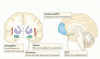
An interactive set of neural structures that underlie components of a prejudiced response.

The amygdala is involved in the rapid processing of social category cues, including racial groups, in terms of potential threat or reward.

Approach-related instrumental responses are mediated by the striatum.

The insula supports visceral and subjective emotional responses towards social ingroups or outgroups.

Affect-driven judgements of social outgroup members rely on the orbital frontal cortex (OFC) and may be characterized by reduced activity in the ventral medial prefrontal cortex (mPFC), a region involved in empathy and mentalizing.
Prejudice-network.gif
 
Neural and Cognitive Characteristics of Extraordinary Altruists

Altruism, and particularly costly altruism toward strangers, such as altruistic kidney donation, represents a puzzling phenomenon for many fields of science, including evolutionary biology, psychology, and economics.

How can such behavior be explained?

The propensity to engage in costly altruism varies widely and may be genetically mediated, but little is known about the neural mechanisms that support it.

We used structural and functional brain imaging to compare extraordinary altruists, specifically altruistic kidney donors, and controls. Altruists exhibited variations in neural anatomy and functioning that represent the inverse of patterns previously observed in psychopaths, who are unusually callous and antisocial.

These findings suggest extraordinary altruism represents one end of a caring continuum and is supported by neural mechanisms that underlie social and emotional responsiveness.

Marsh AA, Stoycos SA, Brethel-Haurwitz KM, Robinson P, VanMeter JW, Cardinale EM. Neural and cognitive characteristics of extraordinary altruists. Proceedings of the National Academy of Sciences. http://www.pnas.org/content/early/2014/09/11/1408440111.abstract

Altruistic behavior improves the welfare of another individual while reducing the altruist’s welfare. Humans’ tendency to engage in altruistic behaviors is unevenly distributed across the population, and individual variation in altruistic tendencies may be genetically mediated.

Although neural endophenotypes of heightened or extreme antisocial behavior tendencies have been identified in, for example, studies of psychopaths, little is known about the neural mechanisms that support heightened or extreme prosocial or altruistic tendencies.

In this study, we used structural and functional magnetic resonance imaging to assess a population of extraordinary altruists: altruistic kidney donors who volunteered to donate a kidney to a stranger.

Such donations meet the most stringent definitions of altruism in that they represent an intentional behavior that incurs significant costs to the donor to benefit an anonymous, nonkin other.

Functional imaging and behavioral tasks included face-emotion processing paradigms that reliably distinguish psychopathic individuals from controls.

Here we show that extraordinary altruists can be distinguished from controls by their enhanced volume in right amygdala and enhanced responsiveness of this structure to fearful facial expressions, an effect that predicts superior perceptual sensitivity to these expressions.

These results mirror the reduced amygdala volume and reduced responsiveness to fearful facial expressions observed in psychopathic individuals.

Our results support the possibility of a neural basis for extraordinary altruism.

We anticipate that these findings will expand the scope of research on biological mechanisms that promote altruistic behaviors to include neural mechanisms that support affective and social responsiveness.
 
It’s OK if “my brain made me do it”: People’s Intuitions About Free Will And Neuroscientific Prediction

Highlights
· Some have argued that perfect neuroscientific prediction conflicts with free will.
· We found most participants judge that neuro-prediction is consistent with free will.
· Judgments about free will varied with the presence or possibility of manipulation.
· Judgments about free will were mediated by judgments about ‘bypassing’.
· Results suggest people’s understanding of free will is minimally metaphysical.

Nahmias E, Shepard J, Reuter S. It’s OK if “my brain made me do it”: People’s intuitions about free will and neuroscientific prediction. Cognition 2014;133(2):502-16. https://www.sciencedirect.com/science/article/pii/S0010027714001462

In recent years, a number of prominent scientists have argued that free will is an illusion, appealing to evidence demonstrating that information about brain activity can be used to predict behavior before people are aware of having made a decision.

These scientists claim that the possibility of perfect prediction based on neural information challenges the ordinary understanding of free will.

In this paper, we provide evidence suggesting that most people do not view the possibility of neuro-prediction as a threat to free will unless it also raises concerns about manipulation of the agent’s behavior.

In Experiment 1 two scenarios described future brain imaging technology that allows perfect prediction of decisions and actions based on earlier neural activity, and this possibility did not undermine most people’s attributions of free will or responsibility, except in the scenario that also allowed manipulation.

In Experiment 2 the scenarios increased the salience of the physicalist implications of neuro-prediction, while in Experiment 3 the scenarios suggested dualism, with perfect prediction by mindreaders.

The patterns of results for these two experiments were similar to the results in Experiment 1, suggesting that participants do not understand free will to require specific metaphysical conditions regarding the mind–body relation.

Most people seem to understand free will in a way that is not threatened by perfect prediction based on neural information, suggesting that they believe that just because “my brain made me do it,” that does not mean that I didn’t do it of my own free will.
 
Bendahan S, Zehnder C, Pralong FoP, Antonakis J. Leader corruption depends on power and testosterone. The Leadership Quarterly. https://www.sciencedirect.com/science/article/pii/S1048984314000800

We used incentivized experimental games to manipulate leader power — the number of followers and the discretion leaders had to enforce their will.

Leaders had complete autonomy in deciding payouts to themselves and their followers.

Although leaders could make prosocial decisions to benefit the public good they could also abuse their power by invoking antisocial decisions, which reduced the total payouts to the group but increased the leaders' earnings.

In Study 1 (N = 478), we found that both amount of followers and discretionary choices independently predicted leader corruption.

In Study 2 (N = 240), we examined how power and individual differences (e.g., personality, hormones) affected leader corruption over time; power interacted with endogenous testosterone in predicting corruption, which was highest when leader power and baseline testosterone were both high.

Honesty predicted initial level of leader antisocial decisions; however, honesty did not shield leaders from the corruptive effect of power.
 
Brain Responses To Sexual Images In 46,XY Women With Complete Androgen Insensitivity Syndrome Are Female-Typical

Highlights
· Men (46,XY), typical women (46,XX), and women with complete androgen insensitivity (CAIS, 46,XY) were imaged for response to sexual images.
· Men showed greater amygdala activation to sexual images than did typical women or women with completely androgen insensitivit
· Typical women and women with CAIS were highly similar in their patterns of brain activation.
· Sex differences in brain activation to sexual images are not due to the presence of a Y chromosome.
· Aromatization of testosterone to estradiol does not appear to play a role in masculinization of responses to sexual stimuli

Hamann S, Stevens J, Vick JH, et al. Brain responses to sexual images in 46,XY women with complete androgen insensitivity syndrome are female-typical. Horm Behav. https://www.sciencedirect.com/science/article/pii/S0018506X14001998

Androgens, estrogens, and sex chromosomes are the major influences guiding sex differences in brain development, yet their relative roles and importance remain unclear. Individuals with complete androgen insensitivity syndrome (CAIS) offer a unique opportunity to address these issues.

Although women with CAIS have a Y chromosome, testes, and produce male-typical levels of androgens, they lack functional androgen receptors preventing responding to their androgens. Thus, they develop a female physical phenotype, are reared as girls, and develop into women.

Because sexually differentiated brain development in primates is determined primarily by androgens, but may be affected by sex chromosome complement, it is currently unknown whether brain structure and function in women with CAIS is more like that of women or men.

In the first functional neuroimaging study of (46,XY) women with CAIS, typical (46,XX) women, and typical (46, XY) men, we found that men showed greater amygdala activation to sexual images than did either typical women or women with CAIS. Typical women and women with CAIS had highly similar patterns of brain activation, indicating that a Y chromosome is insufficient for male-typical human brain responses.

Because women with CAIS produce male-typical or elevated levels of testosterone which is aromatized to estradiol these results rule out aromatization of testosterone to estradiol as a determinate of sex differences in patterns of brain activation to sexual images, We cannot, however, rule out an effect of social experience on the brain responses of women with CAIS as all were raised as girls.
 
Thync Lets You Give Your Mind a Jolt
http://www.businessweek.com/article...-million-for-its-brain-stimulating-electrodes

In a windowless conference room at Thync, a secretive startup in Los Gatos, Calif., I recently tried what may be Silicon Valley’s strangest new product in years. http://www.thync.com/

The company’s engineers carefully placed a prototype device with two electrodes on my head and asked if I wanted the “energy vibe” or the “calm vibe.”

I chose the latter, and for the next 12 minutes, they applied specifically calibrated levels of electricity to target my cranial nerves. When the skin under the pads started to tighten, I lowered the intensity setting on an accompanying iPhone app. It all seemed crazy—until halfway through the session, when the familiar knot of stress in my stomach evaporated.

Thync announced on Oct. 8 that it’s raised $13 million from investors, including well-heeled Khosla Ventures, to mine the intersection of neuroscience and consumer electronics.

Sometime next year, the company will begin selling a miniaturized, Bluetooth-enabled neurosignaling device, along with the seductive, controversial proposition that customers can program their state of mind. “This is an avenue for people to call up their best stuff on demand,” says Isy Goldwasser, Thync’s chief executive officer and co-founder. “It’s a way for us to overcome our basic limitation as people. It lets us call up our focus, our calm, and creativity when we need it.”
 
Highlights
· Oxtr Cre BAC transgenic mice target a subset of Sst-positive cortical interneurons
· OxtrINs respond to Oxytocin by increasing their firing rate
· OxtrINs in mPFC are required for female social interest in male mice during estrus
· Oxytocin action in mPFC is required for female sociosexual behavior

Nakajima M, Gorlich A, Heintz N. Oxytocin Modulates Female Sociosexual Behavior through a Specific Class of Prefrontal Cortical Interneurons. Cell 2014;159(2):295-305. http://www.cell.com/cell/abstract/S0092-8674(14)01169-6

Human imaging studies have revealed that intranasal administration of the “prosocial” hormone oxytocin (OT) activates the frontal cortex, and this action of OT correlates with enhanced brain function in autism. Here, we report the discovery of a population of somatostatin (Sst)-positive, regular spiking interneurons that express the oxytocin receptor (OxtrINs). Silencing of OxtrINs in the medial prefrontal cortex (mPFC) of female mice resulted in loss of social interest in male mice specifically during the sexually receptive phase of the estrous cycle. This sociosexual deficit was also present in mice in which the Oxtr gene was conditionally deleted from the mPFC and in control mice infused with an Oxtr antagonist. Our data demonstrate a gender-, cell type-, and state-specific role for OT/Oxtr signaling in the mPFC and identify a latent cortical circuit element that may modulate other complex social behaviors in response to OT.
 
Did you see this? Remarkable!!!

Scientists discover gene and part of brain that make people gullible http://blogs.discovermagazine.com/n...-and-part-of-brain-that-make-people-gullible/

Professor Cristoph Morris, who led the research, said that a part of the brain called the inferior supra-credulus was unsually active in people with a tendency to believe horoscopes and papers invoking fancy brain scans. “This correlation is so strong that we can speculate about a causal link with a high degree of certainty,” he concluded.

Morris made his discovery using a brain-scanning technique called fluorescence magnetic resonance imaging (fMRI), which can read people’s thoughts with an incredible degree of accuracy, just slightly better than chance. His results are published in the Journal of Evolutionary Psychoimagery.
 
Did you see this? Remarkable!!!

Scientists discover gene and part of brain that make people gullible http://blogs.discovermagazine.com/n...-and-part-of-brain-that-make-people-gullible/

Professor Cristoph Morris, who led the research, said that a part of the brain called the inferior supra-credulus was unsually active in people with a tendency to believe horoscopes and papers invoking fancy brain scans. “This correlation is so strong that we can speculate about a causal link with a high degree of certainty,” he concluded.

Morris made his discovery using a brain-scanning technique called fluorescence magnetic resonance imaging (fMRI), which can read people’s thoughts with an incredible degree of accuracy, just slightly better than chance. His results are published in the Journal of Evolutionary Psychoimagery.

fascinating! almost... unbelievable.
to think science has progressed this far.
it seems people who believe in things like horoscopes and papers involving fancy brain scans are afflicted by an underactive gene called WTF1. I would have never believed it, had I not read it, here in this paper, with a fancy brain scan to prove. so it must be true. couple that with the fact that fMRI can read peoples thoughts with an incredible degree of accuracy, just slightly better than chance, and there you have it. science.
too bad for those afflicted, as the cure will hurt them more than it will me.
 
Using functional MRI we examined the unconscious influence of early experience on later brain outcomes. Internationally adopted (IA) children (aged 9–17 years), who were completely separated from their birth language (Chinese) at 12.8 mo of age, on average, displayed brain activation to Chinese linguistic elements that precisely matched that of native Chinese speakers, despite the fact that IA children had no subsequent exposure to Chinese and no conscious recollection of that language.

Importantly, activation differed from monolingual French speakers with no Chinese exposure, despite all participants hearing identical acoustic stimuli. The similarity between adoptees and Chinese speakers clearly illustrates that early acquired information is maintained in the brain and that early experiences unconsciously influence neural processing for years, if not indefinitely.


Pierce LJ, Klein D, Chen J-K, Delcenserie A, Genesee F. Mapping the unconscious maintenance of a lost first language. Proceedings of the National Academy of Sciences. http://www.pnas.org/content/early/2014/11/12/1409411111.abstract

Optimal periods during early development facilitate the formation of perceptual representations, laying the framework for future learning. A crucial question is whether such early representations are maintained in the brain over time without continued input.

Using functional MRI, we show that internationally adopted (IA) children from China, exposed exclusively to French since adoption (mean age of adoption, 12.8 mo), maintained neural representations of their birth language despite functionally losing that language and having no conscious recollection of it.

Their neural patterns during a Chinese lexical tone discrimination task matched those observed in Chinese/French bilinguals who have had continual exposure to Chinese since birth and differed from monolingual French speakers who had never been exposed to Chinese.

They processed lexical tone as linguistically relevant, despite having no Chinese exposure for 12.6 y, on average, and no conscious recollection of that language. More specifically, IA participants recruited left superior temporal gyrus/planum temporale, matching the pattern observed in Chinese/French bilinguals. In contrast, French speakers who had never been exposed to Chinese did not recruit this region and instead activated right superior temporal gyrus.

We show that neural representations are not overwritten and suggest a special status for language input obtained during the first year of development.

 
Using functional MRI we examined the unconscious influence of early experience on later brain outcomes. Internationally adopted (IA) children (aged 9–17 years), who were completely separated from their birth language (Chinese) at 12.8 mo of age, on average, displayed brain activation to Chinese linguistic elements that precisely matched that of native Chinese speakers, despite the fact that IA children had no subsequent exposure to Chinese and no conscious recollection of that language.

Importantly, activation differed from monolingual French speakers with no Chinese exposure, despite all participants hearing identical acoustic stimuli. The similarity between adoptees and Chinese speakers clearly illustrates that early acquired information is maintained in the brain and that early experiences unconsciously influence neural processing for years, if not indefinitely.


Pierce LJ, Klein D, Chen J-K, Delcenserie A, Genesee F. Mapping the unconscious maintenance of a lost first language. Proceedings of the National Academy of Sciences. http://www.pnas.org/content/early/2014/11/12/1409411111.abstract

Optimal periods during early development facilitate the formation of perceptual representations, laying the framework for future learning. A crucial question is whether such early representations are maintained in the brain over time without continued input.

Using functional MRI, we show that internationally adopted (IA) children from China, exposed exclusively to French since adoption (mean age of adoption, 12.8 mo), maintained neural representations of their birth language despite functionally losing that language and having no conscious recollection of it.

Their neural patterns during a Chinese lexical tone discrimination task matched those observed in Chinese/French bilinguals who have had continual exposure to Chinese since birth and differed from monolingual French speakers who had never been exposed to Chinese.

They processed lexical tone as linguistically relevant, despite having no Chinese exposure for 12.6 y, on average, and no conscious recollection of that language. More specifically, IA participants recruited left superior temporal gyrus/planum temporale, matching the pattern observed in Chinese/French bilinguals. In contrast, French speakers who had never been exposed to Chinese did not recruit this region and instead activated right superior temporal gyrus.

We show that neural representations are not overwritten and suggest a special status for language input obtained during the first year of development.

 
I remember reading years ago about someone coming out of a coma or something and speaking a foreign language fluently. A language they had never been exposed to, at least in their lifetime.
 
Demystifying "free will": The role of contextual information and evidence accumulation for predictive brain activity

Highlights
· Free decisions can be predicted from brain activity seconds prior to awareness.
· Sequential-sampling models can explain early predictive brain activity in free choice.
· Free choices might be informed by subtle contextual information, e.g. choice history.
· Demonstrated unconscious processing cannot inform the philosophical free-will debate.

Bode S, Murawski C, Soon CS, Bode P, Stahl J, Smith PL. Demystifying "free will": The role of contextual information and evidence accumulation for predictive brain activity. Neurosci Biobehav Rev 2014;47C:636-45. https://www.sciencedirect.com/science/article/pii/S0149763414002693

Novel multivariate pattern classification analyses have enabled the prediction of decision outcomes from brain activity prior to decision-makers' reported awareness. These findings are often discussed in relation to the philosophical concept of "free will". We argue that these studies demonstrate the role of unconscious processes in simple free choices, but they do not inform the philosophical debate. Moreover, these findings are difficult to relate to cognitive decision-making models, due to misleading assumptions about random choices. We review evidence suggesting that sequential-sampling models, which assume accumulation of evidence towards a decision threshold, can also be applied to free decisions. If external evidence is eliminated by the task instructions, decision-makers might use alternative, subtle contextual information as evidence, such as their choice history, that is not consciously monitored and usually concealed by the experimental design. We conclude that the investigation of neural activity patterns associated with free decisions should aim to investigate how decisions are jointly a function of internal and external contexts, rather than to resolve the philosophical "free will" debate.
 
FMRI under the Microscope: An interview with MRI Physicist PractiCal fMRI
http://neuro.plos.org/2015/01/28/fm...-interview-with-mri-physicist-practical-fmri/

Since its development in the early 1990’s, functional magnetic resonance imaging (fMRI) has grown in popularity to become one of the most commonly used techniques to image activity in the human brain. This rapid growth is due largely to several advantages that set it apart from other neuroimaging tools, including superb spatial resolution, non-invasiveness, safety and minimal preparation time. However, it also has several critical limitations, including relatively poor temporal resolution, susceptibility to various signal artifacts and relying on a signal that only roughly approximates the activity of neurons.

Although the development of fMRI has considerably advanced our understanding of human cognitive function, its powers have been misinterpreted to suggest that fMRI can be used to “read minds”, that particular concepts or functions are located in specific brain regions, or that a particular activity pattern causes some behavior. fMRI has become one of the hottest, but also most controversial, neuroimaging methods in recent years, and is unlikely to fall from this pedestal any time soon. Ongoing advances in fMRI data acquisiton, processing and analysis methods continue to refine our understanding of how fMRI can and should be used to study human brain function.

Here to discuss the state of fMRI, including its limitations, practical concerns, and future development, is PractiCal fMRI, an MRI physicist at the UC Berkeley Brain Imaging Center.
 
New biological evidence reveals link between brain inflammation and major depression

Date: January 28, 2015
Source: Centre for Addiction and Mental Health
150128113824-large.jpg

Dr. Jeffrey Meyer.
Credit: Image courtesy of Centre for Addiction and Mental Health

A new study by the Centre for Addiction and Mental Health (CAMH) found that the measure of brain inflammation in people who were experiencing clinical depression was increased by 30 per cent. The findings, published today in JAMA Psychiatry, have important implications for developing new treatments for depression.

"This finding provides the most compelling evidence to date of brain inflammation during a major depressive episode," says senior author Dr. Jeffrey Meyer of CAMH's Campbell Family Mental Health Research Institute. "Previous studies have looked at markers of inflammation in blood, but this is the first definitive evidence found in the brain."

Specifically, Dr. Meyer's research team was able to measure the activation of immune cells, known as microglia, that play a key role in the brain's inflammatory response.

To investigate whether brain inflammation was increased in people during clinical depression, Dr. Meyer and his team conducted brain scans on 20 patients with depression but who were otherwise healthy and 20 healthy control participants using a brain imaging technique called positron emission tomography (PET). Results showed a significant elevation of brain inflammation in participants with depression. Rates of inflammation were also highest among those with the most severe depression.

Although the process of inflammation is one way that the brain protects itself -- similar to the inflammation of a sprained ankle -- too much inflammation may not be helpful and can be damaging. A growing body of evidence suggests the role of inflammation in generating the symptoms of a major depressive episode such as low mood, loss of appetite, and inability to sleep. But what was previously unclear was whether inflammation played a role in clinical depression independent of any other physical illness.

"This discovery has important implications for developing new treatments for a significant group of people who suffer from depression," says Dr. Meyer, who also holds a Canada Research Chair in the neurochemistry of major depression. "It provides a potential new target to either reverse the brain inflammation or shift to a more positive repair role, with the idea that it would alleviate symptoms."

The drive to uncover new ways to target and treat depression is fueled by the reality that more than half of people with major depression do not respond to antidepressant treatments and four per cent of the general population is the midst of a clinical episode. Current treatments do not target inflammation, and treating depression with anti-inflammatories is one avenue for future research, Dr. Meyer says.

"Depression is a complex illness and we know that it takes more than one biological change to tip someone into an episode," says Dr. Meyer. "But we now believe that inflammation in the brain is one of these changes and that's an important step forward."

First author of the study was post-doctoral research fellow Dr. Elaine Setiawan. This research was supported by the Canadian Institutes of Health Research, the Brain and Behavior Research Foundation, the Canada Foundation for Innovation and the Ministry of Research and Innovation.

http://www.sciencedaily.com/releases/2015/01/150128113824.htm


Original Investigation | January 28, 2015

Role of Translocator Protein Density, a Marker of Neuroinflammation, in the Brain During Major Depressive Episodes


Elaine Setiawan, PhD1,2; Alan A. Wilson, PhD1,2,3; Romina Mizrahi, MD, PhD1,2,3,4; Pablo M. Rusjan, PhD1,2; Laura Miler, HBSc1,2; Grazyna Rajkowska, PhD5; Ivonne Suridjan, HBSc1,2,4; James L. Kennedy, MD1,2,3,4; P. Vivien Rekkas, PhD1,2; Sylvain Houle, MD, PhD1,2,3; Jeffrey H. Meyer, MD, PhD, FRCPC1,2,3,4

JAMA Psychiatry. Published online January 28, 2015. http://archpsyc.jamanetwork.com/article.aspx?articleid=2091919

ABSTRACT


Importance The neuroinflammatory hypothesis of major depressive disorder is supported by several main findings. First, in humans and animals, activation of the immune system causes sickness behaviors that present during a major depressive episode (MDE), such as low mood, anhedonia, anorexia, and weight loss. Second, peripheral markers of inflammation are frequently reported in major depressive disorder. Third, neuroinflammatory illnesses are associated with high rates of MDEs. However, a fundamental limitation of the neuroinflammatory hypothesis is a paucity of evidence of brain inflammation during MDE. Translocator protein density measured by distribution volume (TSPO VT) is increased in activated microglia, an important aspect of neuroinflammation.

Objective To determine whether TSPO VT is elevated in the prefrontal cortex, anterior cingulate cortex (ACC), and insula in patients with MDE secondary to major depressive disorder.

Design, Setting, and Participants Case-control study in a tertiary care psychiatric hospital from May 1, 2010, through February 1, 2014. Twenty patients with MDE secondary to major depressive disorder and 20 healthy control participants underwent positron emission tomography with fluorine F 18–labeled N-(2-(2-fluoroethoxy)benzyl)-N-(4-phenoxypyridin-3-yl)acetamide ([18F]FEPPA). Patients with MDE were medication free for at least 6 weeks. All participants were otherwise healthy and nonsmokers.

Main Outcomes and Measures Values of TSPO VT in the prefrontal cortex, ACC, and insula.

Results In MDE, TSPO VT was significantly elevated in all brain regions examined (multivariate analysis of variance, F15,23 = 4.5 [P = .001]). The magnitude of TSPO VT elevation was 26% in the prefrontal cortex (mean [SD] TSPO VT, 12.5 [3.6] in patients with MDE and 10.0 [2.4] in controls), 32% in the ACC (mean [SD] TSPO VT, 12.3 [3.5] in patients with MDE and 9.3 [2.2] in controls), and 33% in the insula (mean [SD] TSPO VT, 12.9 [3.7] in patients with MDE and 9.7 [2.3] in controls). In MDE, greater TSPO VT in the ACC correlated with greater depression severity (r = 0.63 [P = .005]).

Conclusions and Relevance This finding provides the most compelling evidence to date of brain inflammation, and more specifically microglial activation, in MDE. This finding is important for improving treatment because it implies that therapeutics that reduce microglial activation should be promising for MDE. The correlation between higher ACC TSPO VT and the severity of MDE is consistent with the concept that neuroinflammation in specific regions may contribute to sickness behaviors that overlap with the symptoms of MDE.
 
Back
Top