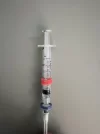
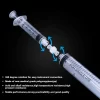
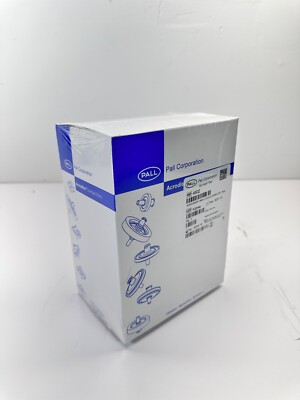
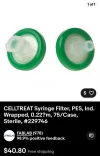
So a weird thing about that 97% tirz. I’ve been getting tirz for my brother since last summer, and he got to the 97% kit about a month ago. As soon as he injected it, instant ISR. Like, golf ball sized. Happened with the second shot too, so I filtered the rest of the vial for him and he finished 2 more 2.5mg shots with no issue. In the off chance that it was just that vial, he injected the first shot of a new vial (same batch) yesterday. Huge reaction again. I’ll be filtering the rest of the kit for him as he goes, but I’ll be curious if you experience the same thing.
@Ghoul thoughts?
He’s also going to try tirz from a different vendor to see if he’s developed some sort of allergy to the tirz after this second vial is out.
It makes perfect sense that pain would be less post filtration.
Peptide aggregates, especially large aggregates trigger an immune response.
Aggregates form most easily from degraded peptide/protein. "Degraded" peptide including denatured (unfolded and not in its proper shape), peptide broken into fragments, or impurities (chains of random amino acids) left from the manufacturing process.
I've recently been reading about the way peptide aggregates tend to remain where they're injected in sub-q injection. They sit there attracting the attention of the immune system causing inflammation and pain.
Filtration eliminates most of the aggregates, and all of the large ones, reducing the injecting site reaction.
A new batch won't demonstrate that he's "allergic" to this one. If he doesn't have an ISR to the new one it just means that one isn't as damaged, and therefore there's less "peptide junk" to stick together forming aggregates.
In any case, I think you should always filter anyway. Just because things don't rise to the level of obvious symptoms like inflammation at the injection site, they can still cause numerous problems.
One other thing that reduces aggregation and site reactions is proper dilution. If you can get the Tirz dose to .5ml, or as close as possible, there will be less of a problem.
By understanding the potential causes of aggregation and its consequences, researchers can minimize the risk of immune responses and inflammation
www.pion-inc.com
"When administering drugs subcutaneously, larger particles or aggregates, can linger at the injection site for extended time periods, increasing the chances of interactions with immune cells. The human body's innate defense mechanisms can recognize these aggregates as potential threats, which can cause immune cells to engulf and destroy the drug, rendering it less effective."
The severity of an adverse immune reaction to a medication can vary, ranging from minor localized discomfort to potentially fatal anaphylaxis for the patient. Often immune reactions to a subcutaneous medicine will result in some amount of inflammation, which, if substantial, can cause significant pain for the patient."
Protein aggregates are a major risk factor for immunogenicity. Until now most studies on aggregate-driven immunogenicity have focused on linking physicochemical features of the aggregates to the formation of anti-drug antibodies. Lacking is however, ...
pmc.ncbi.nlm.nih.gov