The Reason Donald Trump is Unfit for President

This thread proves that when people are profoundly ignorant/stupid, they are per definition incapable of assessing their own level of ignorance/stupidity.

I would say gullible not stupid, and it applies to people on both sides of US politics. Trump may be more entertaining than Obama (OK, a LOT more entertaining), but he's also out bombing and out spending Obama by a large amount, and he's deporting fewer illegals. Now he's working around his let's be friends with Russia campaign by (among other things) selling advanced weapons to Ukraine.

On paper he's starting to look very much like every president we've had for the last several decades. The general opinions of both Republican and Democrat voters are so far from reality intelligent debates have become impossible.
 
I would say gullible not stupid, and it applies to people on both sides of US politics. Trump may be more entertaining than Obama (OK, a LOT more entertaining), but he's also out bombing and out spending Obama by a large amount, and he's deporting fewer illegals. Now he's working around his let's be friends with Russia campaign by (among other things) selling advanced weapons to Ukraine.

On paper he's starting to look very much like every president we've had for the last several decades. The general opinions of both Republican and Democrat voters are so far from reality intelligent debates have become impossible.

I did state that both parties would lose a good deal of voters if there were a competency test, but I think more Republicans have feet that actually connect with the ground. I also said ignorant/stupid - that pretty much covers gullible too.

Personally, I don't care overly much about policies outside of what drives the economy forward - and of course what protects what's left of the Constitution. Trump is doing a remarkably good job at deregulating in general, reinvigorating our energy sector, getting non-agenda judges in place, challenging agencies to justify their work and so on. And the tax law overhaul was brilliant - sure, there's more left to do, but that's A+ work.

I really like his approach of sticking to what Congress decided as opposed to undermining and using the executive pen to dodge Congress - this is what drove the Jerusalem embassy decision, and is what propels him to force Congress to make up their f-ing minds about all the various immigrant/refugee/wetback/dreamer bla bla programs that don't work. I love it when he makes Congress do the work they're supposed to do.

He's still a weirdo, no doubt, but on balance, outstanding results. With Hillary it would have been Obama Part III.
 
I did state that both parties would lose a good deal of voters if there were a competency test, but I think more Republicans have feet that actually connect with the ground. I also said ignorant/stupid - that pretty much covers gullible too.

Personally, I don't care overly much about policies outside of what drives the economy forward - and of course what protects what's left of the Constitution. Trump is doing a remarkably good job at deregulating in general, reinvigorating our energy sector, getting non-agenda judges in place, challenging agencies to justify their work and so on. And the tax law overhaul was brilliant - sure, there's more left to do, but that's A+ work.

I really like his approach of sticking to what Congress decided as opposed to undermining and using the executive pen to dodge Congress - this is what drove the Jerusalem embassy decision, and is what propels him to force Congress to make up their f-ing minds about all the various immigrant/refugee/wetback/dreamer bla bla programs that don't work. I love it when he makes Congress do the work they're supposed to do.

He's still a weirdo, no doubt, but on balance, outstanding results. With Hillary it would have been Obama Part III.

Most of the changes (not counting the tax laws) look good politically, but have insignificant impact on real production and wealth. The tax law changes were definitely brilliant subterfuge. It beats Bernanke's helicopter money for sure, but it's essentially the same thing. It will delay the (very) negative aspect of the business cycle for a little while longer, maybe even long enough to get him reelected.

Personally, I don't care overly much about policies outside of what drives the economy forward

US style foreign policy, the destruction it causes and the enemies it makes, is a lot more important to what drives the economy than most understand. It has caused immeasurable harm already and will continue to do so as long as it is tolerated.
 
Most of the changes (not counting the tax laws) look good politically, but have insignificant impact on real production and wealth. The tax law changes were definitely brilliant subterfuge. It beats Bernanke's helicopter money for sure, but it's essentially the same thing. It will delay the (very) negative aspect of the business cycle for a little while longer, maybe even long enough to get him reelected.


US style foreign policy, the destruction it causes and the enemies it makes, is a lot more important to what drives the economy than most understand. It has caused immeasurable harm already and will continue to do so as long as it is tolerated.
He is not open to listening to others people's opinions. It is like talking to a brick wall my friend. Don't waste your time. I wonder if he thinks he is above the stupid people he speaks of? I hope not.
 
Most of the changes (not counting the tax laws) look good politically, but have insignificant impact on real production and wealth. The tax law changes were definitely brilliant subterfuge. It beats Bernanke's helicopter money for sure, but it's essentially the same thing. It will delay the (very) negative aspect of the business cycle for a little while longer, maybe even long enough to get him reelected.

US style foreign policy, the destruction it causes and the enemies it makes, is a lot more important to what drives the economy than most understand. It has caused immeasurable harm already and will continue to do so as long as it is tolerated.

No impact on real production? Not following you here - all the investment decisions made over the past year have no impact on US production?

Do enlighten us with more detail on the rest of what you hint at - specifically in regards what the President can/can't do and what Congress does/doesn't do. And then there's the entrenched agency agendas that few seem able to control. Oh, and lobbyists.

Here's something you never saw Obama receiving - praise for his economic policies:
Trump earns 'high marks' from UBS for his economic policies
 
No impact on real production? Not following you here - all the investment decisions made over the past year have no impact on US production?

Do enlighten us with more detail on the rest of what you hint at - specifically in regards what the President can/can't do and what Congress does/doesn't do. And then there's the entrenched agency agendas that few seem able to control. Oh, and lobbyists.

Here's something you never saw Obama receiving - praise for his economic policies:
Trump earns 'high marks' from UBS for his economic policies
Dude it’s really sad that you idolize a ignorant racist asshole.
 
No impact on real production? Not following you here - all the investment decisions made over the past year have no impact on US production?

Investments in what? I hope you're not talking about the stock market.

No significant impact on real production and wealth. I'm talking about capital formation. If you see some that could noticeably offset the current and planned increases in government borrowing and spending I would be very interested.

Do enlighten us with more detail on the rest of what you hint at - specifically in regards what the President can/can't do and what Congress does/doesn't do. And then there's the entrenched agency agendas that few seem able to control. Oh, and lobbyists.

Here's something you never saw Obama receiving - praise for his economic policies:
Trump earns 'high marks' from UBS for his economic policies

You completely lost me. I don't remember hinting at anything, and I'm sure I wasn't talking about presidential powers, Congress or lobbyists.
 
Dude it’s really sad that you idolize a ignorant racist asshole.

No, what's sad is your utter inability to carry on any reasoned argument. As sad is your inability to grasp that you're totally out of your league.

Do carry on with your ad hominems and general rants, maybe it's cathartic for you.
 
Investments in what? I hope you're not talking about the stock market.

No significant impact on real production and wealth. I'm talking about capital formation. If you see some that could noticeably offset the current and planned increases in government borrowing and spending I would be very interested.

You completely lost me. I don't remember hinting at anything, and I'm sure I wasn't talking about presidential powers, Congress or lobbyists.

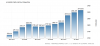
Capital formation is exactly what takes place when investors decide to build factories in the US as opposed to abroad. This has been going on at a strong pace since Trump got elected. And got a boost after the tax reform. Thus the praise from UBS. Rather significant.

Note this graph, see what happened after it became clear that Hillary wasn't getting the job.

united-states-gross-fixed-capital-formation@2x.png

This is what you said: "US style foreign policy, the destruction it causes and the enemies it makes, is a lot more important to what drives the economy than most understand. It has caused immeasurable harm already and will continue to do so as long as it is tolerated." This is what's ambiguous and inchoate.

There's only so much one president can do, the factors involved are controlled by so many parties not under his thumb, as I mentioned. And there's massive inertia and historical sedimentation - you can say that it goes back to at least the war of 1812. And that was for the better, wasn't it?

Edit : it's an established observation that Obama (and HILLARY) squandered much US foreign influence capital by backing out of or not following through on just about everything they touched. We're turning that around now. Look at what has happened to ISIS.
 
Last edited:
More on the economic impact, including capital formation, resulting from the tax reform recently passed.

Trade and Capital Flow Consequences of Tax Reform: A Means to a Faster Expansion of U.S. Capital Formation and Employment - Tax Foundation

Trade and Capital Flow Consequences of Tax Reform: A Means to a Faster Expansion of U.S. Capital Formation and Employment
December 21, 2017


Stephen J. Entin


H.R.1 – originally named “The Tax Cuts and Jobs Act of 2017” and subsequently retitled to conform to Senate Budget rules as “An Act to provide for reconciliation pursuant to titles II and V of the concurrent resolution on the budget for fiscal year 2018” – has passed the Congress and awaits the President’s signature.

We estimate that the Act will boost investment, employment, and incomes in the United States. That is good news. However, another outcome of the bill may cause concern in some circles, and might be given a bad-news “spin.” To wit: the bill will temporarily increase the U.S. current account (or trade) deficit. This should not alarm anyone but instead be viewed as a positive sign that the world wants to invest in America. It will not harm the U.S. economy. On the contrary, it will facilitate the expansion of the U.S. capital stock, our productive capacity, and our ability to compete in the world.

Looking only at the permanent reduction in the corporate tax rate to 21 percent, we expect long-run GDP to be 1.7 percent higher after all economic adjustments. This would imply an increase of roughly $1.8 trillion in the quantities of plant, equipment, and commercial and residential structures in the economy, boosting productivity, wages, and employment.

If the rest of the tax bill is extended on a permanent basis, particularly the expensing provision and the reduced income tax rates, including the reduced rates on business income, the increase in GDP would be nearer 4.7 percent, and the stock of capital would be close to $5 trillion higher than under current law.

These potential additions to the U.S. capital stock must be funded through additional saving. Some of that added saving will be done by Americans. The higher returns on capital will cause people to save more, to buy more American stocks and bonds, and to pump more money into their small businesses. The corporate and individual tax reductions on business income, and the faster depreciation permitted by expensing, will boost businesses’ saving directly by raising after-tax cash flow. A portion of the tax cuts on wages and salaries will be saved. However, these increases in domestic saving may not be large enough to cover the capital stock expansion and the increased federal borrowing to fund the deficit. For the remainder, we must look to international capital flows.

The World Bank projects global saving over the next decade of about a quarter of a quadrillion dollars. That’s $250,000,000,000,000. An infinitesimally small portion of that projected world saving may be redirected toward the United States, by several means. U.S. businesses may repatriate cash held abroad. U.S. banks and mutual funds may lend more at home and less abroad. Foreign banks, mutual funds, and individuals may lend more or invest more in the United States and less at home. Foreign businesses may expand their U.S. subsidiaries.

Any increase in the capital inflow coming to the United States will be matched by an equal increase in the U.S. current account deficit. This is an accounting truism. Increased capital-flows toward the United States provide an inpouring of foreign exchange seeking dollars. The dollar will rise, until there is a corresponding increase in U.S. purchases of foreign goods and services to balance the capital inflow. The increased spending will be in part for investment goods to expand U.S. factories, and in part for consumption goods. These increased outlays will be over and above the rising levels of production in the United States, not a substitute or diversion away from U.S. production.

It is only normal, and historically true, that when a nation begins to grow more rapidly than its trading partners, its purchases of foreign goods grows more rapidly than its sales to foreign buyers. When a trade deficit is the result of increased growth, rather than a drop in buying by foreign customers, it is not a drag on the domestic economy.

The capital inflow to assist in the additions to the capital stock will be temporary. There will be only a finite amount of additional capital to be built here. Once that capital has been funded, the capital inflow for that purpose will be complete, and international saving-flows will return to normal, as will the level of the dollar and the current account (trade) balance. In the short run, the capital inflow will boost the dollar and the current account deficit. In the medium run, foreigners will receive an increased stream of dividends and interest on their added U.S. assets, which will assist in reversing the capital-flow, the rise in the dollar, and the current account increase. In the long run, U.S. savers will be earning more interest and dividends too, and the effects on the capital-flow will fade.

The temporary nature of the capital-flows can be best understood by noting that the new plant, equipment, and other structures must be paid for only once. After that, the added capital will pay its own way, earning enough to cover its maintenance or replacement. (If it were not expected to do that, no one would buy it in the first place!)

Also note that, as the added capital is put in place, American wages and employment will rise, and the total amount of saving done by Americans will rise. Over time, Americans will fund more of the expansion. As Americans add to their assets, some of the government bonds that foreigners may have initially bought may be refinanced by Americans. Americans will increase their holdings of domestic or foreign stocks and bonds. In the long run, the holdings of domestic savers versus foreign investors will return to normal shares of the (larger) total stock of productive capital in the United States.

Several things are clear. The tax bill will boost investment and incomes in the United States, and make the country a better place to locate production and hiring. There will be a transitory rise in the trade deficit, but in the context of a stronger, faster-growing economy. The associated capital-inflow will speed the expansion of U.S. industry and employment. Finally, there is no reason to interpret the temporary trade swings as detrimental, or providing an excuse for restraint of trade or abandonment of trade expansion agreements.

 
Capital formation is exactly what takes place when investors decide to build factories in the US as opposed to abroad. This has been going on at a strong pace since Trump got elected. And got a boost after the tax reform. Thus the praise from UBS. Rather significant.

Capital formation doesn't take place when factories are built abroad?

Note this graph, see what happened after it became clear that Hillary wasn't getting the job.

View attachment 83169

So revenue generated from an annual $100B increase in factory spending in the US is going to offset how much of a $40T national debt the US will have acquired over the next 10 years?

This is what you said: "US style foreign policy, the destruction it causes and the enemies it makes, is a lot more important to what drives the economy than most understand. It has caused immeasurable harm already and will continue to do so as long as it is tolerated." This is what's ambiguous and inchoate.

There's only so much one president can do, the factors involved are controlled by so many parties not under his thumb, as I mentioned. And there's massive inertia and historical sedimentation - you can say that it goes back to at least the war of 1812. And that was for the better, wasn't it?

Not sure how this relates to what I wrote, but the 10+% increase in "defense" spending strongly pushed for by Trump would seem to indicate he's not planning to back off on the foreign adventures. Bush, Obama and Trump all boosted their voter base claiming to want to do so, and all three did the exact opposite.

Edit : it's an established observation that Obama (and HILLARY) squandered much US foreign influence capital by backing out of or not following through on just about everything they touched. We're turning that around now. Look at what has happened to ISIS.

Yes, thanks to Russia, and thanks to organizations like Wikileaks that showed the US was largely responsible for the creation of ISIS.

Note that I might agree with the article you posted below, except they seem to forget the government spending increases that go along with the tax cuts. The latter will not remotely offset the former. But as I said in my OP, the increased consumer spending WILL prolong the high side of the business cycle a little while longer.
 
Capital formation doesn't take place when factories are built abroad?

So revenue generated from an annual $100B increase in factory spending in the US is going to offset how much of a $40T national debt the US will have acquired over the next 10 years?

Not sure how this relates to what I wrote, but the 10+% increase in "defense" spending strongly pushed for by Trump would seem to indicate he's not planning to back off on the foreign adventures. Bush, Obama and Trump all boosted their voter base claiming to want to do so, and all three did the exact opposite.

Yes, thanks to Russia, and thanks to organizations like Wikileaks that showed the US was largely responsible for the creation of ISIS.

Note that I might agree with the article you posted below, except they seem to forget the government spending increases that go along with the tax cuts. The latter will not remotely offset the former. But as I said in my OP, the increased consumer spending WILL prolong the high side of the business cycle a little while longer.

Flenser - you're all over the place here. We're usually in agreement I think, so here are some more comments:

If you take a cosmic perspective, yes, then capital formation takes place overseas too - but we were discussing the POTUS here, and he can influence our policies so that more capital formation takes place domestically rather than overseas, which was the case under Obama, and would have continued under Hillary.

The POTUS doesn't establish the budget, that's up to Congress, and they're not particularly good at it, haven't been in generations, not Trump's fault. And it's amusing (sort of) that media and the lefties have found deficit religion now, after applauding while Obama spent money like it was going out of style. Finally, you're confusing private investment and public expenditures.

Power abhors a vacuum, and when Obama/Hillary ran for the hills when faced with any pushback or need for intestinal fortitude, out of this void came ISIS. Not Trump's fault, and not a secret either, that's just basic politics, particularly in that region.

When did Trump ever campaign on cutting the military? All I can recall is that he wanted a stronger US military, and pay the military better etc. Obama, on the other hand, went out of his way for years to suppress military pay increases - so an increase seems logical. DoD and their spending needs a massive overhaul of course, but that's in many ways Congress' business.

I think it's getting clearer and clearer by the day that Russia is nothing but a red herring, no pun intended.

PS/ note how we are having a reasoned debate? Refreshing change from the petulance of people like Morefyah.
 
...but we were discussing the POTUS here...

Ah, I thought we were talking about the financial impact of recent policy changes. Not much in the scheme of things was my opinion. I will try to be more clear.

If you take a cosmic perspective, yes, then capital formation takes place overseas too - but we were discussing the POTUS here, and he can influence our policies so that more capital formation takes place domestically rather than overseas, which was the case under Obama, and would have continued under Hillary.

The POTUS doesn't establish the budget, that's up to Congress, and they're not particularly good at it, haven't been in generations, not Trump's fault. And it's amusing (sort of) that media and the lefties have found deficit religion now, after applauding while Obama spent money like it was going out of style. Finally, you're confusing private investment and public expenditures.

I'm not. Public revenue was sacrificed to entice those businesses stay or return to the US, revenue that can only be replaced through borrowing. And public borrowing is a promise to spend private revenue.

When did Trump ever campaign on cutting the military? All I can recall is that he wanted a stronger US military, and pay the military better etc.

He did campaign on "rebuilding the military". But he also campaigned on ending aggression against Russia, destroying ISIS, and getting out of Syria, Iraq and Afghanistan, closing overseas bases and getting out of NATO if interested countries refused to pay for the service. All of that would more than offset the increase in actual military spending. So military spending was increased without the promised reduction in overseas involvement.

I think it's getting clearer and clearer by the day that Russia is nothing but a red herring, no pun intended.

The "Russia Gate" stuff was made up from the beginning. It was convenient to try to discredit Trump and continue to malign Putin with the same lies - not that they need lies to malign Putin.

PS/ note how we are having a reasoned debate? Refreshing change from the petulance of people like Morefyah.

I do prefer arguing to name calling..
 
I'm not. Public revenue was sacrificed to entice those businesses stay or return to the US, revenue that can only be replaced through borrowing. And public borrowing is a promise to spend private revenue.

"Public revenue" - such a euphemism. That money didn't belong to the government, and wasn't coming back to the US anyway. So no "sacrifice" was made. You're accepting Marxist thinking - wake up! :)

On the Federal level, I think the connection btw taxation and expenditure is long lost. Again, a rather moot point, and in any case rather late to wake up to that after Obama et al spent like drunken sailors on pet projects and other wasteful things, racking up trillions with nothing to show for it. And it's really Congress that should own that mess. This thread is about the POTUS.
 
"Public revenue" - such a euphemism. That money didn't belong to the government, and wasn't coming back to the US anyway. So no "sacrifice" was made. You're accepting Marxist thinking - wake up! :)

I used public revenue because you used public expenditures. That revenue is borrowed money, monetary inflation since borrowed money is created from nothing.

On the Federal level, I think the connection btw taxation and expenditure is long lost. Again, a rather moot point, and in any case rather late to wake up to that after Obama et al spent like drunken sailors on pet projects and other wasteful things, racking up trillions with nothing to show for it.

The connection is lost on the politicians, but it's not lost. Monetary inflation destroys the value of the currency, the savings of the middle class and the incomes of those on fixed payouts like SS, military retirement and pensions.

Edit, I should have also asked: If the connection were really lost, why doesn't Congress end taxation completely, and just borrow all the money it spends?

And it's really Congress that should own that mess. This thread is about the POTUS.

Why do you blame increased spending on Congress now, and "Obama et al" in the past? Anyway, as with all presidents lately Trump plans to spend far far more than his predecessors ever dreamed of. Congress might cut him off, but I doubt it.

Also, who appointed the current dovish Fed? It wasn't Congress. There were plenty of Volcker clones he could have picked from, but that would have made cutting taxes while increasing spending impossible, and it would have truncated the business cycle and cost Trump reelection. It would have also been the most responsible thing for him to do, even if the recovery was ultimately credited to the next president.

And finally, since you didn't comment on the increased military spending coupled with Trump's failure to follow through with his other military campaign positions, do you agree he, not Congress, is responsible?
 
I used public revenue because you used public expenditures. That revenue is borrowed money, monetary inflation since borrowed money is created from nothing.

The connection is lost on the politicians, but it's not lost. Monetary inflation destroys the value of the currency, the savings of the middle class and the incomes of those on fixed payouts like SS, military retirement and pensions.

Edit, I should have also asked: If the connection were really lost, why doesn't Congress end taxation completely, and just borrow all the money it spends?

Why do you blame increased spending on Congress now, and "Obama et al" in the past? Anyway, as with all presidents lately Trump plans to spend far far more than his predecessors ever dreamed of. Congress might cut him off, but I doubt it.

Also, who appointed the current dovish Fed? It wasn't Congress. There were plenty of Volcker clones he could have picked from, but that would have made cutting taxes while increasing spending impossible, and it would have truncated the business cycle and cost Trump reelection. It would have also been the most responsible thing for him to do, even if the recovery was ultimately credited to the next president.

And finally, since you didn't comment on the increased military spending coupled with Trump's failure to follow through with his other military campaign positions, do you agree he, not Congress, is responsible?

I don't recall using "public expenditures" - that's not a term I use.

I'm quite familiar with both macro and micro - but I find it more productive to look at the micro level incentives, e.g. the tax plan and regulatory reform.

Inflation as such hollows us unproductive assets, look at Venezuela. If you want to walk into M1, M2, M3 etc and how that works you're on your own, too many theories there. You're sounding like a gold bug. And that ship sailed. Actually, on the inflation note, Obama intentionally held back COLA adjustments for the military - that was under his purview.

Volcker.... yes, the 70s were an interesting experiment.

Congress confirms, the President appoints.

Obama et al was a unique case as he could get away with anything. He could have taken a dump in the middle of the road and people would have applauded. He was also unique in his ridiculously overbroad use of executive orders as well as unleashing the agencies to do his bidding. Trump sticks to laws, has no media support, and almost as little support in Congress.

This is getting way OT, but I think we have established that Trump has managed to implement significant changes that have substantially strengthened and accelerated economic growth in the US - i.e. he's far from incompetent.
 
I don't recall using "public expenditures" - that's not a term I use.

I quoted the text of your comment in bold in my reply. I thought you were making a joke. Here it is again.

Finally, you're confusing private investment and public expenditures.

I'm quite familiar with both macro and micro - but I find it more productive to look at the micro level incentives, e.g. the tax plan and regulatory reform.

I always try to adjust my arguments and vocabulary to fit the person I'm conversing with. Classical economics is always the underlying reality behind the various economic schools, such as they are.

Inflation as such hollows us unproductive assets, look at Venezuela. If you want to walk into M1, M2, M3 etc and how that works you're on your own, too many theories there. You're sounding like a gold bug. And that ship sailed. Actually, on the inflation note, Obama intentionally held back COLA adjustments for the military - that was under his purview.

I can't tell, are you denying that monetary inflation is the direct result of government borrowing, or that monetary inflation has the impact on savings and income I asserted previously?

Volcker.... yes, the 70s were an interesting experiment.

No idea what you mean, but it doesn't address the fact Trump appointed a dovish Fed chairman.

Congress confirms, the President appoints.

Are you blaming Congress for the Fed?

Obama et al was a unique case as he could get away with anything. He could have taken a dump in the middle of the road and people would have applauded. He was also unique in his ridiculously overbroad use of executive orders as well as unleashing the agencies to do his bidding. Trump sticks to laws, has no media support, and almost as little support in Congress.

Err, Obama made fewer executive orders than Bush II, Clinton, Regan, Carter, Nixon and quite a few others. And Trump is so far on a path to almost double Obama's number.

I'm just going to pretend you didn't say, "Trump sticks to laws".

This is getting way OT, but I think we have established that Trump has managed to implement significant changes that have substantially strengthened and accelerated economic growth in the US - i.e. he's far from incompetent.

We have established no such thing. You ignored legitimate economic issues I brought up because, "I find it more productive to look at the micro level incentives". You discounted overwhelming economic forces that make implemented changes insignificant because it's all Congress' fault. You avoided the military spending issue despite me having brought it up multiple times. Not sure who you're debating, but it doesn't appear it's me.
 
As No One Watched, Trump Pardoned 5 Megabanks For Corruption Charges

Rachel Blevins
January 11, 2018

While Americans celebrated the holidays, President Trump followed in the footsteps of his predecessors by acting in the interest of Wall Street and using the distraction to do something that was not in the best interest of the American people. He pardoned five megabanks for rampant fraud and corruption, which is especially notable because of the amount of money he owes them.

...

While Trump granted 5-year exemptions to Citigroup, JPMorgan, and Barclays, and 3-year exemptions to UBS and Deutsche Bank, it should be noted that his administration is not the only one to have done this. As International Business Times noted, “In late 2016, the Obama administration extended temporary one-year waivers to five banks,” which just happened to be the same ones Trump has now extended the exemptions on—revealing the real rulers in DC.

...

full article
 
I quoted the text of your comment in bold in my reply. I thought you were making a joke. Here it is again.

I always try to adjust my arguments and vocabulary to fit the person I'm conversing with. Classical economics is always the underlying reality behind the various economic schools, such as they are.

I can't tell, are you denying that monetary inflation is the direct result of government borrowing, or that monetary inflation has the impact on savings and income I asserted previously?

No idea what you mean, but it doesn't address the fact Trump appointed a dovish Fed chairman.

Are you blaming Congress for the Fed?

Err, Obama made fewer executive orders than Bush II, Clinton, Regan, Carter, Nixon and quite a few others. And Trump is so far on a path to almost double Obama's number.

I'm just going to pretend you didn't say, "Trump sticks to laws".

We have established no such thing. You ignored legitimate economic issues I brought up because, "I find it more productive to look at the micro level incentives". You discounted overwhelming economic forces that make implemented changes insignificant because it's all Congress' fault. You avoided the military spending issue despite me having brought it up multiple times. Not sure who you're debating, but it doesn't appear it's me.

I didn't avoid military spending, I brought up several examples of what Trump's done differently than his predecessor. You sound like you are in Rand Paul's father's camp, that's a different discussion.

It's not the quantity of executive orders, there's nothing wrong with them per se, it's what they're used for. Obama heavily abused them. Many of Trump's orders are simply undoing Obama abuses.

Trump does stick to the laws, again compared to his predecessor, what are your gripes?

Congress created the Fed. Originally a bill sponsored by a Democrat from VA, then signed into law by one of the more disastrous presidents, Woodrow Wilson.
Federal Reserve Act - Wikipedia

Again, very OT. Just as macro debates are. There's not a single president on the planet who understands macro. Academics too disagree substantially, thus the many schools. Pointless for you and I to discuss here.
 
Back
Top