Climate Change

Kunkel KE, Karl TR, Easterling DR, et al. Probable maximum precipitation (PMP) and climate change. Geophysical Research Letters. Probable maximum precipitation (PMP) and climate change - Kunkel - Geophysical Research Letters - Wiley Online Library

Probable Maximum Precipitation (PMP) is the greatest accumulation of precipitation for a given duration meteorologically possible for an area. Climate change effects on PMP are analyzed, in particular, maximization of moisture and persistent upward motion, using both climate model simulations and conceptual models of relevant meteorological systems. Climate model simulations indicate a substantial future increase in mean and maximum water vapor concentrations. For the RCP8.5 scenario, the changes in maximum values for the continental United States are approximately 20–30% by 2071–2100. The magnitudes of the maximum water vapor changes follow temperature changes with an approximate Clausius-Clapeyron relationship. Model-simulated changes in maximum vertical and horizontal winds are too small to offset water vapor changes. Thus, our conclusion is that the most scientifically sound projection is that PMP values will increase in the future due to higher levels of atmospheric moisture content and consequent higher levels of moisture transport into storms.
 
Climate change will lead to bumpier flights, say scientists | Environment | guardian.co.uk

Global warming could bring stronger air turbulence with it | MNN - Mother Nature Network

"Paul Williams, at the University of Reading who led the new research, said: "Air turbulence does more than just interrupt the service of in-flight drinks. It injures hundreds of passengers and aircrew every year. It also causes delays and damages planes, with the total cost to society being about £100m each year."

The study, which used the same turbulence models that air traffic controllers use every day, found that the frequency of turbulence on the many flights between Europe and North America will double by 2050 and its intensity increase by 10-40%.

"Rerouting flights to avoid stronger patches of turbulence could increase fuel consumption and carbon emissions, make delays at airports more common, and ultimately push up ticket prices," said Williams."

"There is evidence that clear-air turbulence has already risen by 40-90% over Europe and North America since 1958, but that is set to increase further due to global warming. The jet streams, which meander for thousands of miles, are driven by the temperature difference between the poles and the tropics, Williams explained. Climate change is heating the Arctic faster than lower latitudes, because of the rapid loss of reflective sea ice, so the temperature difference is shrinking. That leads to stronger jet streams and greater turbulence. The modelling done by Williams and Joshi assumed that carbon dioxide levels will double from pre-industrial levels by 2050, which is in the mid-range of current projections for future emissions."

Climate change deniers are so pathetic - comparable to flat earthers and evolution deniers.
 
Climate Change: The Moral Choices
The effects of global warming will persist for hundreds of years. What are our responsibilities and duties today to help safeguard the distant future? That is the question ethicists are now asking.
http://www.technologyreview.com/review/513526/climate-change-the-moral-choices/
 
Climate change will lead to bumpier flights, say scientists | Environment | guardian.co.uk

Global warming could bring stronger air turbulence with it | MNN - Mother Nature Network

"Paul Williams, at the University of Reading who led the new research, said: "Air turbulence does more than just interrupt the service of in-flight drinks. It injures hundreds of passengers and aircrew every year. It also causes delays and damages planes, with the total cost to society being about £100m each year."

The study, which used the same turbulence models that air traffic controllers use every day, found that the frequency of turbulence on the many flights between Europe and North America will double by 2050 and its intensity increase by 10-40%.

"Rerouting flights to avoid stronger patches of turbulence could increase fuel consumption and carbon emissions, make delays at airports more common, and ultimately push up ticket prices," said Williams."

"There is evidence that clear-air turbulence has already risen by 40-90% over Europe and North America since 1958, but that is set to increase further due to global warming. The jet streams, which meander for thousands of miles, are driven by the temperature difference between the poles and the tropics, Williams explained. Climate change is heating the Arctic faster than lower latitudes, because of the rapid loss of reflective sea ice, so the temperature difference is shrinking. That leads to stronger jet streams and greater turbulence. The modelling done by Williams and Joshi assumed that carbon dioxide levels will double from pre-industrial levels by 2050, which is in the mid-range of current projections for future emissions."

Climate change deniers are so pathetic - comparable to flat earthers and evolution deniers.

Climate change believers: just like flat earth believers
Climate change deniers: Like Columbus and others whose travels proved the earth was round

Climate change believers: believe what they believe even in the mountain of evidence that climate change is political, the books are cooked, Michael's hockey stick has been debunked as a fraud, the earth is not heating up, NONE of the alarmist predictions have come to pass even though we were told that by now we would all be screwed, the Economist (a huge liberal bastion of climate change) is backtracking and beginning to expose the fraud for what it is - a power grab, and of course - CLIMATEGATE, where leaked emails show a concerted campaign to discredit deniers to keep money flowing into the pockets of the so-called scientists and emails where code blatantly admitting to "hiding the decline" in the code comments.

So who are the deniers of truth who believe that mankind can model the planet's climate change when we can't even predict our global weather? Who is the idiot who does not see that money talks and that is why so much is riding of getting people to believe in BS? Who are the idiots who believe a model of the Earth's climate that treats the earth as a closed system (ignoring the interface and impact of earth to space and the effects of the sunspots on climate change) is a model that makes any sense at all? In my line of work, if I ignored the EM field that can impact my design I would not have a job as I would lose all predictability and the systems I work on still require super computers to study something that can fit on your desk (a computer) and is based on numerical math and models that have passed the test of time and actually PREDICT things with accuracy (see below about MET and Google to find other data that is not being reported). So who believes in climate change?

Scientists who want money or have a political agenda and scientifically illiterate people who don't have the intellectual capacity to see through the BS and/or the intellectual honesty to see how damning Climategate was to the movement (have most of you on here even read the emails - I doubt it). And of course, there is the Economist.

And at the end of the day, the big MET report (these were major climate change believers): Global warming at a standstill, new Met Office figures show - Telegraph

Oops.

So who is ignoring the data now? Who believes the Earth is flat now?

So your analogy sucks. Flat Earths believers outnumbered the deniers, just a climate change believers outnumber deniers today, although worldwide that is quickly changing. A small group of adventurous people dared to challenge the flat earth theory theory. They were right. So you are a flat Earth believer and I am the one who believes in reality.

Of course, if you went back to the 70s, your kind was yelling about the coming Ice Age due to mankind's actions. When that did not pan out, the scientists getting the money changed their tune and the sheeple followed.

You live in a commune of idiots. But keep telling yourself otherwise and posting idiotic statements and making ignorant comparisons that show you have no idea what you are talking about. One just throws up data with no commentary and others make commentary on science and math they no nothing about, even from a layman's point of view. Brilliant strategy. The other sheeple can cheer you on. I will just laugh at you.

So in the end - it is all about money - and of course, with the help of climate change believers, a healthy populations of half-wits to keep the gravy going to the so-called scientists.

Men occasionally stumble over the truth, but most of them pick themselves up and hurry off as if nothing ever happened....Winston Churchill

Your sprinting.
 
Earth warmer today than during 70 to 80 percent of the past 11,300 years

Using data from 73 sites around the world, scientists have been able to reconstruct Earth's temperature history back to the end of the last Ice Age, revealing that the planet today is warmer than it has been during 70 to 80 percent of the time over the last 11,300 years.

Of even more concern are projections of global temperature for the year 2100, when virtually every climate model evaluated by the Intergovernmental Panel on Climate Change (IPCC) shows that temperatures will exceed the warmest temperatures during that 11,300-year period known as the Holocene -- under all plausible greenhouse gas emission scenarios.

What that history shows, the researchers say, is that over the past 5,000 years, Earth on average cooled about 1.3 degrees (Fahrenheit) -- until the past 100 years, when it warmed ? 1.3 degrees (F). The largest changes were in the northern hemisphere, where there are more land masses and greater human populations.

Climate models project that global temperature will rise another 2.0 to 11.5 degrees (F) by the end of this century, largely dependent on the magnitude of carbon emissions. "What is most troubling," Clark said, "is that this warming will be significantly greater than at any time during the past 11,300 years."

Marcott said that one of the natural factors affecting global temperatures over the past 11,300 years is gradual change in the distribution of solar insolation associated with Earth's position relative to the sun.

"During the warmest period of the Holocene, the Earth was positioned such that Northern Hemisphere summers warmed more," Marcott said. "As the Earth's orientation changed, Northern Hemisphere summers became cooler, and we should now be near the bottom of this long-term cooling trend -- but obviously, we are not."

"The Earth's climate is complex and responds to multiple forcings, including CO2 and solar insolation," Marcott said. "Both of those changed very slowly over the past 11,000 years. But in the last 100 years, the increase in CO2 through increased emissions from human activities has been significant. It is the only variable that can best explain the rapid increase in global temperatures."

http://content.csbs.utah.edu/~mli/Economics%207004/Marcott_Global%20Temperature%20Reconstructed.pdf

Surface temperature reconstructions of the past 1500 years suggest that recent warming is unprecedented in that time. Here we provide a broader perspective by reconstructing regional and global temperature anomalies for the past 11,300 years from 73 globally distributed records. Early Holocene (10,000 to 5000 years ago) warmth is followed by ~0.7°C cooling through the middle to late Holocene (<5000 years ago), culminating in the coolest temperatures of the Holocene during the Little Ice Age, about 200 years ago. This cooling is largely associated with ~2°C change in the North Atlantic. Current global temperatures of the past
decade have not yet exceeded peak interglacial values but are warmer than during ~75% of the Holocene temperature history. Intergovernmental Panel on Climate Change model projections for 2100 exceed the full distribution of Holocene temperature under all plausible greenhouse
gas emission scenarios.

nsf.gov - National Science Foundation (NSF) News - Earth Is Warmer Today Than During 70 to 80 Percent of the Past 11,300 Years - US National Science Foundation (NSF)

Reconstruction of Earth history shows significance of temperature rise

The research team, which included Jeremy Shakun of Harvard and Alan Mix of OSU, primarily used fossils from ocean sediment cores and terrestrial archives to reconstruct the temperature history.

The chemical and physical characteristics of the fossils--including the species as well as their chemical composition and isotopic ratios--provide reliable proxy records for past temperatures by calibrating them to modern temperature records.

Global warming: New study shows warming is faster than it has been in 11,000 years.

http://www.slate.com/content/dam/sl.../marcott_graph.jpg.CROP.original-original.jpg

The rate at which the globe is warming right now is far, far faster than it ever has going back as far as they could measure, up to 11,300 years ago. In fact, over the past 5000 years, the Earth actually cooled by about 1.3°F…until the last 100 years, when our temperature spiked upwards by about the same amount.

Mind you, this is the rate of warming, how quickly the global temperature is increasing. But they also showed the actual temperature of the planet is warmer now than it has been for 70-80 percent of the past over that time period. There have been times when the Earth was warmer, but the important point isn’t the actual temperature, but what it’s doing.

And what it’s doing now is skyrocketing.

We’re pumping 30 billion tons of CO2 into the atmosphere every year—100 times as much as all volcanoes combined—and all that carbon dioxide is upsetting the heat balance in our atmosphere. We retain more of the heat from sunlight, and that warms us up. It’s really that simple, despite the frothing from the deny-o-sphere.

As arctic ice shrinks, so does a denier claim : Bad Astronomy

The report lists 15 key findings about the changes at the Earth’s northern regions. Fifteen. Here are four that alarmed me particularly:

1) The past six years (2005–2010) have been the warmest period ever recorded in the Arctic. Higher surface air temperatures are driving changes in the cryosphere.

3) The extent and duration of snow cover and sea ice have decreased across the Arctic. Temperatures in the permafrost have risen by up to 2 °C. The southern limit of permafrost has moved northward in Russia and Canada.

7) The Arctic Ocean is projected to become nearly ice-free in summer within this century, likely within the next thirty to forty years.

12) Loss of ice and snow in the Arctic enhances climate warming by increasing absorption of the sun’s energy at the surface of the planet. It could also dramatically increase emissions of carbon dioxide and methane and change large-scale ocean currents. The combined outcome of these effects is not yet known.

And speaking of deniers, a claim I’ve heard bandied about is that a single volcano eruption pours more carbon dioxide into the air than humans do over the course of a year (the time scale may vary depending on the claimant, but as you’ll see it doesn’t matter).

Guess what? That’s totally wrong. As geologist Terry Gelrach points out in a paper in the American Geophysical Union’s Eos newsletter (PDF), human contribution to atmospheric CO2 completely outstrips anything the Earth puts out; humans put over 30 billion tons — that’s billion with a b, folks — of CO2 in the air annually, while volcanoes emit about 0.3 billion tons.

In other words, when it comes to carbon dioxide, humans outgas volcanoes by a factor of 100. As Gerlach points out, light duty vehicles (cars and pickup trucks) put out ten times as much CO2 as volcanoes do alone. In fact, human emission is greater than even what a supervolcano like Yellowstone would put out.

http://www.agu.org/pubs/pdf/2011EO240001.pdf
Volcanic Versus Anthropogenic Carbon Dioxide
 
Last edited:
http://amap.no/swipa/

http://amap.no/documents/index.cfm?dirsub=%2FSnow%2C%20Water%2C%20Ice%20and%20Permafrost%20in%20the%20Arctic%20%28SWIPA%29

http://amap.no/swipa/CombinedReport.pdf
 
One word rebuts your entire postings: climategate.

Game over. You lose. AGW is dying. First MET, now the economist, and even Michael backed of suing NRO after he found out there would be a discovery phase and he would have to show his data.

[:o)][:o)][:o)][:o)][:o)][:o)][:o)]
 
The Economist's Climate Deep Dive off the Shallow End
The Economist's Climate Deep Dive off the Shallow End | Dan Lashof's Blog | Switchboard, from NRDC


Explaining climate change science & rebutting global warming misinformation
Scientific skepticism is healthy. Scientists should always challenge themselves to improve their understanding. Yet this isn't what happens with climate change denial. Skeptics vigorously criticise any evidence that supports man-made global warming and yet embrace any argument, op-ed, blog or study that purports to refute global warming. This website gets skeptical about global warming skepticism. Do their arguments have any scientific basis? What does the peer reviewed scientific literature say?
Global Warming and Climate Change skepticism examined
 
Overland JE, Wang M. When will the summer arctic be nearly sea ice free? Geophysical Research Letters. When will the summer arctic be nearly sea ice free? - Overland - Geophysical Research Letters - Wiley Online Library

The observed rapid loss of thick, multi-year sea ice over the last seven years and September 2012 Arctic sea ice extent reduction of 49 % relative to the 1979-2000 climatology are inconsistent with projections of a nearly sea ice free summer Arctic from model estimates of 2070 and beyond made just a few years ago.

Three recent approaches to predictions in the scientific literature are:
1) extrapolation of sea ice volume data,
2) assuming several more rapid loss events such as 2007 and 2012, and
3) climate model projections.

Time horizons for a nearly sea ice free summer for these three approaches are roughly 2020 or earlier, 2030± 10 yrs, and 2040 or later. Loss estimates from models are based on a subset of the most rapid ensemble members. It is not possible to clearly choose one approach over another as this depends on the relative weights given to data versus models. Observations and citations support the conclusion that most Global Climate Models results in the CMIP5 archive are too conservative in their sea ice projections. Recent data and expert opinion should be considered in addition to model results to advance the very likely timing for future sea ice loss to the first half of the 21st century, with a possibility of major loss within a decade or two.
 
Barrand NE, Vaughan DG, Steiner N, et al. Trends in Antarctic Peninsula surface melting conditions from observations and regional climate modeling. Journal of Geophysical Research: Earth Surface. Trends in Antarctic Peninsula surface melting conditions from observations and regional climate modeling - Barrand - 2013 - Journal of Geophysical Research: Earth Surface - Wiley Online Library

Multidecadal meteorological station records and microwave backscatter time-series from the SeaWinds scatterometer onboard QuikSCAT (QSCAT) were used to calculate temporal and spatial trends in surface melting conditions on the Antarctic Peninsula (AP). Four of six long-term station records showed strongly positive and statistically significant trends in duration of melting conditions, including a 95% increase in the average annual positive degree day sum (PDD) at Faraday/Vernadsky, since 1948. A validated, threshold-based melt detection method was employed to derive detailed melt season onset, extent, and duration climatologies on the AP from enhanced resolution QSCAT data during 1999–2009. Austral summer melt on the AP was linked to regional- and synoptic-scale atmospheric variability by respectively correlating melt season onset and extent with November near-surface air temperatures and the October–January averaged index of the Southern Hemisphere Annular Mode (SAM). The spatial pattern, magnitude, and interannual variability of AP melt from observations was closely reproduced by simulations of the regional model RACMO2. Local discrepancies between observations and model simulations were likely a result of the QSCAT response to, and RACMO2 treatment of, ponded surface water, and the relatively crude representation of coastal climate in the 27?km RACMO2 grid.
 
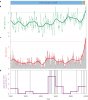
Figure 5: Melt response over the past millennium.

a, Schematic of Prince Gustav ice shelf history showing its presence (blue), intervals of rapid retreat (1957 and 1989; yellow) and collapse (1995; red).

b,c, JRI mean temperature anomaly (green; b) and melt percentage (red; c) shown as 11-year moving averages. Thick lines are 21-year Gaussian kernel filters; dashed lines denote 1981–2000 mean. Lowest temperatures and melt occurred at ~AD 1410–1460, followed by progressive warming and a nonlinear melt increase.

d, The occurrence of melt layers (grey lines) and a 100-year stepped average of melt frequency (purple) at Siple Dome in West Antarctica.

10982


Abram NJ, Mulvaney R, Wolff EW, et al. Acceleration of snow melt in an Antarctic Peninsula ice core during the twentieth century. Nature Geosci;advance online publication. http://www.nature.com/ngeo/journal/vaop/ncurrent/full/ngeo1787.html

Over the past 50 years, warming of the Antarctic Peninsula has been accompanied by accelerating glacier mass loss and the retreat and collapse of ice shelves. A key driver of ice loss is summer melting; however, it is not usually possible to specifically reconstruct the summer conditions that are critical for determining ice melt in Antarctic. Here we reconstruct changes in ice-melt intensity and mean temperature on the northern Antarctic Peninsula since AD 1000 based on the identification of visible melt layers in the James Ross Island ice core and local mean annual temperature estimates from the deuterium content of the ice. During the past millennium, the coolest conditions and lowest melt occurred from about AD 1410 to 1460, when mean temperature was 1.6?°C lower than that of 1981–2000. Since the late 1400s, there has been a nearly tenfold increase in melt intensity from 0.5 to 4.9%. The warming has occurred in progressive phases since about AD 1460, but intensification of melt is nonlinear, and has largely occurred since the mid-twentieth century. Summer melting is now at a level that is unprecedented over the past 1,000 years. We conclude that ice on the Antarctic Peninsula is now particularly susceptible to rapid increases in melting and loss in response to relatively small increases in mean temperature.
 

Attachments

  • ngeo1787-f5.jpg
    ngeo1787-f5.jpg
    357.4 KB · Views: 18
Last edited:
Climate Crisis Threatens Millions With Starvation And Destitution

Our world is not prepared to face the food disaster due to climate crisis. Parts of Africa face risk of turning into permanent disaster areas, say food experts. Millions of people could become destitute in Africa and Asia as prices of staple foods will more than double by 2050 as a result of extreme temperatures, floods and droughts that will transform the way the world farms.

As food experts gather at two major conferences to discuss how to feed the nine billion people expected to be alive in 2050, leading scientists have told the Observer (UK) that food insecurity risks turning parts of Africa into permanent disaster areas. Rising temperatures will also have a drastic effect on access to basic foodstuffs, with potentially dire consequences for the poor.

The food security summits are now being held in Ireland , organized by UN World Food Programme, the CGIAR Research Programme on Climate Change and the Mary Robinson Climate Justice foundation.

John Vidal's reports added:

Frank Rijsberman, head of the world's 15 international CGIAR crop research centers, which study food insecurity, said: "Food production will have to rise 60% by 2050 just to keep pace with expected global population increase and changing demand. Climate change comes on top of that. The annual production gains we have come to expect … will be taken away by climate change. We are not so worried about the total amount of food produced so much as the vulnerability of the one billion people who are without food already and who will be hit hardest by climate change. They have no capacity to adapt."

he reports added:

Global warming is exacerbating political instability as tensions brought on by food insecurity rise. The issue can only get worse.

Citing a host of new studies John's reports said:

A major factor in the subsequent uprisings, which became known as the Arab spring, was food insecurity. Drought, rocketing bread prices, food and water shortages have all blighted parts of the Middle East . Analysts at the Centre for American Progress in Washington say a combination of food shortages and other environmental factors exacerbated the already tense politics of the region.

In the Middle East and north Africa, declining yields of up to 30% are expected for rice, about 47% for maize and 20% for wheat.

An as-yet unpublished US government study indicates that the world needs to prepare for much more of the same, as food prices spiral and longstanding agricultural practices are disrupted by climate change.

"We should expect much more political destabilization of countries as it bites," says Richard Choularton, a policy officer in the UN's World Food Programme climate change office. "What is different now from 20 years ago is that far more people are living in places with a higher climatic risk; 650 million people now live in arid or semi-arid areas where floods and droughts and price shocks are expected to have the most impact.

"The recent crises in the Horn of Africa and Sahel may be becoming the new normal. Droughts are expected to become more frequent. Studies suggest anything up to 200 million more food-insecure people by 2050 or an additional 24 million malnourished children. In parts of Africa we already have a protracted and growing humanitarian disaster. Climate change is a creeping disaster," he said.

Many African countries are already experiencing longer and deeper droughts, floods and cyclones. The continent is expected to suffer disproportionately from food insecurity, due to fast-growing vulnerable populations.

Egypt expects to lose 15% of its wheat crops if temperatures rise 2C, and 36% if the increase is 4C. Morocco expects crops to remain stable up to about 2030, but then to drop quickly later.

Most north African countries traditionally import wheat and are therefore highly vulnerable to price shocks and droughts elsewhere.

A new study of 11 west African countries expects most to be able to grow more food as temperatures rise and rainfall increases. But demand from growing populations may double food prices. Climate change may mean Nigeria , Ghana and Togo can grow and export more sorghum, raised for grain.

Temperatures are expected to rise several degrees in regions close to the Sahel . In Burkina Faso , the sorghum crop is expected to decline by 25% or more, but maize yields may improve.

Other studies by IFPRI suggest crop yields across sub-Saharan Africa may decline 5-22% by 2050, pushing large numbers of people deeper into destitution.

A new UN study suggests climatic conditions in southern Africa will worsen. Climate models mostly predict an increase in annual maximum temperatures in the region of 1 to 2C by 2050. This will favor some crops but shift others to higher ground or further north.

Both of Africa 's staple crops, maize and sorghum, are expected to be badly hit by increasing severity of weather.

Oxfam warns that small-scale farmers in the Horn of Africa will bear the brunt of the negative impacts of climate change. Unpredictable weather here has already left millions semi-destitute and dependent on food aid.

Food prices to increase 40%-50%

In the Dublin conference hosted by the Mary Robinson climate justice foundation research reports say that rising incomes and growth in the global population, expected to create 2 billion more mouths to feed by 2050, will drive food prices higher by 40-50%. Climate change may add a further 50% to maize prices and slightly less to wheat, rice and oil seeds.

"We know population will grow and incomes increase, but also temperatures will rise and rainfall patterns will change. We must prepare today for higher temperatures in all sectors," said Gerald Nelson, a senior economist with the International Food Policy Research Institute in Washington .

Citing these studies John Vidal wrote:

The worst impacts will be felt by the poorest people.

Robinson, the former Irish president, said: "Climate change is already having a domino effect on food and nutritional security for the world's poorest and most vulnerable people. Child malnutrition is predicted to increase by 20% by 2050. Climate change impacts will disproportionately fall on people living in tropical regions, and particularly on the most vulnerable and marginalized population groups. This is the injustice of climate change – the worst of the impacts are felt by those who contributed least to causing the problem."

But from Europe to the US to Asia , no population will remain insulated from the huge changes in food production that the rest of the century will bring.

Frank Rijsberman said: "There's a lot of complacency in rich countries about climate change. We must understand that instability is inevitable. We already see a lot of refugees. Perhaps if a lot of people come over on boats to Europe or the US that would wake them up."

Citing a US government report John Vidal's report said:

The US economy is set to undergo dramatic changes over the next three decades, as warmer temperatures devastate crops. The draft US National Climate Assessment report predicts that a gradually warming climate and unpredictable severe weather, such as the drought that last year spread across two-thirds of the continental United States , will have serious consequences for farmers.

The research by 60 scientists predicts that all crops, livestock and fruit harvests will be affected by the temperature shift. The changing climate, it says, is likely to lead to more pests and less effective herbicides. The $50bn Californian wine industry could shrink as much as 70% by 2050.

Mentioning rising incidence of weather extremes and increased climate disruptions in the recent past the report lays bare the stark consequences for the $300bn US farm industry:

"Many agricultural regions will experience declines in crop and livestock production.”

It said:

These will have increasingly negative impacts on crop and livestock production.

It added:

Climate disruptions are projected to increase further over the next 25 years.

The reports said:

"Critical thresholds are already being exceeded. Many regions will experience declines in crop and livestock production from increased stress due to weeds, diseases, insect pests and other climate change-induced stresses. Climate disruptions to agricultural production have increased in the recent past and are projected to increase further".

Lead author Jerry Hatfield, director of the US government's national laboratory for agriculture and the environment, said that climate change was already causing weather extremes to worsen. Very hot nights, fewer cool days and more heatwaves, storms and floods have already devastated crops and will have "increasingly negative" impacts, he said.

The report follows recent disastrous harvests in Russia , Ukraine , Australia and the US . In 2010, climate-driven factors led to a 33% drop in wheat production in Russia and a 19% drop in Ukraine . Separate climate events in each case led to a 14% drop in Canada 's wheat output, and a 9% drop in Australia .

The US is expected to grow by 120 million people by 2050. Government scientists expect more incidents of extreme heat, severe drought, and heavy rains to affect food production. The warming is expected to continue without undue problems for 30 years but beyond 2050 the effects could be dramatic with staple crops hit.

According to the latest government report, "The rising incidence of weather extremes will have increasingly negative impacts on crop and livestock productivity, because critical thresholds are already being exceeded." Many agricultural regions of the US will experience declines.

California 's central valley will be hard hit with sunflowers, wheat, tomato, rice, cotton and maize expected to lose 10-30% of their yields, especially beyond 2050. Fruit and nut crops which depend on "winter chilling" days may have to relocate. Animals exposed to many hot nights are increasingly stressed. Many vegetable crops will be hit when temperatures rise only a few degrees above normal.

Nearly 20% of all US food is imported, so climate extremes elsewhere will also have an effect. In 2011, 14.9% of US households did not have secure food supplies and 5.7% had very low food security.

Because few crops can withstand average temperature rises of more than 2C, Latin America expects to be seriously affected by a warming climate and more extreme weather. Even moderate 1-2C rises would cause significant damage to Brazil , one of the world's biggest suppliers of food crops. Brazilian production of rice, beans, manioc, maize and soya are all expected to decline, with coffee especially vulnerable.

Other studies suggest Brazil 's massive soya crop, which provides animal feed for much of the world, could slump by more than 25% over the next 20 years.

Two major crops should do well: quinoa and potatoes.

Citing a US government-funded study of the fertile Lower Mekong basin that includes Vietnam , Cambodia , Thailand and Laos the John Vidal's reports stated:

Temperatures in the region could rise twice as much as previously expected, devastating food supplies for the 100 million people expected to live there by 2050. "We've found that this region is going to experience climate extremes in temperature and rainfall beyond anything that we expected", says Jeremy Carew-Reid, author of the Climate Change Adaptation and Impact Study for the Lower Mekong .

The Lower Mekong region is prone to weather extremes, could also see rainfall increase 20% or more in some areas, reducing the growth of rice and other staple crops. Many provinces will see food production decline significantly. The number of malnourished children in the region may increase by 9 to 11 million by 2050.

Ertharin Cousin, the UN's World Food Programme director, said: "We are entering an uncertain and risky period. Climate change is the game changer that increases exposure to high and volatile food prices, and increases the vulnerability of the hungry poor, especially those living in conflict zones or areas of marginal agricultural productivity. We must act quickly to protect the world's poorest people."

John's reports added:

China is relatively resilient to climate change. Its population is expected to decline by up 400 million people this century, easing demand on resources, and it has the capacity to buy in vast quantities of food.

But because more and more Chinese are changing to a more meat-based diet, its challenges will be land and cattle feed. Climate change will affect regions in different ways, but many crops are expected to migrate northwards.

Crop losses are increasingly being caused by extreme weather events, insect attacks and diseases. The 2011 drought lifted food prices worldwide. Wheat is becoming harder to grow in some northern areas of China as the land gets drier and warmer.

In southern China , droughts in recent years have replaced rainy seasons. The national academy of agricultural sciences expects basic food supplies to become insufficient around the year 2030.

Extreme events will increasingly affect agriculture in Australia . Key food-growing regions in the south are likely to experience more droughts in the future, with part of western Australia having already experienced a 15% drop in rainfall since the mid-1970s.

The number of record-breaking hot days in Australia has doubled since the 1960s, also affecting food output.

Crops normally seen growing in the south of Europe will be able to be grown further north. This would allow more sweetcorn, grapes, sunflowers, soya and maize to be grown in Britain . In Scotland , livestock farming could

become more suitable. At the higher latitudes warmer temperatures are predicted to lengthen and increase the intensity of the growing season. But more CO2 and a major temperature rise could cut yields by around 10% later in the century.

Citing latest EU projections John reported:

The most severe consequences of climate change will not be felt until 2050. But significant adverse impacts are expected earlier from more frequent and prolonged heatwaves, droughts and floods. Many crops now grown in southern Europe , such as olives, may not survive high temperature increases. Southern Europe will have to change the way it irrigates crops.

It added:

In Europe 's high and middle latitudes, global warming is expected to greatly expand the growing season. Crops in Russia may be able to expand northwards but yields will be much lower because the soils are less fertile. In the south, the climate is likely to become much drier which will reduce yields. In addition, climate change is expected to make water resources scarcer and encourage weeds and pests.

In 2011, Russia banned wheat and grain exports after a heatwave. Warming will increase forest fires by 30-40%. This will affect soil erosion and increase the probability of floods.

The link between hunger, nutrition and climate justice is the focus of an international conference in Dublin . The impact of climate change on the lives of millions of people living on the frontlines of hunger is in the agenda. [2]

Communities that have been affected by climate change can no longer depend on their immediate environment to provide basic needs such as food, water and energy, and this exacerbates their vulnerability, increasing the risk of hunger and under-nutrition.

Climate change: how a warming world is a threat to our food supplies | Environment | The Observer

Millions face starvation as world warms, say scientists | Global development | The Observer

http://www.wfp.org/stories/dublin-conference-highlight-links-between-hunger-and-climate

 
Last edited:
Barrand NE, Vaughan DG, Steiner N, et al. Trends in Antarctic Peninsula surface melting conditions from observations and regional climate modeling. Journal of Geophysical Research: Earth Surface. Trends in Antarctic Peninsula surface melting conditions from observations and regional climate modeling - Barrand - 2013 - Journal of Geophysical Research: Earth Surface - Wiley Online Library

Multidecadal meteorological station records and microwave backscatter time-series from the SeaWinds scatterometer onboard QuikSCAT (QSCAT) were used to calculate temporal and spatial trends in surface melting conditions on the Antarctic Peninsula (AP). Four of six long-term station records showed strongly positive and statistically significant trends in duration of melting conditions, including a 95% increase in the average annual positive degree day sum (PDD) at Faraday/Vernadsky, since 1948. A validated, threshold-based melt detection method was employed to derive detailed melt season onset, extent, and duration climatologies on the AP from enhanced resolution QSCAT data during 1999–2009. Austral summer melt on the AP was linked to regional- and synoptic-scale atmospheric variability by respectively correlating melt season onset and extent with November near-surface air temperatures and the October–January averaged index of the Southern Hemisphere Annular Mode (SAM). The spatial pattern, magnitude, and interannual variability of AP melt from observations was closely reproduced by simulations of the regional model RACMO2. Local discrepancies between observations and model simulations were likely a result of the QSCAT response to, and RACMO2 treatment of, ponded surface water, and the relatively crude representation of coastal climate in the 27?km RACMO2 grid.

Arctic Will Be Almost-Completely Ice-Free By 2020 By Countercurrents.org

http://shadow.eas.gatech.edu/~kcobb/abrupt/holland06.pdf
Future abrupt reductions in the summer Arctic sea ice

http://archive.mrc.org/pdf/WANG-OVERLAND-ARCTIC%20SEA%20ICE%20ESTIMATE.pdf
A sea ice free summer Arctic within 30 years?

http://www.the-cryosphere.net/6/1383/2012/tc-6-1383-2012.pdf
Constraining projections of summer Arctic sea ice
 
Last edited:
Arctic Will Be Almost-Completely Ice-Free By 2020 By Countercurrents.org

http://shadow.eas.gatech.edu/~kcobb/abrupt/holland06.pdf
Future abrupt reductions in the summer Arctic sea ice

http://archive.mrc.org/pdf/WANG-OVERLAND-ARCTIC%20SEA%20ICE%20ESTIMATE.pdf
A sea ice free summer Arctic within 30 years?

http://www.the-cryosphere.net/6/1383/2012/tc-6-1383-2012.pdf
Constraining projections of summer Arctic sea ice

Yawn. Heard it before a hundred times. Boy who cried wolf.

There was a time when it was going to be 2005, then 2008, then 2012, then 2020 and now 30 years. See the trend? Alarmism is not working. The movement is dying, just like Dawking's version of atheism. So just push out the date really far and maybe people will be back on board.

Nice try. Won't work. People are tired of hearing the sky is falling and it never falls. METs research shows the warming trend has stopped, so how again is the ENTIRE Arctic sea going to be ice free? I'm here in Texas and we having another cold front coming through on Thursday - in APRIL.

Temps go up, temps go down. Nothing to see here - move along. You want to live like a savage with no lights and air, or pay higher electric bills and taxes like you would with carbon trading (which net net does nothing to lower so-called greenhouse gasses) be my guest. I am sure it won't take you long to find an address where you can send $10,000 dollars to. If you want it, prove it. Quit talking about it. Buy a Chevy Volt - I hear they are such awesome cars - or invest in companies like Solyndra - oh wait, they're bankrupt like 100s of other "green" companies - and put solar panels on your roof and see how long you can run your air conditioning on the stored power and how comfortable you are in the hotter states.

Go ahead. Put your money where your mouth is.

Sell you car, take a bike everywhere you go. 100 miles - no big deal, it's for the environment man!

Quit trying to suck the rest of us into your dream of living in tents singing hippie songs by the campfire while smoking your brain cells away.
 
Mills LS, Zimova M, Oyler J, Running S, Abatzoglou JT, M. Lukacs P. Camouflage mismatch in seasonal coat color due to decreased snow duration. Proceedings of the National Academy of Sciences. Camouflage mismatch in seasonal coat color due to decreased snow duration

Most examples of seasonal mismatches in phenology span multiple trophic levels, with timing of animal reproduction, hibernation, or migration becoming detached from peak food supply. The consequences of such mismatches are difficult to link to specific future climate change scenarios because the responses across trophic levels have complex underlying climate drivers often confounded by other stressors. In contrast, seasonal coat color polyphenism creating camouflage against snow is a direct and potentially severe type of seasonal mismatch if crypsis becomes compromised by the animal being white when snow is absent. It is unknown whether plasticity in the initiation or rate of coat color change will be able to reduce mismatch between the seasonal coat color and an increasingly snow-free background. We find that natural populations of snowshoe hares exposed to 3 y of widely varying snowpack have plasticity in the rate of the spring white-to-brown molt, but not in either the initiation dates of color change or the rate of the fall brown-to-white molt. Using an ensemble of locally downscaled climate projections, we also show that annual average duration of snowpack is forecast to decrease by 29-35 d by midcentury and 40-69 d by the end of the century. Without evolution in coat color phenology, the reduced snow duration will increase the number of days that white hares will be mismatched on a snowless background by four- to eightfold by the end of the century. This novel and visually compelling climate change-induced stressor likely applies to >9 widely distributed mammals with seasonal coat color.
 
Ahmed M, Anchukaitis KJ, Asrat A, et al. Continental-scale temperature variability during the past two millennia. Nature Geosci;advance online publication. http://www.nature.com/ngeo/journal/vaop/ncurrent/full/ngeo1797.html

Past global climate changes had strong regional expression. To elucidate their spatio-temporal pattern, we reconstructed past temperatures for seven continental-scale regions during the past one to two millennia. The most coherent feature in nearly all of the regional temperature reconstructions is a long-term cooling trend, which ended late in the nineteenth century. At multi-decadal to centennial scales, temperature variability shows distinctly different regional patterns, with more similarity within each hemisphere than between them. There were no globally synchronous multi-decadal warm or cold intervals that define a worldwide Medieval Warm Period or Little Ice Age, but all reconstructions show generally cold conditions between AD 1580 and 1880, punctuated in some regions by warm decades during the eighteenth century. The transition to these colder conditions occurred earlier in the Arctic, Europe and Asia than in North America or the Southern Hemisphere regions. Recent warming reversed the long-term cooling; during the period AD 1971–2000, the area-weighted average reconstructed temperature was higher than any other time in nearly 1,400 years.


Major PAGES 2k Network Paper Confirms the Hockey Stick
 
Yawn. Heard it before a hundred times. Boy who cried wolf.

There was a time when it was going to be 2005, then 2008, then 2012, then 2020 and now 30 years. See the trend? Alarmism is not working. The movement is dying, just like Dawking's version of atheism. So just push out the date really far and maybe people will be back on board.

Nice try. Won't work. People are tired of hearing the sky is falling and it never falls. METs research shows the warming trend has stopped, so how again is the ENTIRE Arctic sea going to be ice free? I'm here in Texas and we having another cold front coming through on Thursday - in APRIL.

Temps go up, temps go down. Nothing to see here - move along. You want to live like a savage with no lights and air, or pay higher electric bills and taxes like you would with carbon trading (which net net does nothing to lower so-called greenhouse gasses) be my guest. I am sure it won't take you long to find an address where you can send $10,000 dollars to. If you want it, prove it. Quit talking about it. Buy a Chevy Volt - I hear they are such awesome cars - or invest in companies like Solyndra - oh wait, they're bankrupt like 100s of other "green" companies - and put solar panels on your roof and see how long you can run your air conditioning on the stored power and how comfortable you are in the hotter states.

Go ahead. Put your money where your mouth is.

Sell you car, take a bike everywhere you go. 100 miles - no big deal, it's for the environment man!

Quit trying to suck the rest of us into your dream of living in tents singing hippie songs by the campfire while smoking your brain cells away.

Its already been proven through an overwhelming volume of scientific data. If you don't believe in man made climate change, then you don't believe in science...... Its really about that simple.

Sure there's a few Scientists that still don't believe in it, and most of them are getting funding from big oil or some group with a vested interest in seeing things continue on the way they are. Its no different than the tactics used by the tobacco industry, they too managed to find a few Scientists that were willing to say that tobacco was harmless..... For a price of course.
The strategy is to make it seem as if there is a legitimate divide within the scientific community regarding climate change, as if its an equal split. In fact, the overwhelming majority of scientists feel that man is having a definite and measurable impact on the climate.

So really, the biggest question is how much longer are we going to be in denial? At least in the case of tobacco, for the most part it came down to a personal choice if you wanted to test the scientific theory or not by smoking...... In this case, the outcome is going to effect the whole planet.
 

Sponsors

Latest posts

Back
Top