Brain & Behavior

Researchers from the Max Planck Institute for Ornithology in Seewiesen have now discovered that in duetting African white-browed sparrow weavers, the solo song of dominant males is linked to elevated levels of testosterone. What is more, the male-typical solo song could be activated via testosterone treatment in female birds. The study thus shows a complex relationship between song behaviour and hormone concentration also in a tropical bird species.

Voigt C, Leitner S. Testosterone-dependency of male solo song in a duetting songbird - Evidence from females. Hormones and Behavior. ScienceDirect.com - Hormones and Behavior - Testosterone-dependency of male solo song in a duetting songbird — Evidence from females

For male songbirds of the temperate zone there is a tight link between seasonal song behaviour and circulating testosterone levels. Such a relationship does not seem to hold for tropical species where singing can occur year-round and breeding seasons are often extended. White-browed sparrow weavers (Plocepasser mahali) are cooperatively breeding songbirds with a dominant breeding pair and male and female subordinates found in eastern and southern Africa. Each group defends an all-purpose territory year-round.

While all group members sing duets and choruses, the most dominant male additionally sings a solo song that comprises a distinct and large syllable repertoire. Previous studies suggested this type of song being associated with reproduction but failed to support a relationship with males' circulating testosterone levels. The present study aimed to investigate the steroid hormone sensitivity of the solo song in more detail.

We found that dominant males had significantly higher circulating testosterone levels than subordinates during the early and late breeding seasons. No changes in solo song characteristics were found between both time points. Further, experimental implantation of captive adult females with exogenous testosterone induced solo singing within one week of treatment. Such females produced male-typical song regarding overall structure and syllable composition. Sex differences existed, however, concerning singing activity, repertoire size and temporal organisation of song.

These results suggest that solo singing in white-browed sparrow weavers is under the control of gonadal steroid hormones. Moreover, the behaviour is not male-specific but can be activated in females under certain conditions.
 
Your brain on speed dating
Activity in two regions helps calculate compatibility with potential mates
http://www.sciencenews.org/view/generic/id/346293/title/Your_brain_on_speed_dating

When the researchers looked back at the brain scans of volunteers who viewed photographs of people they would later meet, the team found that the behavior of two parts of the brain’s dorsomedial prefrontal cortex — a region near the front of the brain that sits above the eyes — could predict whether viewers would later pursue the people in real life.


J.C. Cooper et al. Dorsomedial prefrontal cortex mediates rapid evaluations predicting the outcome of romantic interactions. Journal of Neuroscience, Vol. 32, November 7, 2012.

Humans frequently make real-world decisions based on rapid evaluations of minimal information; for example, should we talk to an attractive stranger at a party? Little is known, however, about how the brain makes rapid evaluations with real and immediate social consequences.

To address this question, we scanned participants with functional magnetic resonance imaging (fMRI) while they viewed photos of individuals that they subsequently met at real-life “speed-dating” events. Neural activity in two areas of dorsomedial prefrontal cortex (DMPFC), paracingulate cortex, and rostromedial prefrontal cortex (RMPFC) was predictive of whether each individual would be ultimately pursued for a romantic relationship or rejected. Activity in these areas was attributable to two distinct components of romantic evaluation: either consensus judgments about physical beauty (paracingulate cortex) or individualized preferences based on a partner’s perceived personality (RMPFC).

These data identify novel computational roles for these regions of the DMPFC in even very rapid social evaluations. Even a first glance, then, can accurately predict romantic desire, but that glance involves a mix of physical and psychological judgments that depend on specific regions of DMPFC.
 
Last edited:
Trading Speed For Accuracy

Trading speed for accuracy is common in decision making, but the neuronal mechanisms have not been investigated. Heitz and Schall demonstrate proactive, sensory, and motor neurophysiological adjustments in prefrontal cortex. They also show how the findings can be reconciled with computational decision models.

º Monkeys immediately adjusted speed-accuracy tradeoff (SAT) based on a symbolic cue
º SAT was accomplished by proactive, perceptual, and response changes in distinct neurons
º Results appear to disagree with stochastic accumulator models
º Including an invariant motor threshold reconciles neural activity with accumulator model


Heitz Richard P, Schall Jeffrey D. Neural Mechanisms of Speed-Accuracy Tradeoff. Neuron 2012;76(3):616-28. Neuron - Neural Mechanisms of Speed-Accuracy Tradeoff

Intelligent agents balance speed of responding with accuracy of deciding. Stochastic accumulator models commonly explain this speed-accuracy tradeoff by strategic adjustment of response threshold. Several laboratories identify specific neurons in prefrontal and parietal cortex with this accumulation process, yet no neurophysiological correlates of speed-accuracy tradeoff have been described. We trained macaque monkeys to trade speed for accuracy on cue during visual search and recorded the activity of neurons in the frontal eye field. Unpredicted by any model, we discovered that speed-accuracy tradeoff is accomplished through several distinct adjustments. Visually responsive neurons modulated baseline firing rate, sensory gain, and the duration of perceptual processing. Movement neurons triggered responses with activity modulated in a direction opposite of model predictions. Thus, current stochastic accumulator models provide an incomplete description of the neural processes accomplishing speed-accuracy tradeoffs. The diversity of neural mechanisms was reconciled with the accumulator framework through an integrated accumulator model constrained by requirements of the motor system.
 
Scheele D, Striepens N, Güntürkün O, et al. Oxytocin Modulates Social Distance between Males and Females. The Journal of Neuroscience 2012;32(46):16074-9. Oxytocin Modulates Social Distance between Males and Females

In humans, interpersonal romantic attraction and the subsequent development of monogamous pair-bonds is substantially predicted by influential impressions formed during first encounters. The prosocial neuropeptide oxytocin (OXT) has been identified as a key facilitator of both interpersonal attraction and the formation of parental attachment. However, whether OXT contributes to the maintenance of monogamous bonds after they have been formed is unclear.

In this randomized placebo-controlled trial, we provide the first behavioral evidence that the intranasal administration of OXT stimulates men in a monogamous relationship, but not single ones, to keep a much greater distance (?10–15 cm) between themselves and an attractive woman during a first encounter. This avoidance of close personal proximity occurred in the physical presence of female but not male experimenters and was independent of gaze direction and whether the female experimenter or the subject was moving.

We further confirmed this unexpected finding using a photograph-based approach/avoidance task that showed again that OXT only stimulated men in a monogamous relationship to approach pictures of attractive women more slowly. Importantly, these changes cannot be attributed to OXT altering the attitude of monogamous men toward attractive women or their judgments of and arousal by pictures of them.

Together, our results suggest that where OXT release is stimulated during a monogamous relationship, it may additionally promote its maintenance by making men avoid signaling romantic interest to other women through close-approach behavior during social encounters. In this way, OXT may help to promote fidelity within monogamous human relationships.
 
Dirty Money Spends Faster
Dirty Money Spends Faster - Forbes

Here’s one from the odd-but-true department: we are more likely to spend old, soiled money faster than crisp, new notes. You might object that this makes no sense at all – twenty dollars is twenty dollars, right? If fact, new research from Canadian scientists show that we are more likely to spend or gamble with currency that is old and worn.

Currency Isn’t Interchangeable

We think of money as being infinitely interchangeable. Any $5 bill is equivalent to any other. Five $20 bills are the same as one $100 bill. Unfortunately, it’s not true, at least from the standpoint of human behavior. We tend to spend small bills faster than large bills. So, if your wallet is full of $5 bills you’ll likely buy more stuff than if you have the same amount of money in larger bills.

The magnitude of the difference in spending rates is startling. The Canadian reseachers found that subjects spent an average of $3.68 when given a crisp, new $20 bill, but more than double that – $8.35 – when given an old bill.

Making Change

In these days of heavy use of electronic payment methods, the way our brains process cash may be less and less important. Still, with differences like the ones observed here, merchants might want to think about dispensing worn money to customer to increase the chance they’ll spend it in the store. Of course, checking out is often the last thing the consumer does in many shopping situations, meaning any “old money” benefit would accrue to other stores.

One vaguely ridiculous idea that might actually work would be to set up a station as customers entered the store. This station would offer a small premium to buy crisp, higher denomination bills, exchanging them for worn bills of smaller value. This would be a fun experiment, and perhaps effective, but seems unlikely to be implemented.

Bet on This

The researchers also found people were far more willing to gamble with worn money. I saw this research after my last visit to Las Vegas, but it wouldn’t surprise me in the least that casinos have known about this tendency. I’m sure casino operators hate to see customers cashing in chips and vouchers for cash, so what better way to get the customer back in the game than giving them a pile of old bills?

Can YOU think of a way for a business to act on this aspect of our behavior? Do you think you spend old money more quickly, or is it just everyone else who is subject to these irrational impulses?


Di Muro F, Noseworthy TJ. Money Isn’t Everything, but It Helps If It Doesn’t Look Used: How the Physical Appearance of Money Influences Spending. Journal of Consumer Research (Ahead of Print). http://www.jcr-admin.org/files/pressPDFs/100312163624_Noseworthy_Article.pdf

Despite evidence that currency denomination can influence spending, researchers have yet to examine whether the physical appearance of money can do the same. This is important because smaller denomination bills tend to suffer greater wear than larger denomination bills. Using real money in the context of real purchases, this article demonstrates that the physical appearance of money can override the influence of denomination. The reason being, people want to rid themselves of worn bills because they are disgusted by the contamination from others, whereas people put a premium on crisp currency because they take pride in owning bills that can be spent around others. This suggests that the physical appearance of money matters more than traditionally thought, and like most things in life, it too is inextricably linked to the social context. The results suggest that money may be less fungible than people think.
 
Body Cues, Not Facial Expressions, Discriminate Between Intense Positive and Negative Emotions

Contrary to lay intuition and basic models of emotional expression and perception, the studies presented here suggest that transient peak-intensity facial expressions elicited in a wide variety of emotional situations do not convey diagnostic information about affective valence. Paradoxically, although the faces are inherently ambiguous, viewers experience illusory affect and erroneously report perceiving diagnostic affective valence in the face. This process seems to be automatic as participants have little awareness of the actual facial ambiguity and the original diagnostic source of the valence.

The current data highlight the critical role of contextual body and scene information in the perception of facial affect and confirm the elusive gap between artistic truth (the expressions people expect) and optical truth (the expressions that actually occur). Although previous work has shown that specific emotions are hard to recognize from weak and vague spontaneous expressions, such findings do not challenge standard models of emotions because these models can easily accommodate context effects on ambiguous emotional states. In contrast, the finding that peak face expressions of highly intense situations cannot be discriminated on the most basic dimension of positivity and negativity poses a major challenge to standard models of emotion.


Aviezer H, Trope Y, Todorov A. Body Cues, Not Facial Expressions, Discriminate Between Intense Positive and Negative Emotions. Science 2012;338(6111):1225-9. Body Cues, Not Facial Expressions, Discriminate Between Intense Positive and Negative Emotions

The distinction between positive and negative emotions is fundamental in emotion models. Intriguingly, neurobiological work suggests shared mechanisms across positive and negative emotions. We tested whether similar overlap occurs in real-life facial expressions. During peak intensities of emotion, positive and negative situations were successfully discriminated from isolated bodies but not faces. Nevertheless, viewers perceived illusory positivity or negativity in the nondiagnostic faces when seen with bodies. To reveal the underlying mechanisms, we created compounds of intense negative faces combined with positive bodies, and vice versa. Perceived affect and mimicry of the faces shifted systematically as a function of their contextual body emotion. These findings challenge standard models of emotion expression and highlight the role of the body in expressing and perceiving emotions.


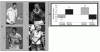
Experiment 2. (A) Examples of original images of players (1) losing or (2) winning a point. The same faces combined with incongruent-valence bodies such as (3) a losing face on a winning body and (4) a winning face on a losing body. (B) Mean valence ratings of the facial expressions.

10585
 

Attachments

  • Pages-from-Body-Cues.gif
    Pages-from-Body-Cues.gif
    179.2 KB · Views: 40
Pazda AD, Elliot AJ, Greitemeyer T. Sexy red: Perceived sexual receptivity mediates the red-attraction relation in men viewing woman. Journal of Experimental Social Psychology 2012;48(3):787-90. http://www.psych.rochester.edu/peop...s/pdf/2012_PazdaElliotGreitemeyer_SexyRed.pdf

In many non-human primate species, female red displays are a signal of sexual receptivity and this signal attracts male conspecifics. In the present research, we proposed and tested a human analog whereby perceived sexual receptivity mediates the relation between red and sexual attraction in men viewing women. Two experiments were conducted, each of which provided support for the hypothesized mediational model. Experiment 1 documented the mediational role of perceived sexual receptivity using the experimental-causal-chain approach, and Experiment 2 did so using the measurement-of-mediation approach. Alternative mediator variable candidates were ruled out, and participants showed no evidence of awareness of the red effect. These findings document red as a subtle, but surprisingly powerful environmental stimulus that can serve parallel functions in the mating game for human and non-human primates.
 
Spontaneous Giving and Calculated Greed

Many people are willing to make sacrifices for the common good. Here, researchers explore the cognitive mechanisms underlying this cooperative behaviour. They use a dual-process framework in which intuition and reflection interact to produce decisions.

Intuition is often associated with parallel processing, automaticity, effortlessness, lack of insight into the decision process and emotional influence. Reflection is often associated with serial processing, effortfulness and the rejection of emotional influence.

In addition, one of the psychological features most widely used to distinguish intuition from reflection is processing speed: intuitive responses are relatively fast, whereas reflective responses require additional time for deliberation. Here, they focus attention on this particular dimension, which is closely related to the distinction between automatic and controlled processing.


Rand DG, Greene JD, Nowak MA. Spontaneous giving and calculated greed. Nature 2012;489(7416):427-30. http://decisionlab.harvard.edu/_content/research/papers/Greene_Rand_and_Nowak_Spontaneous_Giving_Calculated_Greed.pdf

Cooperation is central to human social behaviour. However, choosing to cooperate requires individuals to incur a personal cost to benefit others. Here we explore the cognitive basis of cooperative decision-making in humans using a dual-process framework. We ask whether people are predisposed towards selfishness, behaving cooperatively only through active self-control; or whether they are intuitively cooperative, with reflection and prospective reasoning favouring ‘rational’ self-interest.

To investigate this issue, we perform ten studies using economic games. We find that across a range of experimental designs, subjects who reach their decisions more quickly are more cooperative. Furthermore, forcing subjects to decide quickly increases contributions, whereas instructing them to reflect and forcing them to decide slowly decreases contributions. Finally, an induction that primes subjects to trust their intuitions increases contributions compared with an induction that promotes greater reflection. To explain these results, we propose that cooperation is intuitive because cooperative heuristics are developed in daily life where cooperation is typically advantageous. We then validate predictions generated by this proposed mechanism.

Our results provide convergent evidence that intuition supports cooperation in social dilemmas, and that reflection can undermine these cooperative impulses.
 
Flawed Statistics Make Almost Everyone's Brain "Abnormal"

Highlights
? Single subject VBM shows high false positive rates in the healthy population.
? Differences in single subjects are more likely to reflect increases than decreases.
? Differences are mainly located in frontal and temporal areas of the neocortex.
? Single subject VBM studies of patients should be interpreted with caution.

Scarpazza C, Sartori G, De Simone MS, Mechelli A. When the single matters more than the group: Very high false positive rates in single case Voxel Based Morphometry. NeuroImage. ScienceDirect.com - NeuroImage - When the single matters more than the group: Very high false positive rates in single case Voxel Based Morphometry

Voxel Based Morphometry (VBM) studies typically involve a comparison between groups of individuals; this approach however does not allow inferences to be made at the level of the individual. In recent years, an increasing number of research groups have attempted to overcome this issue by performing single case studies, which involve the comparison between a single subject and a control group.

However, the interpretation of the results is problematic; for instance, any significant difference might be driven by individual variability in neuroanatomy rather than the neuropathology of the disease under investigation, or might represent a false positive due to the data being sampled from non-normally distributed populations.

The aim of the present investigation was to empirically estimate the likelihood of detecting significant differences in gray matter volume in individuals free from neurological or psychiatric diagnosis. We compared a total of 200 single subjects against a group of 16 controls matched for age and gender, using two independent datasets from the Neuroimaging Informatics Tools and Resources Clearinghouse.

We report that the chance of detecting a significant difference in a disease-free individual is much higher than previously expected; for instance, using a standard voxel-wise threshold of p<0.05 (corrected) and an extent threshold of 10 voxels, the likelihood of a single subject showing at least one significant difference is as high as 93.5% for increases and 71% for decreases. We also report that the chance of detecting significant differences was greatest in frontal and temporal cortices and lowest in subcortical regions. The chance of detecting significant differences was inversely related to the degree of smoothing applied to the data, and was higher for unmodulated than modulated data.

These results were replicated in the two independent datasets. By providing an empirical estimation of the number of significant increases and decreases to be expected in each cortical and subcortical region in disease-free individuals, the present investigation could inform the interpretation of future single case VBM studies.
 
Quoidbach J, Gilbert DT, Wilson TD. The End of History Illusion. Science 2013;339(6115):96-8. The End of History Illusion

We measured the personalities, values, and preferences of more than 19,000 people who ranged in age from 18 to 68 and asked them to report how much they had changed in the past decade and/or to predict how much they would change in the next decade. Young people, middle-aged people, and older people all believed they had changed a lot in the past but would change relatively little in the future. People, it seems, regard the present as a watershed moment at which they have finally become the person they will be for the rest of their lives. This “end of history illusion” had practical consequences, leading people to overpay for future opportunities to indulge their current preferences.
 
Slater M, Rovira A, Southern R, et al. Bystander Responses to a Violent Incident in an Immersive Virtual Environment. PLoS ONE 2013;8(1):e52766. PLOS ONE: Bystander Responses to a Violent Incident in an Immersive Virtual Environment

Under what conditions will a bystander intervene to try to stop a violent attack by one person on another? It is generally believed that the greater the size of the crowd of bystanders, the less the chance that any of them will intervene. A complementary model is that social identity is critical as an explanatory variable. For example, when the bystander shares common social identity with the victim the probability of intervention is enhanced, other things being equal. However, it is generally not possible to study such hypotheses experimentally for practical and ethical reasons.

Here we show that an experiment that depicts a violent incident at life-size in immersive virtual reality lends support to the social identity explanation. 40 male supporters of Arsenal Football Club in England were recruited for a two-factor between-groups experiment: the victim was either an Arsenal supporter or not (in-group/out-group), and looked towards the participant for help or not during the confrontation. The response variables were the numbers of verbal and physical interventions by the participant during the violent argument.

The number of physical interventions had a significantly greater mean in the in-group condition compared to the out-group. The more that participants perceived that the Victim was looking to them for help the greater the number of interventions in the in-group but not in the out-group. These results are supported by standard statistical analysis of variance, with more detailed findings obtained by a symbolic regression procedure based on genetic programming. Verbal interventions made during their experience, and analysis of post-experiment interview data suggest that in-group members were more prone to confrontational intervention compared to the out-group who were more prone to make statements to try to diffuse the situation.
 
van Honk J, Eisenegger C, Terburg D, Stein DJ, Morgan B. Generous economic investments after basolateral amygdala damage. Proceedings of the National Academy of Sciences. Generous economic investments after basolateral amygdala damage

Contemporary economic models hold that instrumental and impulsive behaviors underlie human social decision making. The amygdala is assumed to be involved in social-economic behavior, but its role in human behavior is poorly understood. Rodent research suggests that the basolateral amygdala (BLA) subserves instrumental behaviors and regulates the central-medial amygdala, which subserves impulsive behaviors. The human amygdala, however, typically is investigated as a single unit. If these rodent data could be translated to humans, selective dysfunction of the human BLA might constrain instrumental social-economic decisions and result in more impulsive social-economic choice behavior. Here we show that humans with selective BLA damage and a functional central-medial amygdala invest nearly 100% more money in unfamiliar others in a trust game than do healthy controls. We furthermore show that this generosity is not caused by risk-taking deviations in nonsocial contexts. Moreover, these BLA-damaged subjects do not expect higher returns or perceive people as more trustworthy, implying that their generous investments are not instrumental in nature. These findings suggest that the human BLA is essential for instrumental behaviors in social-economic interactions.
 
Swami V, Tovee M. Men’s Oppressive Beliefs Predict Their Breast Size Preferences in Women. Archives of Sexual Behavior 2013:1-9. Men’s Oppressive Beliefs Predict Their Breast Size Preferences in Women - Online First - Springer

Previous studies of men’s breast size preferences have yielded equivocal findings, with studies variously indicating a preference for small, medium, or large breasts. Here, we examined the impact of men’s oppressive beliefs in shaping their female breast size ideals. British White men from the community in London, England (N = 361) viewed figures of women that rotated in 360° and varied in breast size along five levels. They then rated the figure that they found most physically attractive and also completed measures assessing their sexist attitudes and tendency to objectify women. Results showed that medium breasts were rated most frequent as attractive (32.7 %), followed by large (24.4 %) and very large (19.1 %) breasts. Further analyses showed that men’s preferences for larger female breasts were significantly associated with a greater tendency to be benevolently sexist, to objectify women, and to be hostile towards women. These results were discussed in relation to feminist theories, which postulate that beauty ideals and practices in contemporary societies serve to maintain the domination of one sex over the other.
 
Kosinski M, Stillwell D, Graepel T. Private traits and attributes are predictable from digital records of human behavior. Proceedings of the National Academy of Sciences. http://www.pnas.org/content/early/2013/03/06/1218772110.full.pdf

We show that easily accessible digital records of behavior, Facebook Likes, can be used to automatically and accurately predict a range of highly sensitive personal attributes including: sexual orientation, ethnicity, religious and political views, personality traits, intelligence, happiness, use of addictive substances, parental separation, age, and gender. The analysis presented is based on a dataset of over 58,000 volunteers who provided their Facebook Likes, detailed demographic profiles, and the results of several psychometric tests. The proposed model uses dimensionality reduction for preprocessing the Likes data, which are then entered into logistic/linear regression to predict individual psychodemographic profiles from Likes.

The model correctly discriminates between homosexual and heterosexual men in 88% of cases, African Americans and Caucasian Americans in 95% of cases, and between Democrat and Republican in 85% of cases. For the personality trait “Openness,” prediction accuracy is close to the test–retest accuracy of a standard personality test. We give examples of associations between attributes and Likes and discuss implications for online personalization and privacy.
 
BRAIN GAMES ARE BOGUS
Brain-Training Games Don't Actually Make You Smarter : The New Yorker

A pair of scientists in Europe recently gathered all of the best research—twenty-three investigations of memory training by teams around the world—and employed a standard statistical technique (called meta-analysis) to settle this controversial issue. The conclusion: the games may yield improvements in the narrow task being trained, but this does not transfer to broader skills like the ability to read or do arithmetic, or to other measures of intelligence. Playing the games makes you better at the games, in other words, but not at anything anyone might care about in real life.


Melby-Lervag M, Hulme C. Is working memory training effective? A meta-analytic review. Dev Psychol 2013;49(2):270-91. http://www.apa.org/pubs/journals/releases/dev-49-2-270.pdf

It has been suggested that working memory training programs are effective both as treatments for attention-deficit/hyperactivity disorder (ADHD) and other cognitive disorders in children and as a tool to improve cognitive ability and scholastic attainment in typically developing children and adults. However, effects across studies appear to be variable, and a systematic meta-analytic review was undertaken. To be included in the review, studies had to be randomized controlled trials or quasi-experiments without randomization, have a treatment, and have either a treated group or an untreated control group.

Twenty-three studies with 30 group comparisons met the criteria for inclusion. The studies included involved clinical samples and samples of typically developing children and adults. Meta-analyses indicated that the programs produced reliable short-term improvements in working memory skills. For verbal working memory, these near-transfer effects were not sustained at follow-up, whereas for visuospatial working memory, limited evidence suggested that such effects might be maintained. More importantly, there was no convincing evidence of the generalization of working memory training to other skills (nonverbal and verbal ability, inhibitory processes in attention, word decoding, and arithmetic).

The authors conclude that memory training programs appear to produce short-term, specific training effects that do not generalize. Possible limitations of the review (including age differences in the samples and the variety of different clinical conditions included) are noted.

However, current findings cast doubt on both the clinical relevance of working memory training programs and their utility as methods of enhancing cognitive functioning in typically developing children and healthy adults.


Shipstead Z, Hicks KL, Engle RW. Cogmed working memory training: Does the evidence support the claims? Journal of Applied Research in Memory and Cognition 2012;1(3):185-93. ScienceDirect.com - Journal of Applied Research in Memory and Cognition - Cogmed working memory training: Does the evidence support the claims?

Cogmed working memory training is sold as a tool for improving cognitive abilities, such as attention and reasoning. At present, this program is marketed to schools as a means of improving underperforming students’ scholastic performance, and is also available at clinical practices as a treatment for ADHD. We review research conducted with Cogmed software and highlight several concerns regarding methodology and replicability of findings. We conclude that the claims made by Cogmed are largely unsubstantiated, and recommend that future research place greater emphasis on developing theoretically motivated accounts of working memory training.


Hulme C, Melby-Lervag M. Current evidence does not support the claims made for CogMed working memory training. Journal of Applied Research in Memory and Cognition 2012;1(3):197-200. ScienceDirect.com - Journal of Applied Research in Memory and Cognition - Current evidence does not support the claims made for CogMed working memory training

It is useful to begin by stating what working memory training is and why it might be so important. Although no definition of Working Memory (WM) would be universally accepted, a widely quoted definition is “a brain system that provides temporary storage and manipulation of the information necessary for …complex cognitive tasks.”

This definition makes clear why attempts to train working memory capacity have such appeal. If working memory is a limited capacity “mental work space” then increasing its capacity should have wide-ranging benefits – making people better able to perform complex cognitive tasks, to learn from experience, and generally become more intelligent.

Limitations of working memory have also been seen as a potential causal risk factor for a variety of common developmental disorders including ADHD, Mathematics Disorder and Language Impairment. This view has led to WM training being advocated as a treatment for a variety of such disorders.

For example the CogMed website claims “CogMed Working Memory Training is a solution for individuals who are held back by their working memory capacity. That means several large groups: children and adults with attention deficits or learning disorders….”

Shipstead et al. (2012) focus solely on studies of the effectiveness of the commercially available CogMed programme which has been more widely evaluated than any other such programme. After a rigorous and detailed evaluation of these studies they reach a number of conclusions that we would summarize as follows:

1. Contrary to earlier claims, there is no evidence that CogMed training increases scores on measures of intelligence (of which variants of the Raven's Progressive Matrices are the most widely used).

2. CogMed training has been claimed to improve attention as measured by performance on the Stroop task, but evidence does not support this claim, and the form of Stroop task used in these studies (incongruent only trials) is unrelated to WM capacity.

3. There is limited evidence that CogMed training increases vigilance performance, although whether such effects reflect changes in WM capacity is uncertain.

4. There is no convincing evidence that CogMed training reduces the symptoms of ADHD. Objective measures of ADHD behavior have not shown reliable improvements and the improvements reported on subjective ratings of children's behavior are very difficult to interpret because raters may expect children who have been treated to get better and rate them accordingly.

5. Finally, and perhaps most worryingly, there is even a lack of convincing evidence that CogMed training actually improves the thing it directly trains – WM capacity.
 
very nice topic i like that topic.The Brain - is wider than the Sky -
For - put them side by side -
The one the other will contain
With ease - and You - beside -
The Brain is deeper than the sea -
For - hold them - Blue to Blue -
The one the other will absorb -
As sponges - Buckets - do

The Brain is just the weight of God -
For - Heft them - Pound for Pound -
And they will differ - if they do -
As syllable from Sound -
 
An Evaluation of the Left-Brain vs. Right-Brain Hypothesis

Nielsen JA, Zielinski BA, Ferguson MA, Lainhart JE, Anderson JS. An Evaluation of the Left-Brain vs. Right-Brain Hypothesis with Resting State Functional Connectivity Magnetic Resonance Imaging. PLoS ONE 2013;8(8):e71275. PLOS ONE: An Evaluation of the Left-Brain vs. Right-Brain Hypothesis with Resting State Functional Connectivity Magnetic Resonance Imaging

Lateralized brain regions subserve functions such as language and visuospatial processing. It has been conjectured that individuals may be left-brain dominant or right-brain dominant based on personality and cognitive style, but neuroimaging data has not provided clear evidence whether such phenotypic differences in the strength of left-dominant or right-dominant networks exist.

We evaluated whether strongly lateralized connections covaried within the same individuals. Data were analyzed from publicly available resting state scans for 1011 individuals between the ages of 7 and 29. For each subject, functional lateralization was measured for each pair of 7266 regions covering the gray matter at 5-mm resolution as a difference in correlation before and after inverting images across the midsagittal plane. The difference in gray matter density between homotopic coordinates was used as a regressor to reduce the effect of structural asymmetries on functional lateralization.

Nine left- and 11 right-lateralized hubs were identified as peaks in the degree map from the graph of significantly lateralized connections. The left-lateralized hubs included regions from the default mode network (medial prefrontal cortex, posterior cingulate cortex, and temporoparietal junction) and language regions (e.g., Broca Area and Wernicke Area), whereas the right-lateralized hubs included regions from the attention control network (e.g., lateral intraparietal sulcus, anterior insula, area MT, and frontal eye fields).

Left- and right-lateralized hubs formed two separable networks of mutually lateralized regions. Connections involving only left- or only right-lateralized hubs showed positive correlation across subjects, but only for connections sharing a node.

Lateralization of brain connections appears to be a local rather than global property of brain networks, and our data are not consistent with a whole-brain phenotype of greater “left-brained” or greater “right-brained” network strength across individuals. Small increases in lateralization with age were seen, but no differences in gender were observed.
 

Sponsors

Back
Top