

Climate Change

Ceballos G, Ehrlich PR, Barnosky AD, Garcia As, Pringle RM, et al. Accelerated modern human–induced species losses: Entering the sixth mass extinction. Science Advances. 2015;1(5). http://advances.sciencemag.org/content/1/5/e1400253.full

The oft-repeated claim that Earth’s biota is entering a sixth “mass extinction” depends on clearly demonstrating that current extinction rates are far above the “background” rates prevailing in the five previous mass extinctions.

Earlier estimates of extinction rates have been criticized for using assumptions that might overestimate the severity of the extinction crisis.

We assess, using extremely conservative assumptions, whether human activities are causing a mass extinction.

First, we use a recent estimate of a background rate of 2 mammal extinctions per 10,000 species per 100 years (that is, 2 E/MSY), which is twice as high as widely used previous estimates.

We then compare this rate with the current rate of mammal and vertebrate extinctions. The latter is conservatively low because listing a species as extinct requires meeting stringent criteria.

Even under our assumptions, which would tend to minimize evidence of an incipient mass extinction, the average rate of vertebrate species loss over the last century is up to 114 times higher than the background rate.

Under the 2 E/MSY background rate, the number of species that have gone extinct in the last century would have taken, depending on the vertebrate taxon, between 800 and 10,000 years to disappear.

These estimates reveal an exceptionally rapid loss of biodiversity over the last few centuries, indicating that a sixth mass extinction is already under way.

Averting a dramatic decay of biodiversity and the subsequent loss of ecosystem services is still possible through intensified conservation efforts, but that window of opportunity is rapidly closing.
 
Jansen D, Luckman AJ, Cook A, Bevan S, Kulessa B, et al. Brief Communication: Newly developing rift in Larsen C Ice Shelf presents significant risk to stability. The Cryosphere. 2015;9(3):1223-7. http://www.the-cryosphere.net/9/1223/2015/tc-9-1223-2015.html

An established rift in the Larsen C Ice Shelf, formerly constrained by a suture zone containing marine ice, grew rapidly during 2014 and is likely in the near future to generate the largest calving event since the 1980s and result in a new minimum area for the ice shelf. Here we investigate the recent development of the rift, quantify the projected calving event and, using a numerical model, assess its likely impact on ice shelf stability. We find that the ice front is at risk of becoming unstable when the anticipated calving event occurs.
 
Latif M, Semenov V, Park W. Super El Niños in response to global warming in a climate model. Climatic Change. 2015;1-12. http://link.springer.com/article/10.1007/s10584-015-1439-6

Extraordinarily strong El Niño events, such as those of 1982/1983 and 1997/1998, cause havoc with weather around the world, adversely influence terrestrial and marine ecosystems in a number of regions and have major socio-economic impacts. Here we show by means of climate model integrations that El Niño events may be boosted by global warming. An important factor causing El Niño intensification is warming of the western Pacific warm pool, which strongly enhances surface zonal wind sensitivity to eastern equatorial Pacific sea surface temperature anomalies. This in conjunction with larger and more zonally asymmetric equatorial Pacific upper ocean heat content supports stronger and longer lasting El Niños. The most intense events, termed Super El Niños, drive extraordinary global teleconnections which are associated with exceptional surface air temperature and rainfall anomalies over many land areas.
 
Hamilton LC. Polar facts in the age of polarization. Polar Geography. 2015;1-18. http://www.tandfonline.com/doi/abs/10.1080/1088937X.2015.1051158

Many drivers of polar-region change originate in mid-latitude industrial societies, so public perceptions there matter. Building on earlier surveys of US public knowledge and concern, a series of New Hampshire state surveys over 2011–2015 tracked public knowledge of some basic polar facts.

Analysis indicates that these facts subjectively fall into two categories: those that are or are not directly connected to beliefs about climate change. Responses to climate-linked factual questions, such as whether Arctic sea ice area has declined compared with 30 years ago, are politicized as if we were asking for climate-change opinions.

Political divisions are less apparent with factual questions that do not suggest climate change, such as whether the North Pole is on land or sea ice. Only 38% of respondents could answer that question correctly, and even fewer (30%) knew or guessed correctly that melting of Greenland and Antarctic land ice, rather than Arctic sea ice, could potentially do the most to raise sea levels.

At odds with the low levels of factual knowledge, most respondents say they have a moderate amount or a great deal of understanding about climate change. A combination of low knowledge with high self-assessed understanding characterizes almost half our sample and correlates with political views.

The low knowledge/high understanding combination is most prevalent among Tea Party supporters, where it reaches 61%. It also occurs often (60%) among people who do not believe climate is changing.

These results emphasize that diverse approaches are needed to communicate about science with people having different configurations of certainty and knowledge.
 
What's Really Warming The World?
http://www.bloomberg.com/graphics/2015-whats-warming-the-world/

Skeptics [Denialists] of manmade climate change offer various natural causes to explain why the Earth has warmed 1.4 degrees Fahrenheit since 1880. But can these account for the planet's rising temperature? [No!]

Scroll through to see how much different factors, natural and industrial, contribute to global warming, based on findings from NASA's Goddard Institute of Space Studies.
 
Ceballos G, Ehrlich PR, Barnosky AD, Garcia As, Pringle RM, et al. Accelerated modern human–induced species losses: Entering the sixth mass extinction. Science Advances. 2015;1(5). http://advances.sciencemag.org/content/1/5/e1400253.full

The oft-repeated claim that Earth’s biota is entering a sixth “mass extinction” depends on clearly demonstrating that current extinction rates are far above the “background” rates prevailing in the five previous mass extinctions.

Earlier estimates of extinction rates have been criticized for using assumptions that might overestimate the severity of the extinction crisis.

We assess, using extremely conservative assumptions, whether human activities are causing a mass extinction.

First, we use a recent estimate of a background rate of 2 mammal extinctions per 10,000 species per 100 years (that is, 2 E/MSY), which is twice as high as widely used previous estimates.

We then compare this rate with the current rate of mammal and vertebrate extinctions. The latter is conservatively low because listing a species as extinct requires meeting stringent criteria.

Even under our assumptions, which would tend to minimize evidence of an incipient mass extinction, the average rate of vertebrate species loss over the last century is up to 114 times higher than the background rate.

Under the 2 E/MSY background rate, the number of species that have gone extinct in the last century would have taken, depending on the vertebrate taxon, between 800 and 10,000 years to disappear.

These estimates reveal an exceptionally rapid loss of biodiversity over the last few centuries, indicating that a sixth mass extinction is already under way.

Averting a dramatic decay of biodiversity and the subsequent loss of ecosystem services is still possible through intensified conservation efforts, but that window of opportunity is rapidly closing.

Skyrocketing Extinctions Put Humans at Risk
http://takingnote.blogs.nytimes.com/2015/06/23/skyrocketing-extinctions-put-humans-at-risk/

“Every time we lose a species,” he said, we draw closer to “a complete collapse of civilization as we understand it.”

Under their most conservative estimates, mammal species have gone extinct at 28 times the baseline rate since 1900, and amphibian species have gone extinct at 22 times the baseline. A less conservative estimate puts those numbers at 55 and 100.

If baseline rates had held, the number of species lost in the last century alone would have taken 800 to 10,000 years to go extinct.
 
US climate deniers call Paris summit 'a threat' to the world
http://www.theguardian.com/environm...niers-call-paris-summit-a-threat-to-the-world


The godfather of climate denial has warned that a United Nations deal on global warming would spell “economic suicide” for America and a disaster to the world, according to a leaked fundraising letter.

In the rambling 13-page letter, Fred Singer, a retired rocket scientist who rejects the science underlining climate change, appeals for at least $425,000 (£270,212) to stop what he called the “radical, economy-wrecking and sovereignty-destroying UN climate pact”.

The letter, penned on behalf of the Committee for a Constructive Tomorrow (Cfact), an ultra-conservative group that denies the existence of climate change, suggests growing desperation about the prospects of a climate change deal emerging from the Paris meeting. Cfact did not dispute authenticity of the document.
 
Climate Change Deadly Health Risk, Global Health Opportunity – Lancet Commission
http://newsroom.unfccc.int/unfccc-n...ly-health-risk-and-global-health-opportunity/

Climate change threatens to undermine 50 years of gains in development and health, but timely action could make it this century’s “greatest global health opportunity,” states a report by the Lancet Commission on Health and Climate Change.

In 2009, the UCL–Lancet Commission on Managing the Health Effects of Climate Change called climate change “the biggest global health threat of the 21st century.” In its 2015 report just released, a new multidisciplinary international Lancet Commission reaches the same conclusion, adding that tackling climate change could be the greatest global opportunity of the 21st century.
 
Anthropogenic CO2 emissions directly affect atmospheric chemistry but also have a strong influence on the oceans. Gattuso et al. review how the physics, chemistry, and ecology of the oceans might be affected based on two CO2 emission trajectories: one business as usual and one with aggressive reductions.

Ocean warming, acidification, sea-level rise, and the expansion of oxygen minimum zones will continue to have distinct impacts on marine communities and ecosystems. The path that humanity takes regarding CO2 emissions will largely determine the severity of these phenomena.

Gattuso JP, Magnan A, Bille R, Cheung WWL, Howes EL, et al. Contrasting futures for ocean and society from different anthropogenic CO2 emissions scenarios. Science. 2015;349(6243). http://www.sciencemag.org/content/349/6243/aac4722.abstract

The ocean moderates anthropogenic climate change at the cost of profound alterations of its physics, chemistry, ecology, and services.

Here, we evaluate and compare the risks of impacts on marine and coastal ecosystems—and the goods and services they provide—for growing cumulative carbon emissions under two contrasting emissions scenarios.

The current emissions trajectory would rapidly and significantly alter many ecosystems and the associated services on which humans heavily depend.

A reduced emissions scenario—consistent with the Copenhagen Accord’s goal of a global temperature increase of less than 2°C—is much more favorable to the ocean but still substantially alters important marine ecosystems and associated goods and services.

The management options to address ocean impacts narrow as the ocean warms and acidifies. Consequently, any new climate regime that fails to minimize ocean impacts would be incomplete and inadequate.
 
To mark the final day of the 65th Lindau Nobel Laureate Meeting, on Friday, 3 July, over 30 Nobel laureates assembled on Mainau Island on Lake Constance signed a declaration on climate change.


Mainau Declaration 2015 on Climate Change

http://www.lindau-nobel.org/wp-content/uploads/2015/07/Mainau-Declaration-2015-EN.pdf

We undersigned scientists, who have been awarded Nobel Prizes, have come to the shores of Lake Constance in southern Germany, to share insights with promising young researchers, who like us come from around the world. Nearly 60 years ago, here on Mainau, a similar gathering of Nobel Laureates in science issued a declaration of the dangers inherent in the newly found technology of nuclear weapons—a technology derived from advances in basic science. So far we have avoided nuclear war though the threat remains. We believe that our world today faces another threat of comparable magnitude.

Successive generations of scientists have helped create a more and more prosperous world. This prosperity has come at the cost of a rapid rise in the consumption of the world’s resources. If left unchecked, our ever-increasing demand for food, water, and energy will eventually overwhelm the Earth’s ability to satisfy humanity’s needs, and will lead to wholesale human tragedy. Already, scientists who study Earth’s climate are observing the impact of human activity.

In response to the possibility of human-induced climate change, the United Nations established the Intergovernmental Panel on Climate Change (IPCC) to provide the world’s leaders a summary of the current state of relevant scientific knowledge. While by no means perfect, we believe that the efforts that have led to the current IPCC Fifth Assessment Report represent the best source of information regarding the present state of knowledge on climate change. We say this not as experts in the field of climate change, but rather as a diverse group of scientists who have a deep respect for and understanding of the integrity of the scientific process.

Although there remains uncertainty as to the precise extent of climate change, the conclusions of the scientific community contained in the latest IPCC report are alarming, especially in the context of the identified risks of maintaining human prosperity in the face of greater than a 2°C rise in average global temperature. The report concludes that anthropogenic emissions of greenhouse gases are the likely cause of the current global warming of the Earth. Predictions from the range of climate models indicate that this warming will very likely increase the Earth’s temperature over the coming century by more than 2°C above its pre-industrial level unless dramatic reductions are made in anthropogenic emissions of greenhouse gases over the coming decades.

Based on the IPCC assessment, the world must make rapid progress towards lowering current and future greenhouse gas emissions to minimize the substantial risks of climate change. We believe that the nations of the world must take the opportunity at the United Nations Climate Change Conference in Paris in December 2015 to take decisive action to limit future global emissions. This endeavor will require the cooperation of all nations, whether developed or developing, and must be sustained into the future in accord with updated scientific assessments. Failure to act will subject future generations of humanity to unconscionable and unacceptable risk.

Mainau Island, Germany
3 July 2015
 
To mark the final day of the 65th Lindau Nobel Laureate Meeting, on Friday, 3 July, over 30 Nobel laureates assembled on Mainau Island on Lake Constance signed a declaration on climate change.


Mainau Declaration 2015 on Climate Change

http://www.lindau-nobel.org/wp-content/uploads/2015/07/Mainau-Declaration-2015-EN.pdf

We undersigned scientists, who have been awarded Nobel Prizes, have come to the shores of Lake Constance in southern Germany, to share insights with promising young researchers, who like us come from around the world. Nearly 60 years ago, here on Mainau, a similar gathering of Nobel Laureates in science issued a declaration of the dangers inherent in the newly found technology of nuclear weapons—a technology derived from advances in basic science. So far we have avoided nuclear war though the threat remains. We believe that our world today faces another threat of comparable magnitude.

Successive generations of scientists have helped create a more and more prosperous world. This prosperity has come at the cost of a rapid rise in the consumption of the world’s resources. If left unchecked, our ever-increasing demand for food, water, and energy will eventually overwhelm the Earth’s ability to satisfy humanity’s needs, and will lead to wholesale human tragedy. Already, scientists who study Earth’s climate are observing the impact of human activity.

In response to the possibility of human-induced climate change, the United Nations established the Intergovernmental Panel on Climate Change (IPCC) to provide the world’s leaders a summary of the current state of relevant scientific knowledge. While by no means perfect, we believe that the efforts that have led to the current IPCC Fifth Assessment Report represent the best source of information regarding the present state of knowledge on climate change. We say this not as experts in the field of climate change, but rather as a diverse group of scientists who have a deep respect for and understanding of the integrity of the scientific process.

Although there remains uncertainty as to the precise extent of climate change, the conclusions of the scientific community contained in the latest IPCC report are alarming, especially in the context of the identified risks of maintaining human prosperity in the face of greater than a 2°C rise in average global temperature. The report concludes that anthropogenic emissions of greenhouse gases are the likely cause of the current global warming of the Earth. Predictions from the range of climate models indicate that this warming will very likely increase the Earth’s temperature over the coming century by more than 2°C above its pre-industrial level unless dramatic reductions are made in anthropogenic emissions of greenhouse gases over the coming decades.

Based on the IPCC assessment, the world must make rapid progress towards lowering current and future greenhouse gas emissions to minimize the substantial risks of climate change. We believe that the nations of the world must take the opportunity at the United Nations Climate Change Conference in Paris in December 2015 to take decisive action to limit future global emissions. This endeavor will require the cooperation of all nations, whether developed or developing, and must be sustained into the future in accord with updated scientific assessments. Failure to act will subject future generations of humanity to unconscionable and unacceptable risk.

Mainau Island, Germany
3 July 2015
 
F1.large.jpg

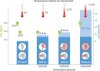
Peak global mean temperature, atmospheric CO2, maximum global mean sea level (GMSL), and source(s) of meltwater. Light blue shading indicates uncertainty of GMSL maximum. Red pie charts over Greenland and Antarctica denote fraction (not location) of ice retreat.


Dutton A, Carlson AE, Long AJ, Milne GA, Clark PU, et al. Sea-level rise due to polar ice-sheet mass loss during past warm periods. Science. 2015;349(6244). http://www.sciencemag.org/content/349/6244/aaa4019.abstract

Interdisciplinary studies of geologic archives have ushered in a new era of deciphering magnitudes, rates, and sources of sea-level rise from polar ice-sheet loss during past warm periods.

Accounting for glacial isostatic processes helps to reconcile spatial variability in peak sea level during marine isotope stages 5e and 11, when the global mean reached 6 to 9 meters and 6 to 13 meters higher than present, respectively.

Dynamic topography introduces large uncertainties on longer time scales, precluding robust sea-level estimates for intervals such as the Pliocene.

Present climate is warming to a level associated with significant polar ice-sheet loss in the past.

Here, we outline advances and challenges involved in constraining ice-sheet sensitivity to climate change with use of paleo-sea level records.
 
Back
Top
