

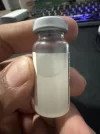
Test E came cloudy and sludgy on the bottom and leaked out while heating, newbie post

yes, that's what I meant. Like injecting Primo without "warming it up" as the tradtional advice goes. The same vial could have zero pip/problems, or cause giant welts.

I assume there is a semi-crashed state, where it's not solid but still looks dissolved in the vial.

I tested CRP while using QSC primo (while constantly getting pip/welts) and not even filtering, and hit a 0.3 hs-crp at at age 40, but my eosinophils were elevated. After I stopped using primo, I had no more CBC issues.

This was using it directly after receiving it, no yellowing, purely clear so I assume their "gutter oil" hadn't had time to oxidize yet.

Probably right about oxidation not occurring yet. Light is another catalyst so it’s going to vary based on where it’s kept. (And whether you were lucky enough to get a stopper that actually sealed.)

HS-CRP is selective for chronic or widespread inflammation. Local inflammation from physical injury, like cutting up a muscle injecting a “slurry” of sharp Primo crystals shouldn’t move HS-CRP much. So the pain is an irritant at worst.

Filtering in that condition would clog fast and probably remove a lot of the Primo.
 
Probably right about oxidation not occurring yet. Light is another catalyst so it’s going to vary based on where it’s kept. (And whether you were lucky enough to get a stopper that actually sealed.)

HS-CRP is selective for chronic or widespread inflammation. Local inflammation from physical injury, like cutting up a muscle injecting a “slurry” of sharp Primo crystals shouldn’t move HS-CRP much. So the pain is an irritant at worst.

Filtering in that condition would clog fast and probably remove a lot of the Primo.
I'm still confused. How can heating up a vial reduce pip? Doesn't dissolved primo (using it as an extreme example) still crash while in the muscle? Hence the welts?

But some say with primo, and I think I've experienced it, heating it up can stop that from happening?

Why would the same vial cause pip alternative shots from same vial but heating it up only on some shots?

Alternatively, I just just start diluting my gear with pharma grade MCT and reduce concentration, hence maybe reduce some risk from pip or dillute potentially oxidized gear?
 
I'm still confused. How can heating up a vial reduce pip? Doesn't dissolved primo (using it as an extreme example) still crash while in the muscle? Hence the welts?

But some say with primo, and I think I've experienced it, heating it up can stop that from happening?

Why would the same vial cause pip alternative shots from same vial but heating it up only on some shots?

Alternatively, I just just start diluting my gear with pharma grade MCT and reduce concentration, hence maybe reduce some risk from pip or dillute potentially oxidized gear?

If I had to guess, warmed oil, less viscous, spreads across a larger area faster, by the time enough BB is washed away for dissolved primo to start crashing the reduced concentration = formation of smaller crystals.
 
Because some people never update their knowledge.

Obviously you have a vial with an imperfect seal. That’s why a drop leaked out. Water is unsterile and accelerates degradation of the oil. No water = no risk of infiltration of water.

A vent is a bed idea because the moment temps inside the vial drop by just a couple of degrees, that vent starts to SUCK IN whatever condensation or other crap is on it.
Sorry I guess common sense isn’t so common anymore. I’m pulling it out prior to taking it off the burner. If someone thinks it’s too risky then they obviously don't have too but I wouldn’t say it’s wrong.
 
IMG_4E0149BF-449E-4A4C-A91F-32433CFDF37D.webp
Can someone help explain what’s going on in this test e vial? This is the second vial it’s happened to… only happens weeks after taking the cap off
 
Cold temps. “Sludge” is the stage of crashing between floating crystal and full solid.

The leaking drop is why water is a bad idea. The seal can be compromised, and water can infiltrate the vial.

FYI, 175f won’t melt any of the vial hardware, and you don’t need to “vent” the vial hardware either. It can go in fully sealed. Even if it’s “shrink wrapped” as some retail vials are, that won’t melt either.

Coffee warmers work as well, but in my experience the oven method has a better chance of staying in solution rather than recrashing.
Absolutely, a coffee warmer or a candle wax warmer both offer a safe way to allow the crashed Test bottles to come back into the solution.
 

Sponsors

Back
Top