Climate Change

The Methane Monster Roars
http://truth-out.org/news/item/28490-the-methane-monster-roars

"It is my view that our climate system is in early stages of abrupt climate change that, unchecked, will lead to a temperature rise of 5 to 6 degrees Celsius within a decade or two," Beckwith told me. "Obviously, such a large change in the climate system will have unprecedented effects on the health and well-being of every plant and animal on our planet."

 
Hay CC, Morrow E, Kopp RE, Mitrovica JX. Probabilistic reanalysis of twentieth-century sea-level rise. Nature;advance online publication. http://www.nature.com/nature/journal/vaop/ncurrent/full/nature14093.html

Estimating and accounting for twentieth-century global mean sea-level (GMSL) rise is critical to characterizing current and future human-induced sea-level change.

Several previous analyses of tide gauge records — employing different methods to accommodate the spatial sparsity and temporal incompleteness of the data and to constrain the geometry of long-term sea-level change—have concluded that GMSL rose over the twentieth century at a mean rate of 1.6 to 1.9 millimetres per year.

Efforts to account for this rate by summing estimates of individual contributions from glacier and ice-sheet mass loss, ocean thermal expansion, and changes in land water storage fall significantly short in the period before 1990.

The failure to close the budget of GMSL during this period has led to suggestions that several contributions may have been systematically underestimated. However, the extent to which the limitations of tide gauge analyses have affected estimates of the GMSL rate of change is unclear.

Here we revisit estimates of twentieth-century GMSL rise using probabilistic techniques and find a rate of GMSL rise from 1901 to 1990 of 1.2 ± 0.2 millimetres per year (90% confidence interval). Based on individual contributions tabulated in the Fifth Assessment Report of the Intergovernmental Panel on Climate Change, this estimate closes the twentieth-century sea-level budget.

Our analysis, which combines tide gauge records with physics-based and model-derived geometries of the various contributing signals, also indicates that GMSL rose at a rate of 3.0 ± 0.7 millimetres per year between 1993 and 2010, consistent with prior estimates from tide gauge records.

The increase in rate relative to the 1901–90 trend is accordingly larger than previously thought; this revision may affect some projections of future sea-level rise.
 
Seize the day - The fall in the price of oil and gas provides a once-in-a-generation opportunity to fix bad energy policies
http://www.economist.com/news/leade...-provides-once-generation-opportunity-fix-bad

The most straightforward piece of reform, pretty much everywhere, is simply to remove all the subsidies for producing or consuming fossil fuels. Last year governments around the world threw $550 billion down that rathole—on everything from holding down the price of petrol in poor countries to encouraging companies to search for oil. By one count, such handouts led to extra consumption that was responsible for 36% of global carbon emissions in 1980-2010.
 
Steffen W, Richardson K, Rockstrom J, et al. Planetary boundaries: Guiding human development on a changing planet. Science. http://www.sciencemag.org/content/early/2015/01/14/science.1259855.abstract

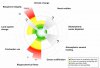
The planetary boundaries framework defines a safe operating space for humanity based on the intrinsic biophysical processes that regulate the stability of the Earth System. Here, we revise and update the planetary boundaries framework, with a focus on the underpinning biophysical science, based on targeted input from expert research communities and on more general scientific advances over the past 5 years. Several of the boundaries now have a two-tier approach, reflecting the importance of cross-scale interactions and the regional-level heterogeneity of the processes that underpin the boundaries. Two core boundaries—climate change and biosphere integrity—have been identified, each of which has the potential on its own to drive the Earth System into a new state should they be substantially and persistently transgressed.

The current status of the control variables for seven of the nine planetary boundaries. Green zone is the safe operating space (below the boundary), yellow represents the zone of uncertainty (increasing risk), and red is the high-risk zone. The planetary boundary itself lies at the inner heavy circle. The control variables have been normalized for the zone of uncertainty (between the two heavy circles); the center of the figure therefore does not represent values of 0 for the control variables. The control variable shown for climate change is atmospheric CO2concentration. Processes for which global-level boundaries cannot yet be quantified are represented by gray wedges; these are atmospheric aerosol loading, novel entities and the functional role of biosphere integrity.

current status of the control variables.jpg
 
Last edited:
McCauley DJ, Pinsky ML, Palumbi SR, Estes JA, Joyce FH, Warner RR. Marine defaunation: Animal loss in the global ocean. Science 2015;347(6219). http://www.sciencemag.org/content/347/6219/1255641.abstract

Marine defaunation, or human-caused animal loss in the oceans, emerged forcefully only hundreds of years ago, whereas terrestrial defaunation has been occurring far longer.

Though humans have caused few global marine extinctions, we have profoundly affected marine wildlife, altering the functioning and provisioning of services in every ocean.

Current ocean trends, coupled with terrestrial defaunation lessons, suggest that marine defaunation rates will rapidly intensify as human use of the oceans industrializes.

Though protected areas are a powerful tool to harness ocean productivity, especially when designed with future climate in mind, additional management strategies will be required.

Overall, habitat degradation is likely to intensify as a major driver of marine wildlife loss. Proactive intervention can avert a marine defaunation disaster of the magnitude observed on land.

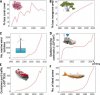
Habitat Change In The Global Oceans

Trends in six indicators of marine habitat modification suggest that habitat change may become an increasingly important threat to marine wildlife:

(A) change in global percent cover of coral reef outside of marine protected areas [percent change at each time point measured relative to percent coral cover in 1988];
(B) global change in mangrove area (percent change each year measured relative to mangrove area in 1980);
(C) change in the cumulative number of marine wind turbines installed worldwide (118);
(D) change in the cumulative area of seabed under contract for mineral extraction in international waters;
(E) trends in the volume of global container port traffic; and
(F) change in the cumulative number of oxygen depleted marine “dead zones.”


Habitat Change In The Global Oceans.jpg
 
Last edited:
2014 Was Hottest Year on Record, Surpassing 2010
http://www.nytimes.com/2015/01/17/science/earth/2014-was-hottest-year-on-record-surpassing-2010.html

Last year was the hottest in earth’s recorded history, scientists reported on Friday, underscoring scientific warnings about the risks of runaway emissions and undermining claims by climate-change contrarians that global warming had somehow stopped.

In the annals of climatology, 2014 now surpasses 2010 as the warmest year in a global temperature record that stretches back to 1880. The 10 warmest years on record have all occurred since 1997, a reflection of the relentless planetary warming that scientists say is a consequence of human emissions and poses profound long-term risks to civilization and to the natural world.

 
2014 Breaks Heat Record, Challenging Global Warming Skeptics
http://www.nytimes.com/2015/01/17/science/earth/2014-was-hottest-year-on-record-surpassing-2010.html


Last year was the hottest on earth since record-keeping began in 1880, scientists reported on Friday, underscoring warnings about the risks of runaway greenhouse gas emissions and undermining claims by climate change contrarians that global warming had somehow stopped.

Extreme heat blanketed Alaska and much of the western United States last year. Records were set across large areas of every inhabited continent. And the ocean surface was unusually warm virtually everywhere except near Antarctica, the scientists said, providing the energy that fueled damaging Pacific storms.

In the annals of climatology, 2014 surpassed 2010 as the warmest year. The 10 warmest years have all occurred since 1997, a reflection of the relentless planetary warming that scientists say is a consequence of human activity and poses profound long-term risks to civilization and nature.

“Climate change is perhaps the major challenge of our generation,” said Michael H. Freilich, director of earth sciences at NASA, one of the agencies that track global temperatures.

 
GO FIGURE: Figuring the odds of Earth's global hot streak
http://phys.org/news/2015-01-figure-figuring-odds-earth-global.html


So how likely are these temperatures to be random? The Associated Press consulted with statisticians to calculate the odds of this hot streak happening at random. Here are some statistics and the odds they calculated, with the caveat that high temperatures tend to persist so that can skew odds a bit:

The three hottest years on record—2014, 2010 and 2005—have occurred in the last 10 years. The odds of that happening randomly are 3,341 to 1, calculated John Grego of the University of South Carolina. Kai Zhu of Stanford University, Robert Lund of Clemson University and David Peterson, a retired Duke statistician, agreed.

Nine of the 10 hottest years on record have occurred in the 21st century. The odds of that being random are 650 million to 1, the statisticians said.

Thirteen of the 15 the hottest years on record have occurred in the last 15 years. The odds of that being random are more than 41 trillion to 1, the statisticians said.

All 15 years from 2000 on have been among the top 20 warmest years on record. They said the odds of that are 1.5 quadrillion to 1. A quadrillion is a million billion.

 
‘It is profitable to let the world go to hell’
http://www.theguardian.com/sustaina...imate-action-democracy-failure-jorgen-randers

The professor of climate strategy at the Norwegian Business School has been pretty close to giving up his struggle to wake us up to our unsustainable ways, and in 2004 published a pessimistic update of his 1972 report showing the predictions made at the time are turning out to be largely accurate.

What he cannot bear is how politicians of all persuasions have failed to act even as the scientific evidence of climate change mounts up, and as a result he has largely lost faith in the democratic process to handle complex issues.

In a newly published paper in the Swedish magazine Extrakt he writes:

It is cost-effective to postpone global climate action. It is profitable to let the world go to hell.

I believe that the tyranny of the short term will prevail over the decades to come. As a result, a number of long-term problems will not be solved, even if they could have been, and even as they cause gradually increasing difficulties for all voters.

 
Dangerously in denial on climate change
http://goo.gl/zaa7wz

The question is why. Passionate anti-evolution skepticism was clearly borne of biblical teaching. But the motivations behind climate denialism — which, to my knowledge, remains unaddressed in Genesis — are a bit blurrier.

To some extent, of course, economic self-interest discourages a belief in man-made climate change, particularly if you’re from a state heavily dependent on fossil fuel production. West Virginia happens to be one such state, and a school board member there who backed the curricular changes even publicly http://www.wvgazette.com/article/20141228/GZ01/141229489 to the coal industry’s stake in the matter. Wyoming legislators’ thinking might be similarly influenced by their state’s status as both the nation’s top producer of coal — it is responsible for 39 percent of domestic production — and the top consumer of energy in per capita terms. In these states, man-made global warming is simply too economically inconvenient to be true.

But plenty of other states keep voting climate-change deniers into office even though doing so is against their interests. South Carolina is one obvious example, since its lucrative coastal tourism industry is vulnerable to rising seas. Florida and Texas are likely to be hit with more and increasingly devastating hurricanes, but both have elected federal lawmakers who are outspoken skeptics of human-caused climate change: Sen. Marco Rubio of Florida, and Sen. Ted Cruz and Rep. Lamar Smith of Texas, all Republicans.

I mention these lawmakers in particular because they have the power to do a lot of damage on the science policy front, seeing as they, among other Republican climate “truthers,” all lead important committees or subcommittees that help set science policy. And in fact, it’s hard to talk about their party’s views of climate change without considering the broader context of its attitudes toward the entire scientific community.

The Republican War on Science has become a bit of a cliche, and GOP leaders http://www.politico.com/magazine/story/2015/01/no-the-gop-is-not-at-war-with-science-114195.html#.VL1_xUfF_cz that they are indeed waging such a war. But who could blame them if they were? Survey data show that conservatives — who, back in 1974, were the political group that expressed the highest amount of trust in science — are now the most distrusting of the scientific community. Decades of anti-elite, anti-intellectual rhetoric, combined with the Internet’s uncanny ability to connect like-minded conspiracy theorists, have sowed a great distrust not only of climate change research specifically but of scientific researchers in general.

The ivory tower’s sole mission, in the minds of Republican leaders such as Sen. James Inhofe (Okla.) and his constituents, is not to push the boundaries of human knowledge but rather to perpetuate a great liberal hoax upon the world while crippling businesses and hoovering up Americans’ hard-won tax dollars for dubious research projects. Thus Republicans’ near-obsessive condemnations not only of strategies to combat climate change but also of the Environmental Protection Agency and of the relatively small amounts of tax dollars delivered through peer-reviewed grants. (A good way to delegitimize the science community further, by the way, is to cut public funding so that research agendas are more often dictated by the whims of private donors and corporate sponsors.)

Conservative climate-change denialism is indeed dangerous, and not just because it threatens coral reefs and polar bears tomorrow. It’s also dangerous because it’s a symptom of a much greater anti-intellectual, anti-science epidemic, one that prioritizes populist punch lines over smart policy and threatens our ability to compete in the global economy today.

 
Willis MJ, Herried BG, Bevis MG, Bell RE. Recharge of a subglacial lake by surface meltwater in northeast Greenland. Nature;advance online publication. http://www.nature.com/nature/journal/vaop/ncurrent/full/nature14116.html

In a warming climate, surface meltwater production on large ice sheets is expected to increase. If this water is delivered to the ice sheet base it may have important consequences for ice dynamics. For example, basal water distributed in a diffuse network can decrease basal friction and accelerate ice flow, whereas channelized basal water can move quickly to the ice margin, where it can alter fjord circulation and submarine melt rates.

Less certain is whether surface meltwater can be trapped and stored in subglacial lakes beneath large ice sheets. Here we show that a subglacial lake in Greenland drained quickly, as seen in the collapse of the ice surface, and then refilled from surface meltwater input.

We use digital elevation models from stereo satellite imagery and airborne measurements to resolve elevation changes during the evolution of the surface and basal hydrologic systems at the Flade Isblink ice cap in northeast Greenland.

During the autumn of 2011, a collapse basin about 70 metres deep and about 0.4 cubic kilometres in volume formed near the southern summit of the ice cap as a subglacial lake drained into a nearby fjord. Over the next two years, rapid uplift of the floor of the basin (which is approximately 8.4 square kilometres in area) occurred as surface meltwater flowed into crevasses around the basin margin and refilled the subglacial lake.

Our observations show that surface meltwater can be trapped and stored at the bed of an ice sheet. Sensible and latent heat released by this trapped meltwater could soften nearby colder basal ice and alter downstream ice dynamics. Heat transport associated with meltwater trapped in subglacial lakes should be considered when predicting how ice sheet behaviour will change in a warming climate.
 
Back
Top