1. There is no shortage of scary facts in the major new report on climate change and land, a summary of which was released today by a United Nations–led scientific panel. Chief among them: For everyone who lives on land, the planet’s dangerously warmed future is already here.
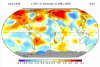
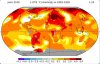
Earth’s land has already warmed more than 1.5 degrees Celsius (2.6 degrees Fahrenheit) since the industrial revolution, according to the Intergovernmental Panel on Climate Change. That’s the same amount of warming that climate activists are hoping to prevent on a global scale. ...
And land temperatures are what humanity usually cares about. Land, really, is what humanity cares about. That’s the point.
2. If the report has an overarching theme, it’s that land is extremely scarce, we need it for everything, and we are already using most of it. More than 70 percent of the planet’s ice-free land is already shaped by human activity, the report says.
As trees are felled and farms take their place, this human-managed land emits about a quarter of global greenhouse-gas pollution every year, including 13 percent of carbon dioxide and 44 percent of the super-warming but short-lived pollutant methane.
But unlike other sources of pollution—such as the burning of fossil fuels, which must be quickly reduced globally—land can’t just be shut down. It must be made into a tool in the climate fight.
...
5. Nearly every American knows what our peculiar national grid of farm and field looks like. During a drive across the Midwest, it rolls past, flipbook-like: field-field-road, field-field-road.
During a coast-to-coast flight, it unfurls outside the plane window like a vast Cartesian quilt, lines meeting lines at right angles, circles of irrigation locked within squares.
This grid system, formally known as the Public Land Survey System, covers much of the land outside the 13 original colonies.
What every American may not realize is that this grid gives us a great advantage when thinking about area. Each of those grid squares is about one square mile.
The Earth’s total land surface is about 52 million square miles. So we only get 52 million grid squares to work with as a species. ...
These 52 million grid squares cannot only service our needs. They are all the land, period. They must also hold the vast, lovely, unknowable thing that we call nature—every shady spot, every mountain stream, every sand dune. (The IPCC authors call this, somewhat dryly, “biodiversity and ecosystem services.”) Every grain of rice and cobalt mine, every sidewalk square and platypus, has to be somewhere on that 52 million.
These were the “really complex political issues” at the center of the IPCC talks. “Land can’t, at the same time, feed people, and grow trees to be burned for bioenergy, and store carbon,” Stabinsky said.
“That conflict of what’s going to take priority as we face greater and greater climate challenges” defined the talks, she said. “There’s going to be more and more desire to try to use land to pull carbon out of the atmosphere, and that’s going to interfere with food production.”
6. Even if the authors mumble about the future, they can clearly denounce the present crisis: That system of 52 million is already badly damaged.
The planet’s land absorbs carbon pollution today only because of a great “natural subsidy,” said Louis Verchot, the report co-author.
The 70 percent of ice-free land surface managed by people actually produces five gigatons of greenhouse gases a year.
The remaining land surface—the 30 percent in nature’s control—sucks up 11 gigatons. So while the land surface absorbs about six gigatons of carbon on net, this has nothing to do with people.
“The land is out of balance in areas that we are managing,” Verchot said. “The biosphere is offsetting the carbon emissions, but that’s not a reason to call the land in balance.” He called this absorption an “additional gift of nature,” but it may be more apt to call it the final gift of nature.
And at some point in the coming century—as more forests are felled and as demand for beef grows—this gift could become a curse, and the land will spew greenhouse gases into the air as ferociously as humanity does today.